消费观念

Search documents
钱只有花出去才是钱,不然就是纸?
集思录· 2025-07-25 13:40
Core Viewpoints - The article emphasizes the importance of establishing a solid material foundation before pursuing spiritual satisfaction, highlighting the impulsive consumption habits of the younger generation and the long-term consequences of such behavior [1][2][4]. Group 1: Consumption Behavior - The article discusses the impulsive consumption behavior of the younger generation, exemplified by a case of a tenant who prioritizes car loans over paying rent and utilities [1]. - It contrasts this with the author's own experience of saving diligently to purchase property, which has proven to be a more valuable investment compared to the depreciating value of luxury goods [1][5]. - The concept of delayed gratification is introduced, illustrated by a candy experiment where only a small percentage of children could wait for a greater reward, suggesting that many struggle with long-term financial planning [2][4]. Group 2: Social Implications of Saving - The article raises concerns about the broader social implications of widespread saving behavior, questioning how a collective focus on frugality could lead to reduced consumption and increased unemployment [3][4]. - It argues that while individual saving is beneficial, if everyone adopts the same mindset, it could harm the economy and lead to job losses [3][4]. Group 3: Personal Reflections on Spending - The author reflects on personal experiences of saving money during college, expressing regret over not spending on experiences that could have created lasting memories [7][8]. - There is a discussion on the balance between saving and spending, emphasizing the need for young individuals to learn financial responsibility while also enjoying life [6][11]. Group 4: Generational Perspectives - The article highlights the differences in financial perspectives between generations, noting that older generations may not fully understand the spending habits of younger individuals [12][14]. - It suggests that societal diversity in consumption habits is essential, and that each generation has its own unique financial challenges and opportunities [12][14].


上海惊现00后女子赖账消费成习惯,两月内找茬生存揭秘新现象
Sou Hu Cai Jing· 2025-07-04 01:31
Core Viewpoint - The phenomenon of a young woman in Shanghai frequently avoiding payment for her purchases reflects a concerning trend in consumer behavior among some young people, highlighting issues with their consumption values and the need for guidance in responsible spending [1][3]. Group 1: Consumer Behavior - The young woman has developed a habit of finding excuses to avoid payment, which indicates a potential psychological issue of escaping reality and seeking comfort through material consumption [3]. - This behavior not only causes direct economic losses for businesses but also disrupts the normal functioning of the market economy, negatively impacting other consumers and potentially leading to increased prices or decreased service quality [3][4]. Group 2: Social Implications - The actions of this individual reflect a shift in societal values and a lack of personal integrity, as some individuals excessively pursue material enjoyment while neglecting the importance of honesty and responsibility [3]. - The competitive and employment pressures in society may drive some young people to adopt avoidance strategies regarding payment, further exacerbating the issue [3]. Group 3: Solutions and Recommendations - A comprehensive approach is needed to address this issue, including strengthening consumer rights protection, increasing penalties for evasion of payment, and enhancing public awareness of integrity and responsibility [4][6]. - Businesses should improve risk management and service quality, while family education and psychological counseling are essential to help individuals develop correct values and a healthy mindset [4][6]. - Collaborative efforts from businesses, society, and legal frameworks are necessary to promote healthy market development and instill the importance of honest consumption among young people [6].

我国人均存款“出炉”,存款超30万的家庭有多少?央行给出了数据
Sou Hu Cai Jing· 2025-06-23 05:27
Core Insights - The recent data from the People's Bank of China reveals that as of the end of June this year, the total household deposits in the country reached 131.9 trillion yuan, with an average deposit of 94,200 yuan per person, and an average of nearly 300,000 yuan for a three-person household [1][3] - However, only 19.3% of households have deposits exceeding 300,000 yuan, which translates to approximately 95.53 million households out of nearly 495 million, indicating a significant disparity in wealth distribution [3] - The data also shows that only 1% of households have deposits over 500,000 yuan, challenging the common perception of widespread wealth among Chinese families [3] Economic Factors - National income and living costs are exerting dual pressure on households, with most families earning between 3,000 and 6,000 yuan per month, while high living costs consume a large portion of this income [5] - The burden of high housing prices forces many families to rely on bank loans, with substantial monthly repayments consuming most of their income, leaving little for savings [5] - The younger generation, particularly those born in the 1990s, faces a mismatch between income and consumption levels, leading to widespread debt, with nearly 90% of this demographic in debt, averaging 127,000 yuan, which would require 18 months of salary to repay [5] Conclusion - The current state of household savings in China is influenced by multiple factors, including national income levels, housing prices, and consumer attitudes, suggesting that addressing these underlying issues is crucial for creating a more equitable and harmonious economic environment [6]

美国只有3.3亿人,消费力为何超过中国14亿人?现在全“露馅”了
Sou Hu Cai Jing· 2025-05-23 14:53
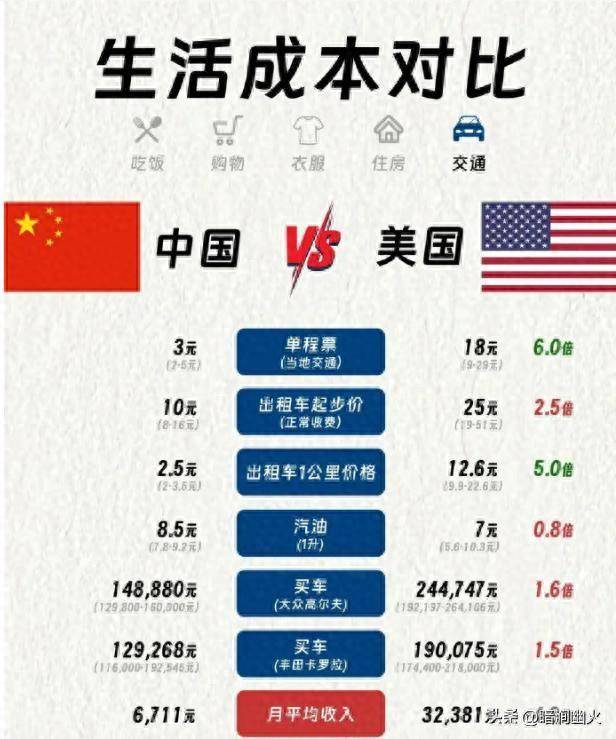
Core Insights - The article highlights the significant disparity in consumer spending between the United States and China, with the U.S. leading at $15 trillion compared to China's $6.7 trillion despite China's larger population of 1.4 billion [1][10]. Group 1: Consumer Behavior - American consumers tend to embrace a culture of forward consumption, often relying on credit, with an average debt of $141,500 per person and about 40% of the population in debt [3][5]. - In contrast, Chinese consumers prioritize savings and financial security, reflecting a cultural inclination towards frugality and risk management [12][15]. - The average annual salary in the U.S. is $45,000, while China's disposable income was only 32,000 RMB in 2020, limiting the latter's consumer spending capacity [10][15]. Group 2: Economic Implications - The article discusses how the disparity in consumer spending affects economic growth, as insufficient consumer demand can lead to unsold products and hinder investment [11]. - The U.S. has a well-established social security system that supports consumer spending even during unemployment, fostering a culture of spending [12]. - China is working to narrow the income gap with the U.S. and enhance consumer spending power through stable income growth initiatives [18]. Group 3: Housing and Cost of Living - High housing prices in China, particularly in first-tier cities, create significant financial burdens for residents, limiting their disposable income for consumption [15]. - In the U.S., housing costs are relatively manageable, with policies in place to alleviate financial pressure on homeowners [15][17]. - The overall cost of living, including prices for goods, also contributes to the higher consumer spending in the U.S., as illustrated by the price comparison of jeans between the two countries [17].

月薪3万存款为负:伪中产正在被信用卡榨干!
Sou Hu Cai Jing· 2025-05-05 04:04
Core Insights - The article highlights the phenomenon of "pseudo-middle class" individuals who appear financially stable but are actually in precarious financial situations due to excessive credit card usage and impulsive spending [1][3][5] Group 1: Financial Behavior of "Pseudo-Middle Class" - Many individuals in this group have high salaries, such as a monthly income of 30,000, yet they struggle with negative savings and mounting credit card debt [1][3] - Impulsive purchases, including luxury items and frequent business dinners, contribute significantly to their financial woes, often leading to a lack of awareness regarding their spending habits [1][3] - The convenience of credit cards creates a false sense of financial security, allowing users to spend without immediate consequences, which can lead to overwhelming debt when bills arrive [3][5] Group 2: Credit Card Usage and Its Implications - The overuse of credit cards, particularly the "buy now, pay later" model, can lead to a cycle of debt due to high-interest rates and late fees [3][5] - Installment payment options, while seemingly easing the burden of large purchases, often increase the total cost due to additional fees and interest, further complicating financial situations [5] Group 3: Recommendations for Financial Improvement - Establishing a correct consumption mindset is crucial, focusing on actual needs and financial capabilities rather than succumbing to trends or vanity [5][7] - Learning to use credit cards responsibly is essential, including maintaining awareness of spending and regularly reviewing credit card statements to manage debt effectively [5][7] - Improving financial literacy through education on investment products and financial planning can help individuals achieve a balance between income and expenses, ultimately leading to financial freedom [7]
中美消费力差异解析:从储蓄习惯到金融体系的多维度观察
Sou Hu Cai Jing· 2025-05-01 04:10
Group 1: Core Insights - The retail total in the U.S. is approximately 1.7 times that of China, highlighting significant differences in consumer markets [1] - Cultural differences in consumption patterns are evident, with Chinese families favoring savings and American families embracing credit systems [3][4] - The U.S. capital market supports consumption through mechanisms like asset securitization, while China's funding flows are concentrated in specific sectors, impacting overall consumption vitality [7] Group 2: Financial System Differences - The U.S. financial system promotes direct financing, which enhances consumer market activity [8] Group 3: Social Welfare and Consumer Confidence - U.S. social security systems, including healthcare and education, reduce household savings pressure but contribute to high household debt levels, exceeding 75% of GDP [9] - China's social security system is improving, with expanded healthcare coverage and poverty alleviation policies, although some regions still face high out-of-pocket medical expenses [9] Group 4: Implications and Outlook - Optimizing financial resource allocation is essential, with a focus on directing funds towards innovative consumption sectors, such as support for technology companies [11] - Enhancing the social security network can unlock consumer potential by equalizing public services in healthcare and education [12] - Promoting a rational consumption culture that balances savings and spending is crucial, particularly in the context of credit system development [13] - The differences in consumer power between China and the U.S. result from a combination of economic structure, cultural traditions, and institutional design, necessitating a balanced approach to consumption upgrades [15]