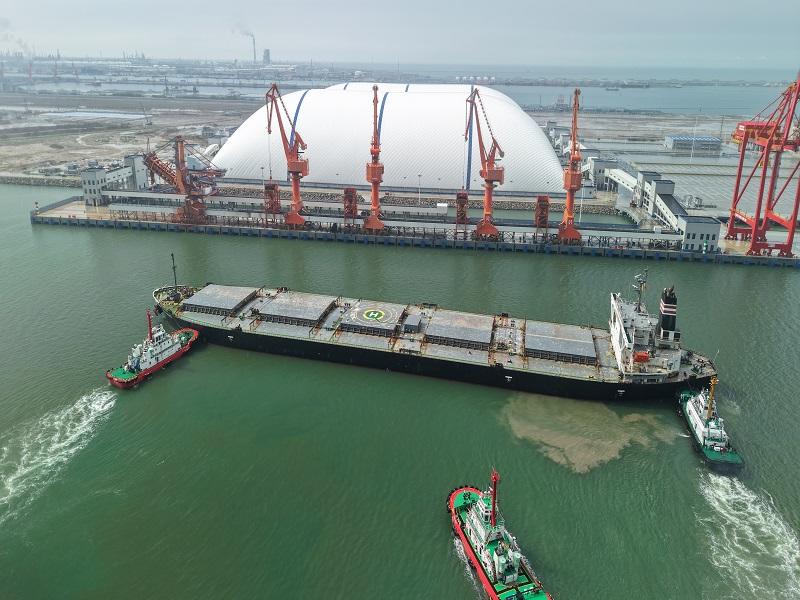
港口建设

Search documents
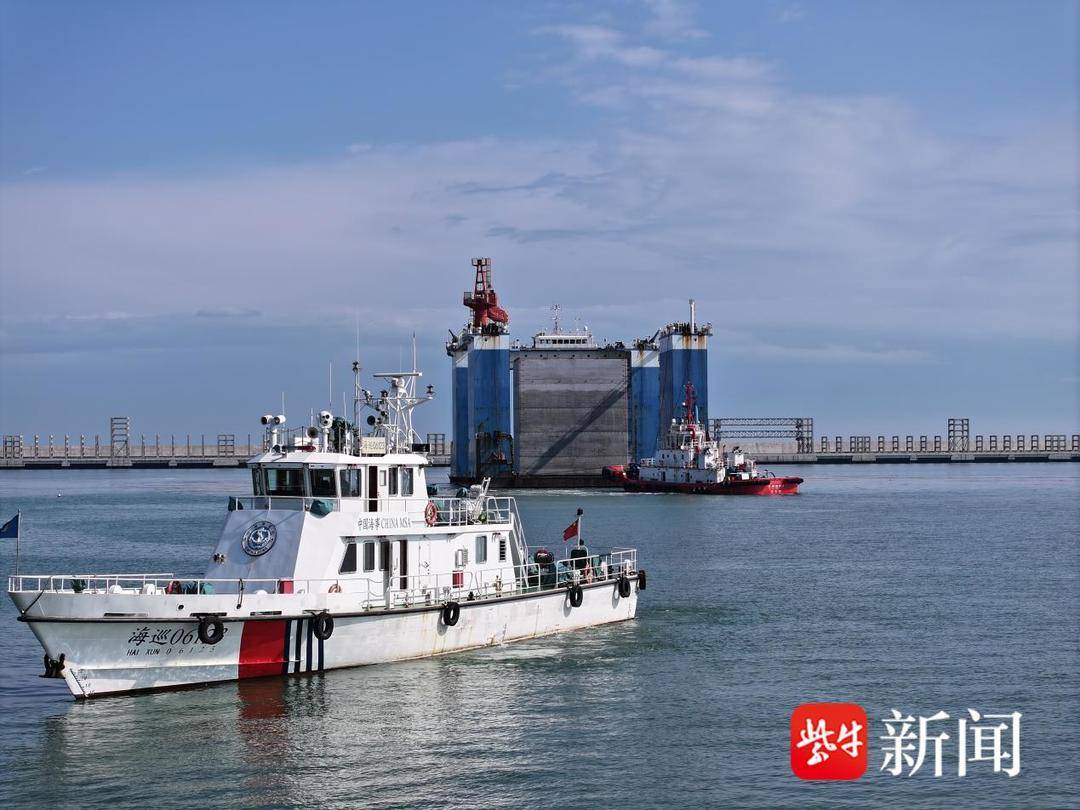
30件沉箱精准落位!连云港海事局助力黄海粮油码头项目建设进入新阶段
Yang Zi Wan Bao Wang· 2025-11-02 10:31
Core Points - The completion of the last sunken box installation at the COFCO oil and grain terminal project in Lianyungang marks the end of all "super hazardous major sub-items," laying a solid foundation for subsequent superstructure construction [1] - The project involves the installation of 30 sunken boxes, with the heaviest weighing up to 2,799 tons, utilizing high-pressure airbag lifting and precise measurement systems for centimeter-level accuracy [3] - The terminal being constructed is a 100,000-ton grain and oil terminal, occupying a planned coastline length of 531 meters, with an annual designed throughput of 5 million tons [7] Industry Impact - The completion of the sunken box installation allows the project to transition to the construction phase of the terminal's superstructure and supporting facilities, which will effectively meet the grain transportation needs of enterprises in the hinterland of Ganyu [7] - The project supports Lianyungang's goal of establishing an international hub port with a "one body and two wings" structure [7]


北部湾港:拟投资9.41亿元建设江海联运泊位工程
Mei Ri Jing Ji Xin Wen· 2025-10-27 10:48
Core Viewpoint - The company plans to invest in the construction of a new terminal project to enhance its container transportation capabilities at the Beibu Gulf Port, with a total investment of 941 million yuan [1] Investment Project Details - The project involves the construction of berths 1 to 5 in the Dalanping South Operation Area of the Qinzhou Port, aimed at improving comprehensive service capacity for container transport [1] - The total investment for the project is 941 million yuan, with funding sourced from 25% self-owned funds and 75% bank loans at an interest rate of 3.0% [1] - The construction period is estimated to be 18 months, and the project is expected to generate an average annual operating income of 111 million yuan upon reaching full capacity [1]

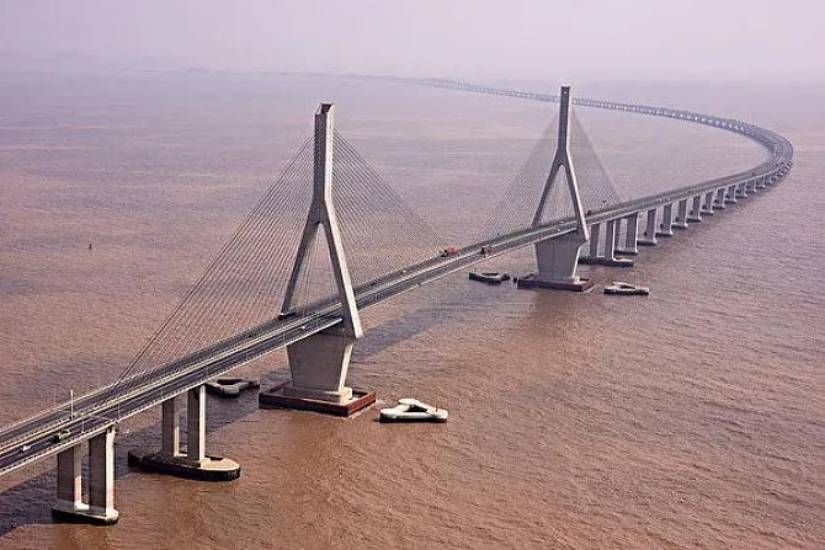
斥资700亿,中国打造全球最先进港口,多项数据位居世界第一
Sou Hu Cai Jing· 2025-10-05 10:52
Core Insights - Yangshan Port, built with an investment of 70 billion yuan, has become one of the world's largest ports in terms of container throughput, consistently ranking first globally since 2010 [1][8]. Development Background - The decision to open the Pudong area in Shanghai in April 1990 laid the groundwork for the development of Yangshan Port to meet foreign trade demands, as existing ports could not accommodate large vessels [1][3]. - In 1992, the 14th National Congress of the Communist Party of China emphasized accelerating Shanghai's development as an international shipping center, leading to the selection of Yangshan Island for deep-water port construction [3][5]. Construction Challenges and Achievements - Despite setbacks during the Asian financial crisis, the construction of Yangshan Port resumed in the early 2000s, driven by the need for a deep-water port to support Shanghai's economic growth [5][6]. - The construction involved significant direct expenditures, with the first phase costing over 10 billion yuan, and included the East China Sea Bridge, which alleviated transportation bottlenecks [6][8]. - Yangshan Port is unique as it is the only offshore container terminal built on an island, with a construction area comparable to 200 football fields and a foundation laid in waters up to 39 meters deep [6][8]. Technological Advancements - The port has undergone a transformation with the implementation of automated operations, particularly in its fourth phase, which features unmanned operations through advanced technology [8]. - The AGV (Automated Guided Vehicle) system, developed in China, allows for precise cargo handling and transportation, showcasing China's technological advancements in port operations [8][10]. Economic Impact - Since its opening, Yangshan Port has significantly contributed to Shanghai's status as an international shipping hub, attracting more investments and enhancing the economic integration of the Yangtze River Delta region [8][10]. - The rise of Yangshan Port has created competitive pressure on other ports, such as Busan, Hong Kong, and Kaohsiung, prompting them to improve their infrastructure [10]. Future Prospects - The successful operation of Yangshan Port has positioned China as a leader in deep-water port construction globally, with Chinese port technology gaining traction in international markets [10].
天津港发展附属以3.03亿元成功竞得天津市滨海新区天津港地块
Zhi Tong Cai Jing· 2025-09-30 08:48
Core Viewpoint - Tianjin Port Development (600717) has successfully acquired land use rights for a plot in Tianjin Binhai New Area for RMB 303 million, aiming to enhance its bulk cargo handling capabilities and overall competitiveness in the dry bulk business [1] Group 1: Acquisition Details - The acquisition was conducted by Yuanchen Warehousing Company, a subsidiary of Tianjin Port Development, through a public bidding process [1] - The land use rights acquisition contract is expected to be signed by October 21, 2025 [1] - A deposit of RMB 60.6 million was paid for the bidding process [1] Group 2: Strategic Implications - The acquisition is part of a broader strategy to advance the construction of storage yards, thereby improving the bulk cargo functionality layout in the Tianjin Port area [1] - This initiative aims to promote the scale and intensive development of bulk cargo transportation, enhancing storage capacity to meet the demands of dry bulk shipping and customer dispatch needs [1] - The overall goal is to strengthen the comprehensive competitiveness of Tianjin Port's dry bulk business and create greater benefits for the company [1]

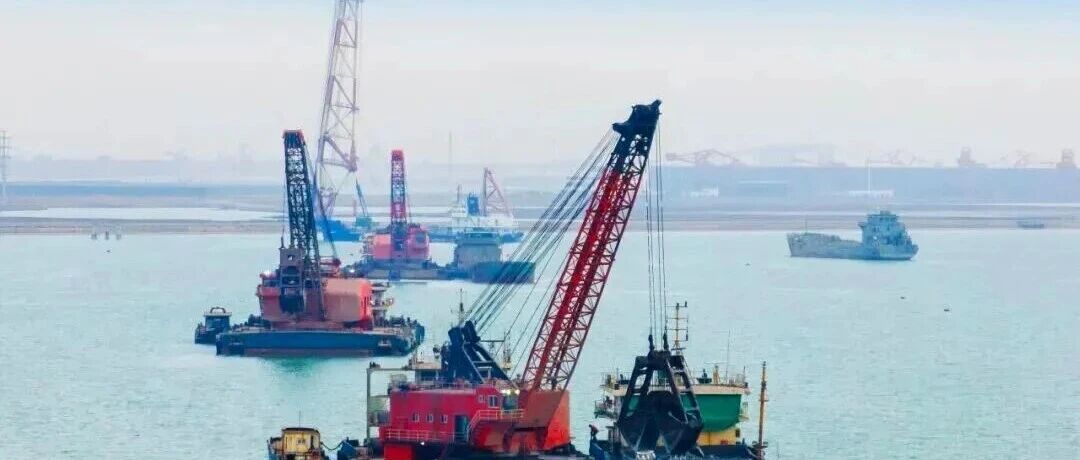
黄骅港煤炭港区又一工程通过验收
中国能源报· 2025-09-17 05:58
Core Viewpoint - The successful pre-acceptance of the dredging project for the fifth phase of the Huanghua Port coal terminal by China Shenhua lays a solid foundation for subsequent construction, enhancing coal transportation efficiency and profitability [1][3]. Group 1: Project Overview - The dredging project involved a total dredging volume of 2.7748 million cubic meters, including tasks such as excavation of the berthing area and dredging of the port basin [1]. - The project is a key precursor to the fifth phase of the Huanghua Port coal terminal, ensuring that the construction water area meets design depth requirements for efficient vessel operations [3]. Group 2: Management and Execution - The project adopted a refined management approach with a "one area, one team, one plan" strategy, optimizing equipment and personnel allocation based on terrain and soil conditions [3]. - Innovative construction techniques were employed, such as the "grab and rake combined" method to tackle hard soil layers, achieving integrated operations of "excavation—suction—transportation—disposal" [3][4]. Group 3: Environmental and Safety Measures - The project emphasized ecological protection by using environmentally friendly processes to minimize marine impact [3]. - A weather warning information system was established to enhance response capabilities during adverse weather conditions, ensuring safety and stability in navigation [4]. Group 4: Impact on Logistics and Supply Chain - The successful completion of the dredging project facilitates efficient vessel docking and cargo transfer, supporting the overall construction progress of the fifth phase [3]. - The coordination between the dredging scheduling office and maritime traffic departments helps avoid conflicts between construction and navigation, thereby stabilizing traffic order in the port area and reducing logistics costs [4].

十万吨级散货外轮首靠东营港!东营海事助推东营港亿吨大港建设
Qi Lu Wan Bao Wang· 2025-08-19 11:02
Core Insights - The successful docking of the "Libra" vessel, carrying 88,000 tons of bauxite, at Dongying Port marks the first foreign trade voyage for the port's general terminal, showcasing its operational capabilities [1][4] - Dongying Maritime Bureau has implemented various measures to ensure safe docking, including precise services, smart supervision, and collaborative control, achieving a "zero-barrier" seamless docking process [1][3] Group 1 - The "Libra" vessel's docking sets a record for the largest bulk carrier to dock at Dongying Port since its opening, contributing to the port's development towards becoming a 100-million-ton port [4] - Dongying Maritime Bureau has conducted systematic assessments of navigation safety impacts from major water engineering projects, proactively addressing potential navigation risks [3] - The bureau has organized emergency response drills for pollution incidents, enhancing the port's capability to handle sudden pollution events and ensuring operational safety [3] Group 2 - A special task force has been established to improve collaboration with shipping companies and related entities, optimizing vessel traffic organization to enhance efficiency and safety for large vessels entering and exiting the port [3] - The use of smart maritime technologies and real-time monitoring systems, including CCTV and drones, has been implemented to ensure a clean navigation environment and stable order [3] - The Dongying Maritime Bureau is focused on optimizing the port's customs clearance processes, significantly improving the efficiency of key operational links and enhancing user satisfaction [3]