
真实世界资产代币化

Search documents
创胜集团医药(06628) - 自愿公告-有关与华检医疗控股有限公司及其两间子公司的战略合作协议探索...
2025-09-22 00:03
Transcenta Holding Limited 香港交易及結算所有限公司及香港聯合交易所有限公司對本公告的內容概不負責,對其準確性 或完整性亦不發表任何聲明,並明確表示,概不對因本公告全部或任何部份內容而產生或因倚 賴該等內容而引致的任何損失承擔任何責任。 創勝集團醫藥有限公司 (以存續方式於開曼群島註冊的有限公司) (股份代號:6628) 自願公告 有關與華檢醫療控股有限公司及其兩間子公司的戰略合作協議 探索首創真實世界資產代幣化潛在融資用於 創新腫瘤療法研發的業務進展 本公告由創勝集團醫藥有限公司(「本公司」)自願作出,旨在告知本公司股東及潛 在投資者有關最新業務進展。本公告所用但並無另行界定的詞彙應與本公司日期 為2021年9月14日的招股章程中所賦予該等詞彙的涵義相同。 本公司董事會(「董事會」)欣然公佈,於2025年9月21日,本公司及本公司全資子 公司Transcenta Oncology Inc.(「Transcenta Oncology」)已與華檢醫療控股有限 公司(香港聯合交易所有限公司主板上市公司,股份代號:1931)及其兩間子公司 ETHK Inc.及ETHK HOLDINGS L ...
211家发行商入局,真实世界资产代币化是喧嚣还是新趋势?
2 1 Shi Ji Jing Ji Bao Dao· 2025-09-16 01:49
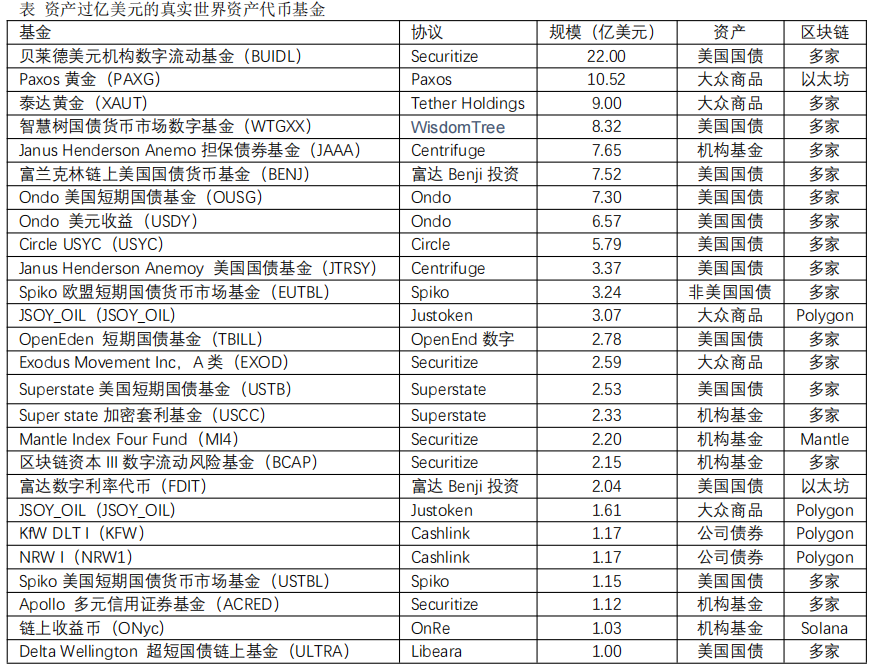
Core Insights - The rapid growth of real-world asset tokenization has reached a market size of $29.27 billion as of September 12, 2023, with 389,136 asset holders and 211 issuers, including major asset management firms like BlackRock and Fidelity [1][3] - The tokenized assets are primarily categorized into private credit ($16.72 billion), U.S. Treasury bonds ($7.42 billion), commodities ($2.01 billion), and alternative funds, among others [1][3] - The legalization of asset tokenization in the U.S. has been facilitated by legislative efforts, notably the GENIUS ACT, which has removed legal barriers and allowed for a surge in market activity [3][10] Group 1: Historical Context and Challenges - The journey of asset tokenization has faced significant challenges, with over 90% of projects failing to achieve basic trading volumes before 2021 due to legal uncertainties, weak investor participation, and lack of liquidity mechanisms [2][3] - Early attempts at asset tokenization, such as the St. Regis Aspen hotel project, faced liquidity issues and investor dissatisfaction due to complex structures and additional fees [2] Group 2: Advantages of Asset Tokenization - Asset tokenization offers several advantages over traditional finance, including shared ledger information that enhances transparency and reduces information asymmetry [4][5] - The flexibility in custody arrangements and programmability through smart contracts improve operational efficiency and user experience [6][7] - Tokenization enhances financial inclusion by breaking down large assets into smaller units, making them more accessible to a broader range of investors [6][7] Group 3: Future Potential and Market Trends - The private market holds significant untapped potential, with a focus on private equity, private credit, infrastructure, and real estate as key areas for future growth [8] - The global market for tokenized assets is projected to exceed $30 trillion by 2030, indicating a transformative shift in the financial landscape [10][11] - Hong Kong's approach to asset tokenization emphasizes a diverse range of asset classes and a focus on building a digital financial ecosystem, contrasting with the U.S. model [9][10] Group 4: Impact on Global Financial Systems - Asset tokenization and stablecoins are expected to disrupt the traditional dollar-based international monetary system, providing equal competition for currencies from other regions [10][12] - The evolution of a new international monetary and financial system based on blockchain technology is anticipated to occur more rapidly than previous shifts in economic power [12]


狮腾控股股东将股票由大华继显(香港)转入花旗银行 转仓市值5.62亿港元
Zhi Tong Cai Jing· 2025-08-26 00:20
Core Viewpoint - Lion Group Holdings (狮腾控股) is transitioning its stock holdings from Dahua Jixin (大华继显) to Citibank, with a market value of HKD 562 million, representing 6.77% of the total shares [1] Group 1: Business Development - On July 28, Lion Group Holdings announced the creation of a new flagship business unit, the Synagistics Digital Finance Group (SDFG), aimed at developing solutions for multi-currency, interoperable stablecoins, and tokenization of Real-World Assets (RWA) [1] - The SDFG intends to connect traditional financial systems with blockchain-based frameworks by providing compliant tokenization of real-world assets, including trade receivables, inventory, and future cash flows [1] - The tokenized assets will be paired with interoperable multi-currency stablecoins (such as HKD, offshore RMB, SGD, and other applicable fiat currencies) to achieve efficient, programmable settlements and enhance liquidity, facilitating seamless integration across decentralized financial systems [1]
狮腾控股(02562)股东将股票由大华继显(香港)转入花旗银行 转仓市值5.62亿港元
智通财经网· 2025-08-26 00:15
Group 1 - The core point of the article is that Lion Group (02562) is transitioning its shares from Dahua Jixin (Hong Kong) to Citibank, with a market value of HKD 562 million, representing 6.77% of the total shares [1] - On July 28, Lion Group announced the creation of a new flagship business unit, Synagistics Digital Finance Group (SDFG), aimed at developing solutions for multi-currency, interoperable stablecoins, and tokenization of Real-World Assets (RWA) [1] - SDFG intends to connect traditional financial systems with blockchain-based frameworks by providing compliant tokenization of real-world assets, including trade receivables, inventory, and future cash flows [1] Group 2 - The tokenized assets will be paired with interoperable multi-currency stablecoins, such as Hong Kong dollars, offshore renminbi, Singapore dollars, and other applicable fiat currencies, to achieve efficient, programmable settlements and enhance liquidity [1] - The initiative aims to facilitate seamless connectivity between decentralized financial systems, promoting development and adoption across Asia once regulatory approvals are obtained [1]
狮腾控股(02562.HK)推出数字金融集团打造亚洲首个多货币、互通稳定币及真实世界资产代币化解决方案生态系统
Ge Long Hui A P P· 2025-07-30 06:03
Core Viewpoint - Lion Group (02562.HK) announced the creation of a new flagship business unit, the Synagistics Digital Finance Group (SDFG), aimed at developing multi-currency, interoperable stablecoin and real-world asset (RWA) tokenization solutions, facilitating growth and adoption across Asia upon obtaining regulatory approvals [1] Group 1 - The SDFG aims to connect traditional financial systems with blockchain-based frameworks by providing compliant tokenization of real-world assets, including trade receivables, inventory, and future cash flows [1] - The tokenized assets will be paired with interoperable multi-currency stablecoins, such as Hong Kong dollars, offshore renminbi, Singapore dollars, and other applicable fiat currencies, to achieve efficient, programmable settlements and enhance liquidity [1] - The initiative is designed to enable seamless interoperability between decentralized financial systems [1]
稳定币快速发展的生机与隐患
Di Yi Cai Jing· 2025-07-27 13:40
Core Viewpoint - The recent passage of two significant bills in the U.S. and Hong Kong has granted legal status to stablecoins, eliminating policy uncertainty and promoting their development, which is expected to invigorate the payment industry, digital asset sector, and the global financial system [1][2]. Regulatory Framework - Both bills clarify the positioning of stablecoins and regulate their activities, requiring a 1:1 backing with reserve assets limited to fiat or other low-risk, high-liquidity assets [2] - Interest payments on stablecoins are prohibited, reinforcing their payment attributes and distinguishing them from traditional investment products [2] - Issuers face stricter legal constraints, with only licensed entities allowed to operate stablecoin businesses in Hong Kong [2] - Regular disclosure of reserve asset reports and compliance with anti-money laundering regulations are mandated to enhance market transparency and protect investor rights [2] Impact on Payment Systems - Stablecoins are expected to reduce costs and improve efficiency in the global payment system, serving as an ideal payment tool for various transactions, especially cross-border and cryptocurrency transactions [3] - A report predicts that by 2030, the global supply of stablecoins could reach $3.7 trillion, with market capitalization growing from hundreds of billions to trillions of dollars, positioning stablecoins at the core of cross-border payments and digital asset transactions [3] Innovation in Digital Assets - Compliant stablecoins connect the real and virtual worlds, facilitating the flow of traditional capital into the Web3 space and enabling the tokenization of real-world assets (RWA) [4] - The RWA market is currently valued at $268.16 billion, with over 90% of this value attributed to stablecoins, indicating a significant role in attracting investors to the digital asset sector [4] Risks Associated with Stablecoins - The rapid development of stablecoins poses liquidity risks, as their stability relies heavily on the quality of reserve assets, which could lead to large-scale redemption crises if confidence wanes [5] - Technical risks are inherent due to the blockchain technology underpinning stablecoins, with historical incidents of hacks and system failures highlighting vulnerabilities [6] - Regulatory costs may rise significantly due to the lack of a unified global framework, creating opportunities for regulatory arbitrage and compliance challenges [7] - The widespread use of stablecoins could threaten the dominance of traditional banking by reducing commercial deposits and altering the payment landscape [7] Strategic Recommendations for China - China should leverage Hong Kong as a pilot for stablecoin development, attracting global compliant projects to enhance the internationalization of the Renminbi [9] - A robust risk management framework and legal regulations are essential to control the circulation of stablecoins domestically while ensuring sustainable development [9] - Structural reforms are necessary to restore global confidence in China's growth and to adapt to the evolving digital landscape, ultimately supporting the internationalization of the Renminbi [9]