
罕见病药物研发

Search documents
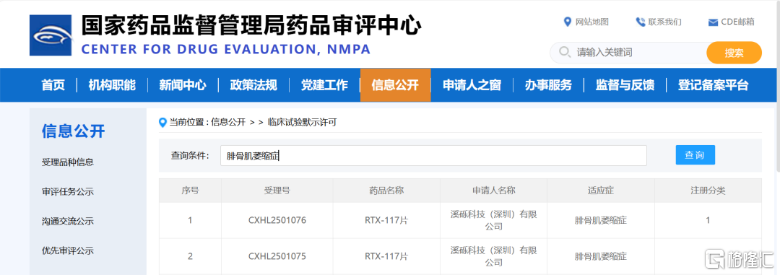
晶泰控股赋能,国内首个AI+RNA小分子创新药获批临床
Zheng Quan Shi Bao Wang· 2026-01-07 14:26
Core Insights - Crystal Tech Holdings (02228.HK) announced that its incubated company, ReviR, received approval from the National Medical Products Administration for the clinical trial of RTX-117, a small molecule pipeline for treating Charcot-Marie-Tooth disease (CMT), set to begin Phase I trials in Q1 2026 [1] - RTX-117 is the first Class 1 innovative drug targeting CMT in China and represents a significant milestone in the collaboration between ReviR and Crystal Tech, leveraging AI and robotic-assisted research for rare disease drug development [1][2] - The drug has also received IND approval and orphan drug designation from the FDA, allowing for priority review and extended market exclusivity in the U.S. [1] Company and Industry Summary - CMT is listed as the 17th rare disease in the first batch published by the National Health Commission in 2018, characterized by its progressive nature and high disability rate, with RTX-117's clinical approval marking a breakthrough in CMT treatment development in China [2] - The collaboration between ReviR and Crystal Tech utilizes AI and RNA technology, demonstrating the potential of AI-driven drug discovery to overcome economic bottlenecks in rare disease treatment [2][3] - Crystal Tech, as the first "AI + Robotics" stock in Hong Kong, has established a leading automated research infrastructure and intelligent drug development platform, gaining trust from 17 of the top 20 global pharmaceutical companies [3] - The company’s platform-based business model allows for the continuous incubation of innovative pipelines, providing partners with breakthrough innovations while sharing long-term value through revenue sharing [3]
晶泰科技赋能国内首个"AI + RNA"小分子创新药获批临床,ReviR溪砾科技实现罕见病首创新药突破
Ge Long Hui· 2026-01-07 05:28
Core Viewpoint - ReviR, a company incubated by JingTai Technology, has received approval from the National Medical Products Administration (NMPA) for its small molecule pipeline RTX-117, aimed at treating Charcot-Marie-Tooth disease (CMT), with Phase I clinical trials set to begin in Q1 2026 [1] Group 1: Company Developments - RTX-117 is the first Class 1 innovative drug in China targeting CMT and is the first project to enter clinical trials from a series of rare disease drug pipelines developed through AI and robotic-assisted research [1][3] - JingTai Technology will receive milestone payments and has the right to participate in revenue sharing from sales and subsequent licensing of the RTX-117 pipeline [1] - The drug has already received IND approval and orphan drug designation from the FDA, allowing for priority review and extended market exclusivity [1] Group 2: Market Potential - CMT is listed as the 17th rare disease in the first batch of rare diseases published by the National Health Commission in 2018, with a global prevalence of 17.7 to 40 per 100,000, affecting over 2.6 million patients [2] - The global CMT treatment market is projected to grow from $1.013 billion in 2024 to $11.394 billion by 2035, reflecting a compound annual growth rate (CAGR) of 24.62% [2] - The median age of onset for CMT patients is 7.3 years, with a long diagnostic cycle and a lack of effective treatment options, indicating a significant unmet clinical need [2] Group 3: Innovation and Technology - RTX-117 targets the key physiological mechanisms causing CMT by inhibiting the Integrated Stress Response (ISR) pathway, showing significant preclinical efficacy in restoring motor function in model animals [4] - The development of RTX-117 exemplifies the potential of AI and RNA modulation in accelerating breakthroughs in rare disease therapies [3][4] - JingTai Technology's platform integrates quantum physics, AI, and large-scale robotic experimentation, establishing a leading automated drug development infrastructure [6] Group 4: Industry Challenges and Opportunities - The global rare disease market is characterized by a significant commercial opportunity, with only 5% of the over 7,000 identified rare diseases having clear treatment options [5] - Domestic rare disease patients face challenges such as high costs and low accessibility of imported drugs, highlighting the need for innovative solutions [5] - The AI-driven approach to drug development is expected to accelerate the creation of clinically valuable and marketable therapies, providing new opportunities in the rare disease treatment landscape [5]

Sanofi Scores Two Major China Approvals For Rare Blood Disorder Drugs
Benzinga· 2025-12-11 18:11
Core Insights - The National Medical Products Administration (NMPA) in China has approved Sanofi's two medicines for rare hematologic diseases: Qfitlia for hemophilia and Cablivi for acquired thrombotic thrombocytopenic purpura [1][2] - These approvals mark Sanofi's fourth and fifth in China this year, expanding its rare hematology portfolio [2][5] Group 1: Qfitlia - Qfitlia is indicated for routine prophylaxis to prevent or reduce bleeding episodes in pediatric patients aged 12 and older, and adults with severe hemophilia A [2][3] - The approval is based on ATLAS phase 3 studies showing significant bleed protection, with a 71% reduction in annualized bleeding rates (ABR) for patients without inhibitors and a 73% reduction for patients with inhibitors [3][7] - Nearly half of the patients in the open-label extension study experienced one or fewer bleeds, with 94% achieving target AT levels with minimal dose adjustments [7] Group 2: Cablivi - Cablivi is the first Nanobody targeted therapy for treating acquired thrombotic thrombocytopenic purpura in adults and adolescents aged 12 or older [4][5] - It targets von Willebrand factor (vWF) to inhibit the interaction between vWF and platelets, helping to prevent organ damage during the disease [5] - Approximately 2,700 patients are diagnosed with this condition annually in China [4]


Mirum Pharmaceuticals (NasdaqGM:MIRM) M&A Announcement Transcript
2025-12-08 14:32
Summary of Mirum Pharmaceuticals Conference Call Company Overview - **Company**: Mirum Pharmaceuticals (NasdaqGM:MIRM) - **Acquisition Target**: BlueJ Therapeutics - **Focus**: Rare diseases, specifically Hepatitis Delta Key Points from the Conference Call Acquisition Announcement - Mirum announced a definitive agreement to acquire BlueJ Therapeutics for a total of $620 million, consisting of $250 million in cash and $370 million in stock priced at $71.21 per share, plus up to $200 million in sales-based milestone payments starting at $500 million in annual sales [2][17] - The acquisition aims to expand Mirum's rare disease portfolio and enhance its late-stage pipeline [2][4] Product Details - The acquisition includes tegovibart, an anti-hepatitis B surface antigen monoclonal antibody for chronic hepatitis delta virus, which has shown promising Phase II results [4][5] - Tegovibart has received FDA Breakthrough Therapy and PRIME designations in the EU, indicating its potential to significantly change the standard of care for Hepatitis Delta patients [5][9] Clinical Data - Phase II study results showed a 100% virologic response rate in 47 adults with chronic hepatitis delta, with 65%-82% achieving a composite endpoint of virologic response and ALT normalization [8][9] - The ongoing Phase III Azure program is designed to meet registration requirements in both the U.S. and EU, with final data expected in the second half of 2026 [10][11] Market Opportunity - There are an estimated 40,000 prevalent Delta patients in the U.S. and over 230,000 in the U.S. and EU combined, with a significant number undiagnosed [13][14] - Mirum anticipates a global revenue potential of at least $750 million for tegovibart, with the majority expected to come from the U.S. market [14][42] Commercial Strategy - Mirum plans to leverage its existing commercial infrastructure, which is expected to deliver $500 million-$510 million in sales in 2025, to support the launch of tegovibart [14][17] - The company aims to expand its field teams modestly to cover areas like infectious disease and internal medicine practices where Delta patients are managed [15] Financial Position - Mirum has a solid balance sheet and expects to return to cash flow positive status in 2027, with no change to its 2025 guidance despite the acquisition [17][18] - The acquisition is seen as a disciplined approach to capital allocation, expanding the rare disease portfolio without compromising financial independence [18] Competitive Landscape - The competitive dynamics include the potential entry of Gilead's Hepcludex in the U.S. market, which could enhance market development for Hepatitis Delta [22][24] - Mirum believes that the unique profile of tegovibart, with its high response rates and favorable safety profile, positions it well against competitors [46] Regulatory Path - The Azure One and Azure Four studies are designed to support U.S. registration, with clear buy-in from the FDA [23][55] - The Azure Two and Three studies are superiority studies aimed at supporting EMA registration [61] Future Outlook - Mirum is optimistic about the upcoming catalysts, including four registrational stage readouts in the next 18 months, which could significantly enhance its value creation potential [19][20] Additional Important Points - The acquisition process was competitive, with other interest in BlueJ's program, but Mirum had been following the program for over a year [52] - The company is focused on the Delta program and does not plan to invest in BlueJ's HBV pipeline agents [37] This summary encapsulates the key aspects of the conference call, highlighting Mirum Pharmaceuticals' strategic acquisition, product potential, market opportunity, and future outlook in the rare disease sector.

Mirum制药拟以最高8.2亿美元收购蓝鸟治疗公司
Xin Lang Cai Jing· 2025-12-08 14:08
Core Viewpoint - Mirum Pharmaceuticals announced the acquisition of Bluebird Bio for up to $820 million, aimed at enhancing its product portfolio with an experimental drug for severe liver disease [1][4]. Group 1: Acquisition Details - The acquisition involves an initial payment of $250 million in cash and $370 million in stock, with potential milestone payments of up to $200 million based on sales [1][4]. - The deal is expected to be completed in the first quarter of 2026 [3][6]. Group 2: Drug Information - Mirum will gain global rights to the monoclonal antibody Brelovitug, which is in clinical trials for chronic delta hepatitis, a rare and rapidly progressing liver disease affecting approximately 230,000 people in the US and Europe [1][4]. - Delta hepatitis is considered the most severe type of viral hepatitis, occurring only in individuals infected with hepatitis B, and can lead to rapid liver damage or liver cancer [1][4]. - Nearly half of diagnosed patients may die from liver-related complications within 10 years [1][4]. - In a mid-stage clinical trial, all patients treated with Brelovitug for 48 weeks showed a decrease in delta hepatitis virus load, with up to 82% of patients normalizing liver enzyme levels [1][4]. Group 3: Funding and Future Plans - Mirum has raised $200 million through a targeted equity offering to healthcare investors to support the drug's further development and commercialization [2][5]. - The drug is currently in late-stage clinical trials, with results expected in the second half of 2026, and Mirum plans to apply for US regulatory approval in 2027 if trials are successful [2][5].
Pharming Group to participate in Oppenheimer Movers in Rare Disease Summit
Globenewswire· 2025-12-08 07:00
Core Insights - Pharming Group N.V. is participating in the Oppenheimer Movers in Rare Disease Summit on December 11, 2025, in New York City, focusing on innovative companies and investors in the rare disease sector [1] - Anurag Relan, M.D., Chief Medical Officer of Pharming, will engage in a discussion about the hereditary angioedema (HAE) market during the event [1] Company Overview - Pharming Group N.V. is a global biopharmaceutical company dedicated to developing and commercializing innovative medicines for patients with rare, debilitating, and life-threatening diseases [3] - The company is headquartered in Leiden, the Netherlands, with a significant number of employees based in the U.S. [3]


Amylyx(AMLX) - 2025 FY - Earnings Call Transcript
2025-12-03 22:00
Financial Data and Key Metrics Changes - The company is excited about the upcoming pivotal study for Avexitide, targeting post-bariatric hypoglycemia (PBH), with an estimated 160,000 patients in the U.S. and no approved treatments [2][6][12] - Enrollment for the pivotal study is expected to complete in Q1 2026, with top-line results anticipated in Q3 2026, leading to potential commercialization in 2027 [2][3] Business Line Data and Key Metrics Changes - Avexitide is positioned as a competitive inhibitor of the GLP-1 receptor, with significant unmet needs in PBH and strong prior trial data supporting its efficacy [5][6] - The company is also developing a long-acting formulation of Avexitide, which is expected to enhance market appeal [3][21] Market Data and Key Metrics Changes - There is a growing awareness of PBH among endocrinologists, with initiatives for coverage and coding underway, including a petition for an ICD-10 code [9][36] - The company has identified a clear patient journey for PBH, which aids in diagnosis and treatment planning [34][41] Company Strategy and Development Direction - The company aims to leverage its experience in rare diseases to establish a robust commercialization strategy for Avexitide, focusing on patient connectivity and care pathways [30][32] - Future plans include exploring additional indications for Avexitide beyond Roux-en-Y gastric bypass patients, potentially expanding to sleeve gastrectomy and other surgeries [18][19] Management's Comments on Operating Environment and Future Outlook - Management expressed optimism about the upcoming pivotal trial results and the potential impact of Avexitide on patient quality of life [12][14] - The company is preparing for a chronic treatment model, anticipating ongoing patient management needs [31][32] Other Important Information - The company is also advancing its ALS candidate AMX0114, with ongoing studies to assess its safety and efficacy [53][56] - AMX0035 for Wolfram syndrome is in the pipeline, with plans for a phase three trial pending FDA alignment [65][66] Q&A Session Summary Question: What is the expected timeline for Avexitide's pivotal study results? - The company anticipates completion of enrollment in Q1 2026 and top-line results in Q3 2026, with commercialization targeted for 2027 [2][3] Question: How does the company plan to raise awareness about PBH? - The company is working with the American Society of Metabolic and Bariatric Surgery to develop educational materials and increase awareness among healthcare providers [40][41] Question: What is the significance of the potential ICD-10 code for PBH? - While the ICD-10 code is seen as beneficial for claims databases and awareness, it is not deemed essential for diagnosis, as endocrinologists are already trained to recognize PBH [46][47]

Travere Therapeutics (NasdaqGM:TVTX) FY Conference Transcript
2025-12-02 16:52
Summary of Travere Therapeutics FY Conference Call Company Overview - **Company**: Travere Therapeutics (NasdaqGM:TVTX) - **Date**: December 02, 2025 - **Key Focus**: The company is focused on the ongoing launch of FILSPARI for IgA nephropathy, an SNDA with the FDA for FSGS, and enzyme replacement therapy for classical homocystinuria (HCU) [2][3][4] Core Points and Arguments FILSPARI Launch and Growth - **IgA Nephropathy**: The launch of FILSPARI is seeing strong growth, supported by the nephrology community and recent KDIGO guidelines that emphasize urgency in treating patients to prevent kidney failure [2] - **Patient Reach**: The company has reached a significant number of new patients this year, indicating robust market acceptance [2] FSGS SNDA and Regulatory Process - **SNDA Submission**: An SNDA for FSGS is under review, with a PDUFA date set for January 13, 2026. The process is straightforward, with no mid-cycle or late-cycle meetings planned [3][4] - **Labeling Expectations**: The company anticipates a broad indication for FSGS treatment without specific proteinuria cutoffs, as many patients present with high proteinuria levels [6][9] Market Potential and Patient Population - **Addressable Population**: The estimated addressable population for FSGS is around 30,000 patients, which could expand to 40,000-50,000 if secondary patients are included [10][9] - **Provider and Payer Dynamics**: Nephrologists are eager to prescribe FILSPARI, especially for secondary patients, despite challenges in identifying the etiology of FSGS. Payers may face difficulties in managing secondary populations due to the lack of specific ICD-10 codes [11][12][13] Manufacturing and Enrollment Challenges - **HCU Therapy**: The company faced manufacturing scale-up challenges but is now on track to resume enrollment in the phase three trial for pegtibatinase for HCU next year [3][26] - **Patient Support**: The company emphasizes the importance of patient support services to help patients reach target doses and maintain compliance [16][18] Financial Dynamics - **Revenue Growth**: Revenue from FILSPARI is outpacing patient start forms, attributed to the time required for reimbursement processes post-approval [19][20] - **Future Expectations**: The company expects a more stable dynamic between new patient prescriptions and reimbursements moving forward [21][23] Combination Therapy Considerations - **Combination with BAFF APRIL**: The company is optimistic about the potential for payers to approve FILSPARI in combination with BAFF APRIL therapies, especially for severe patients [24][25] HCU Study Design - **Enrollment Cadence**: The company plans to quickly ramp up enrollment for the HCU trial, having already identified interested patients and providers [26] - **Dietary Protocol**: A sub-study will explore how much protein can be introduced into patients' diets while maintaining control of homocysteine levels, which is a significant concern for patients [27][28] Other Important Points - **Eagerness for Approval**: There is a high level of eagerness among physicians to prescribe FILSPARI for FSGS, indicating a strong unmet need in the market [18] - **Patient-Centric Approach**: The company is focused on addressing patient needs, particularly in terms of dietary flexibility and treatment efficacy [27][28] This summary encapsulates the key points discussed during the conference call, highlighting the company's strategic priorities, market dynamics, and future expectations.

需补充儿童患者临床试验相关数据 天坛生物一款血友病药物撤回上市申请
Mei Ri Jing Ji Xin Wen· 2025-11-26 14:02
Core Viewpoint - Tian Tan Biological has withdrawn its application for a hemophilia drug after 10 months of acceptance, citing the need for additional clinical trial data for children under 12 years old as per the CDE's review [1][4]. Group 1: Company Developments - Tian Tan Biological's drug, "Recombinant Human Coagulation Factor VIIa," had an investment of 266 million yuan in R&D and was expected to treat bleeding in patients aged 12 and older [1][3]. - The company’s product was designed to be similar to the imported drug Novoseven, which has been in the market for over 20 years without any domestic alternatives until recently [2][3]. - The recent announcement did not specify age groups for the drug's indications, aligning it closely with the imported product [4]. Group 2: Market Context - The hemophilia drug market is predominantly controlled by foreign companies, with over 90% market share, highlighting the challenges faced by domestic firms [7]. - The approval of the first domestic recombinant factor VIIa by Zhengda Tianqing in July 2023 marked a significant milestone, although its indications are limited compared to Novoseven [2][6]. - The domestic market for rare disease drugs is evolving, with 21 rare disease drugs approved in the first half of 2025, indicating a shift towards addressing previously unmet needs [7][8]. Group 3: Regulatory and Industry Trends - Regulatory bodies are increasingly focused on ensuring that new drugs address comprehensive patient needs, particularly for children, as seen in the requirement for additional pediatric data for Tian Tan's drug [6]. - The Chinese government has initiated programs to support the development of pediatric drugs and streamline approval processes, which may enhance the availability of treatments for rare diseases [7]. - The competitive landscape is changing, with domestic companies pushing for market share, leading to price reductions in existing treatments, thereby improving accessibility for patients [8].

90余种罕见病药物纳入医保,“超罕”患者用药却告急,如何破解?
Mei Ri Jing Ji Xin Wen· 2025-11-19 13:04
Core Viewpoint - The article highlights the severe challenges faced by patients with ultra-rare diseases in China, particularly the lack of approved medications and the impact of pharmaceutical company bankruptcies on drug availability [1][2][3]. Group 1: Current Situation of Ultra-Rare Diseases - Ultra-rare diseases, defined as those with fewer than 1,400 patients, face significant treatment challenges, with many patients having no available medications [1]. - The case of hereditary periodic ataxia (EA) is discussed, where no specific approved drugs exist, forcing patients to rely on off-label medications like aminopyridine, which is not commercially available in China [2][3]. Group 2: Pharmaceutical Industry Challenges - Acorda Therapeutics, the original manufacturer of aminopyridine, filed for bankruptcy, highlighting the difficulties faced by companies developing drugs for ultra-rare diseases [3][4]. - The "patent cliff" is a significant issue for pharmaceutical companies, with an estimated 130 drugs expected to lose exclusivity between 2022 and 2027, leading to increased competition from generics [4]. Group 3: Legislative and Policy Developments - There is a growing call for legislation to support rare disease drug development, but progress has been slow at the institutional and governmental levels [5][6]. - Recent initiatives in Shanghai aim to improve the regulatory environment for rare disease drugs, including optimizing import inspection processes and enhancing insurance support [6][7].