
美国国家安全战略

Search documents
美国最新国家安全战略深度解析——大转向!America_First_Global_Retrenchment1
2025-12-08 00:41
The provided documents do not contain any specific information regarding a company or industry analysis, financial results, or key insights from a conference call. They primarily consist of repetitive phrases promoting access to research and reports. Therefore, no relevant summaries or key points can be extracted from the content provided. If there are specific documents or content that contain detailed information about a company or industry, please provide those for analysis.
俄媒:克宫称,美国家安全战略不再将俄列为“直接威胁”,是“积极一步”
Huan Qiu Wang· 2025-12-07 05:33
Core Points - The U.S. White House released a new National Security Strategy report, adjusting global security priorities [1] - The report no longer categorizes Russia as a "direct threat," which is viewed positively by the Kremlin [3] - The report emphasizes the need to quickly resolve the Ukraine crisis through negotiations, labeling it as a "core interest" of the U.S. [3] - It also mentions the importance of rebuilding strategic stability with Russia and ending the perception of NATO as a permanently expanding alliance [3] - The report criticizes the European Union for obstructing U.S. efforts to resolve the Ukraine crisis [3] - Although the National Security Strategy report is not legally binding, it influences federal budget allocations and policy priorities [3]


“美国将调整与中国的经济关系”
Zhong Guo Ji Jin Bao· 2025-12-06 15:26
Group 1 - The new National Security Strategy marks a significant shift in the U.S. approach, moving away from the long-standing goal of being the sole superpower and rejecting the idea of a U.S.-led global hegemony [1][2] - The strategy emphasizes a need to adjust global military deployments to address imminent threats in the Western Hemisphere, while also asserting U.S. dominance in Latin America [2] - The report indicates that the U.S. will maintain a larger military presence in the Western Hemisphere to tackle issues such as immigration and drug problems, and to reaffirm the Monroe Doctrine [2] Group 2 - The U.S. plans to adjust its economic relationship with China based on mutual respect and aims to restore American economic autonomy [3][4] - The report highlights the evolution of U.S.-China relations from a disparity between a mature economy and a poor nation to a near-equal relationship [3] - The strategy places increased emphasis on Taiwan, noting its critical role in global semiconductor production and its strategic location in the Asia-Pacific region [5]
美国白宫发布新版《国家安全战略》 阐述对其外交政策调整
Yang Shi Xin Wen· 2025-12-06 08:07
Group 1 - The core of the new U.S. National Security Strategy is the adjustment of military presence in the Western Hemisphere to address immigration and drug trafficking issues [1] - The strategy emphasizes the expansion of the Coast Guard and Navy presence in the region, including the deployment of forces to ensure border security and combat drug cartels, potentially using lethal force if necessary [1] - The strategy elevates border security and anti-drug operations to core national defense tasks, reflecting a shift in focus from terrorism to large-scale immigration as the primary threat [1] Group 2 - The strategy presents an unprecedented confrontational stance towards Europe, warning of economic recession and the demographic shift in NATO member countries, raising questions about their alliance with the U.S. [2] - It notes that the Russia-Ukraine conflict has worsened Europe's external dependencies, with many Europeans viewing Russia as a threat, while also criticizing European officials for obstructing U.S. efforts to end the conflict [2] - The relationship between the U.S. and China has evolved from a disparity between a mature economy and a poor nation to a near-equal status, prompting the U.S. to adjust its economic relations with China based on mutual benefit [2]
牛弹琴:美国战略,有重大变化
Xin Lang Cai Jing· 2025-12-06 01:02
Core Viewpoint - The latest U.S. National Security Strategy indicates a significant shift in American strategic focus, particularly towards the Western Hemisphere, while also reflecting a nuanced approach to China, which is no longer labeled as the "primary threat" [5][6][42]. Group 1: Strategic Focus - The U.S. will prioritize the revival of the Monroe Doctrine to reassert dominance in the Western Hemisphere, aiming to prevent non-Western competitors from deploying military forces or controlling strategically important assets in the region [5][40]. - The report emphasizes a realignment of military deployments to address urgent threats in the hemisphere while reducing presence in regions deemed less critical to U.S. national security [5][40]. - The U.S. identifies four primary tasks: national security and border control, revitalization of the Monroe Doctrine, economic security, and addressing China and the Indo-Pacific region [6][43]. Group 2: China Relations - China has been downgraded to a secondary target in U.S. strategic priorities, reflecting a shift in perception from being the "primary threat" to being viewed more as an economic competitor [6][42][45]. - The report acknowledges the evolution of U.S.-China relations from a disparity between a mature economy and a poor one to a "near-equal" relationship, marking a significant change in rhetoric [9][45]. - The U.S. recognizes the failure of its trade war against China, admitting that China has adapted to U.S. tariffs and strengthened its supply chain control [9][45]. Group 3: Military and Economic Strategy - The report states that maintaining military superiority to deter conflict over Taiwan is a priority, but it also suggests that this is an "ideal situation," indicating potential concerns about U.S. military capabilities [10][46]. - The U.S. plans to build a military capable of rejecting aggression in the first island chain, but it emphasizes that allies must contribute more to collective defense efforts [12][48]. - The report highlights that economic competition is now viewed as the ultimate battleground, with military deterrence becoming less central to U.S. strategy [14][50]. Group 4: European Relations - The strategy outlines a significant ideological divide between the U.S. and Europe, suggesting that Europe faces a decline in its traditional demographic and cultural identity [16][52]. - The report expresses concerns about the future of certain NATO members becoming majority non-European populations, hinting at a perceived threat to European civilization [16][52].
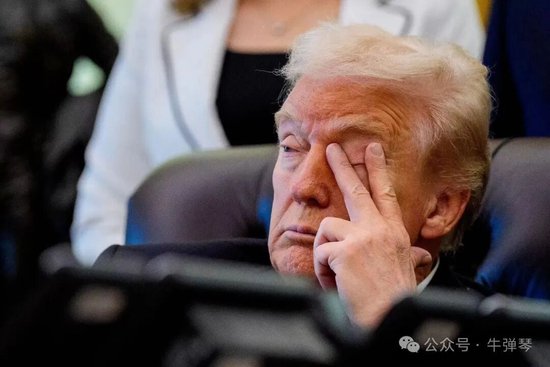
白宫新战略怒批盟友:欧洲正面临“文明消亡”,不想被抛弃就得改!
Jin Shi Shu Ju· 2025-12-05 14:41
Group 1 - The core message of the U.S. National Security Strategy indicates that Europe is facing "civilizational decline" and must change its course to remain a reliable ally of the U.S. [1] - The document reflects a shift in the established assumptions about the relationship between Europe and the U.S., emphasizing the need for Europe to correct its current trajectory [1] - The strategy outlines that the U.S. aims to assist European countries that wish to restore their former glory, highlighting a desire for collaboration with these nations [1] Group 2 - The document echoes concerns raised by Vice President Vance regarding "internal threats" in Europe and a divergence from shared values with the U.S. [2] - It criticizes the European Union for undermining political freedom and sovereignty, as well as for its immigration policies that are "changing the continent" [2] - The strategy warns that if current trends continue, Europe could become "unrecognizable" within 20 years, raising doubts about the economic and military strength of certain European nations to remain reliable allies [2] Group 3 - The document advocates for a quick resolution to the Russia-Ukraine conflict through negotiations and aims to rebuild "strategic stability" with Russia, aligning with U.S. strategic interests [3] - It contrasts the views of the Trump administration with those of European officials who hold "unrealistic expectations" regarding the conflict [3] - The strategy notes that many Europeans desire peace, but this wish has not translated into effective policy due to the undermining of democratic processes by their governments [3]
美国防战略会发生根本性调整吗?(环球热点)
Ren Min Ri Bao· 2025-10-15 21:21
Core Viewpoint - The upcoming 2025 U.S. Defense Strategy report indicates a significant shift in focus, prioritizing domestic and Western Hemisphere security over great power competition, suggesting a potential fundamental adjustment in U.S. defense strategy [1][4]. Group 1: Historical Context - The discussion around the adjustment of U.S. strategic focus has intensified since the 2008 financial crisis and China's rise as the world's second-largest economy in 2010, leading to increased U.S. vigilance towards China [2]. - The Obama administration's "Pivot to Asia" and subsequent strategies aimed to counter China's rise, with the Trump administration explicitly identifying China and Russia as primary strategic competitors [2][3]. - The Biden administration has continued this trend, labeling China as the "largest strategic competitor" and committing to "win" against China over the next decade [2]. Group 2: Current Strategic Focus - The draft of the new U.S. National Security Strategy and Defense Strategy emphasizes a shift towards prioritizing U.S. domestic issues and Western Hemisphere security, reflecting a broader global strategic adjustment [3][4]. - The U.S. has faced challenges in its Asia-Pacific strategy due to China's growing influence, prompting a reevaluation of its military and strategic resources in the region [3][4]. Group 3: Military Strategy in the Asia-Pacific - The current U.S. strategy in the Asia-Pacific is characterized by a focus on "remote deterrence" rather than traditional forward military presence, allowing for a more flexible and diversified approach to countering China [5][6]. - The U.S. is enhancing its capabilities in long-range deterrence, including strategic nuclear submarines and missile defense systems, while also increasing investments in non-traditional warfare areas such as cyber and space [6]. Group 4: Domestic Political Influences - Domestic political dynamics, including increasing polarization and calls for prioritizing internal issues, are influencing the U.S. strategic shift, with factions advocating for reduced foreign intervention [2][4]. - The "America First" policy under Trump emphasizes domestic governance and regional security, particularly in the Western Hemisphere, indicating a potential resurgence of Monroe Doctrine principles [10][11]. Group 5: Global Implications - The U.S. strategic adjustments are likely to reshape global security and economic environments, with a shift from unilateral dominance to a more multipolar competition [11][12]. - In the Asia-Pacific, the U.S. will continue to focus on countering China's rise through enhanced cooperation with regional allies, while in Europe, it may push for greater European defense autonomy [12].