
职业教育高质量发展

Search documents
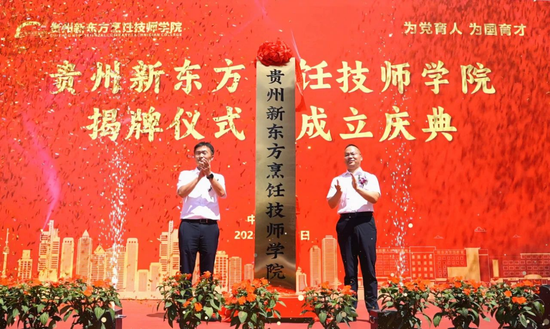
贵州新东方烹饪技师学院正式揭牌,新东方烹饪迈向更高质量的发展新阶段
Xin Lang Zheng Quan· 2025-08-29 08:43
Core Viewpoint - The Guizhou New Oriental Culinary Technician College has been officially upgraded from a vocational school to a technician college, marking a significant milestone for China Oriental Education Group and enhancing its role in vocational education in Guizhou province [2][7][9]. Group 1: Institutional Upgrade - The upgrade was approved by the Guizhou Provincial Government, signifying national recognition and support for the institution [7]. - The unveiling ceremony was attended by various officials and leaders from the education and human resources sectors, highlighting the importance of this upgrade [2][4]. Group 2: Educational Goals and Commitments - The college aims to focus on high-quality talent cultivation to meet industry demands and promote employment [4][11]. - The institution plans to enhance its educational model, strengthen faculty development, and increase investment in education to become a leading modern technician college in the province and nationwide [5][11]. Group 3: Historical Context and Future Plans - Established in 1988, the college has trained thousands of skilled talents in the culinary field, becoming a key talent training base for the Guizhou restaurant industry [11]. - The college will continue to optimize its professional structure and deepen educational reforms to support the high-quality development of the local culinary industry and rural revitalization [11].

专升本培养机制不断完善 新时代职业教育升学路径持续拓宽
Yang Shi Wang· 2025-08-14 07:35
Core Insights - The article highlights the significant improvement in the enrollment rate for higher education among vocational students at Sanya Polytechnic College, achieving a record 34.69% for the 2025 graduating class, which is 2.72 percentage points higher than the previous year and well above the national average of 20% [1] Group 1: Enrollment Rate and Achievements - Sanya Polytechnic College's 2025 graduating class has a specialized enrollment rate of 34.69%, marking a historical high and surpassing the national average [1] - Nearly a thousand students have successfully elevated their academic qualifications, leading the enrollment rate rankings among vocational colleges in Hainan Province [1] Group 2: Supportive Measures for Students - The college has established a comprehensive support system for students aiming for higher education, including dedicated study spaces with 132 seats and regular open hours to foster a strong learning environment [2] - A specialized tutoring team has been formed, with nearly 100 teachers involved over the past three years, providing systematic training in key subjects [2] - Free tutoring programs have been implemented, offering 384 hours of assistance in English and other subjects, resulting in an average score increase of 30 points for students [2] - Each college has set up enrollment guidance teams to analyze admission policies and provide personalized school selection plans, maintaining a 100% transition rate for the "3+2" program over the last three years [2] Group 3: Student Success Stories - Several students have achieved notable success, such as a national scholarship recipient who scored 240 points to enter Sanya University, and a student who won first prize in a national recitation competition [3] - The achievements of these students reflect the effective support and resources provided by the college, showcasing the transformative impact of vocational education [3] Group 4: Future Outlook - Sanya Polytechnic College is committed to enhancing the quality of talent cultivation by optimizing teaching resources, strengthening faculty, and deepening inter-school cooperation [4] - The college's president emphasized that the 34.69% enrollment rate is a testament to the institution's overall strength and the promising future of vocational education [4] - The success of these students illustrates the fruitful outcomes of high-quality vocational education, providing a platform for aspiring students to shine [4]
高分上职校折射职教新气象
Jing Ji Ri Bao· 2025-07-28 00:08
Group 1 - The core viewpoint highlights the increasing recognition and competitiveness of vocational education, particularly vocational colleges at the undergraduate level, which are now attracting high-scoring students and becoming a significant source of skilled talent supply [1][2] - The "Double High Plan" and other policies have enhanced the quality and structure of vocational education, allowing some vocational schools to compete for high-quality student resources with traditional universities [1][2] - The trend of students choosing vocational colleges reflects a shift in decision-making factors for education, where employment prospects and career development are becoming more critical than mere academic scores [1][2] Group 2 - The vocational education examination system is being improved, creating a vertical pathway from secondary vocational schools to higher education, which helps to change the perception that vocational education is a terminal point [2] - Despite advancements, there remains a significant inertia in traditional views of vocational education, necessitating ongoing efforts to shift societal recognition and acceptance [2] - Strengthening the positioning of vocational education within the national education system is essential for promoting educational equity and meeting the demand for skilled talent [2][3] Group 3 - Vocational colleges are encouraged to optimize their academic and professional structures to align with local economic and social development needs, fostering deeper integration between education and industry [3] - Establishing collaborative mechanisms with leading enterprises and high-level vocational institutions is crucial for enhancing students' job adaptability and development potential [3] - The essence of education is to help individuals find suitable growth paths, and as more students opt for skill-based career paths, vocational education must respond with solid development [3]
直击产教融合最前沿 上海职教直播电商大赛搭建数字人才练兵场
Sou Hu Cai Jing· 2025-05-24 12:57
Group 1 - The event showcased the skills of students from 20 vocational schools in Shanghai, focusing on the emerging field of live e-commerce [1][3] - The competition was organized by various educational and human resources authorities, emphasizing key aspects of live e-commerce such as content planning, promotion, sales, and interactive operations [3][7] - Participants demonstrated their practical abilities through tasks including product selection, live script writing, studio setup, and data analysis, reflecting real-world live e-commerce operations [5][7] Group 2 - The competition aligns with national strategies for digital economy and vocational education reform, aiming to enhance participants' employability and job competency [7] - The organizing institution, Minhang Vocational Technical College, integrated competition content into regular teaching, promoting a blend of education and practical experience in live e-commerce [5][7] - The event serves as a platform for educational reform and talent cultivation, contributing to the development of high-quality vocational education and skilled professionals in the digital economy [7]


福建省高等教育学会高等职业技术教育分会成立
Zhong Guo Chan Ye Jing Ji Xin Xi Wang· 2025-04-30 00:48
Group 1 - The establishment of the Higher Vocational Education Branch of the Fujian Higher Education Society aims to deepen the integration of industry and education, promoting high-quality development in vocational education in Fujian Province [1][2] - The conference was attended by representatives from 45 vocational colleges and 25 enterprises, highlighting the collaborative effort between educational institutions and industry [1][2] - The first leadership team of the branch was elected, with Wang Feng from Liming Vocational University becoming the first president, indicating a structured governance for the new organization [1][3] Group 2 - The branch is expected to play a significant role in building a distinctive vocational education system in Fujian, contributing to the province's educational strength strategy [2][3] - Key figures emphasized the importance of collaboration among educational institutions, government, and enterprises to enhance vocational education quality and meet the demands of modern society [2][3] - The branch will facilitate regular exchanges of educational practices and innovations, aiming for deep cooperation in research, professional development, and practical training [4]