
脱欧

Search documents
“脱欧”五年 英欧首度重置关系
Bei Jing Shang Bao· 2025-05-20 15:22
Group 1: Core Points - The UK and EU have reached a historic agreement to reset their relationship after Brexit, covering various areas including trade, defense, and personnel movement [3][4][6] - The fishing industry remains a focal point, with the UK extending EU fishing vessels' access to its waters for an additional 12 years, significantly longer than previously proposed [3][4] - The UK government anticipates that the new agreements will boost the economy by nearly £9 billion by 2040, with a projected 20% increase in agricultural exports to the EU [4][6] Group 2: Economic Implications - The simplification of food and beverage import/export processes is expected to enhance the UK's seafood sales to the EU [4] - The UK plans to invest £360 million in the fishing industry to modernize fleets and support tourism and seafood exports [4] - The EU has agreed to initiate a €150 billion arms loan program, indicating a commitment to defense collaboration [4][5] Group 3: Political Context - The change in UK leadership, with the Labour Party's Starmer becoming Prime Minister, reflects a shift towards improving relations with the EU [7][8] - The current geopolitical landscape, including the US's changing interest in Europe and ongoing conflicts, is influencing the rapprochement between the UK and EU [6][8] - There are internal challenges within the UK regarding the fishing agreement, with significant opposition from political factions and industry groups [7][8]

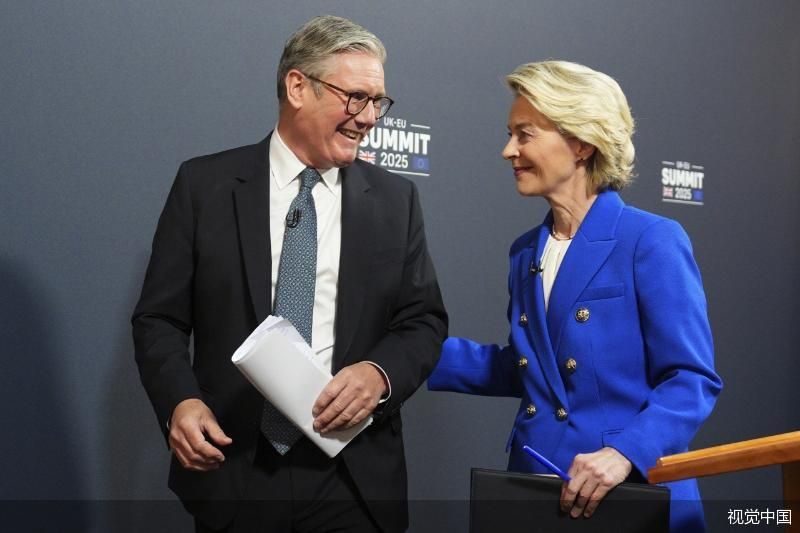
“脱欧”5年后英国首次与欧盟举行峰会,双方取得哪些突破?
Di Yi Cai Jing· 2025-05-20 03:05
Group 1: Core Perspectives - The UK and EU have expressed a willingness to ease relations, marking a significant change since Brexit [1][2] - The recent summit resulted in agreements on fisheries, food imports and exports, defense security, and personnel movement [1][2] - The new agreements are seen as a "new chapter" in UK-EU relations, moving away from outdated Brexit debates [1][2] Group 2: Fisheries Agreement - The UK government extended the access period for EU fishing vessels in UK waters by 12 years until June 2038, surpassing previous proposals [3] - The new fisheries agreement is controversial, with many UK fishermen not seeing significant increases in catch volumes since its signing [4] - The fisheries sector accounted for 0.4% of the UK's GDP last year, highlighting its economic significance [3] Group 3: Economic Implications - The new agreements are projected to add nearly £9 billion to the UK economy by 2040 through simplified food and drink import/export processes [3] - The UK is expected to see a potential 20% increase in agricultural exports to the EU following the new trade agreements [6] - The UK steel industry will benefit from exemptions from new EU regulations, saving approximately £25 million annually [6] Group 4: Defense and Security - The EU has agreed to initiate a €150 billion arms loan program, reflecting a commitment to defense collaboration [6] - The UK and EU are exploring the reconnection of their emissions trading systems, which could exempt the UK from the EU's carbon border tax set to take effect in 2026 [6] Group 5: Personnel Movement - Agreements have been reached to facilitate youth exchange programs and discussions on simplifying business visas [7] - The UK government emphasizes the need to address illegal immigration while pursuing these agreements [7]
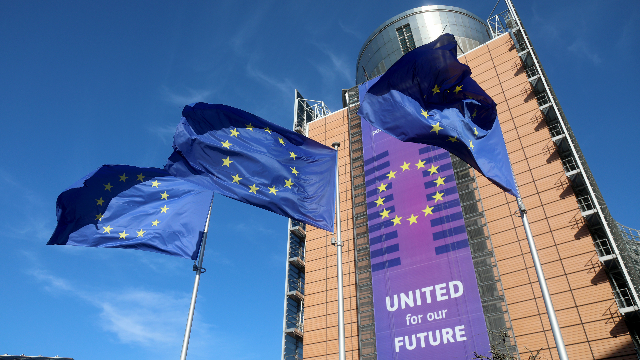
法国总统马克龙:我们必须重塑并彻底革新与英国的关系,以应对脱欧后的新局面。
news flash· 2025-05-15 08:01
Group 1 - The core viewpoint is that French President Macron emphasizes the need to reshape and fundamentally innovate the relationship with the UK in response to the new situation post-Brexit [1]
印度与英国达成自由贸易协定
Jing Ji Ri Bao· 2025-05-08 21:47
Core Viewpoint - India and the UK have signed a Free Trade Agreement (FTA) after years of negotiations, marking a significant milestone for both countries in enhancing trade relations post-Brexit and amid India's economic growth ambitions [1] Group 1: Agreement Details - India will reduce import tariffs on UK whiskey and gin from 150% to 75%, eventually reaching 40% in 10 years [2] - The agreement will lead to a reduction of tariffs on 90% of UK imports, with 85% of goods achieving zero tariffs within 10 years, covering a wide range of products including food, medical supplies, and cosmetics [2] - The UK government anticipates that by 2040, the agreement will increase bilateral trade by £25.5 billion annually and boost the UK GDP by £4.8 billion each year [2] Group 2: Benefits for India - The FTA will facilitate Indian labor-intensive products like textiles and agricultural goods entering the UK market by eliminating tariffs, such as the 10% tariff on textiles [2] - Indian sectors such as technology services and pharmaceuticals will benefit from increased access to the UK market [2] - The agreement aims to attract more UK investments into India, particularly in clean energy and new technology development, while also simplifying visa processes for Indian students [2] Group 3: Concerns and Challenges - India remains cautious about sensitive issues like agricultural products, dairy, and data localization, fearing potential negative impacts on its agriculture and tech sectors [3] - Concerns persist regarding the UK's request to relax origin rules, which could allow EU products to enter India under preferential tariffs [3] - Ongoing negotiations will address unresolved issues related to service trade and visa facilitation, as India seeks to maintain policy autonomy in labor rights and environmental standards [3]