融资性贸易

Search documents
金龙鱼召开一审判决结果说明会,表态称没有理由诈骗安徽华文
Nan Fang Du Shi Bao· 2025-11-21 13:40
Core Viewpoint - The company, Yihai Kerry Arawana Holdings Co., Ltd. (referred to as "Golden Dragon Fish"), is contesting a first-instance court ruling that found its subsidiary, Yihai (Guangzhou) Grain and Oil Industry Co., Ltd. (referred to as "Guangzhou Yihai"), guilty of contract fraud, resulting in a fine of 1 million yuan and a compensation liability of 1.881 billion yuan to Anhui Huawen International Trade Co., Ltd. [3][4][6] Group 1 - Guangzhou Yihai received a criminal judgment on November 19, which stated that it was an accomplice in contract fraud, leading to a significant economic loss for Anhui Huawen [3][4] - The company has filed an appeal against the judgment and maintains that it is innocent, asserting that it was misled by Anhui Huawen's executives who were involved in fraudulent activities [4][5] - The management of Golden Dragon Fish expressed shock at the ruling and emphasized their commitment to supporting Guangzhou Yihai in the appeal process [4][6] Group 2 - The chairman of Guangzhou Yihai, Fang Yanjian, claimed that the case's essence involves Anhui Huawen and Yunnan Huijia engaging in illegal financing trade, with the latter allegedly bribing Anhui Huawen's executives [5][6] - Fang Yanjian stated that the company has no reason to assist in defrauding a state-owned enterprise and highlighted the significant investments made by the parent company in China, amounting to approximately 100 billion yuan [5][6] - The president of Golden Dragon Fish, Mu Yanquan, pointed out that the judgment contradicts basic business logic, as Guangzhou Yihai's storage capacity could not accommodate the alleged volume of palm oil involved in the case [6][7] Group 3 - The company reported that its revenue for the first three quarters of 2025 was 184.3 billion yuan, with a net profit of 2.749 billion yuan [7] - If the appeal fails, Golden Dragon Fish may face a financial impact, as the compensation amount could represent about 68% of its net profit for the period [7] - As of November 21, Golden Dragon Fish's stock price closed at 30.88 yuan per share, reflecting a decline of 2.92% [7][8]

一纸判决炸出背后50亿元巨额诈骗案,金龙鱼今日公开喊冤
Di Yi Cai Jing· 2025-11-21 11:58
Core Viewpoint - The company Jinlongyu (金龙鱼) claims innocence in a major fraud case involving 5 billion yuan related to palm oil transactions, following a first-instance court ruling that found its subsidiary guilty of contract fraud [1][4]. Group 1: Background of the Case - The fraud case involves a commercial collaboration between Guangzhou Yihai (广州益海), Anhui Huawen (安徽华文), and Yunnan Huijia (云南惠嘉) from 2008 to 2014, where Guangzhou Yihai acted as a storage intermediary for palm oil [2]. - The transactions between Anhui Huawen and Yunnan Huijia were characterized as financing trade, which is common in bulk commodities but carries risks of loss of rights and funding chain disruptions [2][3]. - Yunnan Huijia's representative, Zhang Lihua, allegedly bribed executives at Anhui Huawen to change the agreed payment terms from "payment before delivery" to "delivery before payment" [2][3]. Group 2: Details of the Fraud - From March 2012 to December 2014, Zhang Lihua used bribery and forged documents to misappropriate palm oil, leading to direct economic losses of 3.23 billion yuan and indirect losses of 2.015 billion yuan for Anhui Huawen [3]. - The court found Guangzhou Yihai complicit in the fraud, imposing a fine of 1 million yuan and ordering it to jointly repay 1.881 billion yuan alongside Yunnan Huijia [4]. Group 3: Company’s Defense - Guangzhou Yihai and its parent company Jinlongyu have appealed the court's decision, asserting that they acted in accordance with the storage agreement and conducted due diligence [5][6]. - The company claims that it did not participate in any fraudulent activities and that the losses should not be attributed to them, as they followed proper procedures in verifying inventory and transactions [5][6]. Group 4: Market Implications - The case has drawn significant attention due to the scale of the alleged fraud, with the total amount involved reaching 5 billion yuan, raising concerns about the integrity of trade practices in the palm oil sector [1][8]. - The financial health of Yunnan Huijia is in question, as it reportedly has numerous enforcement actions against it, indicating a lack of ability to repay the alleged debts [8].
深度|一纸判决炸出背后50亿元巨额诈骗案,金龙鱼今日公开喊冤
第一财经网· 2025-11-21 11:41
Core Viewpoint - The company Jinlongyu claims that Anhui Huawen is attempting to illegally transfer its massive losses after being defrauded in a significant palm oil scam involving 5 billion yuan [1][2]. Group 1: Background of the Case - From 2008 to 2014, Guangzhou Yihai acted as a storage intermediary for Anhui Huawen and Yunnan Huijia, responsible for storing palm oil imported by Anhui Huawen [2]. - The transaction between Anhui Huawen and Yunnan Huijia was essentially a financing trade, which is common in bulk commodities but carries risks such as loss of control over goods and funding chain disruptions [2][3]. - Yunnan Huijia's representative bribed Anhui Huawen's executives to change the agreed payment terms from "payment before delivery" to "delivery before payment" [2][3]. Group 2: Details of the Fraud - Yunnan Huijia's representative exceeded the agreed limits to obtain goods and used forged documents to conceal the fact that the palm oil stored at Guangzhou Yihai had already been sold [3]. - Between March 2012 and December 2014, Yunnan Huijia's representative bribed Anhui Huawen's employees to facilitate the acquisition of goods through fraudulent means [3]. - The direct economic loss to Anhui Huawen was reported at 3.23 billion yuan, with indirect losses amounting to 2.015 billion yuan [3]. Group 3: Legal Proceedings and Company Response - The court found Guangzhou Yihai guilty of contract fraud and imposed a fine of 1 million yuan, along with a compensation responsibility of 1.881 billion yuan [4][5]. - Guangzhou Yihai and its parent company, Yihai Kerry, have appealed the ruling, asserting that they did not participate in any fraudulent activities and that Anhui Huawen is attempting to shift its losses onto them [5][6]. - The chairman of Guangzhou Yihai stated that they followed due diligence as per the storage agreement and had no knowledge of any fraudulent actions [6]. Group 4: Market Implications and Observations - The case has drawn attention to the unusual storage claims made by Anhui Huawen, which allegedly stored over 1 million tons of palm oil for over a decade, raising questions about the feasibility and legality of such practices [7]. - Legal experts suggest that the current judgment may favor the victims, as Yunnan Huijia appears to lack the ability to repay the defrauded amounts [8].
信贷审核中,融资性贸易风险如何识别?
Sou Hu Cai Jing· 2025-04-30 07:41
Core Viewpoint - Financing trade business is essentially a form of illegal lending disguised as trade activities, leading to significant operational risks for companies due to the creation of fictitious trades and large bad debts [1]. Group 1: Characteristics of Financing Trade - Financing trade typically involves signing false sales contracts where goods are never actually delivered, creating a fictitious trading background [3]. - There exists a specific interest relationship between upstream suppliers and downstream customers, often controlled by the same actual controller [4]. - False delivery documents are issued to obscure the true purpose of the transactions, confirming receipt of goods that were never delivered [4]. - Financing is provided in a disguised manner, either directly or through methods such as settlement notes, factoring, or credit enhancement [5]. Group 2: Case Study - A notable example is Dongfang Group, which inflated its revenue by 16.1 billion yuan through fictitious agricultural product trade chains, leading to penalties from the regulatory authority and forced delisting [6]. Group 3: Identifying Financing Trade in Credit Assessment - Discrepancies between logistics and cash flow are common, as financing trade lacks real logistics, only showing money flow [8]. - The presence of related enterprises in the supply chain may indicate that transactions are merely a means of providing financing without legitimate commercial reasons [9]. - Unusual payment terms between upstream and downstream entities can suggest financing activities, especially if prepayments and accounts receivable trends do not align with revenue changes [10]. - Contract prices that deviate significantly from market prices may indicate fictitious trading backgrounds [11]. - Timeliness of accounts receivable transfer notifications should be monitored to identify potential financing trade [12]. - Fixed relationships in trade enterprises, especially with large transaction amounts and low frequency, warrant scrutiny of transaction authenticity [13]. - Contracts signed with unreasonable timing, such as close dates for procurement and sales, may indicate financing trade [14]. - Abnormal gross profit margins, particularly if significantly lower than the typical range of 5%-10%, could suggest profits are primarily from interest rather than trade margins [15].


沐邦高科能否被质疑财务造假?客商疑云再起
Xin Lang Zheng Quan· 2025-04-16 02:30
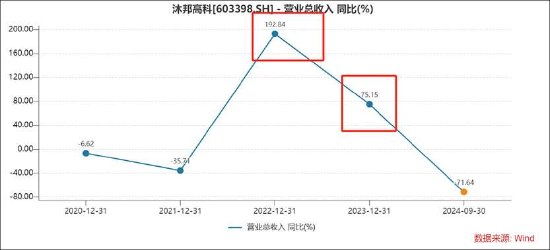
Core Viewpoint - The significant revenue growth of Muban Gaoke raises concerns about the authenticity of its financial data, particularly due to an abnormal cash collection ratio and potential financing trade issues linked to local state-owned enterprises [1][4][9] Financial Performance - Muban Gaoke's revenue surged by 192.84% in 2022 and 75.15% in 2023 [4] - The company projected an annual revenue of 330 million to 350 million yuan for 2024, while its revenue for the first three quarters of 2023 was already 486 million yuan, exceeding the annual forecast [1][2] Revenue Adjustments - The cancellation of a contract with Gansu Chao Xun resulted in a revenue reversal of 198 million yuan and a net profit reduction of 51.2 million yuan [2][3] - The company faced scrutiny regarding whether it had overstated revenue in previous periods due to this reversal [2][3] Cash Collection Ratio - The cash collection ratios for 2022 and 2023 were notably low at 35% and 51%, respectively, compared to over 100% in 2020 and 2021, indicating potential financial reporting risks [4][8] Supplier Relationships - Muban Gaoke's largest supplier in 2023 was Nanchang State-owned Supply Chain Financial Management Co., with transactions amounting to 466 million yuan, representing 32.28% of total transactions [9][10] - Concerns arise regarding the legitimacy of new small-scale customers and suppliers, particularly those with minimal registered capital [15][16] Investment and Project Validity - The company reported significant investments in various projects, including 1.42 billion yuan in Wuzhou and 100 million yuan in Tongling, raising questions about the authenticity of these investments [16] - The company's construction projects showed a substantial amount in progress (1.59 billion yuan) compared to fixed assets (680 million yuan), suggesting potential issues with asset valuation [17] Goodwill and Impairment - Muban Gaoke recorded a goodwill balance of 783 million yuan from its acquisition of Haoan Energy, with concerns about whether this goodwill should be impaired given the declining profitability in the solar industry [19][20]