返乡创业

Search documents
重庆江津:这里的“村咖”有特色
Xin Lang Cai Jing· 2026-01-03 19:18
Core Insights - The article highlights the transformation of Baoping Village in Chongqing's Jiangjin District through the establishment of "He Coffee," which integrates coffee culture with rural tourism and entrepreneurship [1][2]. Group 1: Business Development - "He Coffee" was created by Zhang Yanming, who returned to his hometown to capitalize on rural tourism opportunities by renovating idle farmhouses into a multi-functional platform for coffee tasting, educational experiences, and leisure activities [1]. - The coffee shop has become a social hub for villagers and tourists, fostering a community space for relaxation and entrepreneurial ideas [1]. Group 2: Employment and Community Impact - The return of young entrepreneurs like Li Yanqiu and Liang Bo has led to the creation of over 200 job opportunities for local villagers in Baoping [2]. - The establishment of a rural talent innovation and entrepreneurship academy in Xiangfeng Town supports local entrepreneurs with training, policy consultation, and resource connections [1].
江源故土焕新颜返乡逐梦报恩情
Xin Lang Cai Jing· 2025-12-26 21:01
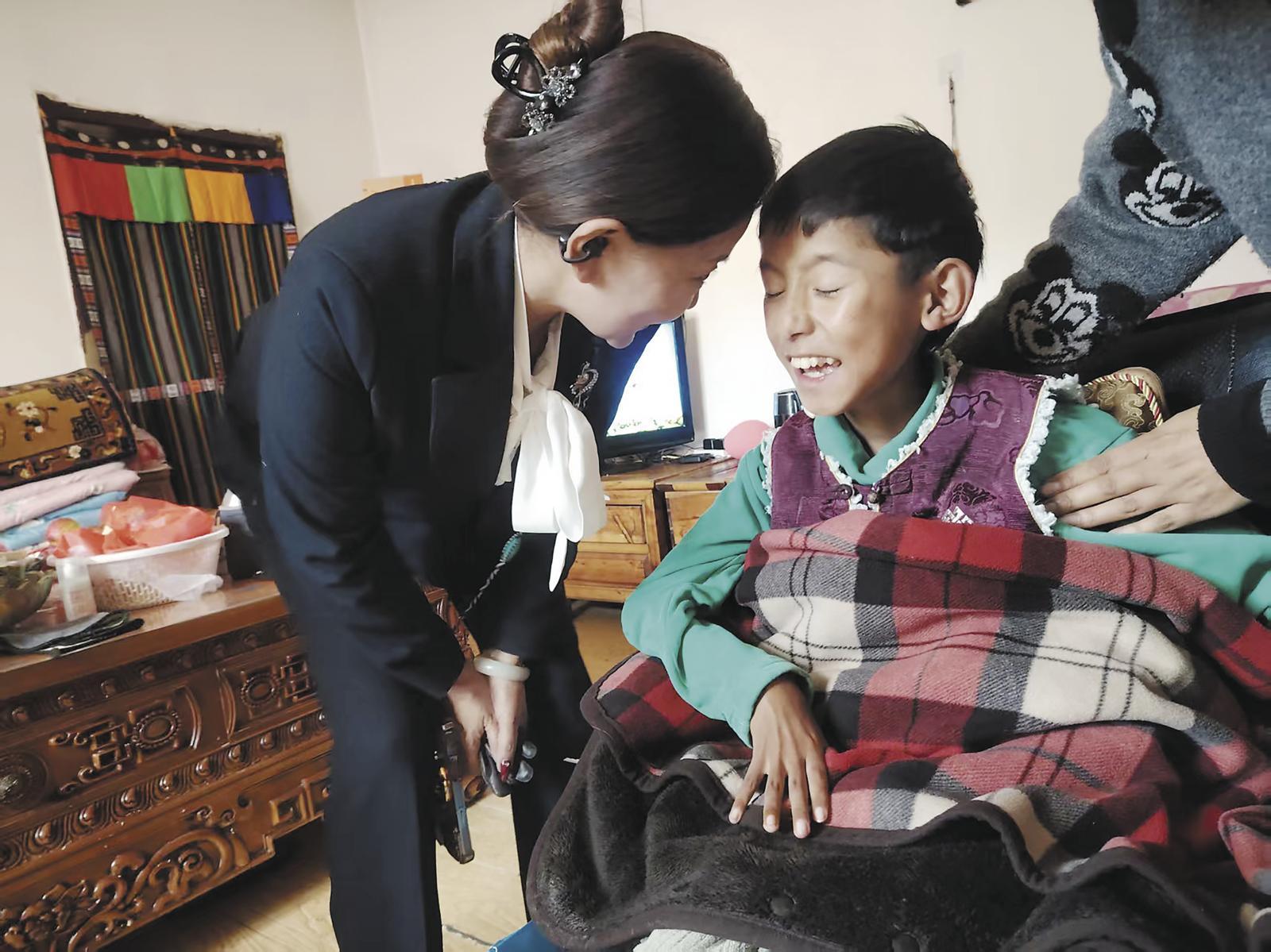
Core Viewpoint - The article highlights the transformative journey of a local entrepreneur in Yushu, who returned to her hometown to establish a culturally rich guesthouse, contributing to the local economy and promoting traditional Tibetan culture [3][4][6]. Group 1: Entrepreneurial Initiatives - The entrepreneur initiated a project to build a guesthouse that reflects the unique characteristics of Yushu, aiming to attract tourists and share local stories [3][4]. - The guesthouse incorporates local intangible cultural heritage through handcrafted decorations made by local artisans [4]. - The establishment of a 200-square-meter agricultural product experience store and a 360-square-meter exhibition center at the airport showcases local products and creates job opportunities for over 60 local women [6][7]. Group 2: Government Support and Policies - The local government has implemented a series of supportive policies, including the "36 measures for benefiting enterprises and the public," which provide financial support and reduce entrepreneurial pressure [4][6]. - The Yushu Chamber of Commerce has facilitated exchanges with regions like Nepal, allowing local entrepreneurs to learn and promote their products [6]. Group 3: Cultural and Economic Impact - Yushu has been designated as a national-level Tibetan cultural ecological protection zone, with numerous intangible cultural heritage projects and practitioners thriving in the area [7]. - The local economy is experiencing growth, with an increasing number of tourists visiting the area and engaging with local products, thereby enhancing the visibility of Yushu's agricultural offerings [6][7].

昔日“孔雀东南飞” 今朝“信商雁归来”——从信阳返乡创业现象看河南发展活力
He Nan Ri Bao· 2025-12-24 00:00
Group 1: Investment and Development - The Huibo Yuntong Big Data Industrial Park in Luoshan County is under construction, set to become an AI data labeling base accommodating 7,000 people by June next year [1] - The project is spearheaded by Yu Hao, who returned to his hometown to invest, highlighting the trend of entrepreneurs returning to their roots to foster local development [1] - In Xinyang, over 150,000 entrepreneurs have returned to establish more than 100,000 businesses, creating job opportunities for over a million people in the revolutionary old district [1] Group 2: Economic Migration and Opportunities - Xinyang has over 3 million residents working outside the region, primarily in economically developed areas like the Yangtze River Delta and the Pearl River Delta, focusing on industries such as circular economy and textile processing [3] - The local government has implemented policies to support returning entrepreneurs, including financial assistance and tax reductions, to stimulate the "return economy" [8][11] Group 3: Entrepreneurial Success Stories - Zhang Chuanwei, who founded Mingyang Group, successfully transitioned from military service to entrepreneurship, establishing a leading international renewable energy company [3][5] - Yu Hao's company has grown into a high-tech enterprise valued at over 10 billion, showcasing the potential for success among returning entrepreneurs [6] - The story of Wang Chenghai illustrates the journey from a factory worker to a successful business owner in high-end manufacturing, reflecting the entrepreneurial spirit of Xinyang residents [7] Group 4: Government Support and Infrastructure - The local government has shifted its role from a manager to a partner, providing comprehensive support for businesses from project negotiation to operational launch [10] - Initiatives like the "Return to Hometown" project aim to attract talent back to Xinyang, offering support in education and housing for returning entrepreneurs [8][11] - The establishment of "Xinyang Business Home" serves as a platform for entrepreneur training and communication, enhancing the local business environment [8]

95后鸵鸟主理人:养鸵鸟不是“把头埋进沙子”
Xin Lang Cai Jing· 2025-12-21 20:41
Core Viewpoint - The article highlights the innovative approach of a young entrepreneur, Fan Zhiheng, who has successfully established an ostrich farming business in Chongqing, China, utilizing a model that combines breeding, cooperative farming, and online sales to revitalize rural entrepreneurship and engage local farmers [1][2][9]. Group 1: Business Model and Operations - Fan Zhiheng's ostrich farming model includes unified breeding, cooperative farming, and guaranteed sales, attracting over 80 farmers from four provinces to participate [1]. - The ostrich farming process involves raising the birds from chicks to market-ready adults in about 10 months, with a profit of approximately 1,000 yuan per bird [2]. - The business has expanded to include two ostrich farming bases, with one in Guangzhou focusing on breeding and the other in Chongqing for independent operations [6]. Group 2: Market Potential and Product Value - The global ostrich farming industry is significant, with an estimated 15 million ostriches worldwide, predominantly in South Africa [3]. - Ostrich meat is high in protein and low in fat, appealing to high-end meat consumers, while other products like ostrich skin and eggs have various market applications [4]. - The demand for ostrich products is growing, with a focus on both domestic sales and international exports [4][10]. Group 3: Challenges and Learning - Initial challenges included high mortality rates among the first batch of ostrich chicks due to inadequate knowledge and preparation [5][6]. - Fan learned through hands-on experience and research, developing local farming techniques that improved survival rates and overall productivity [6]. - The business model evolved to include a fee-based system for farmers to ensure commitment and proper care of the ostriches [7]. Group 4: Technology and Marketing - The use of internet platforms for marketing and sales has been crucial, with Fan leveraging social media and live streaming to reach customers and educate potential farmers [9][10]. - The business has established nearly 100 stable sales channels, including restaurants and online retail, with 70% of products sold online [10]. - Fan's approach emphasizes community engagement and education, aiming to uplift local farmers and create a sustainable business ecosystem [9].
返乡创业值
Xin Lang Cai Jing· 2025-12-19 22:32
Group 1 - The core idea of the articles revolves around the successful return of young individuals to their hometowns for entrepreneurship, particularly in agriculture and local cuisine, contributing to rural revitalization [1][2]. - The protagonist, Zhang Yuhong, returned to his hometown in 2022 and began cultivating morel mushrooms, which are highly valued in the market, leading to increased income for himself and local villagers [1][2]. - The establishment of a local restaurant, "Chuanli Renjia," in September 2023, aims to attract tourists by offering authentic local dishes made from fresh ingredients sourced from local farmers [2]. Group 2 - The restaurant has seen significant success during the National Day and Mid-Autumn Festival holidays, serving over 50 tables daily, and providing employment opportunities for villagers with monthly incomes exceeding 3,500 yuan [2]. - The local government has implemented policies encouraging young people to return and start businesses, fostering a supportive environment for entrepreneurship in rural areas [2]. - The overall sentiment emphasizes the importance of young, ambitious individuals in driving rural development and improving the quality of life for local communities [2].
【地方动态】“楚商回乡·共建支点”提振应城县域经济
Xin Lang Cai Jing· 2025-12-04 11:25
Core Viewpoint - The article highlights the efforts of the Xiangyang City Federation of Industry and Commerce in Hubei Province to promote the return of Chu merchants and entrepreneurship, achieving significant results in attracting capital, facilitating project implementation, and optimizing the development environment [1][7]. Group 1: Building Efficient Communication Bridges - The Federation has implemented a "precise service" approach to overcome geographical barriers and facilitate connections, establishing a mechanism for city leaders to engage with overseas business associations [2][8]. - Since 2022, 12 projects from returning Chu merchants have been successfully implemented, with a total investment of 2.94 billion yuan and the creation of over 2,000 new jobs [2][8]. Group 2: Optimizing the Entrepreneurship Ecosystem - The Federation is focused on improving the business environment by conducting in-depth enterprise research and providing policy recommendations to local government, promoting initiatives like "funds for enterprises without application" [3][9]. - Efforts to address key concerns for talent, such as housing and cultural life, have been made to create a welcoming environment for returning merchants and talent [3][9]. Group 3: Focusing on Key Industries for Investment - The Federation is targeting the modernization of industries such as green building materials and renewable energy, utilizing a "Chuchang Chucai Database" for precise investment attraction [4][10]. - Various promotional activities have been organized to showcase the unique resources and investment potential of Xiangyang City, fostering a strong consensus among returning merchants [4][10][11]. Group 4: Leveraging Exemplary Role Models - The Federation has developed a multi-dimensional promotional strategy to amplify the "demonstration effect" of returning Chu merchants, achieving over 5 million views on promotional content [5][12]. - A collection of 21 exemplary cases of returning merchants has been published, and numerous promotional events have attracted 386 entrepreneurs for on-site visits [5][12].
苗乡腊味香飘万里 湖南城步“腊菜大王”的兴业之路
Zhong Guo Xin Wen Wang· 2025-11-18 11:46
Core Insights - The article highlights the journey of Wang Wenjie, known as the "King of Preserved Vegetables," who returned to his hometown in Hunan to revive traditional preserved meat production, emphasizing the importance of cultural heritage and local flavors [1][4]. Group 1: Company Development - The establishment of the "Shewei Zi Preserved Vegetable Base" in 2023 has led to the production capacity of several tons of traditional preserved meat, contributing to local economic growth [1]. - The base employs over ten local villagers, including six former poverty-stricken households, significantly increasing their annual income by over 10,000 yuan each [1][2]. Group 2: Sales and Marketing Strategy - The base has adopted a dual sales model combining online live streaming and offline direct sales, which has allowed its products to reach a broader market across the country [4]. - The annual production of ecological preserved meat and sausages is nearly 25 tons, with annual sales exceeding 1 million yuan, and online sales accounting for 15% of total revenue [4].

(乡村行·看振兴)“归燕”反哺桑梓地 澄迈古村焕新生
Zhong Guo Xin Wen Wang· 2025-11-17 04:05
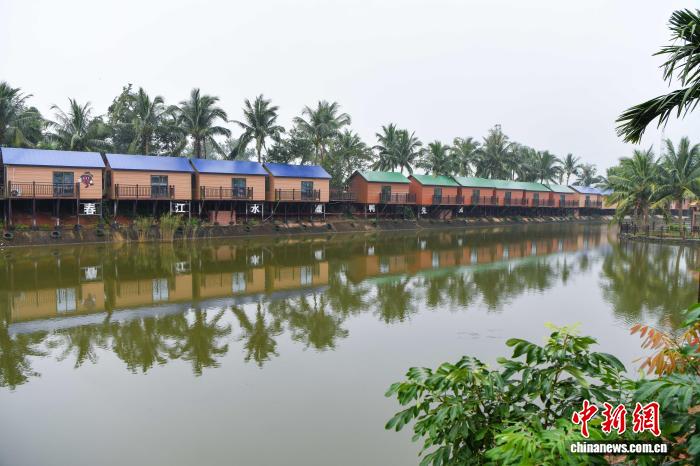
Core Insights - The article highlights the revitalization of the ancient village of Caicun in Hainan Province, driven by returning entrepreneurs who are leveraging local resources to create a diverse agricultural development complex [1][3]. Group 1: Entrepreneurial Initiatives - The Caicun Shared Farm has developed a comprehensive agricultural complex that includes coffee, pepper, agricultural product processing, leisure agriculture, cafes, and guesthouses, employing a "hire + profit-sharing" model to boost local employment and income [3][4]. - The village's overall income reached approximately 7 to 8 million yuan last year, benefiting from a steady influx of tourists and local product sales [3][5]. - The return of entrepreneurs has led to the establishment of various local businesses, including specialty liquor and tofu shops, enhancing the village's economic landscape [5][6]. Group 2: Infrastructure and Community Development - Government support has improved local infrastructure, attracting more visitors and new residents, thereby addressing the issue of "hollow villages" [4][6]. - The village has seen significant improvements in living conditions, with new facilities and roads, which have increased local employment opportunities and community engagement [5][6]. - The introduction of policies from the Hainan Free Trade Port has allowed local companies to extend their industrial chains and focus on deep processing, enhancing market reach and profitability [6].
2026年,这6大变化可能全面爆发!谁先看懂,谁就领先一步
Sou Hu Cai Jing· 2025-10-25 00:48
Group 1 - The core viewpoint is that by 2026, six significant trends will profoundly change lifestyles, careers, and wealth perceptions, necessitating proactive adaptation to avoid passive suffering from these changes [1] Group 2 - A notable trend is the increasing norm of young people choosing to have fewer or no children due to high upbringing costs, which can average between 300,000 to 400,000 yuan, and can exceed 1 million yuan in major cities [3][5] - The birth rate in China has been declining, with only 9.02 million births in 2023, marking a continuous decrease over seven years, and marriage registrations dropping from 13.47 million in 2013 to 7.68 million in 2023 [5] - By 2026, the elderly population (60 years and older) is expected to exceed 25%, leading to a shift in labor dynamics from surplus to scarcity, making skilled young workers more valuable [5] Group 3 - The trend of returning to rural areas for entrepreneurship is rising, with rural e-commerce sales reaching 2.5 trillion yuan in 2023, a 12% increase year-on-year, as young people seek to escape high urban living costs [10] - The perception of housing is shifting from an investment to a consumption good, with housing costs potentially being three times that of renting, and a decline in property prices observed across major cities [12][13] Group 4 - The rental yield is expected to return to a reasonable range of 3% by 2026, with speculation in real estate diminishing as genuine demand takes precedence [13] - The workplace is becoming increasingly youth-oriented, with companies favoring younger employees due to cost efficiency and the rapid pace of technological change, leading to a potential crisis for workers over 35 [13] Group 5 - AI is anticipated to become more integrated into personal and professional tasks by 2026, with predictions that 400 to 800 million jobs globally could be replaced by AI by 2030, emphasizing the need for individuals to adapt and learn AI tools [14]

返乡创业潮正在进行时
Hu Xiu· 2025-10-22 05:46
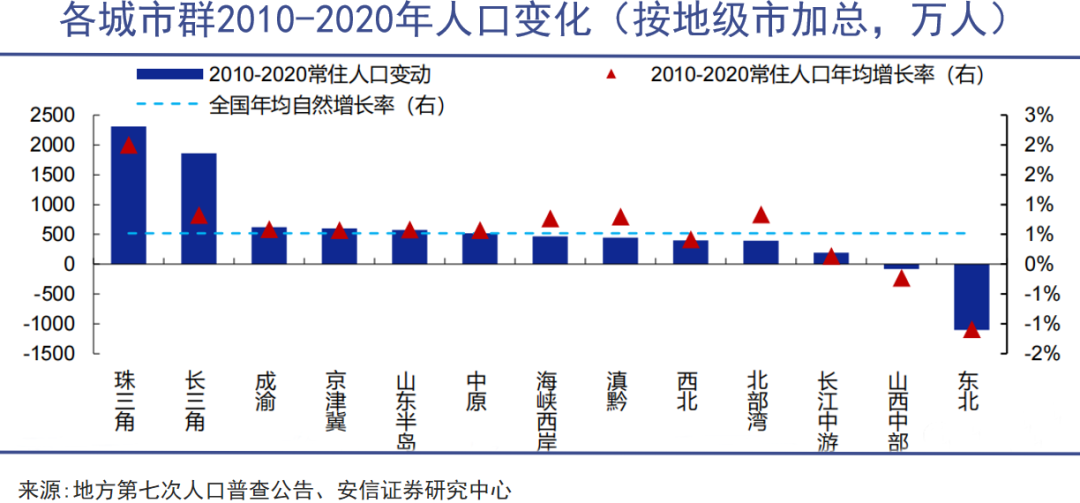
Core Insights - The trend of young people moving from lower-tier cities and rural areas to first-tier cities is changing, with a growing number of individuals choosing to return to their hometowns for various reasons, including entrepreneurship and lifestyle preferences [5][6][16]. Group 1: Urban vs. Rural Dynamics - First-tier cities offer higher salaries and better public resources, but the relative advantages are diminishing as urbanization saturates and industries shift [1][8]. - The population flow has been increasingly concentrated in major cities, particularly from 2010 to 2020, but recent years have seen a reversal with young people considering lower-tier cities as viable options [2][5]. - The living quality gap between urban and rural areas is narrowing, facilitated by e-commerce and social media, allowing rural areas to access similar goods and information as cities [10][11]. Group 2: Return to Hometown Entrepreneurship - The number of individuals returning to their hometowns for entrepreneurship has significantly increased, from 2.42 million in 2015 to over 14.3 million in 2023 [6][24]. - Entrepreneurs returning from cities are bringing knowledge and resources that can stimulate local economies, with many focusing on digital and local industry integration [7][25]. - The rise of e-commerce has enabled rural entrepreneurs to bypass traditional distribution channels, leading to increased sales of local products through platforms like live streaming [28][30]. Group 3: Challenges and Opportunities - Despite the potential for success, returning entrepreneurs face challenges such as limited funding, resources, and talent in rural areas [37][38]. - The entrepreneurial environment in small towns is often characterized by incomplete supply chains, making it difficult for new businesses to scale [39]. - Government policies and support from e-commerce platforms are gradually improving the conditions for rural entrepreneurship, creating a more favorable environment for new ventures [42][44].