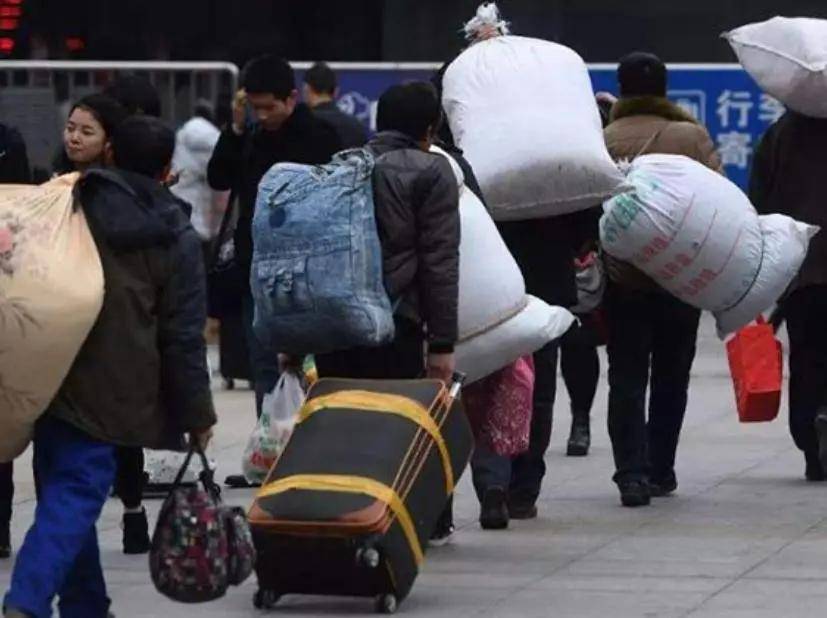
返乡潮

Search documents
热点思考 | “返乡潮”提前了吗?(申万宏观·赵伟团队)
申万宏源宏观· 2025-12-22 16:04
Group 1 - The current high level of human flow is not primarily due to a "return home tide," as the flow is stable rather than exhibiting the typical pulse-like increase associated with such a phenomenon [2][3][8] - The national migration index remains at a high level of approximately 15.3% year-on-year, contrasting with previous years where significant declines were observed post-National Day [2][8] - The recent decline in industrial production and infrastructure investment has led to reduced labor demand, prompting many workers to return home earlier than usual [2][8][19] Group 2 - The sustained high level of human flow is supported by several factors, including the introduction of autumn holiday policies, increased business travel, and warmer winter weather [4][5][33] - Multiple regions, including Sichuan and Zhejiang, have implemented autumn holiday policies that significantly boost residents' willingness to travel, with migration indices showing substantial increases compared to the first half of the year [4][33][35] - Business travel has increased, particularly to major cities like Beijing and Shanghai, with domestic and international flight numbers rising by approximately 2% and 10% year-on-year, respectively [4][46][47] Group 3 - High levels of human flow are expected to drive service consumption, particularly in sectors like dining and accommodation, indicating a robust service consumption environment [6][64][100] - The migration index has historically aligned with retail sales growth, but recent trends show that while human flow remains high, retail sales growth is declining, suggesting that service consumption may be more resilient than goods consumption [6][64][100] - There is a notable shift in consumption patterns from goods to services, driven by economic development stages and demographic trends, with potential for significant growth in service consumption in the coming year [6][76][100]


“见微知著”系列专题之九:“返乡潮”提前了吗?
Shenwan Hongyuan Securities· 2025-12-22 14:43
Group 1: Migration Trends - Recent high levels of migration are not indicative of an early "return home tide," as current migration patterns show stable high levels rather than the typical pulse increase associated with such events, with the national migration index maintaining a high level of 15.3% year-on-year[3] - The migration indices for labor input cities like Henan Zhoukou and labor output cities like Guangdong Dongguan have remained stable, contrasting with the expected pulse increases during peak return periods[4] - The outflow intensity from major labor supply provinces is low, with December figures around 15% year-on-year, indicating that the current high migration levels are not primarily driven by a return home trend[4] Group 2: Factors Supporting High Migration - The introduction of autumn holiday policies in multiple regions, including Sichuan and Zhejiang, has significantly boosted residents' willingness to travel, with migration indices for Chengdu and Hangzhou increasing by 15.4% and 20.3% year-on-year respectively[5] - Warmer winter temperatures this year, with an average increase of 4.2°C in November compared to the past five years, have extended the window for cross-regional travel, contributing to sustained high migration levels[6] - Business travel has also increased, with domestic and international flight operations rising by approximately 2% and 10% year-on-year, respectively, reflecting a recovery in urban mobility and business activity[5] Group 3: Consumption Trends - High migration levels are expected to drive growth in service consumption, particularly in sectors like dining and accommodation, as evidenced by the resilience of service retail growth compared to a decline in goods retail, which has dropped to 4.1%[7] - The shift in consumer behavior towards services is supported by macroeconomic trends, with expectations that service consumption will continue to grow as the economy transitions from goods to services[8] - The potential for service consumption growth remains significant, as current policies are increasingly favoring the service sector, including initiatives like extended holidays and consumer vouchers[8]
不出10年,城市有“3个群体”有可能回到农村?背后的原因很现实
Sou Hu Cai Jing· 2025-09-06 03:14
Core Viewpoint - The article discusses the emerging trend of "return migration" where individuals, particularly migrant workers, unemployed youth, and recent graduates, are choosing to return to their rural hometowns instead of remaining in urban areas due to high living costs, job scarcity, and changing rural dynamics [3][28]. Group 1: Reasons for Return Migration - The high cost of living in cities, particularly housing expenses, is a significant barrier for many individuals, leading to financial strain and a lack of savings [6][9]. - The competitive job market in urban areas, exacerbated by layoffs in industries such as manufacturing and technology, has resulted in many young workers losing their jobs and seeking opportunities back home [21][22]. - The perception of rural areas has changed, with improved infrastructure, access to the internet, and new economic opportunities making them more attractive for returnees [10][11][12]. Group 2: Demographics of Returnees - The primary groups returning to rural areas include aging migrant workers who can no longer sustain the physical demands of urban labor [16][17]. - Young factory workers who have lost their jobs due to automation and offshoring are also a significant demographic returning to rural areas [21][22]. - Recent university graduates, facing a saturated job market and high living costs, are increasingly opting to return home where they see potential for entrepreneurship and a better quality of life [22][24]. Group 3: Impact on Rural Areas - The return of these individuals is seen as an opportunity for rural development, as they bring back skills, experience, and capital that can stimulate local economies [25][27]. - New industries such as e-commerce, rural tourism, and agricultural processing are emerging as returnees leverage their urban experiences to innovate in their hometowns [14][25]. - This trend is expected to alleviate some urban pressures, such as overcrowding and high housing costs, allowing cities to focus on higher-value industries [27][28]. Group 4: Societal Implications - The article suggests that return migration is not a sign of failure but rather a valid choice that reflects changing societal dynamics and personal priorities [28][29]. - The relationship between urban and rural areas is evolving from a one-way flow of labor to a more interactive exchange, with rural areas becoming attractive for living and entrepreneurship [31].