
钠离子电池技术

Search documents
豪鹏科技(001283.SZ):已通过参股公司系统性深化对钠离子电池技术的探索与产业化储备
Ge Long Hui· 2026-01-29 07:25
Core Viewpoint - The company emphasizes technological innovation and forward-looking strategies as core drivers of its development, focusing on both consumer batteries and energy storage systems while exploring next-generation battery technologies [1] Group 1: Strategic Focus - The company is committed to consolidating its main business in consumer batteries and energy storage systems while actively monitoring and investing in next-generation battery technologies [1] - The company has invested in Beijing Sirizhe New Energy Technology Co., Ltd. to deepen its exploration and industrialization of sodium-ion battery technology [1] Group 2: Technological Development - Sirizhe serves as a crucial platform within the company's ecosystem, focusing on the research and industrial application of sodium-ion battery technology, aligning closely with the company's overall technological roadmap [1] - The company adheres to a dual approach guided by market demand and technological maturity, employing a cautious and pragmatic principle to advance research and evaluation of diverse technological routes, including sodium batteries [1] Group 3: Future Outlook - The aim is to establish a solid technological foundation for the extension of future product matrices and the expansion of energy solutions [1]
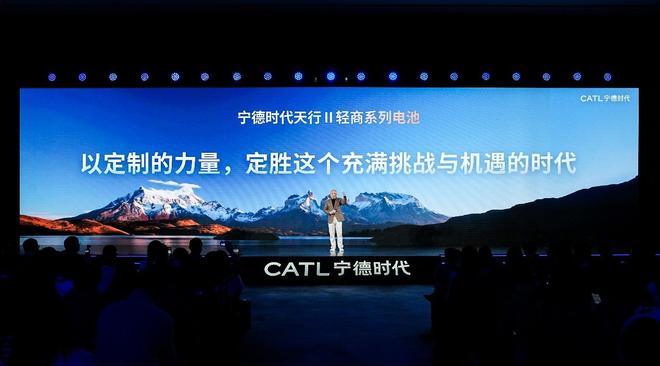
针对低温场景,宁德时代发布首款轻型商用车量产钠电池
Guan Cha Zhe Wang· 2026-01-27 02:41
Core Insights - CATL has launched the Tianxing II light commercial series solutions, including the mass-produced sodium-ion battery for light commercial vehicles, marking a significant step in the industry [1][3] Group 1: Product Launch and Features - The Tianxing II light commercial low-temperature version is the first mass-produced sodium-ion battery in the light commercial vehicle sector, with a capacity of 45 kWh [3] - The battery retains over 92% usable capacity at -20°C and can still charge at -30°C, demonstrating superior cold resistance [3] - Safety tests show that the sodium-ion cells do not catch fire or explode under extreme conditions, maintaining functionality even after being cut [3] Group 2: Market Position and Future Plans - CATL is a pioneer in sodium-ion battery development, having introduced its first generation in July 2021, with a single cell energy density of 160 Wh/kg [5] - The company plans to expand sodium-ion battery applications into passenger vehicles, with the first model set to be produced in Q2 of this year [3][5] - The sodium-ion battery market is projected to exceed 100 GWh in shipments and reach a market size of 100 billion yuan within the next 3-5 years [6] Group 3: Comparison with Lithium-ion Batteries - Sodium-ion batteries have advantages in resource availability, cold resistance, and safety compared to lithium-ion batteries, which are currently dominant in the market [5] - However, sodium-ion batteries face challenges such as lower energy density (175 Wh/kg) and fewer charge cycles (2000-3000) compared to lithium batteries [6] - Despite these challenges, CATL aims to make sodium batteries more economically viable than lithium batteries within 2-3 years [6] Group 4: Additional Product Offerings - The Tianxing II light commercial series also includes long-range, supercharging, and high-temperature supercharging versions, with various features such as 800 km range and rapid charging capabilities [7] - CATL has introduced a battery management app called "Battery Manager" to help users monitor battery lifecycle usage [7]


中国“巨型充电宝”破局“锂依赖”,钠离子电池有望成为中国第四张“国际绿能名片”
Huan Qiu Wang Zi Xun· 2026-01-19 22:45
Core Viewpoint - The world's first 100 MWh sodium-ion battery energy storage station has been officially put into operation in Qianjiang, Hubei, marking a significant leap in China's independent research and large-scale commercial application of sodium-ion battery technology [1][5]. Group 1: Project Overview - The energy storage station can store 100,000 kWh of electricity, enough to meet the daily electricity needs of approximately 12,000 ordinary households [1]. - The project sets a world record for the scale of sodium-ion battery storage and aims to alleviate China's strategic dependence on lithium resources amid increasing international energy competition [1][5]. Group 2: Performance Breakthroughs - The storage station has achieved three major breakthroughs: long lifespan, wide temperature range, and high power [1]. - Sodium-ion batteries maintain 90% capacity at -20°C and can operate stably at 60°C, significantly reducing reliance on temperature control systems [2]. Group 3: Material and Production Innovations - The development of fully domestically produced positive and negative electrode materials faced challenges in performance stability and cost, which were overcome by innovative research [3][4]. - The team developed a copper-iron-manganese-based positive electrode material that eliminates the use of precious metals and enhances cycle stability, laying the foundation for commercial application [3]. - A coal-based hard carbon technology was developed for the negative electrode, utilizing abundant domestic coal resources, which significantly reduces material costs [3]. Group 4: International Impact and Market Outlook - China's sodium-ion technology is becoming a "new green energy business card" globally, with significant patent holdings and rapid industrialization capabilities [5]. - The country has shifted from being a participant to a leader in international standards for sodium-ion technology, with multiple standards being established since 2021 [5]. - Sodium-ion batteries are expected to capture over 20% market share in the renewable energy sector by 2030, serving as a price stabilizer for lithium resources [5]. - The technology offers a replicable green energy path for developing countries, leveraging local sodium resources to reduce dependence on imported lithium [5].
机构:钠离子电池增长空间广阔 相关产业链或受关注
Zheng Quan Shi Bao Wang· 2026-01-08 06:32
Group 1 - China Chemical (601117) and the Physical Power Source Industry Association have approved the release of the group standard "Technical Requirements for Sodium-ion Batteries for Energy Storage" (T/CIAPS0052-2026), which includes definitions, general requirements, testing methods, inspection rules, labeling, packaging, transportation, and storage for sodium-ion batteries and modules [1] - According to QYResearch's report "Global Sodium-ion Battery Market Report 2025-2031," sodium-ion batteries operate similarly to lithium-ion batteries and are expected to partially replace lithium batteries, with a projected global market size of $5.11 billion by 2031 and a compound annual growth rate (CAGR) of 32.2% in the coming years [1] Group 2 - Guohai Securities states that sodium-ion batteries have advantages such as low-temperature performance and excellent economic potential, with leading manufacturers actively advancing product development and industrialization, indicating significant growth opportunities in the sector [2] - Recommended companies for investment in the sodium-ion battery industry include Rongbai Technology, Zhenhua New Materials, Dangseng Technology, and Zhongke Electric, as well as leading battery manufacturers like CATL, Yiwei Lithium Energy, and Penghui Energy [2]
钠离子电池行业-性能适配与经济性共振-有望迎来发展新周期
2026-01-05 15:42
Summary of Sodium-Ion Battery Industry Conference Call Industry Overview - The sodium-ion battery industry is gaining attention due to rising lithium prices, with companies like CATL starting to focus on this technology since 2022. Despite a subsequent decline in lithium prices affecting its application, sodium-ion batteries are still being utilized in two-wheeled vehicles and energy storage demonstration projects. The launch of "NaXing" by CATL and the development by Xiaoyao Battery are driving the industry's growth [1][4]. Key Insights and Arguments - **Performance and Economic Resonance**: The sodium-ion battery exhibits differentiated advantages in low-temperature and specific scenarios, particularly in terms of rate performance. As lithium prices trend upwards, the cost-effectiveness of sodium-ion batteries is expected to improve due to economies of scale, creating a dual-driven resonance that may lead to a new development cycle [2]. - **AIDC Power Supply Solutions**: The AIDC power supply solution opts for sodium batteries due to their large cell size, which meets millisecond response requirements, along with high safety and long lifespan. Haishen Energy has introduced a lithium-sodium collaborative AIDC long-duration energy storage solution, featuring a 2.28 MWh sodium battery storage system with millisecond response speed [3][8]. - **Mainstream Technology Routes**: The current market has three main technology routes: polyanionic, layered oxides, and Prussian blue. Polyanionic materials are gaining attention due to the availability of raw materials, while layered oxides offer high energy density but have high synthesis energy consumption. Prussian blue faces stability challenges [6]. Market Applications - Sodium-ion batteries are being pushed for large-scale applications in the power sector, particularly by major players like CATL. In the energy storage sector, especially in North America, there is an increasing demand for AIDC power supply solutions. Companies like Yiwei Lithium Energy are also exploring similar applications in UPS backup scenarios [5]. Development Potential - The sodium-ion battery industry is expected to experience significant growth in the coming years, driven by leading companies like CATL and the optimization of supply chains and product performance. Material manufacturers with strong R&D capabilities and solid customer bases are likely to benefit from this growth, leading to a recommended rating for the industry [7][11]. Material Suppliers' Progress - Midstream and upstream material suppliers have made notable progress in industrialization. Companies like Rongbai, Dangseng, and Zhenhua are focusing on technology reserves in layered oxide processes. A cooperation agreement between Rongbai Technology and CATL is expected to yield a potential annual procurement volume of 500,000 tons, with a target of achieving a scale of 100,000 tons by 2026 [9][10]. Future Outlook - The future of sodium-ion batteries appears promising due to their differentiated performance and economic advantages. As lithium prices continue to rise, the application space for sodium-ion batteries is expected to expand. Companies with strong R&D capabilities and solid market positions, such as Rongbai, Zhenhua, Dangseng, and leading players like CATL and Yiwei Lithium Energy, are recommended for investment consideration [11].
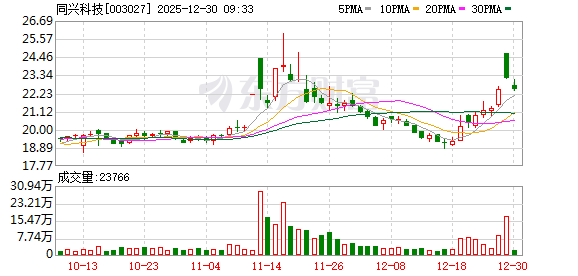
同兴科技:公司研发的钠电正极材料已通过公司中试线试生产,但目前暂未大规模量产
Mei Ri Jing Ji Xin Wen· 2025-12-30 01:32
Group 1 - The core viewpoint of the article highlights that Tongxing Technology (003027.SZ) has developed sodium-ion battery cathode materials that have passed pilot production, showcasing advantages such as low specific surface area, high processing performance, high electrochemical performance, and high safety [1] - The company has not yet commenced large-scale production of these materials, indicating a cautionary note for investors regarding potential risks [1] - There is a growing interest in sodium-ion batteries, as mentioned by Nvidia's CEO Jensen Huang, who noted that energy storage will increasingly adopt sodium-ion technology, suggesting a potential market trend that could benefit the company [3]
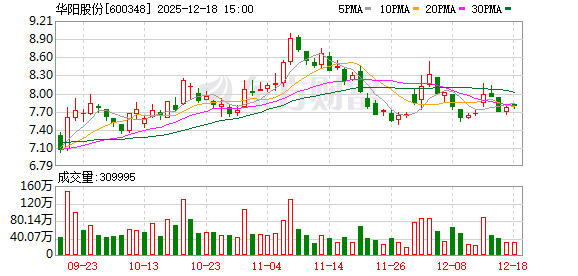
华阳股份:目前公司在钠离子电池领域与中科海钠开展合作
Mei Ri Jing Ji Xin Wen· 2025-12-18 11:35
Group 1 - The core viewpoint of the article highlights Huayang Co., Ltd. (600348.SH) is collaborating with Zhongke Haina in the sodium-ion battery sector to advance the industrialization of anode and cathode materials and battery cells [2] - The company is actively monitoring technological developments in the industry and is committed to maintaining communication with leading enterprises across various fields [2] - Huayang Co., Ltd. aims to promote the application expansion of sodium-ion battery technology in diverse scenarios [2]

大连化物所开发100千瓦时级钠离子电池系统已并网运行
Zhong Guo Xin Wen Wang· 2025-12-15 01:05
Core Insights - The Dalian Institute of Chemical Physics of the Chinese Academy of Sciences has developed a 100kWh sodium-ion battery energy storage system, which has been successfully integrated into the grid in Shandong's Binzhou Lingang Chemical Industrial Park [1] Group 1: Technology Development - The sodium-ion battery utilizes phosphate as the positive electrode material, offering advantages such as high power, stability, and safety, making it a preferred choice for energy storage applications [1] - The energy storage system consists of over 1,000 36Ah battery cells integrated into 28 modules, along with a power control module [1] - The system achieved a discharge energy of 120.6kWh under a constant current of 290A, with a direct current energy conversion efficiency exceeding 95% [1] Group 2: Application and Impact - The system, in conjunction with charging stations, forms a "light-storage-charge" system that stores excess electricity during peak solar generation and releases it during evening peak usage, thus reducing electricity costs and addressing grid absorption capacity issues [1] - The implementation of the 100kWh sodium-ion battery system serves as a demonstration of the team's technological reliability across various components, providing a typical case and experience accumulation for the development and promotion of sodium-ion battery technology [1]
中石化申请硬碳材料及其制备方法、电池负极和钠离子电池专利
Sou Hu Cai Jing· 2025-11-29 13:20
Core Viewpoint - The State Intellectual Property Office of China has reported that China Petroleum & Chemical Corporation (Sinopec), Sinopec Petroleum and Chemical Research Institute Co., Ltd., and Shanghai Jiao Tong University have applied for a patent titled "A Hard Carbon Material and Its Preparation Method, Battery Anode, and Sodium-Ion Battery" with publication number CN121020544A, filed on May 2024 [1] Group 1 - The patent application involves a hard carbon material and its preparation method, which is relevant for battery anodes and sodium-ion batteries [1] - The method described in the patent includes specific steps, starting with the precursor at a temperature T [1]

1-10月中国新能源汽车产量1267.2万辆
Zhong Guo Xin Wen Wang· 2025-11-25 00:49
Core Insights - The Chinese new energy vehicle (NEV) market continues to experience rapid growth, driven by policy support, product innovation, and increasing exports, positioning it as a core driver of the automotive industry [3] Group 1: Market Performance - In the first ten months of 2025, China's NEV production reached 12.672 million units, marking a year-on-year increase of 28.1%, with a cumulative penetration rate of 46.4% [2] - By September 2025, the market share of cars (CAR) was 45.1%, a decrease of 1.7 percentage points compared to the same period last year, while SUVs and MPVs accounted for 43.9% and 3.6% respectively [4] - The passenger vehicle segment saw significant growth, with sedans increasing by 15.1% and SUVs by 15.7%, while the MPV market surged by 39.3% [5] Group 2: Battery and Powertrain Developments - As of September 2025, the installed capacity of NEV power batteries reached 73.7 GWh, reflecting a year-on-year growth of 39.9% [6][7] - The average battery capacity per vehicle was 53.0 kWh, an increase of 17.3% year-on-year, with BYD, Tesla, and Xiaomi being the major contributors to battery installation [8] - In terms of battery cell structure, square cells accounted for 98.6% of the market, while cylindrical and pouch cells made up 1.0% and 0.4% respectively [9] Group 3: Battery Material Trends - The market share of lithium iron phosphate (LFP) batteries continues to grow due to their safety, cost-effectiveness, and longevity, with expectations to maintain dominance in the mid-to-low-end vehicle segment [10] Group 4: Key Players in Battery Supply - By September 2025, the top three battery manufacturers held a market share of 72.2%, with the top ten accounting for 95.4%. CATL led the market with a share of 42.1% [11] - Companies like Contemporary Amperex Technology Co., Ltd. (CATL) and others have shown significant growth, with increases of 102.0% and 143.2% respectively [11] Group 5: Electric Motor Supply Chain - The top ten electric motor suppliers accounted for 62.7% of the market share as of September 2025, with all major players experiencing a rise in supply [12] - Notably, companies like Saike Technology and Grebo have achieved rapid growth due to high sales volumes from brands like Wuling and Geely [12] Group 6: Sodium-Ion Battery Development - Sodium-ion battery technology is advancing quickly, focusing on improvements in cathode and anode materials, with advantages in low-temperature performance, fast charging, and safety [14][15] - Current applications for sodium-ion batteries include home energy storage, large-scale power stations, two-wheeled vehicles, electric cars, and backup power sources [16] - Several companies, including CATL and BYD, are accelerating the development of sodium-ion battery products [18]

