AI Governance

Search documents
The Zacks Analyst Blog ServiceNow, Microsoft, Atlassian and Salesforce
ZACKS· 2025-11-24 11:31
Core Insights - ServiceNow is expanding its partnership with Microsoft, integrating its AI Control Tower with Microsoft Foundry and Copilot Studio to enhance enterprise-grade orchestration and governance across AI agents and workflows [2][3][4] Company Developments - ServiceNow's subscription revenue guidance for 2025 has been raised to between $12.835 billion and $12.845 billion, indicating a growth of 20% on a non-GAAP constant currency basis and 20.5% on a reported basis compared to 2024 [5] - The company is facing challenges due to tightening budgets from U.S. federal agencies, which may negatively impact subscription revenues in the fourth quarter of 2025 [5] Competitive Landscape - ServiceNow is experiencing stiff competition from Atlassian and Salesforce, with Atlassian focusing on subscription-based solutions that have seen a CAGR of approximately 40% from fiscal 2020 to fiscal 2025 [6] - Salesforce is enhancing its AI capabilities and data cloud business, reporting a 140% year-over-year increase in Data Cloud customer adoption in the second quarter of fiscal 2026 [7][8] Financial Performance - ServiceNow shares have declined by 24.6% year to date, underperforming the broader Zacks Computer and Technology sector, which has returned 25.9% [9] - The forward 12-month price/sales ratio for ServiceNow is 10.83X, significantly higher than the broader sector's 6.61X, indicating that the stock may be overvalued [10]





New Agoda report reveals the forces shaping the next phase of AI maturity in Southeast Asia and India
BusinessLine· 2025-11-14 11:21
Core Insights - AI is becoming essential in developer workflows across Southeast Asia and India, with governance being the key factor for the next phase of AI maturity in the region [1][7] Adoption and Usage - 95% of developers use AI weekly, primarily for code generation (94%), while adoption for other tasks like documentation (72%), code review (67%), testing (57%), planning (56%), and deployment (36%) is lower, indicating uneven integration [2] - Most developers report that AI-generated code functions correctly less than half the time without significant revisions, highlighting a gap between adoption and reliability [6] Governance and Guidelines - Only 25% of teams operate under official AI guidelines, and 60% lack a formal AI policy, leading to a reliance on team culture for governance [3] - Leading organizations are implementing structured governance frameworks to balance developer autonomy with organizational oversight, as seen with Agoda's GenAI Proxy [4] Peer Review and Accountability - Developers are incorporating bottom-up accountability, with 57% reporting changes to code review processes, and 67% always reviewing AI-generated code before merging [5] - The evolution of peer review practices is crucial for establishing measurable processes that can be scaled across teams [6] Future Directions - The next competitive edge will be establishing a clear framework for consistent and productive AI usage, focusing on trust, quality, and governance [7] - The Agoda AI Developer Report 2025 provides insights from over 600 developers across seven key markets, reflecting the current state of AI adoption and integration in the region [10]

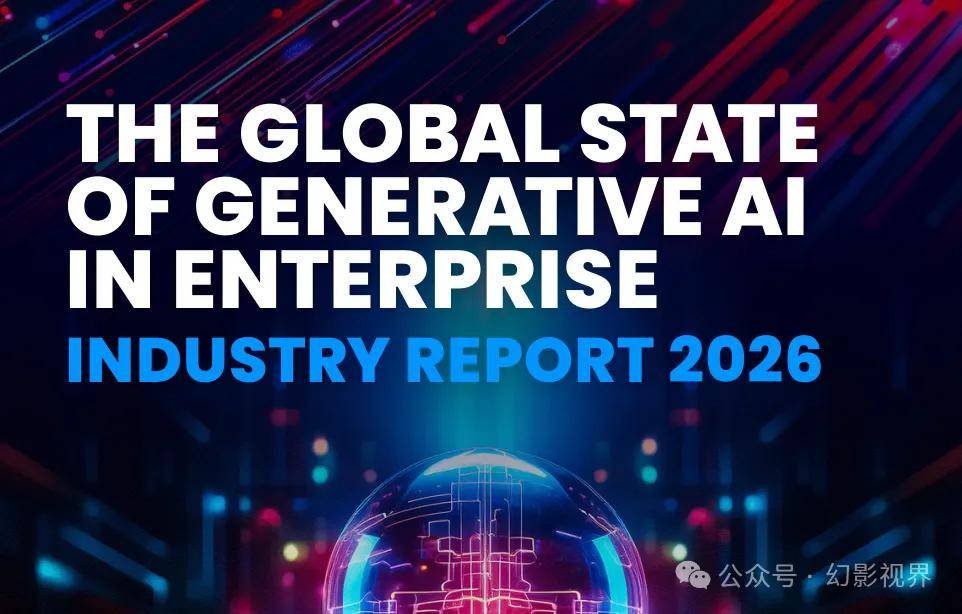
2026年全球生成式AI企业行业报告
Sou Hu Cai Jing· 2025-11-11 17:13
Core Insights - The report analyzes the current state of the global Generative AI (GenAI) industry in 2026, highlighting the transition from pilot projects to full-scale production in enterprises, focusing on measurable business value [1][16][28] Enterprise Market & Technology Landscape - By 2025, 71% of organizations are using GenAI in at least one business function, up from 65% in 2024, indicating a significant increase in adoption [7][27] - The global enterprise GenAI market is projected to grow from $4 billion in 2025 to $19.2 billion by 2030, with a compound annual growth rate (CAGR) of 36.8% [7][41][47] - The software segment is expected to dominate the market, accounting for 67% of the total share in 2025, driven by the rise of Agentic AI [45][58] AI Industry Trends - The adoption rate of GenAI is highest in technology, professional services, and advanced manufacturing, with over 79% adoption, while the energy and materials sector lags at 59% [7] - The North American market is expected to hold a 41% share by 2025, while the Asia Pacific region is projected to be the fastest-growing market due to government initiatives [58][59] Investment Trends - GenAI-related investments are expected to reach $56 billion in 2024, nearly doubling from $29 billion in 2023, with infrastructure investments increasing from $6.86 billion in 2023 to nearly $26 billion in 2024 [7][30] - Venture capital investments in GenAI have surged from $239 million in 2014 to $56.1 billion in 2024, indicating strong investor interest [7][19] GenAI Applications - The fastest-growing application areas include code assistants, support chatbots, and enterprise search solutions, with significant investments aimed at automating routine tasks and enhancing customer interactions [5][36][37] - ING Bank has successfully utilized chatbots to handle 45% of its 85,000 weekly customer interactions, showcasing the effectiveness of AI in customer service [5][36] GenAI Technology & Development - Leading models such as GPT-4 and Claude 3 are approaching human-level performance in natural language understanding and code generation, with ChatGPT holding a 60% market share in the U.S. [10][12][41] - The emergence of Agentic AI, which operates more autonomously than traditional GenAI, is expected to grow from $7.6 billion in 2025 to $48 billion by 2030, with a CAGR of 44.5% [10][12]
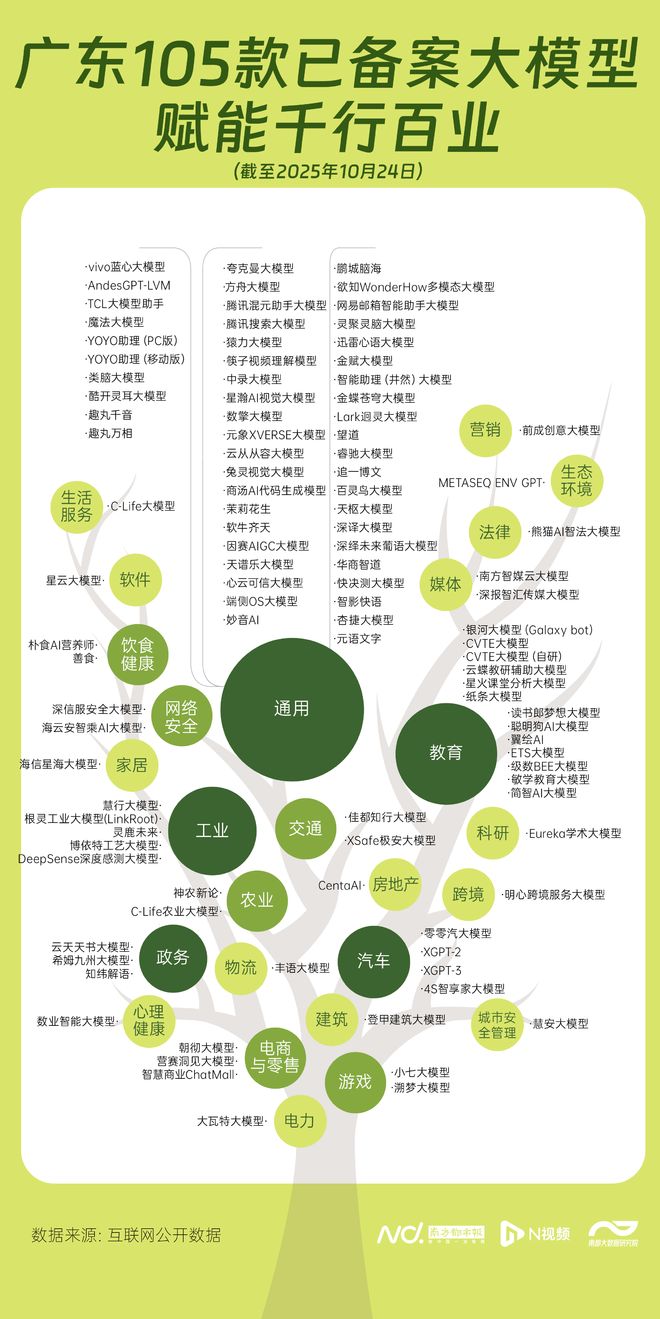
广东百款大模型备案下的双赢:获合规入场券,也拿下市场信任
Nan Fang Du Shi Bao· 2025-10-31 12:53
Core Insights - Guangdong has issued a total of 105 generative AI service registrations, ranking second in the country, with the latest batch including 11 new services across various sectors such as education, media, commercial real estate, and cross-border e-commerce [1][2][5] Policy Support - The policy framework in Guangdong is designed to foster an environment where AI can innovate freely while ensuring safety, transforming regulatory requirements into developmental momentum [1][5] - The establishment of the Guangdong-Hong Kong-Macao Greater Bay Area Generative AI Safety Development Joint Laboratory aims to support compliance and safety standards, thereby reducing compliance costs for enterprises [5][6] Enterprise Dynamics - The registration process serves as both a compliance entry ticket and a market trust certificate, indicating that companies can convert technological advantages into compliant products [7][8] - The AI industry in Guangdong has surpassed 220 billion yuan in scale, with over 1,500 core enterprises and 147 national-level specialized "little giant" companies, the highest in the country [7] Industry Landscape - The 105 registered models reflect a balanced structure of general and vertical models, with 54 industry-specific models and 51 general models covering various fields such as government, education, transportation, and agriculture [8][9] - The AI models are increasingly integrated into the real economy, with applications in education, smart home devices, and industrial sectors, showcasing the inclusive value of AI technology [9][10] Future Outlook - The joint laboratory plans to establish local service stations in cities like Hong Kong, Macau, Guangzhou, and others to provide policy consultation and technical evaluation services, enhancing regional collaboration in AI development [10][11] - The registration of 105 models marks a significant milestone in Guangdong's AI industry, indicating a shift towards a more controlled, active, and efficient AI ecosystem [11]





AvePoint Report Finds AI Rollouts Stalled Up to 12 Months, 75% of Organizations Face Security Breaches
Globenewswire· 2025-10-08 13:00
Core Insights - The report highlights a significant gap between organizations' AI ambitions and their operational realities, with over 75% experiencing AI-related security breaches, leading to deployment delays of up to 12 months [1][2][4] Group 1: AI Deployment Challenges - Organizations are facing an implementation crisis that is hindering AI progress, with critical operational gaps in data security and quality [2][4] - AI deployment delays average nearly 6 months, with some organizations experiencing rollouts stalled up to 12 months due to data quality and security issues [4][5] - Inaccurate AI output (68.7%) and data security concerns (68.5%) are the primary reasons for slowing the rollout of generative AI assistants [4][5] Group 2: Governance and Security Issues - Many organizations treat AI governance as a checkbox exercise rather than an operational necessity, leading to security incidents [3][4] - 90.6% of organizations claim to have effective information management programs, but only 30.3% have implemented effective data classification systems [5] - 43.4% of organizations are actively working on AI policies, indicating that governance remains an ongoing process rather than a completed initiative [5] Group 3: Strategic Investments in AI - Despite challenges, organizations are increasing investments in AI governance tools (64.4%) and data security tools (54.5%) [10] - 99.5% of organizations are implementing AI literacy interventions, with role-based training being highly impactful (79.4%) [10] - 73.9% of organizations use both quantitative and qualitative feedback methods to assess AI program effectiveness [10]

Enterprise AI Expert Sangame Krishnamani, Director of Software Engineering at Capital One, Announced as Keynote Speaker for ModelOp Virtual 2025 AI Governance Leadership Summit
Globenewswire· 2025-10-07 12:14
Core Insights - ModelOp announced the third annual virtual AI Governance Leadership Summit scheduled for October 15, 2025, featuring Sangame Krishnamani from Capital One as the keynote speaker [1][5] - The Summit aims to provide insights for CIOs, CDAOs, CAIOs, and AI leaders on implementing AI Agents and Agentic AI responsibly at scale [1][5] Company Overview - ModelOp is recognized as a leader in AI lifecycle management and governance software, designed specifically for enterprises [6] - The company enables organizations to operationalize AI initiatives effectively, ensuring end-to-end control and oversight [6] - ModelOp has received multiple accolades, including the AI Breakthrough Award for "Best AI Governance Platform" in 2024 and the "Best AI Governance Software Award" in 2025 [6] Event Details - The Summit will gather stakeholders from various sectors, including financial services, healthcare, and retail, to discuss AI governance [3][5] - Previous editions of the Summit featured influential speakers and organizations, enhancing the educational experience for virtual attendees [4][5] - The event is designed to help organizations navigate AI use cases and evaluate their value and risk before implementation [5]

Introducing Fortune’s first-ever Most Influential Women Asia ranking
Fortune· 2025-10-06 23:55
Core Insights - Fortune's Asia team has introduced its first-ever "Most Influential Women" ranking, showcasing twelve women from various sectors including pop culture, policymaking, and professional sports, highlighting the diverse expressions of power in the Asia-Pacific region [1] Group 1: Pop Culture - Blackpink, a leading K-pop girl group, has achieved significant milestones, including being the first to sell over one million and two million album copies in South Korea, and topping the Billboard 200 album chart, contributing to South Korea's cultural influence globally [2] - Individual members of Blackpink have launched their own agencies, marking a shift in the K-Pop industry traditionally dominated by large agencies, and are expanding into new media such as television and fashion [3] - Michelle Yeoh, after winning the Academy Award for Best Actress in 2023, has become a prominent advocate for representation in the film industry, leveraging her platform to promote gender equality and environmental sustainability [6] - Xin Zhilei has gained international recognition, winning the Best Actress award at the Venice Film Festival, and is influencing style conversations while advocating for better scripts and female representation in film [7] Group 2: Sports - Alexandra Eala has made significant strides in tennis, reaching her first WTA Tour final at 20 and winning a junior Grand Slam singles crown, thereby enhancing the sport's profile in Southeast Asia [8] - Eileen Gu made history by winning three Olympic medals in freestyle skiing at 18, and is actively promoting mental health and environmental sustainability while also being a sought-after model and brand ambassador [9] - Naomi Osaka, representing Japan in international competitions, has used her platform to advocate for social causes and mental health, while also launching her own talent agency to support women's sports [10][12] - Zheng Qinwen has emerged as a key figure in Chinese women's tennis, winning the Olympic gold in 2024 and reaching the Australian Open final, while also being a marketable athlete with partnerships with brands like Dior and Rolex [13] Group 3: Policymaking - Josephine Teo, appointed as Singapore's minister for digital development and information, is leading initiatives like Smart Nation 2.0, which allocates 1 billion Singapore dollars ($780 million) towards AI for public good, and has introduced new standards for generative AI [4] - Yuriko Koike, as governor of Tokyo, has implemented reforms for efficiency and gender diversity, managing the COVID pandemic and the 2020 Olympics, while advocating for more women in leadership roles [5]

Poppulo 成为首家获得负责任 AI 基准 ISO 认证的员工通讯与数字标牌企业
Globenewswire· 2025-10-02 23:05
Core Insights - Poppulo has successfully obtained the ISO 42001 certification, making it the only company in its industry to achieve this international standard for Artificial Intelligence Management Systems (AIMS) [1][2] - The certification reinforces Poppulo's commitment to responsible, trustworthy, and transparent AI development and deployment, ensuring clients can scale AI solutions with confidence [1][3] Company Overview - Poppulo is a global leader in employee communications and digital signage, serving over 10,000 organizations, including more than 40 Fortune 100 companies, and reaching an audience of over 50 million people [4] - The company’s digital signage network has expanded to over 600,000 devices worldwide, combining data-driven communication strategies with scalable signage technology to enhance employee engagement and optimize customer experience [4] Product Innovations - Poppulo is launching a new suite of agent-based AI tools designed to revolutionize how companies create and deliver information through employee channels and digital signage networks [2] - New features include AI-driven email translation services and a personal AI assistant to help users access performance metrics and best practices instantly, enabling faster data-driven decision-making [3]

Cybersecurity professionals under pressure turn to AI amid rising threats
Fortune· 2025-09-29 12:03
Cybersecurity Industry Insights - Cyberattacks are a primary concern for CFOs, with cybersecurity professionals experiencing increased stress due to the complexity of threats and ongoing risks [1][2] - A survey by ISACA revealed that two-thirds of cybersecurity experts find their roles more stressful than five years ago, with 63% citing the complexity of the threat landscape as the main stressor [2][3] - 43% of respondents believe an attack on their organization is likely within the next year, while only 41% are confident in their teams' incident-response capabilities [3][4] Types of Cyberattacks - The most common type of attack reported is social engineering (44%), followed by exploited vulnerabilities (37%) and malware (36%) [4] - Approximately one-third of cybersecurity professionals reported an increase in incidents this year [4] Staffing and Training Challenges - The cybersecurity sector faces persistent understaffing, with 55% of teams short-staffed and 65% having unfilled roles [7] - There is a decline in organizations training non-security staff for cybersecurity positions [7] AI in Cybersecurity - AI is increasingly utilized in cybersecurity, with 47% of respondents involved in developing AI governance practices, up from 35% last year [10] - The primary applications of AI in security operations include threat detection, endpoint security, and automating routine tasks [10] - Experts emphasize the need for human oversight in AI to avoid bias and errors in decision-making [9] CFOs and Working Capital Management - CFOs are leveraging working capital to unlock trapped cash and pursue market opportunities, even amid economic uncertainty [13][14] - The approach of using working capital strategically leads to higher operational efficiency and resilience during volatility [17] - Organizations led by strategic planners outperform their peers in operational efficiency and supplier integration [17]