Deregulation

Search documents
Trump's Fed chair pick Warsh likely to boost Wall St rule easing
Yahoo Finance· 2026-01-30 16:50
Core Viewpoint - Kevin Warsh, nominated by President Trump to chair the Federal Reserve, is expected to enhance efforts to ease Wall Street bank regulations and align financial policy more closely with the administration's objectives [1][3]. Group 1: Warsh's Background and Experience - Warsh is a Republican and former Fed governor, ending speculation about the successor to current Fed Chairman Jerome Powell, whose term expires in May [2]. - He served as a Fed governor from 2006 to 2011, contributing to the central bank's response to the 2008 financial crisis and expressing criticism of the reforms [5]. - Warsh has a background in investment banking, which is viewed positively by Wall Street banks [8]. Group 2: Regulatory Implications - If confirmed by the Senate, Warsh is likely to support a deregulatory agenda led by Vice Chair for Supervision Michelle Bowman, aligning with the administration's financial policy goals [3]. - Warsh's belief that the Fed should not be independent in bank regulation indicates support for aggressive deregulatory measures [4]. - He has previously criticized the Fed for regulatory failures that contributed to banking turmoil in 2023, advocating for a significant easing of capital rules and supervision for Wall Street banks [7].
Trump's JPMorgan lawsuit underscores his growing clash with Wall Street
Yahoo Finance· 2026-01-25 11:02
Core Viewpoint - The lawsuit filed by U.S. President Donald Trump against JPMorgan Chase and CEO Jamie Dimon reflects a growing conflict in the administration's Wall Street policy agenda, where large banks are experiencing both victories and setbacks [1][3]. Group 1: Lawsuit Details - Trump has initiated a $5 billion lawsuit against JPMorgan Chase, accusing the bank of closing his and his companies' accounts for political reasons, a claim that JPMorgan denies [2][5]. - The lawsuit is part of a broader narrative where Trump alleges that Wall Street banks are attempting to marginalize him and other conservatives [2]. Group 2: Industry Environment - Large financial institutions, while expected to benefit from Trump's deregulation efforts, are facing an unpredictable policy environment that could harm their reputations and business operations [3]. - The industry is experiencing a mix of victories and losses on significant issues, with ongoing pressure affecting its overall stability [4]. Group 3: Regulatory Context - Trump's administration is reportedly focused on bolstering financial markets and reducing regulatory burdens to promote growth, despite the challenges faced by banks [5]. - The administration's moves to facilitate competition from fintech and crypto firms may further complicate the landscape for traditional banks [4]. Group 4: Broader Implications - Trump's criticisms extend beyond JPMorgan, targeting other banks like Bank of America and Goldman Sachs, indicating a broader trend of conflict between the administration and major financial institutions [6].

Ken Griffin says Biden-era regulations ‘exhausting' on American businesses, 'cost the US economy dearly'
Fox Business· 2026-01-21 18:51
Core Insights - The CEO of Citadel, Ken Griffin, criticized the Biden administration's regulatory policies, stating they created significant friction for businesses, contrasting this with the relief felt during the Trump administration's deregulation efforts [1][2][11] - Griffin highlighted the negative impact of specific regulatory actions, such as the Justice Department's antitrust lawsuit against JetBlue's acquisition of Spirit Airlines, which he claims directly affected Citadel as a creditor of Spirit [5][8] Group 1: Regulatory Environment - The Biden administration's regulatory approach has been described as a "regulatory onslaught," causing daily challenges for businesses [2] - The Trump administration's efforts to reduce federal regulatory pressure have been perceived as a significant relief for American executives, allowing them to focus on business growth [3][13] - Griffin noted that the rollback of Biden-era regulations has been slow but has positively impacted U.S. businesses since the Trump administration returned to power [11][13] Group 2: Economic Impact - Griffin emphasized that poorly thought-out decisions under the Biden administration had severe economic consequences, costing the U.S. economy dearly [11] - The blocking of the JetBlue-Spirit merger was cited as an example of how regulatory actions can lead to negative outcomes for companies, with Spirit now in bankruptcy as a result [5][8]

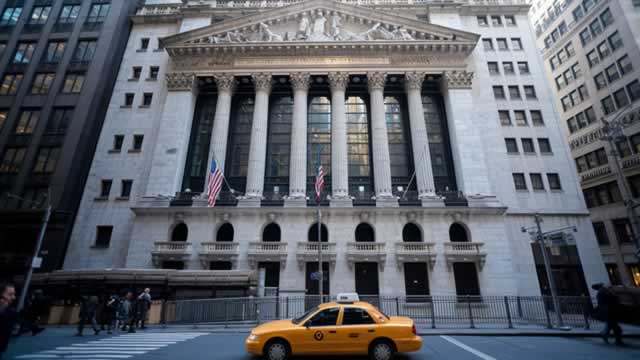
Global Stocks Trounce the S&P 500 in Trump’s Chaotic First Year
Yahoo Finance· 2026-01-20 14:47
Core Viewpoint - The current economic landscape under Trump's presidency is marked by volatility and mixed performance in the stock market, with significant gains in the tech sector driven by AI, but overall performance lagging compared to global markets [2][8][12]. Group 1: Economic Performance and Stock Market Trends - The S&P 500's first-year gain under Trump is only the ninth best since World War II, with previous presidents achieving larger gains [3]. - Excluding the US, global equities have risen approximately 30% since Trump's inauguration, which is about double the S&P 500's gain [4]. - The US stock market has experienced a third consecutive year of double-digit gains, although it fell 1.4% recently due to geopolitical tensions and market reactions [11]. Group 2: Investor Sentiment and Market Volatility - Trump's presidency has introduced significant volatility, with the 100 largest S&P 500 companies experiencing 47 sharp drops of five standard deviations or more in 2025, the highest since 1998 [14]. - Investors are bracing for more volatility as Trump targets various economic segments, including mortgage and credit card rates, amid rising inflation and interest rates [16]. - Historical trends indicate that midterm election years are typically weaker for the stock market due to uncertainty surrounding potential changes in presidential agendas [15][18]. Group 3: Global Market Comparisons - Stock markets in Asia, Europe, and Latin America have outperformed the US, with MSCI's emerging-market index rising over 30% last year, marking its largest advance since 2017 [9][10]. - The perception that global equities will continue to outpace US markets is becoming mainstream, as performance drives investment decisions [10]. Group 4: Federal Reserve and Economic Policy - Trump's administration has exerted unprecedented pressure on the Federal Reserve to lower interest rates, raising concerns about the Fed's independence [17]. - The administration's actions, including a criminal investigation of Fed Chair Jerome Powell, have contributed to investor anxiety regarding monetary policy stability [17].
Fed's Miran Says U.S. Deregulation Backs Easier Fed Stance
WSJ· 2026-01-14 15:59
Core Viewpoint - The Federal Reserve governor Stephen Miran suggested that the Trump administration's initiatives to reduce burdensome regulations for businesses could potentially enable the Fed to lower interest rates further [1] Group 1 - The Trump administration's efforts focus on slashing onerous rules for businesses [1] - These regulatory changes may create an environment conducive to further interest rate cuts by the Federal Reserve [1]
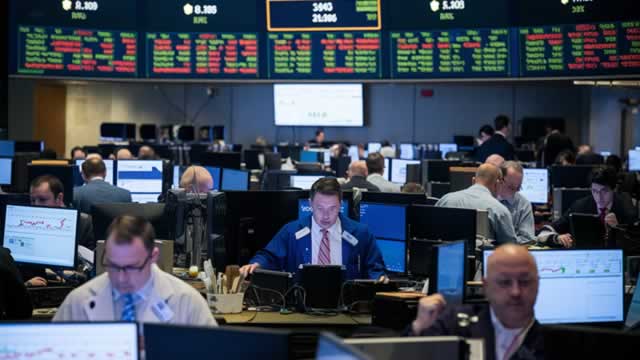
JPMorgan profit takes a hit as it builds $2.2B reserves for Apple card deal
New York Post· 2026-01-13 13:47
Core Viewpoint - JPMorgan Chase reported a decline in quarterly profit due to a $2.2 billion reserve related to its acquisition of a credit card partnership with Apple, despite a strong underlying performance in trading [1][3]. Financial Performance - Quarterly earnings fell to $13 billion, or $4.63 per share, down from $14 billion, or $4.81 per share, in the same quarter last year [1]. - Excluding the one-time reserve impact, quarterly profit increased to $14.7 billion, or $5.23 per share, driven by strong trading performance [3]. Economic Outlook - CEO Jamie Dimon stated that the U.S. economy remains resilient, with healthy business conditions and consumer spending continuing [4]. - Despite some softening in labor markets, conditions are not worsening, supported by fiscal stimulus and recent monetary policy from the Federal Reserve [4]. Market Conditions - Market revenue at JPMorgan increased by 17% in the fourth quarter, with fixed income rising by 7% and equity surging by 40% [8]. - Concerns about a bubble in AI stocks and potential corrections in equities have made markets jittery [6]. Credit Card Partnership - JPMorgan is establishing a $2.2 billion provision for credit losses in anticipation of new credit card customers from Apple, indicating a cautious approach to the new portfolio [13]. - The credit card industry is facing potential changes due to a proposal to cap interest rates at 10%, although analysts are skeptical about its implementation [14].


Jeff Bezos once said America is the world’s ‘luckiest’ country with natural resources, energy independence
Yahoo Finance· 2026-01-12 10:15
Economic Outlook - The U.S. is viewed as a compelling destination for investment due to its economic strength and growth potential, supported by notable investors like Warren Buffett and Jeff Bezos [1][7] - Bezos emphasizes that the U.S. is "set up to grow," particularly with Trump's focus on deregulation, which could enhance the country's growth trajectory [2][6] Strengths of the U.S. Economy - The U.S. is the world's largest economy by GDP, rich in natural resources such as oil, gas, minerals, and arable land, which contribute to its economic advantages [3] - The country has strong financial markets and leads in venture capital and private equity, essential for fostering innovation and entrepreneurship [3][4] Regulatory Environment - Bezos points out the excessive regulation and permitting processes that hinder economic growth, advocating for a reduction in these barriers to facilitate infrastructure projects like solar fields [5] - His collaboration with Trump reflects a broader concern regarding regulatory hurdles that impact the U.S. economy [5][6] Investment Strategies - Buffett's investment philosophy emphasizes holding a majority of net worth in U.S.-based equities, particularly through S&P 500 index funds, which provide diversified exposure to large companies [8][9] - Platforms like Acorns allow individuals to invest in diversified portfolios, including S&P 500 ETFs, with minimal initial investment [10][11] Real Estate Investment Opportunities - The U.S. housing market faces a significant supply gap, with an estimated shortage of 4.7 million homes, presenting unique investment opportunities [12] - Crowdfunding platforms like Arrived enable average Americans to invest in rental properties without large down payments or property management responsibilities [14] - Commercial real estate, particularly necessity-based properties leased by national brands, offers potential for stable income and appreciation, especially in a favorable interest rate environment [17][18]
Dollar Rises Alongside T-Note Yields
Yahoo Finance· 2026-01-06 20:36
Group 1: Dollar Index and Economic Indicators - The dollar index (DXY00) rose by +0.30% but remained below Monday's 3.5-week high, supported by higher T-note yields and comments from Richmond Fed President Tom Barkin regarding expected tax cuts and deregulation to boost growth this year [1] - The US December S&P services PMI was revised downward by -0.4 to 52.5 from the previously reported 52.9, indicating a slight weakening in service sector activity [3] - The markets are currently pricing in an 18% chance of a -25 basis point rate cut at the FOMC's next meeting on January 27-28, reflecting market expectations for monetary policy adjustments [4] Group 2: Fed Policy and Interest Rates - Fed Governor Stephen Miran indicated that Fed policy is "clearly restrictive" and suggested that more than 100 basis points of rate cuts are justified this year, highlighting a potential shift in monetary policy [4] - The dollar is under pressure as the Fed is expected to cut interest rates by about -50 basis points in 2026, contrasting with expectations for the Bank of Japan to raise rates by +25 basis points in the same year [5] - Concerns about President Trump's potential appointment of a dovish Fed Chair, likely to be National Economic Council Director Kevin Hassett, are contributing to bearish sentiment for the dollar [6] Group 3: Geopolitical Factors - The dollar retains some safe-haven support due to escalating geopolitical risks in Venezuela, particularly following the US capturing Venezuelan President Maduro and President Trump's comments about temporarily "running" Venezuela [1]
Markets Risk-On with Venezuela News, Deregulation
ZACKS· 2026-01-06 00:00
Market Overview - Major market indexes experienced a "risk on" trading sentiment, with the Dow reaching a record high of 48,977, gaining 594 points (+1.23%) [2][7] - The S&P 500 and Nasdaq also saw gains, with the S&P up 43 points (+0.64%) and the Nasdaq up 160 points (+0.69%) [2][7] - The small-cap Russell 2000 led the gains, increasing by 39 points (+1.58%) [2] Oil & Gas Sector - The U.S. invasion of Venezuela, aimed at controlling its vast oil reserves, has positively impacted the oil & gas sector [1] - Notable performers included Valero and SLB, both up 9%, and Phillips 66, which rose 7% [3] - Chevron, a major player in the sector, increased by 5.1% [3] - Venezuela is reported to have $17 trillion in oil reserves, attracting significant investor interest [3] E-commerce Sector - MercadoLibre, a leading Latin American e-commerce company, rose by 8.8%, driven by positive sentiment regarding Venezuela [4] Banking Sector - Bank stocks are on the rise due to anticipated deregulation in 2026, with Citigroup shares up 3.9% and a total gain of 65% over the past year [5] - Other banks also showed strong performance: Goldman Sachs (+53%), Morgan Stanley (+41%), and JPMorgan (+34%) [5] - The easing of regulatory standards is expected to benefit both large Wall Street firms and smaller regional banks [5] Manufacturing Sector - The ISM Manufacturing index for December reported a decline to 47.9%, the lowest since October, falling short of the expected 48.3% [9] - Production and inventories decreased, while new orders and backlogs showed improvement, indicating a mixed outlook for the manufacturing sector [9]


US tech stocks are more investable now than at the start of 2025
Invezz· 2026-01-02 17:52
Core Viewpoint - Investors are increasingly concerned about valuations and potential bubbles as they enter 2026, but US megacap tech stocks are viewed as more attractive now than a year ago, according to Andrew Slimmon from Morgan Stanley [1] Valuation and Market Sentiment - The "Magnificent 7" tech stocks have underperformed the broader market in Q4 2025 despite strong fundamentals and AI tailwinds, leading to more compelling valuation multiples now compared to the start of 2025 [2] - Investors can now buy into earnings strength at a relative discount compared to 12 months ago, as the recent market rotation away from tech stocks was driven by sentiment rather than deteriorating profits [3] Interest Rates and Growth Potential - Long-term investors are encouraged to regain exposure to big-cap tech names due to expectations of further interest rate cuts by the US Federal Reserve in 2026, which historically benefits growth-oriented sectors like technology [4] - Lower borrowing costs are expected to support investment in innovation, cloud infrastructure, and AI, making US tech stocks attractive as they combine strong earnings with moderated valuations [5] Future Market Dynamics - A rotation back into tech stocks is anticipated in early 2026 as rate cuts provide a tailwind for capital-intensive growth [6] - Deregulation is identified as a structural driver that may trigger a rally across sectors, including technology, by releasing capital that can be deployed for earnings growth [7] - Greater flexibility for tech firms to raise funds, pursue acquisitions, and expand into new markets is expected due to deregulation, which will support multiple expansion alongside earnings growth [8]