
Dynamic pricing

Search documents
Live Nation's Pricing Power Is on Full Display. Here's Why Investors Should Take Note.
The Motley Fool· 2025-11-01 09:01
Core Insights - Live Nation Entertainment continues to thrive in the live entertainment sector, reporting a 16% revenue growth in Q2, driven by increased concert attendance and a 33% rise in adjusted operating income [1][3][13] - The company welcomed 44 million attendees globally, a 14% increase year-over-year, with significant growth in stadium and international arena attendance [2][10] - Live Nation's dynamic pricing model allows for real-time adjustments based on demand, enhancing revenue capture and margin expansion [5][6] Revenue and Attendance - Concert revenue grew by 19%, while deferred revenue increased by 22%, indicating strong future performance [3][11] - The company has a robust pipeline of events and venues, with nearly all large venue shows booked through the end of 2025 [10][11] Pricing Strategy - CEO Michael Rapino highlighted that concert prices are still "underpriced," suggesting potential for further price increases [4][11] - The implementation of all-in pricing aims to improve transparency and customer satisfaction, addressing concerns over hidden fees [7][8] Global Expansion - Live Nation is focusing on international growth, particularly in Latin America, with plans to open 10 new large venues in 2026 [10][11] - The company is positioned to benefit from the ongoing demand for live experiences, supported by strategic investments and pricing power [13][14]



How Data & AI Transform Everyday Choices | Dr Anshu Jalora | TEDxDTSS College of Law
TEDx Talks· 2025-10-21 15:53
I would like all of you to close your eyes for just few seconds and think about this topic of dynamic pricing. Can you all just spend few seconds doing that. You can open your eyes.Now whenever I've asked this question to my audience, some of the common things that have popped up in people's mind is I'm trying to book a Uber taxi and suddenly the prices have gone up. I'm trying to book a flight ticket and my prices have gone up. And that's what you typically will associate with dynamic pricing that here are ...

How digital price tags could change the future of grocery shopping
CNBC· 2025-10-03 10:00
Core Insights - The adoption of electronic shelf labels is increasing in grocery stores across America, with a projected growth of the global market from $1.85 billion in 2024 to $7.54 billion by 2033 [1] - Walmart plans to implement electronic shelf labels in 2,300 stores by 2026, which will significantly reduce the time required for price updates from two days to minutes [2] - Concerns have been raised by lawmakers regarding the potential for grocery stores to implement dynamic pricing, which could lead to price increases during high demand periods [3][4] Industry Growth - The electronic shelf label industry is expected to experience significant double-digit year-over-year growth in the foreseeable future [2] - Dynamic pricing enabled by electronic shelf labels could potentially reduce food waste by up to 21% [5] Company Responses - Kroger has stated that it does not engage in surge pricing and uses electronic shelf labels to better manage inventory and lower prices on perishable items [5] - Amazon has confirmed it has no plans to utilize surge or dynamic pricing [6]



The gray area of dynamic pricing #shorts #markets #pricing #industry
Bloomberg Television· 2025-09-12 18:50
Wendy's flirt with this idea of doing the surge pricing for burgers and they're trying to learn from the Uber. Wubber of course in this particular situation the surge pricing really helps the consumers. So there wasn't a whole lot of backlash when you surge pricing on the one hand you got to manage the demand simply because more people probably would decide that they're not going to take a Uber. They're going to take a subway take the bus and so on so forth.Most importantly, the surge pricing will help you ...

Delta Air Lines Denies Using Personal Data in Ticket Pricing
PYMNTS.com· 2025-08-01 22:17
Core Viewpoint - Delta Air Lines has stated that it does not and will not use customers' personal data to set ticket prices, responding to concerns raised by senators regarding its collaboration with AI firm Fetcherr [1][2][3]. Group 1: Delta's Position on Pricing - Delta emphasized in a letter that it has never used, is not testing, and does not plan to use fare products that target customers with individualized prices based on personal data [3]. - The airline's ticket pricing model does not take personal data into account, as stated in their response to the senators [3]. Group 2: Senators' Concerns - Senator Mark Warner expressed encouragement by Delta's commitment to not using surveillance pricing but called for more transparency regarding Fetcherr's data collection practices [4]. - Senator Ruben Gallego criticized the potential for predatory pricing linked to Delta's use of AI, arguing that it is unfair and not competitive [5]. Group 3: AI and Pricing Strategy - Delta's President Glen Hauenstein referred to AI as a "super analyst" that has positively impacted unit revenues, suggesting a dynamic pricing model that is tailored to individual customers [4]. - The airline maintains that various market forces drive its dynamic pricing model, which has been a standard practice in the global industry for decades [5].

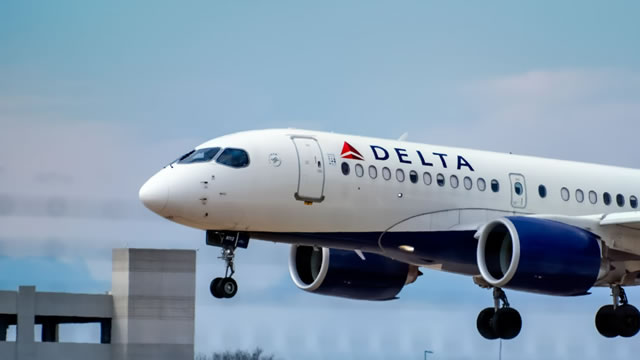
Delta Air Lines tries to calm fury over ticket prices, telling lawmakers it won't use AI
New York Post· 2025-08-01 19:01
Core Viewpoint - Delta Air Lines will not use artificial intelligence to set personalized ticket prices for passengers following criticism from lawmakers regarding potential fare increases based on individual consumer data [1][3]. Group 1: AI Implementation Plans - Delta plans to deploy AI-based revenue management technology across 20% of its domestic network by the end of 2025 in partnership with Fetcherr, an AI pricing company [1][3]. - The airline emphasizes that its ticket pricing does not consider personal data and has never targeted customers with individualized prices based on such data [3][6]. Group 2: Industry Context and Reactions - Dynamic pricing has been utilized by airlines for over three decades, adjusting based on factors like customer demand, fuel prices, and competition, rather than individual consumer information [4]. - American Airlines CEO Robert Isom expressed concerns that using AI for ticket pricing could damage consumer trust, stating that it is not an appropriate practice [4].
Delta Air Lines Tests AI-Powered Personalized Pricing
PYMNTS.com· 2025-07-22 19:02
Core Insights - Delta Air Lines is implementing an AI-powered personalized pricing system that tailors airfares to individual customers, with plans to expand its use to 20% of flights by the end of 2025 [1][3][19] - The initiative has sparked controversy, with lawmakers and advocacy groups labeling it as "predatory" and raising concerns about privacy and fairness [1][9][17] - Delta aims to gain a competitive edge by being a first mover in this pricing strategy, which is a significant shift from traditional pricing models [7][19] Company Strategy - Delta's AI pricing system is currently in a testing phase, being used on 3% of flights, and results so far have been described as encouraging by Delta's CEO [3][19] - The system adjusts prices based on individual behaviors such as booking history and device use, differentiating it from traditional dynamic pricing [4][5][6] - Delta's President emphasized that this approach represents a full reengineering of pricing strategies, aiming to provide individualized offers rather than static price grids [7][19] Industry Context - The practice of personalized pricing, also referred to as surveillance pricing, is already being utilized by various retailers and could lead to broader adoption in the airline industry [4][10][12] - Other airlines, including United and American, are also exploring AI in revenue management, indicating a potential trend in the industry [19] - The Federal Trade Commission has noted that surveillance pricing is prevalent in retail, with concerns about ethical implications and consumer privacy [10][13] Regulatory and Ethical Concerns - There are significant regulatory risks associated with personalized pricing, particularly in Europe where GDPR imposes strict limitations on data usage [1][17] - Concerns have been raised about potential discrimination and the possibility of lawsuits if consumers feel unfairly targeted by pricing algorithms [17][15] - Experts suggest that Delta may be overestimating its ability to accurately assess individual price sensitivity, which could lead to volatility in pricing decisions [13][14]

LYV's Concert Demand Remains Strong: Can it Handle Rising Costs?
ZACKS· 2025-07-17 18:00
Core Insights - Live Nation Entertainment, Inc. (LYV) is experiencing strong global demand for live music, with high-profile tours selling out and robust consumer interest across markets, which supports its flywheel business model [1][7] - Rising costs related to artist production, logistics, labor, and infrastructure are challenging the company's scalability, as evolving cost structures could pressure profitability if not managed carefully [2][4] - The company is leveraging its vertical integration strategy by owning and operating more venues, which enhances control over margins through high-margin ancillary revenue streams [3][7] Financial Performance - LYV's shares have increased by 16.8% over the past three months, outperforming the industry average rise of 12.6% [5] - Despite recent gains, LYV is trading at a forward 12-month price-to-sales ratio of 1.27, significantly lower than the industry average, with Warner Music and IMAX at 2.41 and 3.66, respectively [9] - The Zacks Consensus Estimate for LYV's 2025 earnings per share has risen to $2.35, although a decline of 14.2% is anticipated for the year [12]

Blade(BLDE) - 2025 Q1 - Earnings Call Transcript
2025-05-12 13:02
Financial Data and Key Metrics Changes - The company reported an 11% revenue growth excluding Canada, with a year-over-year improvement in adjusted EBITDA of $2.3 million [7][9] - Adjusted EBITDA for the passenger segment improved by $2.7 million year-over-year, reaching $6.3 million as of Q1 2025, up from $3.6 million in Q4 2024 [9][16] - Medical revenue remained roughly flat year-over-year at $35.9 million, with significant variability in monthly growth trends [17][20] Business Line Data and Key Metrics Changes - Passenger segment revenue grew by 42% year-over-year excluding Canada, marking the first adjusted EBITDA profitable quarter since going public [7][9] - Short distance revenue increased by 28.1% year-over-year, primarily driven by growth in Europe [16] - Jet and Other revenue increased by 60% year-over-year due to higher flight volume and revenue per flight [16] Market Data and Key Metrics Changes - The European market showed strong revenue growth attributed to restructuring efforts, which improved operational efficiency and customer experience [8][16] - The medical business is expected to benefit from strong underlying transplant volume growth, with industry transplant volume rising 7% year-over-year [24] Company Strategy and Development Direction - The company is focused on disciplined capital allocation, evaluating investments in aircraft and medical acquisitions to strengthen its competitive position [14][45] - The transition from helicopters to eVTOL is seen as a key strategic direction, with expectations for deployment in late 2025 to early 2026 [62] - The company aims to enhance profitability through cost rationalization initiatives and restructuring efforts, particularly in the passenger segment [10][13] Management's Comments on Operating Environment and Future Outlook - Management acknowledged economic uncertainty but expressed confidence in the resilience of their higher-end consumer base and ongoing demand in leisure markets [12][32] - The company expects continued revenue growth in the medical segment, with double-digit growth anticipated for the year [24][25] - Management noted that maintenance downtime is expected to moderate in the second half of 2025, leading to improved adjusted EBITDA margins [20][25] Other Important Information - The company ended the quarter with no debt and $120 million in cash and short-term investments, providing flexibility for strategic investments [23] - The company has implemented a withhold to cover method for taxes on employee stock-based compensation, effectively reducing outstanding shares [22] Q&A Session Summary Question: Themes for the year regarding passenger and medical segments - Management highlighted improved profitability in the passenger segment and the impact of maintenance on medical revenue, with expectations for better performance in the second half of the year [28][30] Question: Revenue contribution from Europe and sustainability of growth - Management confirmed approximately $6 million of revenue from Europe in Q1, attributing growth to restructuring and improved service [44] Question: Capital allocation priorities - The company is focused on tactical and strategic medical acquisitions, organic growth initiatives, and has a buyback authorization in place [45][46] Question: Bookings trends and impact of recent issues - Management noted that bookings for summer appear better than last year, but emphasized the on-demand nature of their service [50][53] Question: Repositioning aircraft strategy - Management explained that repositioning will always be part of the business, with a low to mid single-digit revenue headwind expected [71][72] Question: Impact of economic conditions on aircraft acquisitions - Management stated that there is no impact on their aircraft acquisition strategy, with plans to add a low single-digit number of aircraft over the next year or two [75][76]

ArcBest(ARCB) - 2025 Q1 - Earnings Call Transcript
2025-04-29 14:32
Financial Data and Key Metrics Changes - Consolidated revenue decreased by 7% year-over-year to $967 million, with non-GAAP operating income from continuing operations at $17 million compared to $43 million in the prior year [24] - Adjusted earnings per share were $0.51, down from $1.34 in Q1 2024 [24] - The Asset Based segment saw a $27 million decrease in operating income, while the Asset Light segment's non-GAAP operating loss improved to $1 million from $4 million the previous year [24] Business Line Data and Key Metrics Changes - Asset Based business revenue was $646 million, a daily decrease of 3%, with an operating ratio of 95.9%, an increase of 390 basis points year-over-year [25] - Daily shipments in the Asset Based segment were flat year-over-year, while weight per shipment decreased by 4%, resulting in a 4% decrease in tons per day [25] - Asset Light segment revenue was $356 million, a daily decrease of 9%, with shipments per day down 4% due to a strategic reduction in less profitable truckload volumes [29] Market Data and Key Metrics Changes - In April 2025, the Asset Based business achieved a 4% year-over-year increase in daily shipments, despite a 3% decrease in weight per shipment [28] - The pricing environment remains rational, with a 4.9% average increase on contract renewals during the quarter [27][53] - The company noted a decline in shipments within the manufacturing vertical, impacting revenue per hundredweight [28] Company Strategy and Development Direction - The company is focused on driving profitable growth, advancing premium service for customers, and optimizing efficiency [13] - Investments in technology and operational efficiency are expected to enhance service levels and reduce costs [89] - The company is adapting to changes in trade policies and tariffs, aiming to support customers in navigating these challenges [6][34] Management's Comments on Operating Environment and Future Outlook - Management expressed confidence in the company's ability to deliver long-term value despite challenges in the freight environment [12] - The leadership team highlighted a disciplined approach to pricing and operational efficiency to outpace rising costs [27][41] - Management noted that while external factors are unpredictable, the company is focused on controlling its operations and maintaining financial discipline [32] Other Important Information - The company expects capital expenditures for 2025 to be between $225 million and $275 million, focusing on maintenance and strategic investments [31] - The company has approximately $350 million in available liquidity, indicating a strong balance sheet [32] Q&A Session Summary Question: Near term setup and profitability targets - Management expects normal seasonality to drive revenue increases and continues to implement cost initiatives to align workforce with business levels [36][38] Question: Tonnage and revenue per hundredweight trends - Management noted a 1% sequential increase in tonnage but a 1% decrease in revenue per hundredweight, attributing this to a mix of easier-to-handle shipments [40][44] Question: Competitive environment and pricing dynamics - Management emphasized that the pricing environment remains rational, with no significant pressure from competitors to lower prices [53][66] Question: Retail exposure and inbound traffic from China - The company has around 10% exposure to the retail sector, with variations between asset-based and asset-light businesses [80] Question: Strategies in a stagflation environment - Management highlighted operational efficiencies and strategic investments as key levers to navigate inflationary pressures [88][91]
