New Energy Vehicles

Search documents
Is GM Set for 14th Straight EPS Beat in Q4? How to Play the Stock Now
ZACKS· 2026-01-22 17:56
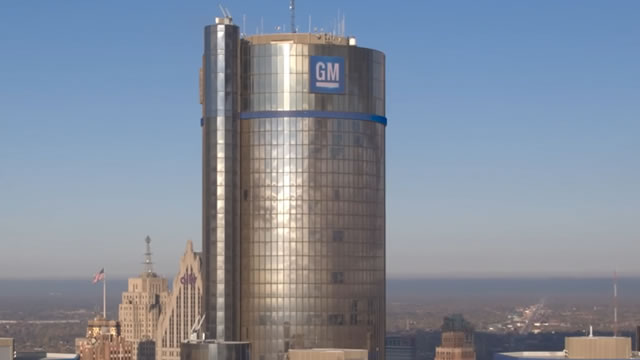
Core Insights - General Motors (GM) is expected to report its fourth-quarter 2025 results on January 27, with an EPS estimate of $2.19 and revenues of $45 billion, reflecting a 6% decline from the previous year [1][2] - The full-year 2025 revenue estimate is $185 billion, indicating a 1% year-over-year decline, while the EPS is projected at $10.31, a 2.7% contraction from the previous year [2] - GM has consistently surpassed earnings estimates for the past 13 quarters, with a positive Earnings ESP of +16.01% and a Zacks Rank of 1, indicating strong buy potential [3] Sales Performance - In Q4 2025, GM delivered 703,001 vehicles in the U.S., a 7% decline year-over-year, mirroring industry trends, with electric vehicle (EV) sales dropping 43% to 25,219 units [5][6] - Despite the decline in Q4, GM was the top-selling automaker in the U.S. for 2025, with full-year deliveries increasing by 5.5% to 2.85 million units [9] - In China, GM's Q4 deliveries were approximately 541,000 units, down from 600,000 units in Q4 2024, but full-year deliveries rose 2.3% to 1.9 million vehicles, driven by a 22% increase in new energy vehicle demand [10] Financial Outlook - The GM North America (GMNA) unit's revenue estimate for Q4 is around $37 billion, a 7% decrease year-over-year, while EBIT is expected to rise to $2.3 billion from $2.2 billion in Q4 2024 [8] - GM anticipates recording about $6 billion in special charges in Q4 2025 due to its EV rollback, which will impact net income but not adjusted earnings [11] - GM's stock has gained over 50% in the past six months, outperforming industry peers, and is currently trading at a forward earnings multiple of 6.77, indicating it may be undervalued [12][15] Strategic Adjustments - GM is adjusting its strategy by scaling back EV capacity to align with demand, focusing on higher-margin vehicles and proven revenue drivers [17] - The company is experiencing growth in its software and services business, with strong revenues from products like Super Cruise and OnStar [18] - GM's automotive liquidity stands at approximately $36 billion, with ongoing buybacks, enhancing its financial position [18]


China Auto Market Boomed in 2025: Why Growth May Be Softer in 2026
ZACKS· 2026-01-16 17:01
Core Insights - China's vehicle sales and production reached record highs in 2025, with production at 34.5 million units (up 10.4% year over year) and sales at 34.4 million units (up 9.4% year over year), driven by strong demand for new energy vehicles (NEVs) [2][4] Group 1: Market Performance - In 2025, China's passenger vehicle market also crossed the 30-million-unit mark, with production at 30.27 million units (up 10.2% year over year) and sales at 30.10 million units (up 9.2% year over year) [3] - The commercial vehicle segment saw production and sales rise to 4.26 million and 4.30 million units, both achieving double-digit growth [3] - China maintained its position as the world's largest auto market for the 17th consecutive year [4] Group 2: NEVs and Export Growth - China remained the largest NEV market globally for the 11th consecutive year in 2025, with NEV production and sales surpassing 16 million units [5] - NEV sales increased by 28% year over year to 16.5 million units, with battery electric vehicles (BEVs) leading the growth at 10.6 million units (up 37.6%) and plug-in hybrid vehicles (PHEVs) reaching 5.8 million units (up 14%) [6] - Vehicle exports reached a record 7.1 million units, up 21% year over year, driven by improved product quality and competitive pricing [7] Group 3: Key Players - BYD led in volume with approximately 4.6 million vehicles delivered in 2025, marking a 7.7% year-over-year increase [9] - NIO delivered 326,028 vehicles, up nearly 47% year over year, while XPeng recorded the fastest growth with deliveries jumping 126% to 429,445 units [10] - Li Auto delivered 406,343 vehicles, reflecting a 19% year-over-year decrease, despite expanding its international presence [11] Group 4: Future Outlook - Growth in China's auto market is expected to moderate in 2026, with total vehicle sales forecasted to increase by just 1% to 34.8 million units, compared to a 9% rise in 2025 [17] - Passenger vehicle sales are projected to rise 0.5% to 30.3 million units, while commercial vehicle sales are expected to increase by 5% to 4.5 million units [18] - NEVs are anticipated to remain the main growth driver, with sales forecasted to rise 15% to 19 million units, albeit at a slower pace than in recent years [18]
AI没有泡沫?在上海一间会议室里,我们听到了另一种答案
2 1 Shi Ji Jing Ji Bao Dao· 2026-01-14 02:10
Group 1 - AI is extending from cloud computing to factory production lines and pharmaceutical laboratories, indicating a shift in the wealth map for the next five years [1] - A closed-door seminar hosted by 21st Century Business Herald gathered nearly 30 distinguished guests, including economists, asset management executives, and scientists, to discuss the new cycle in capital markets driven by technology narratives [1] - The seminar highlighted the importance of strategic emerging industries such as AI, new energy vehicles, and semiconductors, which have moved from a nascent stage to a more robust phase of commercialization [5][6] Group 2 - The chief economist of Zheshang Bank presented a model analyzing the economic outlook across 31 primary industries and 124 secondary industries, predicting that 2026 will be a turning point for economic recovery [3] - The discussion emphasized that the negative impacts of external shocks on traditional industries are gradually being absorbed, with the real estate sector's downturn affecting various related industries [3] - A consensus emerged that a new investment cycle is likely to begin in the second half of 2026, supported by more proactive fiscal policies focusing on both "things" and "people" [5] Group 3 - Concerns about the potential bubble in AI investments were addressed, with most industry representatives rejecting the notion of a bubble, citing that current AI investments are still a small fraction of GDP [9][7] - The discussion revealed that AI is seen as a driver of productivity improvements, with companies leveraging AI technologies to enhance operational efficiency [10][11] - The challenges of transitioning from advanced research to stable delivery in production and achieving sustainable business models in the capital market were highlighted as significant hurdles [11] Group 4 - The need for a balance between short-term performance and long-term AI research investments was emphasized by representatives from robotics and semiconductor companies [14] - The concept of "patient capital" was introduced as essential for hard technology enterprises, with a focus on long-term investments in strategic sectors like computing chips and quantum computing [12][14] - The seminar concluded with a clear consensus on the investment focus being on embracing AI and computing infrastructure, while seeking applications that address real pain points and emphasizing globally competitive companies [15]

新股消息 | 杰华特(688141.SH)二次递表港交所 于全球所有模拟集成电路公司中排名第13
智通财经网· 2026-01-13 12:52
Company Overview - Jiewa Technology Co., Ltd. operates as an integrated circuit design company focusing on analog integrated circuits, utilizing a virtual IDM model for research and development [3][4] - The company offers a comprehensive range of analog integrated circuit products, including power management and signal chain integrated circuits, with approximately 3,400 models available for sale as of October 31, 2025 [4] Market Position - In the Chinese analog integrated circuit market, Jiewa is ranked 13th globally with a market share of 0.9% as of 2024 [5] - The company ranks 8th globally and 4th among Chinese companies in the power management integrated circuit segment, holding a market share of 1.3% [5] - Jiewa ranks 6th globally and 2nd among Chinese companies in the DC-DC integrated circuit segment, with a market share of 1.9% [5] - In the communications market, Jiewa ranks 5th globally and 2nd in China for power management integrated circuits, with a market share of 3.0% [5] Financial Performance - Revenue for Jiewa was approximately RMB 1.447 billion in 2022, RMB 1.297 billion in 2023, RMB 1.679 billion in 2024, and is projected to reach RMB 2.113 billion in 2025 [8] - The company reported a profit of RMB 136 million in 2022, but incurred losses of RMB 533 million in 2023, RMB 611 million in 2024, and RMB 496 million in 2025 [9] - Gross profit margins were 38.5% in 2022, dropping to 11.8% in 2023, and recovering to 22.6% in 2025 [11] Industry Overview - The global integrated circuit market is projected to grow from RMB 2.49 trillion in 2020 to RMB 3.61 trillion by 2024, with a compound annual growth rate (CAGR) of 9.7% [12] - The Chinese integrated circuit market is expected to expand from RMB 0.88 trillion in 2020 to RMB 1.45 trillion by 2024, with a CAGR of 13.3% [12] - Key drivers of growth include advancements in artificial intelligence, automotive electronics, and communication technologies [12]

【月度分析】2025年12月份全国乘用车市场分析
乘联分会· 2026-01-09 08:11
Core Viewpoint - The article analyzes the performance of the automotive market in December 2025, highlighting the trends in retail, production, and exports, particularly focusing on the growth of the new energy vehicle (NEV) sector amidst various market challenges [19][20][22]. Retail Analysis - In December, the national passenger car market retail reached 2.261 million units, a year-on-year decrease of 14.0% but a month-on-month increase of 1.6%. The cumulative retail for the year was 23.744 million units, reflecting a 3.8% year-on-year growth [19][20]. - The retail penetration rate of NEVs reached 59.1% in December, indicating a significant shift towards new energy vehicles, with a year-on-year increase of 9.6 percentage points [29][30]. - The retail performance of self-owned brands was 1.46 million units in December, down 11% year-on-year, but their market share increased to 64.3% [21][22]. Production and Wholesale Analysis - December production of passenger cars was 2.791 million units, a year-on-year decrease of 4.6% and a month-on-month decrease of 10.1%. The total production for the year was 29.633 million units, showing a 10.4% year-on-year increase [22][23]. - The wholesale volume in December was 2.789 million units, down 9.0% year-on-year and 7.0% month-on-month. The cumulative wholesale for the year was 29.554 million units, reflecting an 8.8% year-on-year growth [23][24]. Export Performance - In December, the total passenger car exports reached 588,000 units, a year-on-year increase of 46.2%, with NEVs accounting for 46.4% of total exports, up 15.6 percentage points from the previous year [22][30]. - The export of self-owned brands reached 515,000 units in December, marking a 50% year-on-year increase [22][30]. New Energy Vehicle Market - December saw NEV retail sales of 1.337 million units, a year-on-year increase of 2.6%, with a cumulative annual retail of 12.809 million units, reflecting a 17.6% growth [24][30]. - The production of NEVs in December was 1.560 million units, a year-on-year increase of 7.6%, while the cumulative production for the year reached 15.348 million units, growing by 26.1% [24][30]. Manufacturer Rankings - In December, BYD, Geely, and Tesla China were among the top manufacturers in NEV sales, with BYD leading with 414,784 units sold [33][34]. - The market share of new forces in the automotive sector reached 23.5%, with a year-on-year increase of 4.9 percentage points, indicating a growing presence of new entrants in the market [34].



从监管智驾到准许L3上路,十大事件解码多维博弈
Xin Jing Bao· 2026-01-08 08:29
Core Insights - The Chinese automotive market in 2025 is undergoing a multifaceted transformation driven by policy regulations, capital restructuring, technological breakthroughs, and safety standards. This transformation is not merely a technical iteration or market reshuffle but a comprehensive evolution that presents opportunities for industry restructuring and transformation [1] Regulatory Changes - The Ministry of Industry and Information Technology (MIIT) has mandated that automotive companies clarify system functionality and safety responses, moving away from exaggerated claims in intelligent driving promotions. This shift has led to a more rational understanding of "assisted driving" versus "autonomous driving" among consumers [2] Supply Chain Developments - The implementation of a 60-day payment term for large enterprises purchasing from small and medium-sized suppliers has significantly alleviated cash flow pressures on these suppliers. This change allows them to invest more in technology development, enhancing the quality and technical level of components [3] New Corporate Structures - The establishment of the China Changan Automobile Group as a new state-owned enterprise marks a significant shift in the industry landscape, enhancing decision-making autonomy and financing capabilities while focusing on new energy and intelligent technology [5] Asset Restructuring - Dongfeng Group has accelerated its transformation by divesting low-efficiency fuel assets and focusing on high-end new energy brands. This strategic move exemplifies how traditional automakers can innovate through capital restructuring [6][7] Safety Regulations - New regulations regarding hidden door handles require mechanical emergency functions to ensure safety in extreme conditions, reflecting a balance between innovation and safety in vehicle design [8] Market Performance - Chery Automobile's successful IPO, achieving a market value exceeding 200 billion HKD, highlights its strong performance with a 7.8% increase in total sales and a 54.9% surge in new energy vehicle sales [9] Autonomous Driving Milestones - The approval of L3-level conditional autonomous driving vehicles for real-world testing represents a significant milestone for the industry, allowing for data collection and setting safety boundaries for future developments [10] Corporate Integrations - The completion of the integration of Geely and Zeekr signifies a strategic elevation of Geely's market position, enhancing its technological capabilities and financial stability [11] Quality Concerns - A significant lawsuit against Xinwanda for quality issues in battery cells has raised alarms in the battery industry, emphasizing the need for improved quality management throughout the product lifecycle [12][13] Strategic Partnerships - FAW's investment in Leap Motor illustrates a strategic collaboration that combines manufacturing strength with innovative technology, potentially enhancing both companies' market positions [14]

Tesla Just Lost Its Crown. Should You Ditch TSLA Stock and Buy This No. 1 EV Seller Instead for 2026?
Yahoo Finance· 2026-01-05 16:09
Core Insights - Tesla has been a leader in the global EV market, but its dominance is now challenged by BYD, which has surpassed Tesla in sales as of 2026 [2] - BYD's growth has been characterized by consistent sales increases and a broad range of affordable EVs, while Tesla's vehicle deliveries have declined [2][6] - Investors are now considering whether to continue investing in Tesla or shift focus to BYD, the new leader in the EV market [3] Company Overview - BYD is the largest new-energy vehicle and battery manufacturer in China, offering a wide range of EVs and plug-in hybrids, from budget models to luxury vehicles [3] - The company has built significant manufacturing scale and expanded its global presence, contributing to its sales growth [2][3] Stock Performance - BYD's stock experienced volatility, with a notable rally of 74% in early 2025, but it has since given back much of those gains, resulting in a 10% return over the past year [4] - Berkshire Hathaway's exit from BYD shares in late 2025 indicates that even long-term investors are cautious as risks increase [3] Valuation Metrics - BYD's stock is trading at approximately 21 times trailing earnings, which is nearly double the auto industry average of around 11 times [5] - The price-to-sales ratio is near 1 times trailing revenue, aligning with large global automakers, while the price-to-book ratio of about 3.8 is considered elevated [5] Market Dynamics - Global EV sales increased by 28% in 2025, with BYD selling about 2.26 million battery EVs, a 28% YoY increase, compared to Tesla's 1.64 million, which saw an 8.5% decline [6] - Analysts suggest that BYD's milestone in sales may enhance its international expansion efforts and pressure Tesla to innovate its product lineup and improve margins [6]

2025 全年汽车销量 / 交付榜出炉:比亚迪 460 万辆蝉联第一,零跑夺新势力销冠
Xin Lang Cai Jing· 2026-01-02 04:26
Group 1 - In 2025, the domestic automotive market is highly competitive, with BYD leading in sales at 4,602,436 units, marking a year-on-year increase of 7.73% [1][2] - BYD's overseas sales surpassed 1 million units for the first time, showing a significant growth of 145% [2] - China FAW achieved sales of 3,301,963 units, a 3.2% increase, with notable growth in its Hongqi brand, which sold over 460,000 units, up 11.7% [2] Group 2 - Geely Auto reported sales of 3,024,567 units, a 39% increase, exceeding its annual target of 3 million units [2] - Chery Group's sales reached 2,631,381 units, an 8% increase, with its Jetour brand growing by 10% [2] - Great Wall Motors sold 1,323,672 units, with its WEY brand experiencing a remarkable growth of 86.29% [3] Group 3 - Li Auto's sales were 406,343 units, reflecting a decline of 18.8%, while NIO reported 326,028 units, a growth of 46.9% [3] - Xpeng Motors achieved sales of 429,445 units, a significant increase of 126%, with overseas deliveries reaching 45,008 units, up 96% [3] - The overall performance of new energy vehicles is strong, with several brands, including SAIC-GM Wuling, surpassing 1 million units in annual sales [2][3]
Leadrive Technology (SHANGHAI) Co., Ltd.(H0276) - Application Proof (1st submission)
2026-01-01 16:00
The Stock Exchange of Hong Kong Limited and the Securities and Futures Commission take no responsibility for the contents of this Application Proof, make no representation as to its accuracy or completeness and expressly disclaim any liability whatsoever for any loss howsoever arising from or in reliance upon the whole or any part of the contents of this Application Proof. Application Proof of Leadrive Technology (SHANGHAI) Co., Ltd. 臻驅科技 (上 海 )股份有限公司 (the "Company") (A joint stock company incorporated in t ...
“小气鬼”最爱!续航实测:1度电跑2.9公里的江淮坤鹏ET9
第一商用车网· 2025-12-30 16:03
Core Viewpoint - The Jianghuai Kunpeng ET9, showcased at the Wuhan Commercial Vehicle Exhibition, is positioned as an "all-around logistics vehicle" with innovative technologies and user experiences, aiming to redefine the standards of logistics transportation tools in the new energy vehicle sector [1][14]. Design and Comfort - The Kunpeng ET9 features the industry's widest 2170mm high-top flat floor design, providing an interior height of 1850mm and width exceeding 1800mm, creating a spacious environment comparable to a "living cabin" [3][5]. - The ample vertical space allows for the installation of roof racks or storage devices, enhancing the functionality of the driver's cabin as a "mobile home" [3]. Performance and Efficiency - The vehicle is equipped with a pioneering liquid-cooled flat wire high-efficiency electric motor, delivering a maximum power of 180kW, ensuring responsive and linear power output during operation [5]. - The Kunpeng ET9 boasts a drag coefficient as low as 0.33Cd, contributing to over a 15% increase in vehicle range, optimizing energy usage [7][9]. - The vehicle's battery, a custom version from CATL, supports ultra-fast charging, allowing a 20% to 80% state of charge in just 18 minutes, potentially saving users 40-70 minutes of charging time daily, translating to an annual revenue increase of over 5000 yuan [9][11]. Safety Features - The Kunpeng ET9 includes advanced safety systems such as AEB (Automatic Emergency Braking) and FCW (Forward Collision Warning), providing comprehensive 360-degree safety protection for drivers [14]. - Real-world testing demonstrated the vehicle's reliability in terms of range and energy efficiency, reinforcing its capability as a dependable partner for drivers [12][14]. Conclusion - The Kunpeng ET9 represents a significant evolution in the electric light truck market, focusing on user value and operational efficiency, thus offering a superior choice for logistics operators in the transition from policy-driven to value-driven solutions in the new energy vehicle landscape [14][15].