人类命运共同体

Search documents
从两个大局看“十五五”战略谋划
Ren Min Ri Bao· 2026-01-19 22:42
Group 1 - The "14th Five-Year Plan" outlines a blueprint for China's economic and social development over the next five years, providing a "list of opportunities" for the world [1][2] - The plan emphasizes the importance of strategic planning and maintaining strategic initiative in the context of both domestic and international developments [2][5] - The historical context of China's development is highlighted, showing how the revival of the Chinese nation is a key factor influencing global changes [3][5] Group 2 - The plan reflects a strategic assessment of the current global landscape, recognizing the coexistence of opportunities and challenges for China's development [7][12] - China's commitment to high-quality development is presented as a means to provide stability and new momentum for global growth, with initiatives like the China International Import Expo showcasing this commitment [8][10] - The emphasis on innovation and the development of new productive forces is seen as crucial for maintaining China's competitive edge in the global market [13][14] Group 3 - The role of the Communist Party in driving the interaction between domestic and international dynamics is underscored, with a focus on leveraging historical opportunities for national rejuvenation [12][14] - The plan aims to enhance China's global influence while promoting a shared future for humanity, positioning China as a responsible major power [9][10] - The strategic initiatives outlined in the plan are designed to ensure that China can navigate the complexities of the current global environment effectively [15]
博鳌亚洲论坛2026年年会聚焦携手打造美好未来——坚持多边主义代表共同利益
Jing Ji Ri Bao· 2026-01-19 22:17
Group 1 - The Boao Forum for Asia's 2026 annual conference will be held from March 24 to 27 in Hainan, with the theme "Shaping a Shared Future: New Situations, New Opportunities, New Cooperation" [1][2] - The forum aims to address the role of global South countries in improving global economic governance and the leading role of Asia in the world economic transition [2] - Key topics will include the impact of tariff wars on global trade, the potential of the Regional Comprehensive Economic Partnership (RCEP), and the revitalization of the Asia-Pacific Economic Cooperation (APEC) [2][3] Group 2 - The forum will explore pathways for digital and green transformation, sustainable development goals, and enhancing economic growth momentum and resilience [2][3] - Discussions will also focus on the future of enterprises during transitions and the responsibilities of young entrepreneurs [2] - The event will include dialogues on the outlook for the Chinese economy and a sub-forum on Hainan Free Trade Port [2]
人民日报国纪平:“今天的中国,明天的世界”缘何出现
Bei Jing Ri Bao Ke Hu Duan· 2026-01-18 22:45
Core Insights - China's modernization is contributing to global development and expanding the space for modernization worldwide, particularly in poverty alleviation and green transformation [1][4][5] - The phrase "Today's China, Tomorrow's World" reflects the growing recognition of China's role in global development and the belief that other developing countries can also succeed [1][4] Group 1: Poverty Alleviation - Poverty is a long-standing issue, with over 700 million people facing hunger and more than 800 million in absolute poverty globally [3] - China's approach to poverty alleviation has evolved from theoretical discussions to practical implementations, achieving the largest poverty reduction in history by lifting nearly 100 million people out of poverty in eight years [4][10] - The concept of "targeted poverty alleviation" has been recognized internationally, with countries like Thailand adopting similar strategies based on China's experience [10][11] Group 2: Green Transformation - Balancing development and environmental protection is a significant challenge in modernization, with traditional paths often leading to pollution before remediation [5][6] - China's green development philosophy emphasizes that ecological protection is integral to productivity, advocating for high-quality development alongside environmental sustainability [6][7] - The success of China's green initiatives, such as eco-tourism and sustainable practices, serves as a model for other countries seeking to achieve similar transformations [7][12] Group 3: Global Perspective on China - The international perception of China is shifting from skepticism to recognition of its successful development model, with a growing interest in learning from China's experiences [8][9] - The narrative that poverty is a fate for developing countries is being challenged by China's success, which demonstrates that poverty can be overcome through resilience and strategic planning [10][11] - China's modernization offers a new path for developing countries, emphasizing that there is no one-size-fits-all approach to development [13][14] Group 4: Collaborative Modernization - China's modernization is characterized as "open-source," aiming for shared opportunities and mutual benefits with other developing countries [15][16] - Practical cooperation projects, such as microgrid initiatives and water supply solutions, illustrate China's commitment to global development and its role as a facilitator of progress [16][17] - The ongoing development of China's economy is expected to contribute positively to global economic growth, benefiting both China and the world [16][18]
全球治理倡议助力外空治理改革
Xin Lang Cai Jing· 2026-01-18 18:28
Core Viewpoint - The article discusses the increasing challenges in outer space governance, highlighting the need for a more equitable and sustainable governance system, particularly in light of the rising militarization and competition for space resources. China's global governance initiative is presented as a constructive solution to these issues [1]. Group 1: Challenges in Outer Space Governance - The outer space governance system faces multiple deficits, including a representation deficit where global South countries lack adequate representation in decision-making processes [2]. - There is an authority deficit threatening the multilateral governance framework led by the United Nations, exacerbated by unilateral actions from countries like the U.S. that undermine established international laws [2]. - An effectiveness deficit is evident as current governance mechanisms are slow to respond to emerging challenges such as space debris and military ambitions, leading to regulatory gaps [2]. Group 2: China's Global Governance Initiative - China's initiative emphasizes five core principles to enhance outer space governance: equality of sovereignty, rule of law, multilateralism, human-centered values, and practical effectiveness [3]. - The principle of equality of sovereignty aims to democratize international relations in outer space, ensuring that the voices of global South countries are included [3]. - The initiative advocates for adherence to existing international legal frameworks, including the Outer Space Treaty, to maintain order in outer space governance [3]. Group 3: Constructing a Fairer Governance System - The article argues for reforming the existing governance system rather than completely overhauling it, emphasizing the importance of maintaining the core principles of the United Nations framework [4][5]. - It calls for inclusive participation from all countries in governance processes, particularly in critical areas like frequency allocation and space debris management [5]. - The need for international cooperation and capacity building for developing countries is highlighted to enhance their participation in outer space governance [5].
中国马克思主义哲学何以成为世界的?
Xin Lang Cai Jing· 2026-01-18 04:04
Core Viewpoint - The article emphasizes the significance of Chinese Marxist philosophy as a world philosophy that transcends Western-centric views, highlighting its role in addressing global issues and contributing to human civilization [1][2]. Group 1: Theoretical Foundations - Chinese Marxist philosophy integrates Marxist principles with over 5,000 years of Chinese civilization, creating a unique philosophical framework that embodies both "soul" and "root" [2]. - It challenges the notion that philosophy is synonymous with Western philosophy, establishing a new paradigm for non-Western philosophical discourse [1][2]. Group 2: Practical Contributions - The philosophy addresses both "China's questions" and "world's questions," contributing to public wisdom and global discourse on development, governance, and social issues [1][2]. - It has evolved to provide a framework for understanding human progress and global unity, emphasizing the interconnectedness of national and global concerns [1][2]. Group 3: Innovations in Philosophy - The article outlines three main areas of innovation in Chinese Marxist philosophy: 1. **Ontology**: A shift from traditional materialist ontology to a "practice-relationship" ontology, focusing on human existence and well-being [3][4]. 2. **Methodology**: The development of a distinctive cognitive paradigm that integrates dialectical materialism with traditional Chinese thought, creating a "practice-knowledge-repractice" model [5]. 3. **Value Theory**: A transformation of value assessment from capital logic to human-centered logic, establishing a framework for social justice and common human values [6]. Group 4: Global Impact - Chinese Marxist philosophy not only guides China's modernization but also engages in global practices such as the Belt and Road Initiative, promoting a shared human destiny [7]. - It aims to build a global consensus on values, addressing the needs of humanity and fostering dialogue among diverse cultures [7].
观察者网2026答案秀|全球AI治理:是走向“两极对抗”,还是“多边共治”?
Xin Lang Cai Jing· 2026-01-18 00:57
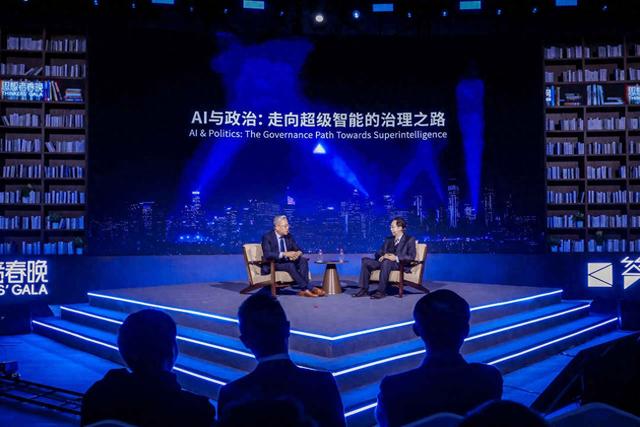
Core Viewpoint - The discussion highlights the divergent paths of AI development between China and the United States, emphasizing the underlying ideological and technical differences that may lead to distinct governance and ethical frameworks in AI [1][5][7]. Group 1: AI Development Paths - The emergence of ChatGPT and DeepSeek represents the contrasting AI development trajectories of the US and China, with the former focusing on "brute force computing" and the latter on "smart computing" [3][5]. - The US relies on a "material science paradigm" for AI, while China is moving towards an "information science paradigm," indicating a fundamental scientific divergence [6][11]. - The differences in AI development are not only technical but also rooted in deeper philosophical beliefs about the relationship between technology and ethics [7][11]. Group 2: Ethical and Governance Considerations - The ethical implications of AI development are significant, with differing views on whether technology should be pursued without ethical constraints or if ethical considerations should be integrated into technological design [7][12]. - The urgency for global cooperation in AI governance is highlighted, as failure to establish common standards could lead to fragmentation similar to historical colonial conflicts [13][19]. - The need for a collaborative approach to AI governance is emphasized, with a focus on embedding human values into AI systems to prevent potential negative outcomes [17][19]. Group 3: Strategic and Economic Implications - The US's "small yard, high wall" policy is pushing Chinese AI companies to adopt alternative, more innovative paths, potentially leading to a competitive advantage in the long run [8][10]. - The discussion suggests that while the US aims for advanced general AI, China is focusing on practical applications of AI across various industries, which may lead to more sustainable development [19][20]. - The concept of a "community of shared future for mankind" is proposed as a framework for fostering cooperation in AI development, which could enhance collective benefits [19][20].

中美AI发展路径,有这些明显的分歧
Guan Cha Zhe Wang· 2026-01-18 00:54
Core Viewpoint - The discussion highlights the divergent paths of AI development between China and the United States, focusing on the underlying ideological and technical differences that may lead to distinct governance and ethical frameworks in AI [1][5][7]. Group 1: AI Development Paths - The emergence of ChatGPT and DeepSeek represents the contrasting AI development trajectories of the US and China, with each country adopting different technological philosophies [3][5]. - The US approach is characterized by "brute force computing," relying heavily on hardware, while China's strategy emphasizes "smart computing," focusing on programming capabilities and efficiency [5][6]. - The historical context of technological competition is referenced, comparing current AI developments to past industrial revolutions, indicating that differing foundational beliefs can lead to divergent technological outcomes [5][6]. Group 2: Scientific and Ethical Discrepancies - There is a significant scientific divergence, with the US adhering to a "material science paradigm" while China is moving towards an "information science paradigm," which may influence the future of AI technologies [6][12]. - Ethical considerations in AI development reveal a divide, with the US leaning towards technological libertarianism, while China emphasizes embedding ethical considerations into technology design [7][12]. - The potential for a "clash of civilizations" is acknowledged, suggesting that deep-rooted cultural differences may shape the future of AI governance and development [12][18]. Group 3: Global Cooperation and Governance - The urgency for global cooperation in AI governance is emphasized, as fragmented standards could lead to inefficiencies and conflicts similar to historical colonial disputes [14][20]. - The need for a unified approach to AI standards and protocols is critical to avoid technological fragmentation and ensure mutual benefits for all nations involved [14][20]. - The discussion suggests that AI should not merely be viewed as a technology but as a complex relationship between technology and humanity, necessitating a collaborative governance framework [18][20]. Group 4: Future Implications - The potential for AI to significantly impact social and economic structures is acknowledged, with differing timelines for the realization of these impacts in the US and China [20][21]. - The emphasis on practical applications in China may lead to more sustainable AI development compared to the US's focus on theoretical advancements [20][21]. - The overarching theme is that technology should serve humanity, with the importance of human agency in guiding AI development being paramount [21].
中国驻美国大使谈中美关系:无论是关税战、贸易战、科技战,还是产能战、资源战、地缘战,都是损人害己的死路绝路
Xin Lang Cai Jing· 2026-01-17 16:38
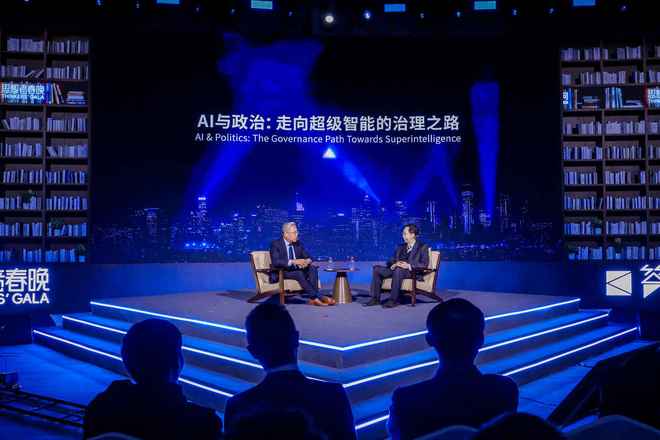
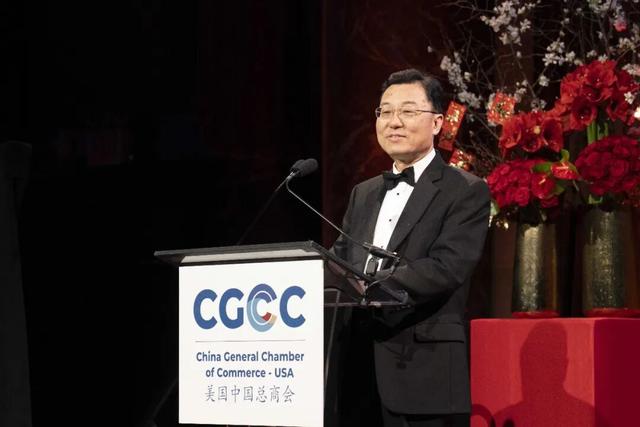
Core Viewpoint - The speech emphasizes the importance of cooperation and development amidst global uncertainties, highlighting the need for multilateralism and mutual respect in international relations [3][4][5]. Group 1: International Relations - The global trend towards peace, development, and cooperation remains unchanged despite rising instability and uncertainty [3][4]. - The historical logic of mutual benefit in Sino-American relations persists, indicating that dialogue is preferable to confrontation [5][6]. - The principles of mutual respect, peaceful coexistence, and win-win cooperation are essential for a stable Sino-American relationship [6]. Group 2: Economic Development - China's economy is projected to grow by around 5% in the past year, contributing over 30% to global economic growth [7]. - The total trade surplus for China exceeded 1 trillion USD for the first time, showcasing its role as both a major exporter and importer [7][8]. - China is committed to high-quality development and high-level opening up, with significant opportunities in emerging industries such as new energy and biotechnology [7][8]. Group 3: Foreign Investment - China has reduced its foreign investment negative list to 29 items and is providing zero-tariff treatment to products from least developed countries [8]. - The number of newly established foreign-invested enterprises in China increased by 16.9% year-on-year, indicating growing foreign confidence [8]. - The potential for cooperation between Chinese and American companies in strategic emerging industries is significant, with a focus on mutual benefits [8].
联播+|立东方 惠天下
Yang Shi Wang· 2026-01-17 12:24
亚投行作为习近平主席亲自倡议筹建、亲自推动成立的21世纪新型多边开发银行,自2016年正式开业以 来,始终坚守初心、创新进取,不断发展壮大,已真正成为惠泽各方的共赢平台。 联播+ "亚投行应该成为促进成员共同发展、推动构建人类命运共同体的新平台。"2020年7月28日,习 近平主席在亚洲基础设施投资银行第五届理事会年会视频会议开幕式上发表致辞。他强调:"中国将继 续同各成员一道支持亚投行、办好亚投行,为国际社会应对风险挑战、实现共同发展作出更大贡献。" ...
伊朗还有救!专家给出招:中俄联手,用人民币与输油管改写规则
Sou Hu Cai Jing· 2026-01-17 05:13
Core Viewpoint - The article discusses the complex situation in Iran, highlighting the dual challenges of economic sanctions and military threats from the U.S., and explores potential solutions through economic and military cooperation with China and Russia [1][3]. Economic Situation - Iran is facing high inflation, primarily due to long-term U.S. sanctions that have cut off its access to dollar transactions and oil exports, leading to a vicious cycle of inflation [3]. - A proposed solution is to utilize the Chinese yuan as an alternative to the dollar, allowing Iran to establish an independent currency circulation system and stabilize its economy [3][5]. - Iran's rich oil resources can serve as collateral for loans, enabling direct oil exports to China in yuan, which would bypass U.S. sanctions and meet China's market demands [5]. Military Support - Economic measures alone are insufficient; military support is crucial for Iran to withstand U.S. threats, particularly from U.S. naval forces and Israeli airstrikes [7]. - Cooperation with China and Russia is essential to enhance Iran's military capabilities, including advanced defense systems and weaponry [9]. Infrastructure Development - Iran needs to restructure its oil export routes to avoid reliance on vulnerable maritime routes, which are subject to U.S. naval blockades [11]. - Proposed land-based oil pipelines connecting Iran to Turkmenistan and Pakistan would create a secure energy corridor, enhancing regional energy security and economic ties [11]. Intelligence and Governance - To achieve long-term stability, Iran must address external infiltration by foreign intelligence agencies, with Russia potentially assisting in counterintelligence efforts [13]. - A collaborative approach between China and Russia could foster mutual benefits in intelligence and military cooperation, aiding Iran's modernization efforts [13]. Geopolitical Implications - The resolution of Iran's challenges could signify a shift in the geopolitical landscape of the Middle East, promoting a multipolar balance and countering U.S. unilateralism [14].