
家国情怀

Search documents
综述|伟大抗战精神在香港薪火相传
Xin Hua She· 2025-08-30 13:40
Core Viewpoint - The article highlights the importance of commemorating the 80th anniversary of the victory in the Chinese People's Anti-Japanese War and the World Anti-Fascist War, emphasizing the transmission of patriotic spirit and historical awareness among the youth in Hong Kong [3][7]. Group 1: Commemorative Activities - A large-scale touring exhibition titled "Remembering History, Cherishing Peace" attracted many visitors in Hong Kong, showcasing the history of the Anti-Japanese War through various media [3]. - The Hong Kong Education Bureau and the Patriotic Education Support Center organized a special exhibition and study program, involving around 200 primary and secondary school teachers and students [4]. - The Hong Kong Youth Patriotic Education Foundation conducted a study tour activity, engaging over 600 students from 18 secondary schools to explore historical sites related to the Anti-Japanese War [5]. Group 2: Youth Engagement - Young participants expressed a deepened understanding of history and a sense of responsibility towards their nation after attending various commemorative events [5][6]. - The Hong Kong Youth Patriotic Education Foundation aims to instill a sense of national pride and responsibility in students through hands-on historical experiences [5]. - The Civil Security Service's youth group held a sharing session to reflect on the significance of the Anti-Japanese War, enhancing their national identity and pride [6]. Group 3: Educational Initiatives - The Education Bureau plans to provide approximately 100 free visits to schools in the 2025/2026 academic year to enhance students' understanding of the Anti-Japanese War [4]. - Various schools organized activities such as online quizzes and expert lectures to deepen students' knowledge of the war and strengthen their awareness of national security [4]. - The inter-school essay and Mandarin recitation competition themed around the Anti-Japanese War aims to promote patriotic sentiments among students [6].
(抗战胜利80周年)香港特区政府举行典礼纪念抗战胜利80周年
Zhong Guo Xin Wen Wang· 2025-08-30 06:59
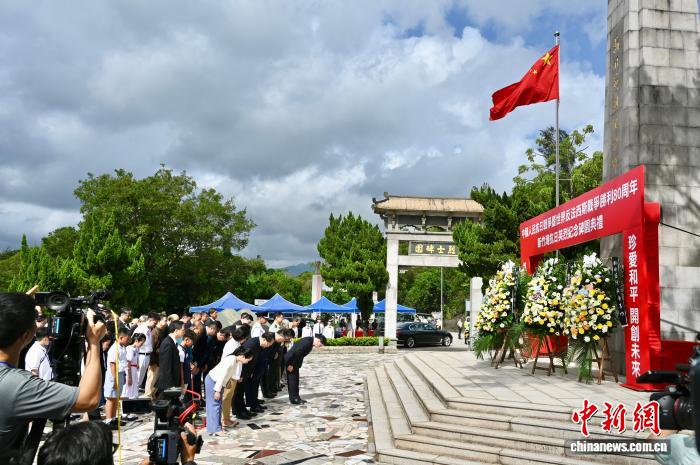
Core Viewpoint - The Hong Kong Special Administrative Region (HKSAR) government held a ceremony on August 30 to commemorate the 80th anniversary of the victory in the Chinese People's War of Resistance Against Japanese Aggression and the World Anti-Fascist War [1][3][5] Group 1: Ceremony Details - The ceremony took place at the Anti-Japanese Heroes Monument Park in Saikung, where HKSAR Chief Executive John Lee led guests in paying respects to the monument [3][5] - A flag-raising ceremony was conducted, followed by a moment of silence and a bow to the monument by Chief Executive Lee and other guests [3][5] - The unveiling of a couplet at the memorial pavilion was performed, which reflects the patriotic sentiments of Hong Kong citizens [5] Group 2: Historical Context and Significance - Chief Executive Lee emphasized the connection between Hong Kong and the nation, highlighting the support of Hong Kong residents during the war, particularly the involvement of local residents in the anti-Japanese struggle [5] - He mentioned that the HKSAR government plans to install commemorative plaques at various historical sites related to the war to enhance public understanding of the significance of the anti-Japanese war and its victory [5] - Lee called for unity and the inheritance of the spirit of the heroes, urging citizens to contribute to the great rejuvenation of the Chinese nation and the building of a community with a shared future for mankind [5]

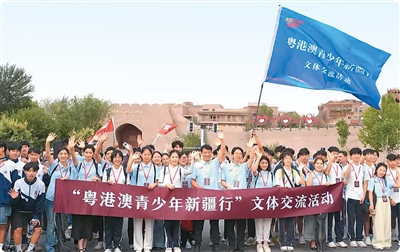
山海虽遥 心手相牵——粤港澳新青少年践行“家国青春约”
Ren Min Ri Bao Hai Wai Ban· 2025-08-29 23:00
Core Viewpoint - The "Youth Exchange Activity in Xinjiang" highlights the importance of cultural and educational exchanges among youth from the Guangdong-Hong Kong-Macao Greater Bay Area and Xinjiang, fostering national unity and understanding through shared experiences and activities [1][5][10] Group 1: Cultural Exchange and Education - The event included visits to significant historical and cultural sites, such as the Banchao Memorial Hall, where stories of border defense were shared, emphasizing the collective effort of various ethnic groups in safeguarding the nation [1][2] - Students participated in ecological education by visiting the Million-Mu Windbreak Forest Base, witnessing the transformation of previously barren land into a green ecological barrier, reflecting the concept of sustainable development [2][5] - The youth engaged in traditional cultural activities, such as music and dance, connecting with the rich heritage of the region while promoting cultural appreciation [2][4] Group 2: Sports and Friendship - Football matches served as a bridge for friendship, with teams from different regions showcasing their skills and fostering camaraderie through sports [7][8] - The interactions during football games allowed for cultural exchange, as students from Hong Kong and Macau expressed their admiration for the local football culture and community [8][9] - The shared experiences in sports led to lasting friendships, with participants expressing a desire to continue these connections beyond the event [9][10]
重温烽火往事 传承家国情怀——香港各界举办多场专题论坛纪念抗战胜利80周年
Xin Hua She· 2025-08-29 12:28
Group 1 - The forums and lectures held in Hong Kong commemorate the 80th anniversary of the victory in the Chinese People's Anti-Japanese War and the World Anti-Fascist War, emphasizing the importance of remembering history and the contributions made during the war [1][2] - Over 250 guests attended a forum organized by the Hong Kong Democratic Alliance for the Betterment and Progress of Hong Kong and China Merchants Port Holdings, highlighting the heroic contributions of Hong Kong during national crises [1] - The discussions aim to instill a sense of patriotism in the younger generation by sharing stories of bravery and sacrifice from the war, ensuring that the spirit of resistance is passed down [2] Group 2 - The Hong Kong government hosted lectures discussing the historical significance of the Anti-Japanese War, focusing on China's role as the main battlefield in the East during the World Anti-Fascist War and the contributions of the Chinese Communist Party [2] - A significant turnout of over a thousand participants attended a lecture organized by the Hong Kong Federation of Trade Unions, where the daughter of an East River Column veteran shared her father's experiences and the importance of national responsibility [2] - The narrative emphasizes that remembering history is not about perpetuating hatred but about cherishing peace and instilling a sense of national identity in the youth [2] Group 3 - During the 35th Hong Kong Book Fair, a lecture commemorating the 90th anniversary of the "March of the Volunteers" was held, where the niece of the lyricist shared the story behind the national anthem's creation [3] - The event included a collective singing of the national anthem, showcasing the emotional connection and historical significance it holds for the attendees [3] - The lecture highlighted the importance of remembering historical figures and events to understand one's roots and national identity [3]
“我们是保乡的战士,我们是卫国的先锋!”(抗战烽火中的华侨华人)
Ren Min Ri Bao Hai Wai Ban· 2025-08-28 23:08
Core Viewpoint - The article commemorates the contributions of overseas Chinese from Hainan who returned to China to participate in the anti-Japanese war, highlighting their bravery and dedication to their homeland during a critical historical period [6][11][17]. Group 1: Historical Context - Over 80 years ago, during the Japanese invasion, a group of young Hainanese overseas Chinese left their comfortable lives in Southeast Asia to join the fight against Japanese aggression [6][8]. - The "Qiongya Overseas Chinese United Association Return Service Team" and the "Nanyang Overseas Chinese Mechanic Return Service Team" were formed, consisting of young individuals who risked their lives to return to their homeland [6][8]. Group 2: Contributions and Activities - More than 240 young Hainanese overseas Chinese returned in five batches, with some disguising themselves as refugees to evade Japanese patrols [8][10]. - Upon their return, they engaged in various activities, including performing plays and operas to inspire anti-Japanese sentiment among the local population [11][12]. - The service teams also provided medical assistance, establishing clinics and distributing medical supplies to those in need [12][13]. Group 3: Personal Stories and Sacrifices - Many members of the service teams came from affluent backgrounds but chose to abandon their comfortable lives to fight for their country [10][11]. - The article recounts personal stories of sacrifice, such as the leader of the service team, Fu Ke, who was killed while negotiating for cooperation against the Japanese [15][17]. - The narrative emphasizes the emotional ties and patriotism of these individuals, showcasing their commitment to their homeland despite the dangers they faced [15][16]. Group 4: Legacy and Recognition - The article highlights the lasting impact of these overseas Chinese on the anti-Japanese war effort, with many integrating into local military and governmental structures after the war [17]. - Memorial sculptures have been erected to honor the contributions of these brave individuals, serving as a reminder of their sacrifices and the deep connection between overseas Chinese and their homeland [6][7].

烽火家书寄深情 不朽丹心护山河
Yang Shi Wang· 2025-08-28 01:24
"志兰!亲爱的,别时容易见时难。分离廿一个月了,何日相聚,念、念、念、念。" 1939年4月,左权与刘志兰结婚。翌年盛夏,他怀抱三个月大的女儿左太北,与妻子拍下一张全家 福。面对镜头,素来严肃的左权将军露出了难得的笑容,那是初为人父时最真实的幸福感。然而,为了 全身心投入即将到来的百团大战,他只能将这份珍贵的幸福封存于照片之中,毅然将亲人送去了延安。 "本来分别是感痛苦的,但为了工作,为了进步,为了于党有益,分别也就没有什么了。" 这是1942年5月22日,左权将军在太行山深处写下对妻女的深深思念。3天后,在山西辽县十字岭, 左权在指挥中共中央北方局和八路军总部等机关突围转移时不幸牺牲,以身殉国,年仅37岁。 再过2天,便是他心爱的女儿左太北的两岁生日。那一声声"念、念、念、念",终成绝响。 风雨飘摇际,英雄少年时 1905年,左权出生在湖南醴陵一个贫苦农民家庭,当时的中国政局动荡、列强环伺。1915年,10岁 的左权听到袁世凯签订"二十一条"的消息,愤然在夹书板上写下了"勿忘五九国耻,五月九忆国仇",稚 嫩却有力的笔迹中,流露出一个少年对国家和民族命运的忧虑。 20岁那年,左权加入中国共产党。1930年,他 ...
港澳台简讯:香港特区政府优化跨境私家车过境措施
Xin Hua Wang· 2025-08-26 03:02
新华社北京8月25日电 港澳台简讯 香港特区政府入境事务处日前于入境处总部举办为期六周的"山河永固·口岸峥嵘——纪念抗战胜利80周 年国门油画展",展出28幅由内地画家杨永智创作的油画作品。特区政府入境处处长郭俊峰在开幕典礼 上表示,期望此次展览向社会传递不屈不挠的抗战精神和先烈的家国情怀。 香港代表团勇夺硅谷国际发明节最高荣誉大奖 香港特区政府优化跨境私家车过境措施 香港特区政府运输署25日宣布,自26日起持有香园围管制站"封闭道路通行许可证"的跨境私家车,可于 每日午夜12时至上午6时30分经落马洲管制站过境。相关安排有助促进粤港进一步融合,提升旅客通关 效率。 香港举办"山河永固·口岸峥嵘——纪念抗战胜利80周年国门油画展" 香港代表团近日在美国举行的硅谷国际发明节中勇夺27面金牌及8个特别大奖,其中包括全场最高荣誉 大奖、IFIA大奖及WIPO大奖。香港特区政府创新科技及工业局局长孙东日前在社交平台发文祝贺。参 与本届硅谷国际发明节的香港代表团成员来自香港大学、岭南大学、香港浸会大学等不同单位。 ...
澳门举行中国人民抗日战争胜利80周年纪念章颁发仪式
Xin Hua She· 2025-08-25 15:28
岑浩辉致辞表示,抗战期间,澳门同胞身处特殊环境,但始终心系祖国,通过各种方式积极支援抗战。 在中华民族救亡图存的关键时刻,广大澳门同胞用实际行动展现了澳门与祖国"风雨同舟、血脉相连"的 紧密关系,体现了澳门同胞强烈的家国情怀与使命担当,为伟大抗战精神做出了生动注解。 岑浩辉表示,特区政府专门成立跨部门工作小组,围绕"铭记历史、缅怀先烈、珍爱和平、开创未来"的 主题,精心筹备系列活动纪念抗战胜利80周年,引导澳门同胞真正理解、践行抗战精神,特别是深入挖 掘澳门本地的抗战历史资源,赓续爱国、团结、奋斗传统,激发澳门同胞的认同感、归属感和民族自豪 感,激励青年一代始终与祖国同频共振,在民族复兴的征程中实现个人与国家的共同发展。 新华社澳门8月25日电(记者齐菲 刘刚)澳门特区政府25日举行中国人民抗日战争胜利80周年纪念章颁 发仪式。澳门特区行政长官岑浩辉分别向吴丰宇烈士家属吴清华女士、蔡俊烈士家属梁凤文女士颁发纪 念章。 澳门中联办主任郑新聪、外交部驻澳特派员公署特派员刘显法、解放军驻澳门部队副司令员戴劲松等出 席纪念章颁发仪式。 ...
档案里的抗战家书丨与妻书,予家国
Xin Hua She· 2025-08-25 11:13
危急关头之际、生死未卜之时,抗战英烈提笔写下与妻书,字里行间是对妻子的诀别、对家人的牵挂, 对家国的赤诚。 炮火连天的抗战岁月里,无数中华儿女奔赴战场,用血肉之躯筑起保家卫国的钢铁长城。 纸短情长,言不尽意。捧起泛黄的信笺,让我们一同聆听那些跨越时空的深情告白。 与妻:生死相托皆不舍 "现在此逃难中,最要紧是食饭。其他要尽量省钱。""我身体平安请勿念。专此顺颂……"1944年夏末, 妻子程俊璧颤抖着拆开一封来自前线的家书,丈夫余子武那熟悉的字迹映入眼帘。 这封信,是国民革命军陆军第62军151师副师长余子武在前线寄给妻子的一封告知平安的家书。可就在 收到信的几天前,程俊璧刚刚得知丈夫已在衡阳会战中壮烈牺牲的噩耗。 国家兴亡,匹夫有责。在民族存亡的危急关头,无数将士选择舍小家为大家,用生命捍卫山河国土、民 族尊严。 战火纷飞年代的与妻书中,将士们常常叮嘱妻子保重身体、照顾家庭,字字句句透露出对家的牵挂。然 而国难当头,先烈只能将儿女情长抛之脑后,毅然决然奔赴战场。 正如国民革命军陆军第5军200师师长戴安澜在1942年赴缅作战前写给妻子的信中所言:"为国战死,事 极光荣""又我去岁所经过之事,实太对不起你,望你 ...
沧海百年 血脉同心——雾峰林家抗日史诗映照台胞家国情怀
Xin Hua She· 2025-08-22 13:44
沧海百年 血脉同心——雾峰林家抗日史诗映照台胞家国情怀 新华社记者李悦、李建华 燕尾屋脊高翘挺立,雕花木窗精巧雅致,福州式戏台华美庄重……在台中雾峰林家古宅的深院间,岁月 留存的不仅是百余年的门第荣光,更是厚重的家国记忆。 戏台正对面的客厅里,悬挂着林文察、林朝栋、林祖密三代人的肖像,两侧的墙壁上则悬挂着密密麻麻 的族谱。林家后人、台湾抗日志士亲属协进会创会会长林光辉将一代代雾峰林家子弟前赴后继、保家卫 国的历史娓娓道来。 "有国才有家,爱家先爱国" "林朝栋、林祖密、林幼春、林正亨、林冈……从武装抗日到非武装抗日,从在台湾抗日到赴大陆抗 日,日本殖民统治台湾50年,我们家族也抵抗了整整半世纪。"林光辉说,祖父林祖密常教导子女"有国 才有家,爱家先爱国"。在这样的家训熏陶下,林家后代自幼埋下了驱逐日寇的信念。 雾峰林家是近代台湾的名门望族,因其发迹于雾峰(今台中市雾峰区)而得名。1746年(清乾隆十一 年),林家开台祖林石自福建平和县渡海来台。此后,几代林家人勤耕不辍,奋发进取。林家来台第五 代林文察因战功卓著,官至福建陆路提督,其宅邸后得冠"宫保第"之名。 林文察之子林朝栋,自幼熟读兵书,曾参与中法战争台湾 ...