
IPO

Search documents
手动统计2025年IPO上会阶段审核问询重点!不同问题问询频次较2023年以来有哪些变化?
Sou Hu Cai Jing· 2026-01-28 02:09
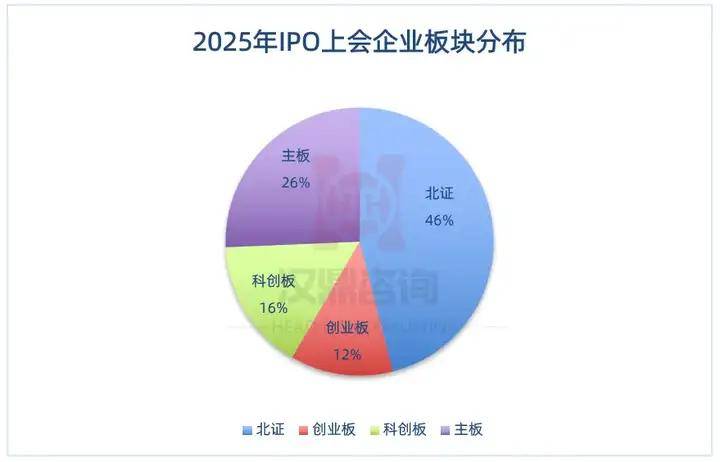
Core Insights - The IPO market is showing signs of recovery in 2025, particularly for technology innovation and unprofitable companies, with a total of 113 IPOs approved across three major exchanges [1][4] - The overall approval rate for IPOs is high at 98.23%, with the Beijing Stock Exchange having a slightly lower rate of 96.15% [3][4] - Regulatory scrutiny remains stringent, focusing on the rationality and necessity of fundraising projects, as well as the financial authenticity and stability of earnings [3][4] Summary by Sections IPO Market Overview - In 2025, the three major exchanges received a total of 113 IPO applications, with the Beijing Stock Exchange accounting for 46% of the approvals, followed by the Main Board (26%), the Sci-Tech Innovation Board (16%), and the Growth Enterprise Market (12%) [1] - The number of newly accepted companies increased significantly in June and December, indicating a warming trend in the market [1] Approval Rates and Regulatory Focus - A total of 111 companies were approved, with only 2 from the Beijing Stock Exchange being deferred, resulting in an overall approval rate of 98.23% [3] - The approval rates for other boards were 100%, indicating a strong market confidence despite stringent regulatory measures [3] Key Concerns During Approval Process - The most frequently raised concerns during the approval process included the stability of operating performance, financial authenticity, and the risks associated with fundraising projects [4][5] - The focus on the rationality and necessity of fundraising projects has increased, with a notable emphasis on the sustainability of earnings and the potential for financial fraud [3][4] Main Board Insights - The Main Board saw a significant increase in inquiries regarding performance volatility risks, which rose to 82.76% in 2025, reflecting heightened regulatory scrutiny [5][6] - The necessity and rationality of fundraising projects were also highlighted, with inquiries in this area reaching 17.24% [6] Sci-Tech Innovation Board Insights - The Sci-Tech Innovation Board's primary concerns included performance volatility risks and financial authenticity, with the latter being a focus in 28.57% of inquiries [7][9] - The board also emphasized the importance of forward-looking information regarding profitability forecasts [10] Growth Enterprise Market Insights - The Growth Enterprise Market maintained a high level of scrutiny on business growth and innovation, with performance volatility risks being the most frequently raised issue at 92.86% [11][12] - Concerns regarding technical innovation and core competitiveness were also prevalent [12] Beijing Stock Exchange Insights - The Beijing Stock Exchange saw a decline in inquiries related to related party transactions, while concerns regarding performance volatility and financial authenticity increased significantly [13][14] - The focus on technical advancement and innovation capabilities was also noted as a rising concern [14]

Walmart-owned Flipkart makes top leadership hires before listing
BusinessLine· 2026-01-28 01:53
Leadership Appointments - Flipkart Group has appointed Jason Chappel as Vice President, Flipkart Group Controller, and Amer Hussain as Vice President, Supply Chain for its Grocery and Minutes businesses [1] - These appointments are part of Flipkart's strategy to strengthen its leadership pipeline ahead of its initial public offering (IPO) [1][5] Executive Backgrounds - Jason Chappel joins Flipkart from Walmart, where he served as Group Director at Walmart Enterprise Business Services, with over two decades of experience in senior leadership roles [2] - Amer Hussain brings over 25 years of experience from companies like The Coca-Cola Company and Reliance Consumer Pvt Ltd, focusing on supply chain strategy for Flipkart's grocery and quick-commerce verticals [3] Responsibilities and Goals - Chappel will lead accounting, financial reporting, and internal controls across all Flipkart operations, based in Bengaluru [3] - Hussain's responsibilities include scaling infrastructure and improving cost efficiency within Flipkart's grocery and quick-commerce sectors [3] Strategic Focus - Flipkart emphasizes the importance of building leadership depth across critical functions to support sustainable growth, as stated by CHRO Seema Nair [4] - The recent appointments reflect Flipkart's long-term focus on strengthening institutional capabilities in preparation for its stock market debut [5]


每100元收入71元来自腾讯,燧原科技60亿募资困局难破
Xin Lang Cai Jing· 2026-01-27 14:44
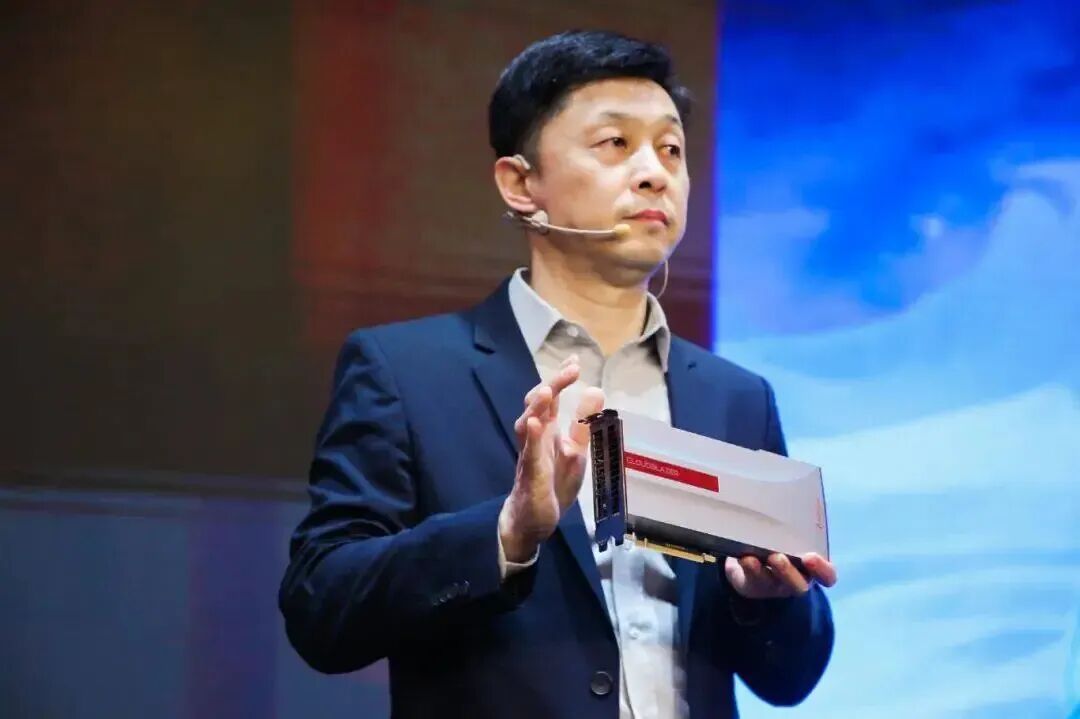
Core Viewpoint - Shanghai Suyuan Technology Co., Ltd. has submitted an IPO application to raise 6 billion yuan, primarily for the development and industrialization of fifth and sixth-generation AI chips, but the company's heavy reliance on Tencent raises concerns about its independent operational capabilities and customer structure [1][7][9] Group 1: IPO and Funding - The company aims to raise 6 billion yuan for AI chip development and innovation projects [1][7] - Tencent has been a significant investor, holding a 20.26% stake and forming a "capital + order" relationship with the company [3][14] - The company's revenue is heavily dependent on Tencent, with over 71% of its income coming from this single client as of the first three quarters of 2025 [4][15] Group 2: Financial Performance - Revenue has shown rapid growth, with a compound annual growth rate of 183.15% from 2022 to 2024, but the company has not achieved profitability, accumulating losses exceeding 5 billion yuan [7][16] - The company has faced negative cash flow, with net cash flow from operating activities remaining negative from 2022 to the first three quarters of 2025 [8][17] - High R&D costs, totaling nearly 4.5 billion yuan since 2022, have significantly impacted profitability, with R&D expense ratios exceeding 160% in 2025 [7][17] Group 3: Market Challenges - The global AI chip market is dominated by Nvidia, which held approximately 76% market share in 2024, posing significant competition for the company [8][18] - The company is attempting to diversify its customer base beyond Tencent but remains heavily reliant on this major client, which limits its risk resilience [9][18] - The lengthy development cycle for AI chips means that achieving profitability may take several years, with uncertainty surrounding the timeline for reaching a breakeven point [8][18]

All the “Buy into SpaceX Early” Teaser Pitches — What are they recommending?
Stockgumshoe· 2026-01-27 13:00
Core Insights - The investment community has a strong fascination with Initial Public Offerings (IPOs), viewing them as opportunities to invest in the next big companies, despite the average IPO performing no better than established public companies [2][3] - Companies like SpaceX, OpenAI, and Anthropic are currently generating significant interest as potential IPO candidates, with SpaceX being the most mature among them [9][10] - The valuation of SpaceX is a focal point, with rumors suggesting a potential IPO valuation of $1.5 trillion, significantly higher than its last private valuation of $800 billion [12] Group 1: IPO Market Dynamics - IPOs are seen as a way for private companies to raise capital and gain public market exposure, often creating a sense of urgency and excitement among investors [2][4] - The Renaissance IPO ETF serves as a proxy for newly public companies, reflecting investor sentiment but not consistently outperforming the market [4] - Investors often lack access to detailed financials of companies before they go public, leading to speculative investments based on perceived potential rather than solid data [7][8] Group 2: SpaceX and Its Valuation - SpaceX has raised approximately $12 billion since its inception and is considering an IPO, potentially keeping its subsidiary Starlink under its umbrella to maintain revenue streams [10][11] - The company’s revenue is projected to be around $15 billion in 2025, with growth expected to be between 30-50% in 2026, primarily driven by Starlink [12] - Comparisons are drawn between SpaceX and other high-profile IPOs, such as Palantir, which went public at a lower valuation and faced significant price fluctuations in its early years [14][15] Group 3: Investment Opportunities and Risks - Various investment vehicles, including mutual funds and ETFs, have significant stakes in SpaceX, providing indirect exposure to the company for investors [26][33] - Accredited investors can purchase SpaceX shares directly through private transactions, though this market is characterized by high fees and limited liquidity [29][30] - The excitement surrounding SpaceX's potential IPO has led to numerous promotional campaigns encouraging early investment in the company or its suppliers [19][20]


天元重工IPO状态变更为已问询
Xin Lang Cai Jing· 2026-01-27 12:59
根据北交所最新披露的信息,2026年1月27日,德阳天元重工股份有限公司IPO的状态从已受理变更为 已问询。 根据北交所最新披露的信息,2026年1月27日,德阳天元重工股份有限公司IPO的状态从已受理变更为 已问询。 ...
凯得智能IPO状态变更为已问询
Xin Lang Cai Jing· 2026-01-27 12:59
根据北交所最新披露的信息,2026年1月27日,广东凯得智能科技股份有限公司IPO的状态从已受理变 更为已问询。 根据北交所最新披露的信息,2026年1月27日,广东凯得智能科技股份有限公司IPO的状态从已受理变 更为已问询。 ...
环能涡轮IPO状态变更为已问询
Xin Lang Cai Jing· 2026-01-27 12:59
根据北交所最新披露的信息,2026年1月27日,常州环能涡轮动力股份有限公司IPO的状态从已受理变 更为已问询。 根据北交所最新披露的信息,2026年1月27日,常州环能涡轮动力股份有限公司IPO的状态从已受理变 更为已问询。 ...
比亚迪供应商来IPO,被点名信用政策“宽松”
IPO日报· 2026-01-27 12:54
星标 ★ IPO日报 精彩文章第一时间推送 1月28日,北交所上市委计划召开审议会议,对浙江恒道科技股份有限公司(下称"恒道科技")的IPO申请进行审核。 大约两年前,公司曾剑指创业板。然而,经历市场环境更迭和战略调整,恒道科技选择转战北交所。本次IPO,公司计划募集资金4.03亿元。 张力制图 比亚迪供应商 近年来,公司先后被浙江省经济和信息化厅评为"浙江省拟重点支持的'专精特新'中小企业"和"浙江省'隐形冠军'企业",公司研发中心被认定为"浙江省省级企业研究开发中心"。截至招股说明书签署日,公司已经形成了12项发明专利、 24项实用新型专利、8项软件著作权,持续积极参与行业内的标准起草和修订工作,先后参与制定1项国家标准、3项团体标准。 经过多年市场耕耘与考验,恒道科技积累了丰厚的客户资源,先后成为国内外知名的汽车主机厂、汽车零部件厂和注塑模具厂的配套供应商。公司与比亚迪(002594.SZ)、安瑞光电(三安光电(600703.SH)之全资子公司)、嘉利股份 (874616.NQ)、星宇股份(601799.SH)、海泰科(301022.SZ)、格力电器(000651.SZ)等知名企业建立了长期稳定的合作关 ...

这家陕企,第三次站到了IPO门前
Sou Hu Cai Jing· 2026-01-27 12:32
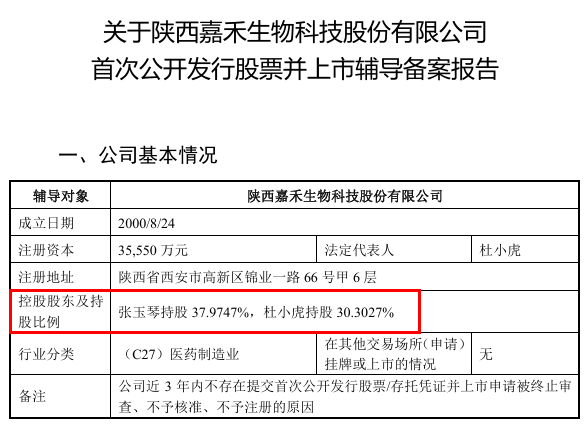
Core Viewpoint - Shaanxi Jiahe Biotechnology Co., Ltd. has officially initiated the listing counseling record, with Guojin Securities as the counseling institution, marking its third attempt at an IPO after two previous withdrawals due to regulatory issues and concerns over financial disclosures [1][7]. Group 1: Company Background - Jiahe Biotechnology was established in 2000 and specializes in the research, production, and sales of natural plant extracts and health foods, making it one of the larger companies in this sector in China [2]. - The company has multiple production facilities, employs over 2,000 staff, and holds more than 200 authorized patents [2]. Group 2: Previous IPO Attempts - The company first attempted to list on the Shanghai Stock Exchange in December 2017 but withdrew its application shortly after [5]. - In June 2021, Jiahe shifted its focus to the ChiNext board but faced two rounds of inquiries from the exchange, leading to another withdrawal in July 2022 [7][8]. Group 3: Regulatory Challenges - In April 2023, the company faced regulatory actions due to issues identified during its previous ChiNext application, including discrepancies in financial disclosures and inventory management [1][9]. - The Shenzhen Stock Exchange highlighted significant concerns regarding the company's overseas sales and inventory, which raised questions about the accuracy of its financial statements [9][10]. Group 4: Current Listing Strategy - This time, Jiahe is adopting a more cautious approach by entering the counseling phase first, focusing on improving its governance, financial, and legal structures before formally applying for an IPO [1][13]. - The implementation of a comprehensive registration system in the A-share market has made the entry more inclusive but has also tightened the scrutiny on the authenticity and accuracy of information disclosures [1][13]. Group 5: Governance and Business Integrity - The company is controlled by its founders, who hold approximately 68% of the shares, raising concerns about governance effectiveness and independence [3][15]. - There are doubts regarding the authenticity of the company's overseas business, which previously accounted for about 80% of its sales, as regulatory investigations suggested potential sales fraud [16].
赛英电子IPO状态变更为提交注册
Xin Lang Cai Jing· 2026-01-27 11:47
根据北交所最新披露的信息,2026年1月27日,江阴市赛英电子股份有限公司IPO的状态从通过变更为 提交注册。 根据北交所最新披露的信息,2026年1月27日,江阴市赛英电子股份有限公司IPO的状态从通过变更为 提交注册。 ...