Stock valuation

Search documents
Here's How to Play Core Labs Stock Ahead of Its Q1 Earnings Release
ZACKS· 2025-04-14 11:20
Core Insights - Core Laboratories Inc. (CLB) has seen a significant share price decline of 33.7% over the past three months, which is worse than the broader oil and energy sector's decline of 14.5% and the Field Services sub-industry's decline of 20.3% [1][4] - The company is set to report first-quarter earnings on April 23, with estimates indicating a 34.8% year-over-year decline in earnings and a 4.3% decrease in revenues [3][4] Financial Performance - Q4 2024 revenues were $129.2 million, down 4% sequentially and missing the Zacks Consensus Estimate of $131 million by 1.4%, primarily due to lower U.S. land drilling activity and geopolitical sanctions [4][5] - The Production Enhancement segment reported a 3% year-over-year revenue decline and a 7% sequential drop in Q4 2024, reflecting a slowdown in U.S. onshore drilling activity [5] Guidance and Projections - For Q1 2025, Core Laboratories projects an operating margin decline to around 9%, down from 12% in Q4 2024, indicating lower earnings due to seasonal slowdowns and weak U.S. onshore activity [7] - The U.S. Energy Information Administration forecasts only a modest increase in U.S. oil production from 13.2 million barrels per day in 2024 to 13.5 million barrels per day in 2025, which may hinder recovery in CLB's Production Enhancement business [10] Operational Challenges - Expanded U.S. sanctions have negatively impacted crude assay laboratory services and product sales, particularly in international markets, affecting Reservoir Description revenues [9] - A 9% sequential decline in inventory levels in Q4 2024 suggests potential supply-chain challenges, which could impact revenues if demand increases unexpectedly [11] Capital Expenditures and Valuation - Higher planned capital expenditures in 2025, including rebuilding the Aberdeen facility, could temporarily reduce free cash flow available for shareholder returns and debt reduction [12] - Core's EV/EBITDA ratio is 8.26, significantly higher than the industry average of 5.62, indicating potential overvaluation compared to peers [13] Summary - The company is facing a mix of internal challenges and external pressures, including declining revenues, shrinking margins, and geopolitical disruptions, leading to a recommendation to avoid CLB stock for now [16]



3 Reasons to Buy Deckers Outdoor Stock Like There's No Tomorrow
The Motley Fool· 2025-04-09 10:15
Core Viewpoint - Deckers Outdoor has experienced significant stock volatility, with a notable decline of 53% from its 52-week high despite strong financial performance, raising concerns about trade tariffs impacting the company [1] Group 1: Company Performance - Deckers Outdoor is recognized for its footwear brands, particularly Ugg and Hoka, with Hoka projected to generate over $2 billion in sales this year, more than doubling its size in three years [3] - In fiscal Q3 2025, total net sales increased by 17.1% year over year, and earnings per share (EPS) rose by 19% to a record $3, with Hoka brand sales surging 24% [4] - Deckers is gaining market share as competitors like Nike face declining sales, supported by a solid balance sheet with $2.2 billion in cash and zero debt [5] Group 2: Trade Tariff Concerns - Deckers relies on overseas manufacturing in China and Vietnam, facing challenges from tariffs imposed by the Trump administration, including a 10% baseline tax and higher rates on imports from Vietnam and China [6] - There is potential for tariff relief as discussions between the U.S. and Vietnam leaders suggest a possible trade deal, which could significantly benefit Deckers since most of its footwear is sourced from Vietnam [7][8] Group 3: Valuation and Market Position - The decline in Deckers' stock price has led to concerns about profit margins and growth sustainability, but the stock is now trading at a forward price-to-earnings ratio of 16, presenting a bargain compared to peers like Nike and On Holding, which trade at 27 and 33 respectively [9][10][11] - The recent sell-off positions Deckers as a value pick in the industry, despite uncertainties regarding future earnings [10][11] Group 4: Investment Outlook - Deckers Outdoor is viewed as a compelling investment opportunity due to its brand momentum, strong growth, and attractive valuation, making it a potential buy-the-dip candidate for diversified portfolios [13]


Best Stock to Buy Right Now: Constellation Brands vs. Coca Cola
The Motley Fool· 2025-04-05 08:25
Core Viewpoint - The beverage industry presents diverse investment opportunities, with Constellation Brands and Coca-Cola as key players, but their stock performances have diverged significantly in early 2025 [1][2]. Constellation Brands - Constellation Brands is facing challenges due to a 20% tariff on imports from Mexico, impacting its flagship brands like Corona and Modelo [3]. - The company is implementing strategic measures such as cost cuts, inventory stockpiling, and potential price hikes to mitigate the impact of increased costs [4]. - Despite recent turbulence, analysts project a 2% revenue growth and a 12% increase in earnings per share (EPS) to an estimated $13.46, indicating strong underlying demand [5]. - The stock is currently trading at a forward price-to-earnings (P/E) ratio of 13, which is considered a bargain compared to Coca-Cola's P/E ratio of around 24 [6]. - There is optimism that the tariffs may be temporary, and the fundamentals of Constellation Brands remain solid, making it a potential buy for investors [7]. Coca-Cola - Coca-Cola has effectively navigated tariff pressures due to its robust global supply chain and diverse product portfolio, which includes over 200 brands [8]. - In 2024, Coca-Cola's organic revenue grew by 14% year-over-year, with adjusted EPS increasing by 7% to $2.88, and management anticipates continued growth in 2025 [9]. - The company's strong execution across various economic conditions has established it as a stable investment, supported by high-quality earnings and cash flow [10]. - Coca-Cola has a long history of dividend increases, with a recent hike of 4.8% to $0.51 per share, resulting in a current dividend yield of nearly 3%, higher than Constellation Brands' 2.2% yield [10]. Investment Decision - While both stocks are viewed positively, Constellation Brands is considered the better buy due to its discounted valuation and potential for outperforming in 2025 [11]. - The significant sell-off in Constellation Brands may have already factored in worst-case scenarios, positioning it favorably for future performance as financial results reaffirm its strengths [12].



The Best Stock to Buy Now in April (2025)
The Motley Fool· 2025-04-04 09:45
Uber (UBER -6.23%) is trading at a relatively cheap valuation because the threat from Tesla's (TSLA -5.40%) driverless car tech is overstated.*Stock prices used were the afternoon prices of March 31, 2025. The video was published on April 2, 2025. ...


Nike Stock Is Down 62%. Is It a Buy?
The Motley Fool· 2025-03-30 09:35
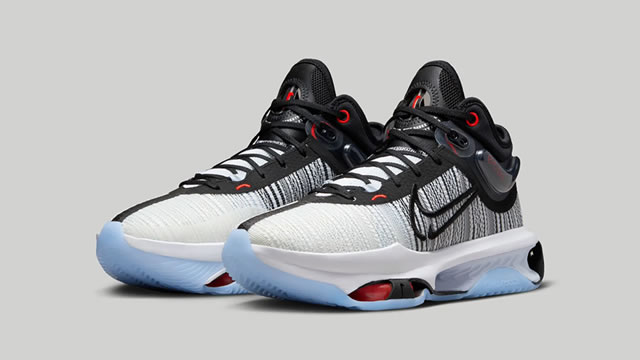
Core Insights - Nike's stock has dropped 62% from its peak due to declining sales, reaching new lows after the latest earnings update [1] - Analysts predict a 10% decline in sales for the fiscal year ending in May, indicating continued softness in demand [2] - Despite recent sales challenges, Nike's brand power remains strong, with trailing-12-month revenue of $47 billion [4] Recent Sales Trends - Last quarter, Nike's revenue fell 7% year over year on a constant-currency basis, with declines in both wholesale and Nike Direct revenues [3] - Competitors like Lululemon Athletica and On Holding continue to grow, highlighting Nike's current struggles [3] Strategic Initiatives - New CEO Elliott Hill is focusing on core products and streetwear, with running shoes showing a sales increase, indicating a positive trend [5] - The launch of the new 24.7 collection has exceeded expectations, and Nike is investing to expand capacity to meet demand [6] Valuation and Earnings Potential - Nike's current share price of $65 is the lowest in over five years, with a forward P/E ratio of 31, higher than its 20-year average of 29 [7] - If Nike returns to a profit margin of around 12%, earnings per share could reach approximately $3.80, reducing the P/E to 17 [8] - Analysts forecast earnings of $3.67 by fiscal 2027, with a forward dividend yield of 2.46%, suggesting potential attractive returns [9]

This Technology Stock Might be a Spectacular Buy After the Nasdaq Correction, According to Wall Street Analysts
The Motley Fool· 2025-03-28 08:27
Core Viewpoint - The U.S. stock market, particularly the Nasdaq-100 index, has experienced a significant decline, but historical trends suggest that such downturns often lead to recoveries, presenting potential buying opportunities for investors, especially in high-quality stocks like Netflix [1][2]. Company Performance - Netflix has emerged as a leader in the streaming industry, ending 2024 with 301.6 million paying subscribers, significantly outpacing competitors like Amazon Prime and Disney+ [4]. - The company generated a record $8.7 billion in net income in 2024, a 61% increase from the previous year, on revenues of $39 billion [5]. - Netflix's advertising revenue doubled in 2024, with expectations for it to double again in the current year [8]. Growth Strategies - The introduction of a cheaper ad-supported subscription tier in November 2022 has been pivotal, accounting for 55% of new signups in available markets [6][7]. - Netflix plans to invest $18 billion in content creation and licensing in 2024, with a focus on live programming to enhance subscriber engagement [9][13]. Market Position and Valuation - Netflix's stock is currently trading at a price-to-earnings (P/E) ratio of 49, which is higher than the Nasdaq-100 average of 29, but its growth potential suggests a forward P/E ratio of 32 based on projected earnings [14][15]. - Analysts remain bullish on Netflix, with 32 out of 54 giving it the highest buy rating, and an average price target of $1,086 indicating an 11% upside potential [17][18]. Long-Term Growth Potential - Netflix estimates it has only captured 6% of its $650 billion total addressable market, indicating substantial room for growth in paid memberships, advertising, and gaming [19].

Costco Stock Sell-Off: Time to Buy the Dip?
The Motley Fool· 2025-03-26 08:33
Core Viewpoint - Costco's stock has experienced a significant decline after reaching a 52-week high, primarily due to disappointing fiscal Q2 earnings and high valuation expectations, raising questions about whether it presents a buying opportunity at a discount [1][2]. Financial Performance - Costco's net sales for fiscal Q2 2025 increased by 9.1% year over year to $62.53 billion, with comparable sales rising by 6.8% [2]. - Paid household memberships grew to 78.4 million, a 6.8% increase from the previous year, while executive memberships rose by 9.1% to 36.9 million [3]. - Earnings per share (EPS) reached $4.02, up from $3.92 a year ago, reflecting an 8.4% growth when excluding a prior year's tax benefit [5]. E-commerce and Growth - E-commerce comparable sales surged by 22.2% year over year, driven by strong demand in various categories, including home furnishings and small electrics [4]. - Membership renewal rates remain high, at 93% in the U.S. and Canada, and 90.5% globally, indicating strong customer loyalty [3]. Valuation Concerns - Costco's price-to-earnings ratio stands at 54, suggesting that investors expect high single-digit sales growth and double-digit EPS growth for the foreseeable future, which may be overly optimistic [6]. - Despite the recent stock price decline, Costco still trades at a significant premium, leaving little room for error in future performance [8][9]. Long-term Outlook - The long-term outlook for Costco remains strong, with continued growth in sales, earnings, and memberships, alongside effective cost management and e-commerce expansion [8]. - However, the current stock valuation may lead to modest returns if growth only meets expectations, prompting investors to consider waiting for a more favorable entry point [9].


BetterInvesting™ Magazine Update on Lowe's Cos. (NYSE: LOW) and ICON PLC (NASDAQ: ICLR)
Prnewswire· 2025-03-24 21:09
Group 1 - Lowe's has been named "Stock to Study" by BetterInvesting Magazine for its June/July 2025 issue, prompting investors to evaluate whether the stock is overvalued or within a buy range [1] - The fundamental data for Lowe's, including sales, earnings, pre-tax profit, and return on equity, is accessible through the National Association of Investors [2] - A full report on Lowe's will be featured in the upcoming June/July 2025 issue of BetterInvesting Magazine [2] Group 2 - The same issue of BetterInvesting Magazine will also include a fundamental review of ICON PLC, which is considered undervalued by the Editorial Advisory and Securities Review Committee [3] - The committee consists of several CFA members, indicating a diverse range of expertise in their evaluations [3]


Cybersecurity Stocks Surge as $32B Deal Reshapes the Industry
MarketBeat· 2025-03-21 12:41
Core Insights - The appetite for buying or selling among leading companies can be gauged through IPO activity and major acquisitions, with IPOs typically indicating peak valuations [1] - Alphabet Inc. announced its acquisition of cybersecurity firm Wiz for $32 billion, signaling potential attractive valuations in the cybersecurity sector [2] Cybersecurity Sector Analysis - The acquisition by Alphabet suggests that cybersecurity valuations may be at an attractive level, prompting interest in stocks like CrowdStrike, Oracle, and Palo Alto Networks [3] - CrowdStrike has seen a 15.6% increase in institutional holdings from UBS Asset Management, indicating bullish sentiment towards its stock [4] - CrowdStrike's 12-month price forecast is $399.51, representing an 8.26% upside from its current price of $369.03, with a high forecast of $475.00 and a low of $275.00 [5] - Morgan Stanley initiated coverage on CrowdStrike with an Overweight rating, while UBS analysts set a price target of $425 for early March 2025 [6] Oracle Stock Insights - Oracle has experienced a 10.1% decline in short interest, indicating bearish capitulation and a favorable risk-to-reward ratio for potential buyers [8] - Oracle's 12-month price forecast is $179.20, indicating a 17.30% upside from its current price of $152.78, with a high forecast of $220.00 and a low of $130.00 [10] - Mackenzie Financial increased its Oracle holdings by 13.1%, reflecting confidence in the stock's valuation [10] Palo Alto Networks Overview - Palo Alto Networks shares are trading at 90% of their 52-week highs, suggesting bullish momentum [13] - The 12-month price forecast for Palo Alto Networks is $205.06, indicating an 11.44% upside from its current price of $184.01, with a high forecast of $240.00 [14] - UBS Asset Management increased its holdings in Palo Alto by 92.7%, reaching a net position of $1.1 billion, indicating strong institutional support [15]


Why Accenture Stock Tumbled on Thursday
The Motley Fool· 2025-03-20 14:57
Core Insights - Accenture's stock fell 8% despite exceeding earnings expectations for Q2 2025, with earnings of $2.82 per share on sales of $16.7 billion compared to analyst forecasts of $2.81 per share on $16.6 billion in sales [1][2] Financial Performance - Revenue grew 5% year over year, but new bookings declined by 3%, indicating potential future revenue challenges [2] - Operating profit margin expanded by 50 basis points to 13.5%, contributing to a 7% year-over-year increase in per-share profits [2] - Free cash flow for the quarter was strong at $2.7 billion, up 35% from the previous year's fiscal Q2 [3] Guidance and Valuation - Accenture narrowed its revenue guidance to a growth range of 5% to 7% for the year, while also narrowing earnings guidance to a full-year profit of $12.55 to $12.79 per share [4] - The midpoint of the earnings guidance is slightly below Wall Street's forecast of $12.72 per share, which has negatively impacted investor sentiment [5] - Accenture's market capitalization stands at $203 billion, with a valuation of over 20 times trailing free cash flow and more than 26 times trailing earnings, while long-term earnings growth is forecasted at only about 9% annually [6]