Autonomous Driving
Search documents
Kyocera to Showcase Underwater IoT, Proprietary AI Imaging Tech, and New Autonomous Driving Sensors at CES 2026
Businesswire· 2025-11-11 04:40
Core Viewpoint - Kyocera Corporation will showcase its innovative technologies at CES 2026, focusing on underwater IoT, AI imaging technology, and autonomous driving sensors, highlighting advancements in connected mobility and marine communication [1][2][3]. Group 1: Underwater Wireless Optical Communication (UWOC) - Kyocera's UWOC technology enables high-speed, high-capacity data transmission underwater, minimizing optical attenuation and enhancing marine surveys with Autonomous Underwater Vehicles (AUVs) [3][4]. - The technology supports real-time transmission of high-definition video and sensor data, improving structural inspections and scientific research [3]. - Kyocera will demonstrate a transmission capacity of 5Gbps, positioning itself as a leader in underwater IoT solutions [4]. Group 2: AI Imaging Technology - The company has developed a Triple Lens AI-Based High-Resolution Depth Sensor that accurately measures distances for small objects (as small as 0.30mm) and challenging targets [5]. - This technology enhances applications in factory measurements and medical environments, improving operational efficiency and addressing labor shortages [5]. - The AI imaging system allows for better recognition accuracy compared to conventional products, showcasing its advanced capabilities at CES [5]. Group 3: Autonomous Driving Sensors - Kyocera's high-resolution millimeter-wave sensor detects minute object vibrations, enabling 4D sensing for autonomous driving applications [5]. - The sensor utilizes proprietary substrate material technology and unique algorithms to provide precise spatial information, balancing privacy and safety [5]. - Anticipated applications include healthcare monitoring and structural surveillance, demonstrating the versatility of the technology [5]. Group 4: Additional Innovations - The OPTINITY module integrates electrical and optical technologies, doubling the bandwidth for AI and autonomous driving applications, allowing for faster and more energy-efficient data exchange [6]. - Kyocera's Phased Array Antenna Module (PAAM) enhances security applications by generating multiple simultaneous beams for improved situational awareness [6]. - The Cotopat system, a real-time speech recognition tool, facilitates communication and eliminates language barriers, marking its first exhibition in the US [6]. Group 5: Company Overview - Kyocera Corporation, founded in 1959, has evolved into a leading supplier of industrial and automotive components, with consolidated sales revenue of approximately US$13.5 billion for the year ended March 31, 2025 [8]. - The company is recognized on Forbes' 2025 "Global 2000" list and has been named among "The World's 100 Most Sustainably Managed Companies" by The Wall Street Journal [8].
港股异动 | 百度集团-SW(09888)现涨超4% 萝卜快跑宣布获阿布扎比全无人商业化运营许可
智通财经网· 2025-11-11 01:38
Core Viewpoint - Baidu Group's stock has seen an increase of over 4%, currently trading at 130.4 HKD, with a transaction volume of 245 million HKD, following the announcement of significant developments in the autonomous vehicle sector by its partner,萝卜快跑 [1] Group 1: Company Developments - 萝卜快跑 has received the first batch of fully autonomous commercial operation licenses from the Abu Dhabi Integrated Transport Centre (ITC), marking a key advancement in its global strategy [1] - Since entering the Abu Dhabi market in March, 萝卜快跑 has formed a strategic partnership with AutoGo to deploy sixth-generation autonomous vehicles in specific areas, aiming for full autonomous operation by 2026 [1] - The collaboration aims to create the largest fleet of autonomous vehicles in Abu Dhabi, enhancing urban traffic efficiency and reducing carbon emissions, contributing to the city's smart city goals [1] Group 2: Operational Metrics - As of October 31, 萝卜快跑 has surpassed 250,000 weekly orders, all of which are fully autonomous [1] - The total number of global orders serviced by 萝卜快跑 has exceeded 17 million [1]
在地平线搞自动驾驶的这三年
自动驾驶之心· 2025-11-11 00:00
Core Viewpoint - The article discusses the transition from autonomous driving to embodied intelligence, highlighting the differences in challenges and solutions between the two fields. It emphasizes the importance of documenting past experiences in autonomous driving, despite the focus shifting to embodied intelligence. Research Areas Summary - The main research areas include 3D fusion perception, trajectory prediction, end-to-end motion planning, sensor simulation, traffic flow simulation, and foundational models for intelligent driving. These areas are interconnected and aim to build a comprehensive autonomous driving algorithm system [2][5]. 1. Sparse4D Series: Multi-Sensor Fusion Perception Framework - The Sparse4D series aims to improve perception performance by utilizing sparse queries and projection sampling from multi-view images, avoiding the computational costs associated with BEV (Bird's Eye View) methods. Sparse4D v1 introduced deformable aggregation for sparse fusion, while v2 improved temporal fusion complexity from O(T) to O(1) [6][9]. Sparse4D v3 further enhanced detection and tracking capabilities, achieving top rankings in camera-only detection and tracking leaderboards [11][13]. 2. SparseDrive: End-to-End Planning Attempt - SparseDrive integrates online mapping and motion planning, achieving five tasks: detection, tracking, mapping, prediction, and planning. It raises concerns about the simplicity of its planning decoder and the need for closed-loop performance evaluation [13][15]. 3. EDA & UniMM: Trajectory Prediction and Traffic Flow Simulation - EDA (Evolving and Distinct Anchors) addresses the core issue of anchor and sample allocation in trajectory prediction, enhancing model convergence. UniMM unifies existing traffic simulation models and proposes a general algorithm framework, addressing key performance factors [16][20]. 4. DriveCamSim: Sensor Simulation - DriveCamSim focuses on creating a highly controllable sensor simulation system to evaluate autonomous driving models efficiently. It emphasizes the need for a simulation system that can accurately reflect model performance without relying solely on real-world testing [22][24]. 5. LATR: Foundational Model for Intelligent Driving - LATR aims to build a robust foundational model for intelligent driving using large datasets and parameters. It employs a masking strategy for unsupervised training and integrates multiple tasks into a unified framework, demonstrating effective performance [26][27]. Conclusion and Outlook - The seven modules collectively form the core link of the autonomous driving system, indicating a correct technological path. The article suggests that the future focus should be on efficient evaluation systems and the potential of reinforcement learning to enhance model performance [30][31].
Tesla's Engineering Exodus Comes Amid Shift From Core EV Mission
Forbes· 2025-11-10 22:35
Core Insights - Tesla shareholders have approved CEO Elon Musk's unprecedented pay package, potentially worth $1 trillion over a decade, amidst significant departures of key engineers from the company [1][14]. Group 1: Executive Departures - Emmanuel Lamacchia and Siddhant Awasthi, both eight-year veterans, announced their departures from Tesla, with no specific reasons provided [2]. - The trend of high-profile engineer exits continues, with Musk prioritizing AI-driven projects over traditional vehicle sales, leading to dissatisfaction among automotive engineers [3][4]. - The lack of new models and a focus on cost reduction is making Tesla less appealing to top talent in the automotive industry [5]. Group 2: Sales and Market Performance - Despite a spike in deliveries in Q3 due to customers rushing to buy before tax credits expired, Tesla's EV sales are down approximately 6% year-to-date [6]. - The Cybertruck, which has faced criticism and recalls, has seen sales drop by 38% in its second year, totaling just 16,097 units [10]. - Tesla's annual production capacity is at least 2 million vehicles, but sales are projected to be between 1.5 million and 1.6 million for the year, indicating a surplus [12]. Group 3: Future Product Plans - Musk has indicated that the two-door Cybercab is expected to launch by Q2 2026, designed to operate without a steering wheel, which poses significant risks given the challenges in achieving autonomous driving [7]. - Tesla is preparing to sell its electric semi truck in 2026, but this is expected to contribute only tens of thousands of sales, a small addition compared to the passenger vehicle market [11]. Group 4: Corporate Governance and Strategy - The lack of a strong executive team and succession plan post-Musk is a concern, with Tesla's C-suite lacking key positions beyond the CFO [14]. - The board's heavy promotion of Musk's compensation package reflects a reliance on his leadership, raising concerns about the company's future valuation without him [15].
Waymo announces new CFO Steve Fieler
CNBC· 2025-11-10 18:56
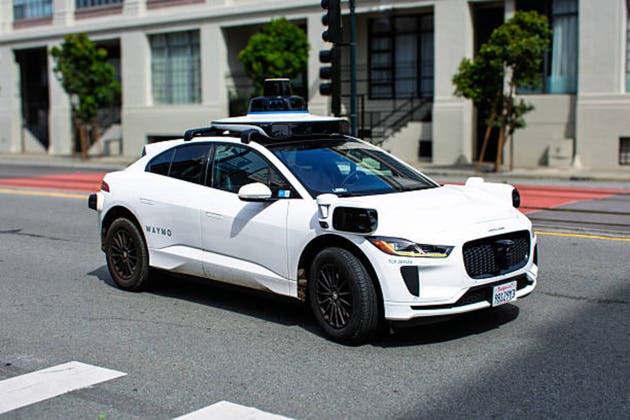
Group 1 - Waymo has appointed Steve Fieler as its new chief financial officer to guide the company through its next phase, which may include seeking additional outside investment [2][3] - The company has been expanding its robotaxi service to more markets over the past year, with plans for further expansion in 2026 [2][5] - Waymo currently offers commercial services in several cities, including Los Angeles, Phoenix, San Francisco, Atlanta, and Austin, with plans to start services in Miami and Washington, D.C. in 2026 [5] Group 2 - Alphabet's "Other Bets" segment, which includes Waymo, reported a revenue of $344 million in Q3, down from $388 million the previous year, while losses increased from $1.12 billion to $1.43 billion in the same period [4] - Fieler has a strong background in finance, having previously served as finance chief at HP and held various positions at early-stage companies and General Electric [3][4]
CiDi Inc.(H0010) - Application Proof (1st submission)
2025-11-10 16:00
The Stock Exchange of Hong Kong Limited and the Securities and Futures Commission take no responsibility for the contents of this Application Proof, make no representation as to its accuracy or completeness and expressly disclaim any liability whatsoever for any loss howsoever arising from or in reliance upon the whole or any part of the contents of this Application Proof. Application Proof of CiDi Inc. 希迪智駕科技股份有限公司 (the "Company") (A joint stock company incorporated in the People's Republic of China with l ...
Remote driving startup Vay could grab up to $410M from Singapore’s Grab
Yahoo Finance· 2025-11-10 13:53
Core Insights - The investment landscape for autonomous vehicles is becoming more favorable for smaller companies, exemplified by Vay's $60 million investment from Grab, with potential for an additional $350 million based on performance milestones [1][2][3] Company Overview - Vay is a Berlin-based startup that utilizes technology and human operators to remotely drive rental cars, currently operational in Las Vegas and planning to expand in the U.S. [2][3] - Grab, a Singaporean tech company, is investing in Vay to support its growth, despite not operating in the U.S. market [4] Investment Details - The initial investment from Grab is $60 million, with the possibility of an additional $350 million contingent on Vay achieving specific milestones in the U.S. [1][3] - Milestones include the number of U.S. cities covered, regulatory approvals, and overall consumer revenue [3] Market Context - The U.S. market is experiencing increased competition in remote driving services, with companies like Waymo expanding their robotaxi services [3] - Vay's service is positioned as a cost-effective alternative to ride-hailing, costing about half the price due to its hybrid approach [5] Strategic Synergies - Both companies are exploring synergies, particularly in Southeast Asia, where Grab's super-app offers a wide range of services [6] - Grab has also invested in other autonomous driving tech startups, indicating a broader strategy to enhance its mobility offerings [7]
中国自动驾驶_聚焦自动驾驶、Robotaxi 与机器人领域-China Autonomous Driving_ All eyes on AD, robotaxis, and robotics
2025-11-10 03:35
Summary of Key Points from the Conference Call Industry Overview - The focus is on the autonomous driving (AD), robotaxi, and robotics sectors in China, which are at different stages of development but collectively represent significant growth opportunities over the next decade [2][8][10]. Core Insights and Arguments 1. **Commercialization Progress**: - Autonomous driving is nearing a demand inflection point, with the penetration rate of highway and city navigation on autopilot (NOA) in China increasing from 14% in Q4 2024 to 24% by August 2025 [3][11]. - Robotaxis are approaching commercialization, with fleets expected to grow from low thousands to tens of thousands by 2H 2025-2026, although they currently represent less than 1% of the market [3][21]. - Humanoid robotics is still in early stages, with significant potential but limited visibility [3][31]. 2. **Investment Preferences**: - Preferred companies include Horizon Robotics, Joyson, Tuopu, Xingyu, and XPeng, all rated as "Buy" [4][8][19]. - Horizon Robotics is highlighted as a leader in benefiting from rising AD penetration, while XPeng is noted for its strong product cycle and leading AD capabilities [4][19][20]. 3. **Catalysts for Growth**: - Upcoming Tesla AGM on November 6 is expected to provide updates on FSD V14, robotaxis, and humanoid robots, which could act as catalysts for the market [2][10][18]. - Regulatory support is increasing, with new safety standards and pilot programs for L3 vehicles expected to enhance commercialization [12][17]. 4. **Market Dynamics**: - The autonomous driving sector in China is entering a key inflection phase, driven by consumer demand and proactive supply-side initiatives from manufacturers like BYD [11][12]. - The robotaxi market is projected to grow significantly, supported by improved fleet economics and regulatory backing [21][22]. 5. **Technological Challenges**: - The core challenge for robotaxis is adapting autonomous driving algorithms to diverse urban environments while ensuring safety and cost-effectiveness [23][24]. - The average cost of a robotaxi is around RMB 300,000 (USD 40,000), with potential for further cost reductions in the long term [23]. Other Important Insights - The humanoid robotics market is characterized by high volatility and is heavily reliant on technological advancements and market catalysts [31][32]. - Companies like Waymo are demonstrating the safety benefits of robotaxis, with significant reductions in crash incidents compared to human drivers [25]. - The report emphasizes the importance of regulatory alignment and public acceptance as fleets expand, which will enhance visibility and usage rates of robotaxis [24]. Conclusion - The autonomous driving, robotaxi, and robotics sectors in China are poised for substantial growth, driven by technological advancements, regulatory support, and increasing consumer demand. Key players in the supply chain are well-positioned to capitalize on these trends, making them attractive investment opportunities.
比亚迪_聚焦海外扩张以推动单位利润增长,2026 年第一季度将推出关键技术;买入
2025-11-10 03:34
Summary of BYD Co. (002594.SZ) Management Call Company Overview - **Company**: BYD Co. (002594.SZ) - **Industry**: Electric Vehicles (EV) and New Energy Vehicles (NEV) Key Takeaways from the Management Call 1. **Overseas Expansion Strategy**: - Management is confident in long-term overseas expansion with a target of 1.5 million units in 2026, which is expected to drive higher profits despite demand uncertainty in China [1][2][3] - The company emphasizes strong sales channels, relationships with local distributors, and early product launches as competitive advantages in overseas markets [1][6] 2. **Profit Expectations**: - Management believes the profit trough is behind, expecting overseas operations to yield unit profits exceeding RMB 20,000 [1][2] - Forecasts indicate that overseas profit contribution will rise from 21% in 2024 to 60% by 2028, with a projected earnings CAGR of 30% from 2025 to 2028 [2][8] 3. **Sales Performance**: - Sales volume exceeded 3.7 million units in the first ten months of 2025, marking a 14% year-over-year increase, driven by premium brands and overseas expansion [5] - The company anticipates total export volume of 1.5 million units in 2026, a 60% increase from 2025 estimates [5][6] 4. **Market Dynamics**: - The overseas market is expected to be a key growth driver over the next decade, with NEV penetration entering a mass-adoption phase [2][6] - BYD's competitive product offerings are expected to enhance market share, particularly in regions with low EV penetration [6] 5. **Production and Cost Strategy**: - Local production is crucial for competitiveness, especially in regions with high tariffs, such as Europe and Brazil [7] - The company plans to launch key technology upgrades and adopt a more flexible pricing strategy in response to market pressures in China [1][7] 6. **Technological Developments**: - A significant technology/product launch is scheduled for Q1 2026, aimed at enhancing efficiency and reducing costs [1][7] - The company has slowed its promotion of autonomous driving features due to inventory management and regulatory constraints [7] 7. **Other Business Segments**: - BYD is also a leading player in energy storage systems (ESS) and power batteries, with rapid growth in these segments [7] Financial Projections - **Revenue Forecast**: - Projected revenues for 2026 are estimated at RMB 1,041.4 billion, with EBITDA expected to reach RMB 128.8 billion [9] - **Price Target**: - The 12-month price target is set at RMB 144 for A shares and HK$ 141 for H shares, indicating an upside potential of 48% and 44% respectively [9][8] Risks and Considerations - **Risks**: - Intensifying competition in the electric vehicle market, slower-than-expected overseas expansion, and lower-than-expected external battery sales are noted as potential risks [8] This summary encapsulates the critical insights from BYD's management call, highlighting the company's strategic focus on overseas expansion, profit expectations, and market dynamics within the electric vehicle industry.
Tesla Struggles With India's Roads As It Confuses Tuk-Tuks For Motorcycles - Tesla (NASDAQ:TSLA)
Benzinga· 2025-11-08 13:31
Core Insights - Tesla Inc. is facing challenges in the Indian market, particularly with its Full Self-Driving (FSD) system under scrutiny due to an ongoing NHTSA probe affecting 2.88 million vehicles [1] Group 1: Tesla's Operations in India - Tesla's sole offering in India is the Model Y, available in Standard and Long-Range versions, priced at approximately $67,500 and $76,600 respectively [3] - The company does not currently offer FSD features in India, but customers can purchase the FSD package for an additional INR 600,000 (approximately $6,700) [4] - Sales in India have been disappointing, with over 600 orders for the Model Y against a utilization quota of 2,500 cars [5] Group 2: Autopilot and Market Adaptation - A recent video highlighted that Tesla's Autopilot system failed to recognize tuk-tuks in Mumbai, mistaking them for motorcycles, indicating a need for better software calibration for local road conditions [2] - CEO Elon Musk has expressed confidence in the FSD system's capabilities, suggesting that it could spread rapidly and that existing cars could gain self-driving features through software updates [6] Group 3: Broader Market Performance - Tesla's sales in China have declined nearly 10% in October, with the Shanghai Gigafactory selling over 61,497 units of the Model Y and Model 3, marking a nearly 33% drop in sales [7]