
EDA

Search documents
Can AI Push in EDA & Ansys Integration Help SNPS Stock Grow Further?
ZACKS· 2026-02-27 14:30
Core Insights - Synopsys reported a significant increase in first-quarter fiscal 2026 revenues, reaching $2.41 billion, which is a 65.5% year-over-year growth, surpassing the Zacks Consensus Estimate by 0.8% [2][10] - The company's EDA revenues were $1.1 billion, making up 45.6% of total revenues, while the Ansys product group contributed 36.8% of revenues, indicating strong demand for multiphysics simulation and digital engineering solutions [1][10] Financial Performance - Adjusted earnings for Synopsys in the reported quarter were $3.77 per share, exceeding the Zacks Consensus Estimate by 5.6% [1] - For fiscal 2026, Synopsys anticipates revenues between $9.56 billion and $9.66 billion, including $2.9 billion from Ansys, with a year-over-year growth projection of 36.5% [6] - Non-GAAP EPS is expected to be between $14.38 and $14.46, reflecting an increase from the previous range, while non-GAAP expenses are projected to be between $5.69 billion and $5.75 billion [7] Growth Drivers - The results were primarily driven by AI-led semiconductor demand and the integration of Ansys, which has enhanced Synopsys' capabilities in semiconductor R&D and design [3][10] - Synopsys is embedding AI throughout its EDA stack, leading to significant productivity gains for customers, with reported improvements such as 50% faster knowledge assistance and 5x quicker formal testbench generation [4][10] Market Positioning - The combined Synopsys-Ansys portfolio is strategically positioned to leverage the industry shift from physical prototyping to digital twins, facilitating faster and more cost-effective product development across various sectors, including aerospace and automotive [5][10] - For the second quarter of fiscal 2026, Synopsys expects revenues between $2.225 billion and $2.275 billion, with a year-over-year growth estimate of 40.3% [8]


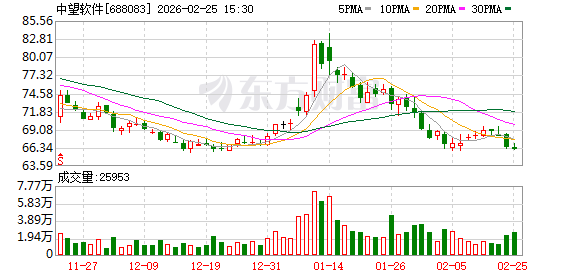
中望软件:公司当下专注于研发设计类工业软件领域,目前的关注重点主要为二、三维CAD以及CAE
Mei Ri Jing Ji Xin Wen· 2026-02-25 12:07
Group 1 - The company is actively considering mergers and acquisitions to enhance its R&D capabilities and core technology reserves in the industrial software sector [2] - Currently, the company's focus is on R&D design software, specifically in 2D and 3D CAD and CAE, with no immediate plans to enter the EDA industry through acquisitions [2] - The company will fulfill its information disclosure obligations in accordance with relevant laws and regulations if there are specific acquisition plans in the future [2]

中国工业软件行业发展研究报告
艾瑞咨询· 2026-02-17 00:09
Core Insights - The industrial software industry is at a critical juncture, driven by the need for innovation and the urgency of development, particularly in the context of China's economic transformation and the push for self-sufficiency in core technologies [1][4][17] - The market for industrial software in China is projected to approach 300 billion by 2024, indicating robust growth despite challenges such as a hollowing out of core technologies and imbalanced industrial structures [1][17] - The evolution of industrial software is characterized by a shift from tools to systems, platforms, and eventually to a genetic level, focusing on data value and efficiency [2][48] Industry Dynamics - The industrial software market is large, with significant opportunities for companies to target head, mid, and long-tail customers, each with distinct needs and potential for revenue generation [2][50] - The core evolution path of industrial software is from tools to systems, then to platforms, and finally to genetic integration, emphasizing the importance of data flow and value efficiency [48][49] - The industry faces systemic challenges, including a lack of foundational technologies and difficulties in integrating into supply chains, which hinder the development of domestic industrial software [26][17] Product Development Trends - Current industrial software primarily focuses on product sales, but there is a shift towards selling "intelligence" as data assets are accumulated and utilized effectively [3][52] - The integration of AI and large models is expected to enhance the capabilities of industrial software, particularly in areas such as code generation and human-computer interaction [43][52] - Future products are anticipated to evolve into "digital engineers," capable of autonomous task execution and intelligent interaction, moving beyond traditional software tools [52] Market Characteristics - The industrial software market is characterized by a high degree of fragmentation, with varying levels of domestic replacement and integration needs across different customer segments [14][50] - The demand for industrial software is driven by practical applications in enterprises, government initiatives, and the integration of research institutions, each with unique procurement focuses [14][16] - The market is currently experiencing a transition from subsidy-driven growth to a more market-oriented approach, emphasizing the importance of innovation and self-sufficiency [19][12] Challenges and Opportunities - The industry is grappling with significant challenges, including a lack of core technologies in research and design software, which is critical for engineering optimization [23][17] - Companies are encouraged to leverage policy incentives and market opportunities to enhance their technological capabilities and address the "bottleneck" issues in core components [17][26] - The evolution of industrial software is expected to create new revenue streams through data value services, as companies adapt to the changing landscape of technology and market demands [30][52]

最高900万元补助!北京工业互联网与工业软件扶持项目申报指南
Sou Hu Cai Jing· 2026-02-12 04:29
Core Insights - The policy aims to encourage independent research and development in key technologies, particularly in industrial internet, industrial software, and cybersecurity, by providing financial support to qualifying projects [1][4]. Policy Focus - The policy targets three main technology areas with seven specific directions: 1. **Key Technologies in Industrial Internet Platforms**: - Industrial intelligent algorithms, knowledge graphs, mechanism models, and microservice components [2]. 2. **Key Technologies in Industrial Software**: - Computer-aided design (CAX), electronic design automation (EDA), and product lifecycle management (PLM) [2]. 3. **New Network and Security Technologies**: - Software-defined networking (SDN), network virtualization, and core security systems [2]. Subsidy Details - The subsidy is set at 30% of the total funding received from national or municipal support, with a maximum limit of 9 million yuan per project [3]. Policy Implications - The policy emphasizes continuous technological iteration rather than one-time development, highlighting the importance of ongoing R&D capabilities [4]. - It stresses the need for practical applications of innovations, indicating that theoretical results without industrial validation will not receive support [4]. - Cybersecurity is treated as a distinct area, reflecting the growing importance of compliance and safety in smart manufacturing [4]. Application Strategy for Enterprises - Companies are advised to clearly define their technical challenges, industrialization paths, and funding usage in their project proposals [5][6]. - Prioritizing applications for national or municipal key project status is recommended to enhance eligibility for subsidies [6]. - Forming joint applications with technology and application partners is encouraged to address verification challenges [7]. - Attention to intellectual property rights is crucial, with a need to clarify core technology patents and software copyrights in proposals [8].

中国工业软件行业发展研究报告
艾瑞咨询· 2026-02-04 00:08
Core Insights - The industrial software industry is at a critical juncture, driven by the need for innovation and the urgency of development, especially in the context of China's economic transformation and the push for self-sufficiency in core technologies [1][3][17] - The market for industrial software in China is projected to approach 300 billion yuan by 2024, indicating robust growth despite challenges such as a lack of core technologies and imbalanced industrial structure [1][17] - The evolution of industrial software is characterized by a shift from tools to systems, platforms, and eventually to a genetic level, focusing on data value and efficiency [2][48] Industry Dynamics - Industrial software serves as a critical enabler for innovation and transformation in the industrial sector, acting as the "brain" and digital foundation of new industrialization [3][9] - The market is large, with significant opportunities for domestic companies to replace foreign products, particularly in the context of national policies promoting self-reliance [2][50] - The development of industrial software is slow and requires patience, but it also presents opportunities amid ongoing changes and restructuring [1][17] Market Characteristics - The industrial software market is characterized by a significant gap in core technologies, particularly in research and design software, which is crucial for engineering optimization [17][23] - The market structure shows a strong presence of management software while engineering software remains weak, indicating a need for improvement in the latter [17][19] - The demand for industrial software is driven by practical needs from enterprises, government initiatives, and the integration of research and education [14][50] Technological Drivers - The advancement of large models and AI technologies is accelerating the development and application of industrial software, supported by government subsidies aimed at fostering innovation [12][14] - The integration of AI and big models is transforming the capabilities of industrial software, enhancing areas such as code generation and human-computer interaction [43][45] Future Directions - The industrial software industry is expected to transition towards a model that emphasizes selling "intelligence" rather than just software, with products evolving into "digital engineers" capable of autonomous task execution [52][48] - The focus will shift towards platformization and the internalization of industrial knowledge into parameters and codes, enhancing the efficiency of data flow and value extraction [48][52] - Companies are encouraged to leverage head clients and policy support to drive technological breakthroughs while also exploring opportunities in mid-tier and long-tail markets [50][52]

Silvaco Group (NasdaqGS:SVCO) FY Conference Transcript
2026-01-14 20:17
Silvaco Group (NasdaqGS:SVCO) FY Conference Summary Company Overview - **Company**: Silvaco Group - **Founded**: 1984 - **Industry**: Electronic Design Automation (EDA) - **Core Product Lines**: - TCAD (Technology Computer-Aided Design): Approximately 50% of revenue, a core business with a strong customer retention rate - IP (Intellectual Property): About 10% of revenue, identified as a significant growth area - Traditional EDA: Comprises the remaining revenue, focusing on niche markets to compete against larger companies like Synopsys and Cadence [3][4] Key Insights - **AI Integration**: Silvaco sees AI as a major long-term growth driver, particularly in manufacturing processes. The company aims to leverage AI to create new markets rather than just improve existing processes [5][6][7] - **Digital Twins**: The transition to virtual prototyping using AI and digital twins is essential for the semiconductor industry, allowing for more efficient process development [7][8] - **Customer Engagement**: The process of acquiring new customers for AI-driven solutions is described as a gradual engagement rather than a traditional sales approach, requiring significant collaboration and commitment from both parties [10][11] Financial Performance and Strategy - **Current Financial Status**: The company is focused on achieving profitability after experiencing losses. Plans include reducing expenses by at least $15 million annually and modest revenue growth in 2026 [19][20] - **Growth Projections**: Modest growth is anticipated due to a significant revenue spike from a major renewal in 2025 that will not recur. The company aims to overcome this loss and achieve growth [23] - **Long-term Goals**: The strategy includes building a strong AI franchise while focusing on short-term revenue growth primarily from the IP business [21][22] Market Position and Competitive Landscape - **Market Dynamics**: Silvaco operates in a highly consolidated EDA market dominated by a few large players. The company focuses on niche markets where it can maintain a competitive edge [12][16] - **Niche Specialization**: Silvaco has established itself as a leader in specific areas, such as TCAD for display manufacturing, holding over 80% market share in that segment [16][17] M&A Strategy - **Acquisition Focus**: The company has successfully acquired several firms, including Mixel, which is expected to significantly enhance Silvaco's product offerings and market position. Future acquisitions will target smaller companies with strong technology that can be integrated into Silvaco's existing framework [36][37][38] - **Cash Management**: Currently, Silvaco is focused on replenishing its cash reserves before pursuing further acquisitions [42] Challenges and Considerations - **Revenue Recognition Issues**: Silvaco faces challenges with revenue recognition due to its accounting practices, which can lead to volatility in reported earnings [45][46] - **Competitive Pricing Dynamics**: The EDA market is characterized by complex pricing strategies, where larger companies often offer discounts or free licenses to retain customers, complicating Silvaco's competitive positioning [49][50] Conclusion Silvaco Group is navigating a challenging EDA landscape with a focus on AI integration, niche market specialization, and strategic acquisitions. The company aims to achieve profitability while laying the groundwork for long-term growth through innovative technologies and customer engagement strategies.
半导体_数字芯片前瞻_AI 支出环境仍稳健,传统市场承压_ Semiconductors_ Digital Preview_ AI spending environment remains solid, traditional markets under pressure
2026-01-10 06:38
Summary of Key Points from Conference Call Records Industry Overview - **Semiconductor Industry**: The AI spending environment remains solid, while traditional markets such as PCs and smartphones are under pressure due to increased input costs. Companies with strong exposure to sustainable spenders like Nvidia (NVDA) and Broadcom (AVGO) are expected to perform better than others in the digital semiconductor landscape [1][1]. Company-Specific Insights Cadence Design Systems (CDNS) - **Rating**: Buy - **Growth Potential**: Cadence is expected to grow through various vectors in the semiconductor industry, driven by the diffusion of custom chip design among a broader customer base. Key focus areas for investors include: 1. End market momentum in Core EDA, IP, and System Design & Analysis 2. Customer adoption rates of AI offerings 3. Current pace of ASIC design starts across the industry [2][8][11]. - **Financial Estimates**: Expected to deliver approximately 1% revenue upside in the quarter, with guidance for 11%-13% YoY revenue growth for 2026. Anticipated operating margin expansion of about 150 basis points and 15% EPS growth [10][10]. - **Valuation Concerns**: Positioning is somewhat negative due to a significant valuation premium compared to peers like Synopsys (SNPS) [2][8]. Advanced Micro Devices (AMD) - **Rating**: Neutral - **Market Sentiment**: The bar for stock price outperformance is considered high, with expectations lowered since November. The stock is priced for OpenAI deployments to begin late in 2026, creating a challenging tactical setup due to low visibility on deployment timing and gross margin trajectory [4][16]. - **Financial Guidance**: Consensus expectations for 1Q guidance are elevated, and a potential miss, particularly in Datacenter revenue, could pressure the stock. EPS estimates for 4Q and 1Q are $1.30 and $1.16, respectively, which are below consensus [17][18]. - **Key Focus Areas**: Investors will be looking for guidance on Datacenter GPU revenue, updates on OpenAI deployment timelines, and margin expectations [18][19]. ARM Holdings (ARM) - **Rating**: Sell - **Investor Focus**: Investors are expected to concentrate on FY4Q royalty revenue guidance and details regarding ARM's chip manufacturing strategy. There is a balanced positioning among investors at current levels [3][23]. - **Financial Estimates**: Expected to have an in-line quarter with modestly above estimates on Licensing but below on Royalty revenue for FY3Q and FY4Q [24][25]. - **Key Metrics**: The company is anticipated to provide insights into the sustainability of AI spending and its growing presence in the datacenter market [26][26]. Additional Insights - **Market Dynamics**: The semiconductor industry is experiencing a divergence in performance based on exposure to AI spending versus traditional markets. Companies with strong AI offerings are likely to outperform those reliant on traditional markets [1][1]. - **Investor Sentiment**: There is a cautious sentiment among investors regarding the timing and impact of AI deployments, particularly for AMD, which could affect stock performance in the near term [4][16]. Conclusion The semiconductor industry is navigating a complex landscape with solid AI spending but pressures in traditional markets. Companies like Cadence are positioned for growth, while AMD and ARM face challenges that could impact their stock performance. Investors are advised to monitor key metrics and guidance closely as they assess potential investment opportunities.



半导体设备ETF(159516)近20日净流入超33亿元,行业壁垒与增长潜力受关注
Mei Ri Jing Ji Xin Wen· 2026-01-09 02:50
Group 1 - The semiconductor equipment ETF (159516) has seen a net inflow of over 3.3 billion yuan in the past 20 days, indicating strong interest in the industry's barriers and growth potential [1] - The EDA (Electronic Design Automation) industry is characterized as a high-quality business with significant barriers to entry and anti-cyclical properties, primarily due to high R&D investment and collaboration within the supply chain [1] - The global EDA market has grown from less than 10 billion USD in 2018 to over 15 billion USD currently, maintaining a high single-digit annual compound growth rate [1] Group 2 - The domestic EDA market is expected to grow rapidly, with projections indicating a scale of nearly 20 billion yuan by 2025 and an annual compound growth rate exceeding double digits [1] - The demand growth in the EDA industry is driven by three core factors: increasing chip complexity, advancements in process technology, and the expansion of the custom ASIC market [1] - The EDA industry is highly concentrated, with three major international players covering the entire field, while domestic companies are gradually moving towards capability integration and platform development [1]
硬科技突围:产业攻坚、资本加持,共建科创生态圈
Di Yi Cai Jing· 2025-12-26 08:12
Core Insights - The article discusses the collaborative efforts of policy, industry, and capital to promote high-quality development in the hard technology sector, emphasizing the opportunities and challenges faced by companies in this field [1][4]. Group 1: Policy and Market Environment - The "14th Five-Year Plan" encourages the capital market to support technological innovation, enhancing the inclusivity and adaptability of market systems [4]. - The capital market's support for technology innovation has become a long-term policy direction, with ongoing institutional innovations aiding the development of tech enterprises [4]. Group 2: Company Strategies and Developments - Srei New Materials, a company focused on new material R&D, has expanded its operations into various sectors, including rail transportation and aerospace, emphasizing technological iteration and industrial upgrading [6][11]. - Hai Tian Rui Sheng is focusing on high-quality training data for AI applications, leveraging industry expertise to maintain technological leadership [6][7]. Group 3: Investment Strategies - Investment institutions are increasingly focusing on long-term capital and risk-sharing mechanisms to foster a healthy ecosystem for hard technology [3][5]. - Oriental Fortune prefers investing in sectors with long-term growth potential, such as GPUs, rather than saturated markets, and emphasizes the importance of team quality in project selection [9][14]. Group 4: Challenges and Solutions - Companies face challenges such as varying technology iteration speeds and stringent customer certification standards, necessitating a robust operational framework to navigate these issues [11][12]. - Compliance with international regulations is a significant hurdle for companies expanding overseas, requiring thorough legal preparations before engaging with foreign clients [12][13].


计算机行业2026年度投资策略(212页完整版):追逐星辰大海的科技浪潮
Guotou Securities· 2025-12-11 02:35
Group 1: Overview of the Computer Sector - The computer sector is experiencing a recovery in fund allocation, with a 4.46% holding ratio in Q3 2025, an increase of 1.93 percentage points from Q2 2025 and 2.24 percentage points year-on-year from Q3 2024 [7][12] - The computer sector's market capitalization accounts for 5.27% of the total A-share market, indicating a low allocation that presents upward potential [7][12] - The computer index has risen by 27.62% as of December 1, 2025, outperforming the CSI 300 index by 11.32 percentage points [12] Group 2: Domestic Substitution Trends - The domestic substitution trend is clear, with significant replacement opportunities in the computer industry, particularly in EDA, electronic measurement instruments, and cybersecurity [3][21] - The EDA market is projected to reach $14.5 billion by 2025, with domestic firms increasing their competitiveness through self-developed and acquired technologies [26][31] - The electronic measurement instrument market is expected to grow rapidly, driven by technological advancements and increased R&D investments [63][75] Group 3: Artificial Intelligence Applications - The AI sector is expanding across various industries, with demand for GPU, servers, IDC, power supplies, and liquid cooling systems driving growth [3][21] - The domestic and international AI model iterations are ongoing, with a focus on world models and physical AI as future trends [3][21] - End-side AI applications, including smart glasses, robotics, and intelligent driving, are emerging as key areas for implementation [3][21] Group 4: Future Industries and Innovations - Quantum technology is anticipated to bring disruptive innovations in computing, communication, and measurement, creating new opportunities [3][21] - The satellite internet sector is accelerating constellation construction, with potential releases in measurement and simulation demands [3][21] - The integration of technology and finance is expected to yield significant dividends through innovative disruptions [3][21] Group 5: Investment Recommendations - Recommended investment targets in the EDA sector include Huada Jiutian, GY Electronics, and Broadcom [53][90] - In the CAD sector, focus on Zhongwang Software and Haocen Software [53][90] - For CAE, consider Zhongwang Software and Holley Technology [53][90]