
Trade War

Search documents
President Trump reignites trade tensions with new tariffs
Yahoo Finance· 2025-09-28 15:01
The tariff war isn't over just yet. October 1st, a slew of new tariffs will take effect, including a 100% tariff on some imported drugs, 50% on kitchen cabinets, 30% on upholstered furniture, and 25% on big trucks. On top of that, the Wall Street Journal reporting that President Trump plans to mandate a onetoone policy for chip makers to manufacture as many chips in the US as they do overseas or face hefty tariffs.Here to break it all down, Sam Stovall, CFR research chief investment strategist and Yahoo Fin ...

Foreign investors are sticking with US stocks amid Trump tariff turmoil
Yahoo Finance· 2025-09-26 16:40
Core Viewpoint - Despite the recent "Liberation Day" tariffs announced by President Trump, foreign investors have maintained a strong allocation to US equities, with over 30% of their US financial assets in stocks, significantly above the long-term average of 19% [2][3]. Group 1: Investor Behavior - From the start of the year to the end of June, foreign investors allocated more than 30% of their US financial assets to equities, nearing record highs [2]. - The absence of a major shift in allocation is attributed to the market's rebound from April lows, where tariff news has not significantly impacted stocks [3]. - International equities have outperformed US stocks by as much as 17%, although this gap has narrowed to about 10% [6]. Group 2: Economic Context - The US effective tariff rate is now closer to 9%, which is roughly half of the theoretical rate of 18%, indicating that various factors have mitigated the impact of higher tariffs [3]. - Falling interest rates and renewed optimism about US growth have contributed to stabilizing investor confidence [4]. - The expectations for the US market were extremely high at the beginning of the year, while international markets had low expectations, making them more sensitive to news [5]. Group 3: Market Dynamics - Stocks sold off in April following the announcement of higher-than-expected tariffs, leading to a simultaneous decline in Treasurys and the dollar, which are typically seen as safe havens [6]. - The initial panic from the tariff news faded as companies managed the impact better than anticipated [3]. - The recent rhetoric from President Trump against the Federal Reserve has raised concerns about the Fed's independence, adding to the uncertainty surrounding the US economy [5].
Trump’s overnight demand for 100% tariffs on pharmaceuticals will be ‘a meaningful commercial hit for U.S. consumers,’ top analyst says
Yahoo Finance· 2025-09-26 11:24
Core Points - President Trump's decision to impose a 100% tariff on imported branded pharmaceuticals starting October 1, 2025, is expected to significantly impact American consumers and global drug stocks, although there are exemptions for companies building manufacturing plants in the U.S. [1][2] - The tariff is anticipated to create a meaningful commercial hit for U.S. consumers, as over 20% of U.S. pharmaceutical imports by value come from Asia [6]. Industry Impact - Asian drug companies experienced a decline in market capitalization as traders reacted negatively to the news, with significant losses reported in Japan's pharmaceutical sector [4][3]. - In Europe, companies like Novo Nordisk and Roche saw minor declines, while Sanofi experienced a slight increase, which may be a temporary rebound after a previous loss [5]. - U.S. pharmaceutical stocks, including Pfizer, Eli Lilly, and Bristol-Myers Squibb, showed marginal gains in premarket trading, indicating a mixed reaction to the tariff announcement [5]. Economic Analysis - Analysts from Oxford Economics highlighted that the tariffs would pose a substantial commercial challenge for U.S. consumers, but they also suggested that the White House may need to relax some standards to mitigate the impact [2][6]. - The imposition of tariffs is part of a broader trade war context, which has already affected market performance in Asia, particularly in the pharmaceutical sector [4].
X @The Economist
The Economist· 2025-09-26 11:20
China’s leaders appear “extraordinarily emboldened” on manufacturing, reports one diplomat. They believe they are winning important battles against Donald Trump, if not the whole trade war https://t.co/HejN5GsWSd ...
X @Bloomberg
Bloomberg· 2025-09-26 10:46
Foreign purchases of US stocks rose to a record in the second quarter despite worries that global investors would dump American assets after Donald Trump launched his trade war https://t.co/WeD2yaykvM ...
China floods the world with cheap exports
Bloomberg Television· 2025-09-26 08:21
Export Performance - China's exports reached $2.5 trillion through August, the highest ever for any country [1] - This export surge is driven by rising global demand [1] - A weaker yuan and domestic deflation are making Chinese exports cheaper [2] Geopolitical Implications - China's strong export performance strengthens its position in trade talks with the U.S [2] - Some governments are hesitant to push back against China due to a desire to maintain good relations and avoid a trade war [3] Impact on Foreign Firms - The influx of Chinese goods is putting pressure on foreign companies [2] - The U.S. tariffs of 50% or more on Chinese goods have not stopped China's export growth [1] Domestic Economic Impact - Strong exports are boosting China's economic growth amidst domestic challenges [1]
‘The frustration is overwhelming’: Soybean farmers feel betrayed as Argentina blows a hole in rural America’s $47 billion soybean bonanza
Yahoo Finance· 2025-09-25 18:14
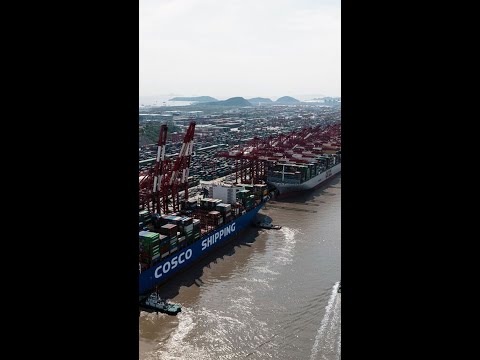
Core Insights - The U.S. soybean industry is facing significant challenges due to retaliatory tariffs from China, which have reached 34%, leading to a loss of market share to South American competitors like Brazil and Argentina [2][4][7] - In 2024, soybeans accounted for nearly 20% of U.S. cash crop receipts, generating $46.8 billion, but U.S. farmers are struggling as China has not purchased U.S. soybeans since May [2][4] - The economic impact of these challenges is profound, particularly in rural communities where farming constitutes a significant portion of employment [8][12] Market Dynamics - Brazil now accounts for 71% of Chinese soybean imports, a dramatic increase from just 2% three decades ago, indicating a substantial shift in market dynamics [2] - U.S. soybean prices have fallen approximately 40% since their peak in 2022, exacerbated by reduced exports and increased supply [9][16] - The ongoing trade war has led to a significant decline in U.S. market share of Chinese soybean imports, dropping to a 30-year low of 19% during the previous trade conflict [13][14] Economic Support and Trade Relations - The U.S. government is extending $200 billion in economic support to Argentina, which has suspended its export taxes on soybeans, further complicating the competitive landscape for U.S. farmers [4][6] - Farmers are increasingly reliant on exports to China, and the lack of a trade agreement is causing frustration within the agricultural sector [4][19] - The Illinois Soybean Association is exploring alternative markets and developing sustainable uses for processed soy to mitigate the impact of reduced exports [17] Long-term Implications - The agricultural sector is concerned that while immediate economic losses may be compensated through subsidies, the long-term competitiveness of U.S. agriculture on the global stage remains uncertain [18][19] - Farmers express a desire for stable trade relations rather than reliance on government bailouts, emphasizing the need for access to markets [19]
Trump’s Steel Tariffs Are Triggering Counterstrikes From US Neighbors Against China
Yahoo Finance· 2025-09-25 13:39
But the shift toward more protectionism in the Americas — a reversal from decades of globalization and close cross-border ties in the region — may not convince Trump to budge. While some countries have won tariff cuts and exemptions for certain goods, the US president has cast duties on steel as key to protecting national security and boosting domestic production of the alloy. His trade policies are bolstering the steel industry in the US while pummeling producers abroad, reshaping supply chains as companie ...
Trump Trade War: Swiss Tariffs Spark Market Volatility, Gold Gains on Risk-Off Mood
FX Empire· 2025-09-22 11:36
EnglishItalianoEspañolPortuguêsDeutschالعربيةFrançaisImportant DisclaimersThe content provided on the website includes general news and publications, our personal analysis and opinions, and contents provided by third parties, which are intended for educational and research purposes only. It does not constitute, and should not be read as, any recommendation or advice to take any action whatsoever, including to make any investment or buy any product. When making any financial decision, you should perform your ...

The $100,000 new worry by Trump for 'good friend' Modi
The Economic Times· 2025-09-22 04:54
Core Insights - The new $100,000 entry fee for H-1B visas, primarily affecting Indian workers, poses a significant threat to the program and may force major outsourcing companies like Infosys to reconsider their strategies [1][13] - The implementation of this fee appears to be an economic sanction rather than a mere travel restriction, escalating tensions between the US and India [1][13] - The US's recent trade measures, including a 50% duty on merchandise exports from India, have compounded the challenges faced by Indian industries, particularly those reliant on exports [2][13] Impact on Indian Industries - Indian industries, especially textiles, gems, and jewelry, have lost access to their largest overseas market, prompting hopes for domestic tax cuts to mitigate losses during the festive season [2][13] - The restrictions on white-collar talent from the US have further complicated India's efforts to stabilize its economy [4][13] - The potential for a 25% tax on American companies for payments to foreign workers could further threaten India's software services export model, which has been a cornerstone of its economic growth [9][13] Challenges for Indian Workers - The new H-1B visa rules have created anxiety among middle-class Indian families, with many fearing they may be stranded abroad if they cannot return by the deadline [5][6][13] - The pathway to permanent residency in the US has become increasingly daunting for immigrant families, leading to considerations of relocation to countries like Canada, Australia, or Singapore [6][13] - Current employees in the US may seek to have their companies relocate them elsewhere due to the uncertainty surrounding the H-1B program [6][13] Strategic Responses - US tech and finance industries may challenge the legality of the new entry fee or seek exemptions for STEM graduates [6][13] - Historical responses to H-1B program shocks suggest that companies may resort to acquisitions of domestic firms to secure talent [7][13] - The ongoing geopolitical tensions and economic sanctions could lead to a reevaluation of the long-standing economic relationship between the US and India [10][13] Broader Economic Context - The backdrop of high youth unemployment in India and unrest in neighboring countries adds urgency to the situation, as the US's actions may limit opportunities for India's large youth population [10][11][13] - Prime Minister Modi's optimistic statements regarding tax reductions may not alleviate consumer concerns about spending amid wage threats for both blue- and white-collar workers [11][13]

