
Physical AI

Search documents
探展CES 2026:与吉利聊聊开始“读懂”世界的汽车,与Physical AI的“GPT时刻”【赞助】
硅谷101· 2026-01-20 00:00
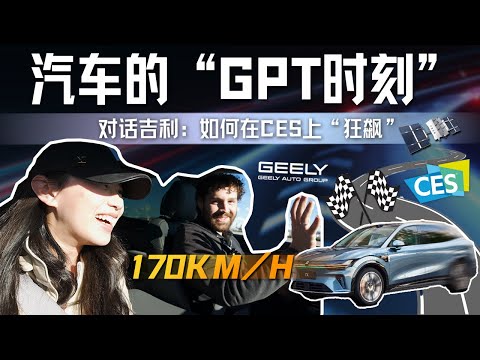
This is me at 170km/h! My goodness, this is the first time I've ever felt like I'm on a roller coaster in a car! I feel a little nauseous. I'm not sitting in an F1 car, although my driver is a former professional race car driver. This is Geely's Extreme Krypton 7X model. On the first day of CES in early January, it showcased the cost-effectiveness of Chinese electric vehicles to global guests on the Las Vegas circuit . For this price, the number of features it offers is unbelievable. In the following days, ...

Ouster, Inc. (OUST) Presents at 28th Annual Needham Growth Conference Transcript
Seeking Alpha· 2026-01-19 18:15
Company Overview - Ouster is not merely a sensor company but a perception solution platform that integrates sensing, software, and applications to drive outcomes [2][3] - The company emphasizes its evolution from hardware to a comprehensive platform that includes a perception software layer capable of generating actions [3] Technology and Innovation - Ouster's platform encompasses three core functions: sensing, thinking, and acting, which aligns with the concept of physical AI [3] - The company aims to redefine perceptions of its capabilities beyond traditional hardware offerings, highlighting its role in the AI landscape [2][3]


CES 2026趋势照进现实:算力引擎RK182X重塑千行百业,瑞芯微AI生态大会共建落地生态
机器之心· 2026-01-19 01:27
Core Viewpoint - The article emphasizes the significant role of Rockchip in the AIoT chip sector, particularly with the launch of the RK182X series chip, which supports the transition of AI from virtual to real-world applications, aligning with the theme of CES 2026, "Defining the Physical Boundaries of AI" [3][4]. Group 1: Technological Advancements - The RK182X chip represents a breakthrough in 3D architecture co-processor technology, providing robust hardware and computational support for the development of "Physical AI" [3][4]. - The chip demonstrates superior performance in visual language models and large language models, achieving an output speed of over 100 tokens, which is three times faster than competing products [6][8]. - RK182X can analyze four video streams simultaneously with real-time alerts, responding to anomalies in just 0.5 seconds, showcasing its advanced capabilities in understanding complex scenarios [8][10]. Group 2: Application Areas - In the consumer electronics sector, RK182X enhances smart devices like smart glasses and TVs by integrating AI functionalities such as real-time translation and visual enhancement, transforming them into interactive tools [12]. - In the robotics field, RK182X provides essential computational power for autonomous robots, enabling them to understand their environment and make decisions, as demonstrated by humanoid robots and multifunctional household robots showcased at CES [12][13]. - The automotive sector benefits from RK182X's local AI processing capabilities, allowing vehicles to make safe decisions in offline environments and facilitating natural multimodal interactions [13]. Group 3: Ecosystem Development - Rockchip aims to build a comprehensive industry ecosystem by offering hardware solutions alongside a collaborative algorithm ecosystem and reusable industry reference designs, creating a full-stack capability [15]. - The first AI Software Ecosystem Conference will be held to discuss the implementation paths and business models for edge AI across various industries, leveraging Rockchip's extensive ecosystem of over 5,000 global clients [15].


1 Stock I'd Buy Before Lockheed Martin in 2026
The Motley Fool· 2026-01-18 08:24
分组1: Lockheed Martin - Lockheed Martin may face volatility due to a new initiative from President Donald Trump, which prohibits defense companies from stock buybacks, dividend distributions, and large executive salaries [1] - The potential lack of buybacks and dividends could make Lockheed Martin less attractive to investors [2] 分组2: Broadcom - Broadcom's AI semiconductor revenue surged by 74% year over year in the fourth quarter of fiscal 2025, with expectations for AI revenue to double year over year in the first quarter [6] - Broadcom's stock has increased by almost 700% over the past five years, indicating strong market performance and potential for continued growth [11] - The introduction of Broadcom's Wi-Fi 8 platform enhances its position in the AI market by providing stronger Wi-Fi for energy-intensive applications, which could lead to lucrative deals with various clients [9][10]


The Best Trillion-Dollar Stock to Buy in January 2026, According to Wall Street (Hint: Not Tesla)
The Motley Fool· 2026-01-16 08:06
Core Viewpoint - Nvidia is expected to maintain its position as the leading provider of AI infrastructure for the foreseeable future, driven by its dominant market share and robust product offerings [3][8]. Group 1: Market Position and Performance - Nvidia holds nearly 90% market share in the data center accelerator market, which is crucial for AI workloads [3]. - The company reported a 62% increase in revenue to $57 billion, with non-GAAP net income rising 60% to $1.30 per diluted share [10]. - Nvidia's stock has surged 1,150% since January 2023, yet analysts suggest the current valuation remains attractive at 45 times earnings [10][13]. Group 2: Product Offerings and Innovations - Nvidia's GPUs are complemented by CPUs and networking gear, along with a comprehensive ecosystem of software development tools, enhancing its competitive edge [4]. - The upcoming Vera Rubin superchip, set to launch in the second half of 2026, will significantly enhance performance, with Vera CPUs offering double the performance of previous models and Rubin GPUs running AI workloads much faster [11]. Group 3: Growth Opportunities - The demand for generative AI is a key growth driver, with Nvidia providing essential hardware and software for AI model development [5]. - Data center GPU sales are projected to grow at 36% annually through 2033, while robotaxi chip sales are expected to increase at 74% annually through 2030 [8][9]. - Nvidia is also positioned to benefit from the easing of export restrictions to China, potentially unlocking a significant market for its products [12].

Ouster (NYSE:OUST) FY Conference Transcript
2026-01-15 21:47
Summary of Ouster's Conference Call Company Overview - Ouster is positioned as a perception solution platform rather than just a sensor company, emphasizing its capabilities in sensing, thinking, and acting through its software layer and hardware [2][3] Market Opportunity - The total addressable market (TAM) is estimated at $70 billion, distributed across four key verticals, each accounting for approximately 25% of the market in 2024 [4] Key Vertical Markets 1. **Automotive**: Focus on robo trucking and robo taxis, not on Advanced Driver Assistance Systems (ADAS) [5] 2. **Smart Infrastructure**: Targeting intelligent transport systems, with over 300,000 intersections in the U.S. using their technology for traffic management [6] 3. **Perimeter Crowd Security**: Engaged in projects for the Los Angeles Olympics and World Cup, focusing on crowd control and analytics [7] 4. **Robotics**: Successful partnerships, such as with Serve Robotics, leading to increased orders and growth in the robotics sector [9] Technology and Product Development - Transition from analog to digital lidar technology, enhancing performance and efficiency [11] - Upcoming L4 chip expected to further improve capabilities and expand market reach [12] - The company has shipped over 100,000 sensors and has a strong patent portfolio following a merger with Velodyne [17] Financial Outlook - Projected growth of 30%-50% across market segments, with gross margins targeted at 35%-40% on a GAAP basis [14][15] - Aiming for profitability in cash flow and EBITDA by late 2027 to early 2028 [16] Investment Strategy - Ouster positions itself as a platform solution provider, focusing on applications that help customers speed their time to market [16] - The company emphasizes fiscal responsibility and maintaining operating expenses to ensure profitable growth [15] Customer Engagement and Partnerships - Ouster has over 1,000 customers, emphasizing long-term partnerships rather than one-time sales [27] - The company’s strong balance sheet provides a competitive advantage, allowing for sustained support and collaboration with clients [27] Unique Selling Proposition - Ouster's technology is integral to the development of physical AI, providing essential perception and sensing capabilities for various applications [18][21] - The Gemini AI engine and Blue City platform are highlighted as key offerings, with Gemini focusing on AI training and Blue City on smart city solutions [23][24] Conclusion - Ouster is well-positioned in the perception and sensing market, leveraging its technology, partnerships, and financial strength to capitalize on the growing demand for physical AI solutions [18][27]
计算机行业2025年度业绩前瞻:从技术探索转向商业化,AI应用多点开花
ZHESHANG SECURITIES· 2026-01-15 14:08
Investment Rating - The industry investment rating is "Positive" (maintained) [5] Core Insights - The consensus has shifted towards physical AI, with advancements in autonomous driving and AI models being showcased at CES 2026 [1] - The government is promoting the integration of large AI models into the real economy, aiming for deep applications in manufacturing by 2027 [2] - AI is transitioning from simple Q&A to more complex agent-based systems, significantly reducing reasoning costs and enabling broader applications [3] Summary by Sections AI Applications Across Multiple Fields - Star Ring Technology is focusing on AI infrastructure to support B-end large model privatization and C-end AIPC foundation [8] - Yonyou Network is leveraging AI and overseas expansion for growth, with significant contract signings in 2025 [12][13] - Tax Friend Co. is enhancing its B-end services with AI, expecting revenue growth due to increased demand for tax compliance services [15][16] - New Point Software is capitalizing on the trend of AI in government services, anticipating stable performance in 2025 [18][19] - Yunsai Zhili is positioned as a leading intelligent computing platform in Shanghai, with a focus on government and industry applications [20][21] - UCloud is benefiting from its neutral cloud computing advantages and the surge in AI computing demand [22][23] - Kingsoft Office is experiencing rapid growth due to its strong position in the AI office sector and user engagement [24][25][26] - Crystal Technology is seeing explosive growth in its drug discovery solutions, with a focus on AI infrastructure [27][28] - Suochen Technology is optimizing its product structure through physical AI, leading to improved profitability [29][30]
Lattice Semiconductor (NasdaqGS:LSCC) FY Conference Transcript
2026-01-14 14:47
Lattice Semiconductor FY Conference Summary Company Overview - **Company**: Lattice Semiconductor (NasdaqGS:LSCC) - **Industry**: Semiconductor, specifically low-power programmable devices - **Market Position**: Leading provider with over 40 years of innovation in the programmable market - **Key Markets**: Communications, computing, industrial, automotive, and consumer markets [1][2] Core Business Insights - **Revenue Breakdown**: - Communications and computing account for over 50% of revenue - Server business grew 80% year-on-year - Communication segment grew 63% year-on-year - Industrial automotive segment is expected to return to growth in 2026 [3][22] - **Production Volume**: Shipped over 150 million units last year, expected to increase to 180 million this year [3] Strategic Pillars 1. **Companion Role**: Lattice provides support functions for powerful ASICs, enhancing their performance and functionality [4][5] 2. **Small and Mid-Range FPGA Roadmap**: Focused on developing the best roadmap for small and mid-range FPGAs, emphasizing low latency, high precision, and parallel processing capabilities [15][18] 3. **Sustainable Growth**: The company aims for sustainable growth through innovation and expanding its product portfolio [18][19] Market Trends and Growth Drivers - **Disaggregation in AI Servers**: Transition from single board to multiple specialized boards (processor, networking, storage, etc.) is increasing FPGA usage per rack [25][26] - **CapEx Growth**: Anticipated 50% growth in capital expenditures for cloud service providers, contributing to demand for FPGAs [26] - **AI Server Growth**: AI servers currently represent 12% of total servers, with higher FPGA content compared to traditional servers [27][28] Financial Performance and Projections - **Gross Margin**: Currently at 69%-70%, with strong EBITDA and free cash flow [21] - **Long-Term Growth Rate**: Expected to be between 15%-20%, with a consensus growth rate of 21% for the current year [21][23] - **2026 Outlook**: Anticipated to be a strong year for data centers and small FPGAs, with growth in industrial automotive expected to ramp up in 2027 [22][23] Competitive Landscape - **Main Competitors**: Xilinx is the primary competitor, with Altera being monitored for potential aggressive moves in the market [39][40] - **Market Differentiation**: Lattice emphasizes its unique low-power, small FPGA architecture as a sustainable competitive advantage [39] Capital Allocation and M&A Strategy - **Focus on Organic Growth**: Prioritizing organic investments in product expansion and innovation [41] - **Potential for Inorganic Growth**: Open to strategic acquisitions to enhance customer offerings and capabilities [42][43] Conclusion - Lattice Semiconductor is well-positioned for growth in the semiconductor industry, particularly in low-power programmable devices, with a strong focus on innovation, market expansion, and strategic partnerships. The company is set to capitalize on emerging trends in AI and data centers while maintaining a competitive edge through its unique product offerings and robust financial health [20][44]

GlobalFoundries to Acquire Synopsys' Processor IP Solutions Business, Expanding Capabilities to Accelerate Physical AI Applications
Globenewswire· 2026-01-14 14:00
Core Insights - GlobalFoundries has announced a definitive agreement to acquire Synopsys' ARC Processor IP Solutions business, which will enhance its capabilities in custom silicon solutions and accelerate its physical AI roadmap [1][2][3] - The acquisition includes various product lines such as ARC-V, ARC-Classic, ARC VPX-DSP, and ARC NPX NPU, along with ASIP processor tools [1][2] - This strategic move aims to provide a comprehensive processor IP suite tailored for physical AI applications, improving IP licensing and software engagement for faster time-to-market [1][2][3] Group 1 - The integration of Synopsys' ARC technologies will enable scalable and energy-efficient processing solutions, benefiting sectors like wearables, robotics, and AI-driven consumer applications [2][3] - Tim Breen, CEO of GlobalFoundries, emphasized that this acquisition reinforces their commitment to leadership in Physical AI and lowers barriers for customer adoption of essential technologies [3][4] - Synopsys will continue to focus on its design IP portfolio, ensuring strong competition in the development and delivery of processor IP solutions [4] Group 2 - The acquisition is subject to customary closing conditions, including regulatory approvals, and is expected to be completed in the second half of 2026 [4] - Following the acquisition, GlobalFoundries will collaborate closely with Synopsys to ensure a seamless transition for employees, customers, and partners [4] - GlobalFoundries is recognized as a leading manufacturer of essential semiconductors, serving various high-growth markets including automotive and IoT [5]



GlobalFoundries to Acquire Synopsys’ Processor IP Solutions Business, Expanding Capabilities to Accelerate Physical AI Applications
Globenewswire· 2026-01-14 14:00
Core Insights - GlobalFoundries (GF) has announced a definitive agreement to acquire Synopsys' ARC Processor IP Solutions business, which will enhance GF's leadership in Physical AI and accelerate custom silicon development [1][3] - The acquisition includes various product lines such as ARC-V, ARC-Classic, ARC VPX-DSP, and ARC NPX NPU, along with ASIP processor tools, which will be integrated with MIPS to create a comprehensive processor IP suite [1][2] - This strategic move aims to lower barriers for customer adoption of essential technologies, thereby supporting the expansion of AI-enabled devices into the physical world [3] Company and Industry Summary - The integration of Synopsys' ARC technologies will provide scalable and energy-efficient processing solutions, benefiting sectors like wearables, robotics, and AI-driven consumer applications [2] - The acquisition is expected to be completed in the second half of 2026, pending regulatory approvals, and will ensure a seamless transition for employees, customers, and partners [4] - GlobalFoundries is positioned as a leading manufacturer of semiconductors, focusing on high-performance products for various high-growth markets, including automotive and IoT [5] - MIPS, as part of GlobalFoundries, specializes in RISC-V IP and software for physical AI platforms, enabling real-time AI adoption in high-growth markets [6]
