《国际紧急经济权力法》(IEEPA)

Search documents
对等关税命运难测:美上诉法院关键审判开启庭辩 法官质疑特朗普授权
Hua Er Jie Jian Wen· 2025-07-31 22:06
Core Points - The fate of the reciprocal tariffs remains uncertain as a court case questions the legal basis for President Trump's significant tariff actions [1] - The case "VOS Selections v. Trump" is pivotal, with judges expressing skepticism about the authority granted to the president under the International Emergency Economic Powers Act (IEEPA) [1][3] - If the Trump administration loses the case, it may have to seek congressional authorization for its tariff strategy, which could significantly impact its trade agenda [1] Legal Context - The judges are particularly focused on the absence of the term "tariff" in the IEEPA, which mentions "foreign exchange, payments, and currency" [3] - The argument presented by the Department of Justice claims that Congress has granted the president the power to regulate imports during a national emergency, which includes imposing tariffs [4] Market Implications - If the Trump administration wins, it would gain substantial new powers to impose and relax tariffs on foreign entities, setting a precedent for future presidents [5] - Conversely, a loss could lead to a murky future for Trump's tariff policies, with potential international disputes arising from countries seeking to revoke agreements made under the current tariff regime [5]
对等关税命运难测:美上诉法院关键审判开启庭辩,法官质疑特朗普授权
Hua Er Jie Jian Wen· 2025-07-31 20:08
Core Viewpoint - The fate of the reciprocal tariffs remains uncertain as a court case questions the legal basis for President Trump's significant tariff actions [1] Group 1: Legal Proceedings - The U.S. Court of Appeals held oral arguments on the case "VOS Selections v. Trump," where judges questioned whether the International Emergency Economic Powers Act (IEEPA) allows the President to unilaterally alter the tariff schedule set by Congress [1][2] - The case centers on whether Trump exceeded presidential authority, infringing on Congress's constitutional power to set tariffs [1][3] - The Department of Justice defended Trump's global tariff system, but judges expressed skepticism towards their arguments [1][3] Group 2: Tariff Implications - A new round of reciprocal tariffs is set to take effect on August 1, impacting nearly 200 countries that failed to reach a trade agreement with the U.S. [1] - If the Trump administration loses the case, it could significantly undermine its overall tariff strategy and may require seeking Congressional authorization [1][5] Group 3: Judicial Concerns - Judges raised concerns about the scope of emergency powers, questioning why tariffs were not explicitly mentioned in the IEEPA and why Trump is the first president to invoke this law for tariffs [3][4] - The argument presented by the DOJ suggested that Congress intended to grant the President broad powers during emergencies, which could include imposing tariffs [4] Group 4: Market Impact - The Federal Circuit Court is not expected to make a ruling immediately, and the losing party is likely to seek a review from the Supreme Court [5] - A ruling in favor of Trump would grant him significant new powers to impose and relax tariffs on foreign entities, potentially setting a precedent for future presidents [5] - Conversely, a loss for the Trump administration could lead to a murky future for its tariff policies, with potential international disputes arising from countries seeking to revoke existing agreements [5][6]
美国联邦巡回上诉法院将如何裁定特朗普关税案?本周迎关键节点
Di Yi Cai Jing· 2025-07-29 08:01
Group 1 - Senate Minority Leader Schumer criticized the recent US-EU trade agreement as "false" and lacking legal binding power, stating that it would lead to price increases for American families [1] - Schumer pointed out that Europe has acknowledged the agreement's lack of legal enforceability, questioning the ability to control whether investments will occur [1] Group 2 - The Trump administration's use of emergency powers to impose tariffs is currently being challenged in federal court, with a key hearing scheduled for Thursday [2] - The case "VOS Selections v. Trump" is one of six federal lawsuits contesting Trump's authority to impose tariffs under emergency powers, with legal experts expressing doubts about the legality of such actions [3][4] - Plaintiffs argue that the International Emergency Economic Powers Act (IEEPA) does not grant the president the authority to impose tariffs, as it has never been used for this purpose in its nearly 50-year history [4] Group 3 - Following the appellate court hearing, new tariffs imposed by Trump are set to take effect, affecting major trading partners like Canada and Mexico [4] - Analysts predict that Trump's tariffs may face an unfavorable outcome in court, potentially nullifying nearly all trade progress made during his administration [5] - If the Supreme Court rules against Trump, recent trade agreements and proposed tariffs could be deemed illegal, impacting his administration's trade policy significantly [5]
特朗普还没赢!周四,美国法院开启口头辩论,“对等关税”面临“取消风险”
Hua Er Jie Jian Wen· 2025-07-29 03:38
Core Viewpoint - The legal challenge against President Trump's trade strategy, particularly the use of tariffs under the International Emergency Economic Powers Act (IEEPA), is set to be debated in a key court hearing, which could undermine recent trade agreements [1][2]. Legal Dispute over Tariff Authority - The central issue is whether the Trump administration has overstepped its authority by invoking IEEPA to impose tariffs, with the government claiming trade deficits and fentanyl trafficking constitute a "national emergency" [2][3]. - The plaintiffs, consisting of several small business owners, argue that IEEPA has never been used for tariff imposition in its nearly 50-year history and does not explicitly grant the president such power [2][3]. - A previous ruling by a three-judge panel of the U.S. International Trade Court favored the plaintiffs, stating that Trump exceeded his legal authority in using IEEPA, but this ruling has been temporarily stayed pending the upcoming appeal [2][3]. Broader Context of Legal Challenges - The "VOS Selections" case is one of several lawsuits challenging the applicability of IEEPA, with over six federal lawsuits targeting the same issue [3]. - Another case, "Learning Resources, Inc. v. Trump," has already established a broader ruling that IEEPA does not permit unilateral tariff actions by the president [3]. Potential Supreme Court Involvement - Regardless of the outcome of the upcoming court ruling, it is widely anticipated that the case may ultimately reach the U.S. Supreme Court due to its implications for presidential power, congressional authority, and global trade [4]. - Legal experts and market analysts are closely monitoring the situation, with concerns that a ruling against the Trump administration could render recent trade agreements "illegal" [4]. White House Contingency Plans - Analysts suggest that if the IEEPA route is blocked, the White House may resort to alternative legal frameworks, such as Sections 122, 232, 301, and 338 of the Trade Act [6]. - This shift could maintain similar average tariff levels but may lead to a more complex and unpredictable trade environment [6].
美国商务部长卢特尼克:特朗普选择《国际紧急经济权力法》(IEEPA)是因为它快速、全面。
news flash· 2025-06-04 14:51
Core Viewpoint - The choice of the International Emergency Economic Powers Act (IEEPA) by Trump is highlighted as a method that is both quick and comprehensive for addressing economic issues [1] Group 1 - The IEEPA allows for rapid implementation of economic measures in response to national emergencies [1] - The act provides a broad range of powers to the President to regulate international commerce during times of crisis [1] - The use of IEEPA reflects a strategic approach to economic governance under urgent circumstances [1]
特朗普对等关税法院受挫,有待更换法律依据
China Post Securities· 2025-06-03 08:12
Group 1: Legal and Trade Policy Implications - The U.S. International Trade Court overturned Trump's equal tariff measures, stating they exceeded the authority granted by the International Emergency Economic Powers Act (IEEPA) [1] - The ruling questions the legality of tariffs including a 10% base tariff and equal tariffs, potentially leading to their cancellation, but does not affect tariffs based on Section 232 and Section 301 [2] - The court mandated that the administration cease the collection of related tariffs within 10 days, but did not require the refund of already collected tariffs [2] Group 2: Future Tariff Strategies - The ruling increases uncertainty in tariff policies, but the Trump administration may still impose tariffs using alternative legal frameworks such as Section 122, which allows temporary tariffs up to 15% for a maximum of 150 days [3] - Section 232 allows tariffs if imports threaten national security, but requires a cumbersome investigation process by the Department of Commerce [3] - Section 301 has not seen new tariffs this year, likely due to existing tariffs still in effect and limited room for additional tariffs under the Biden administration [3] Group 3: Market and Negotiation Impact - The court's decision limits the Trump administration's ability to impose tariffs, weakening its position in trade negotiations [4] - A potential strategy for the Trump administration could involve short-term tariffs under Section 122 to gain time for further investigations and legislation regarding specific industry tariffs [4] - Risks include uncertainty in higher court rulings and the fluctuating nature of trade negotiations [4]
第二家法院阻止!特朗普政府关税又被“锤”
Hua Er Jie Jian Wen· 2025-05-29 18:38
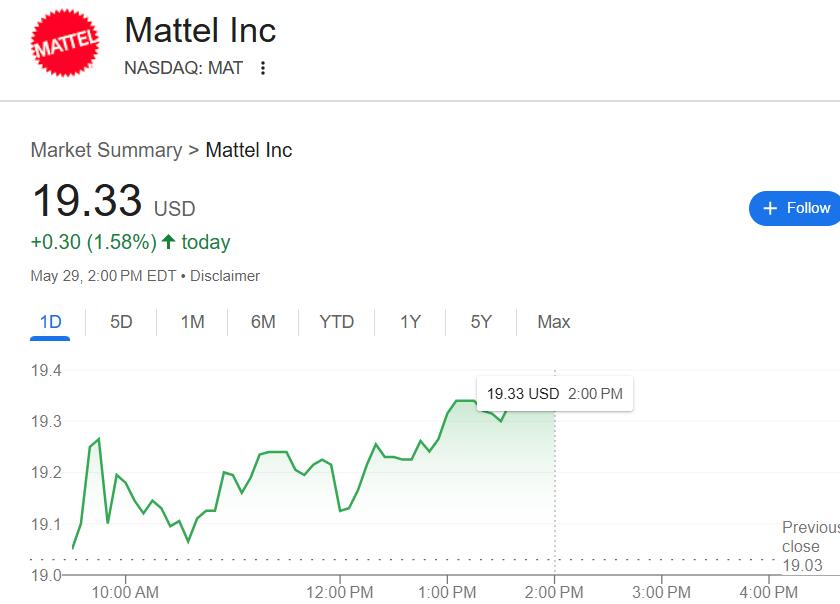
Core Viewpoint - The Trump administration's tariff actions have faced significant legal challenges, with federal judges ruling against the imposition of tariffs on toy importers in Illinois, indicating that the administration's approach may be unconstitutional and unauthorized by Congress [1][4]. Group 1: Legal Rulings - Judge Rudolph Contreras issued a ruling to block tariffs on toy importers Learning Resources and hand2mind, stating that the Trump administration's tariffs on trade with countries like China are illegal [1]. - The U.S. International Trade Court also ruled against the Trump administration's tariff policies, asserting that the president exceeded his authority by imposing tariffs on countries with trade surpluses with the U.S. [4]. - Both courts concluded that the International Emergency Economic Powers Act (IEEPA) does not grant the president the authority to impose such tariffs [5]. Group 2: Impact on Companies - Learning Resources and hand2mind, which employ around 500 workers across several states, argued that the tariffs could lead to their closure despite having survived the COVID-19 pandemic [1]. - Following the court's decision, shares of toy companies Mattel (MAT) and Hasbro (HAS) experienced fluctuations, with Mattel maintaining a gain and Hasbro slightly increasing its gains after initially dipping [2].


美国国际贸易法院裁定“特朗普关税”违法
日经中文网· 2025-05-29 03:33
Core Viewpoint - The U.S. International Trade Court ruled that Trump's tariff policy exceeded presidential authority, ordering the government to cease the tariffs imposed under the International Emergency Economic Powers Act (IEEPA) [1][2]. Group 1 - The court's ruling is the first judicial decision regarding Trump's second-term tariff policy, which includes tariffs on Canada, Mexico, and China, justified under the guise of combating illegal drugs [2]. - The court determined that the president does not have the authority to impose tariffs globally, stating that IEEPA does not grant such power [2]. - The ruling declared the series of tariffs invalid and mandated the government to "permanently stop" these measures [2]. Group 2 - The Trump administration is expected to appeal the ruling, with White House spokesperson Kush DeSai asserting that decisions on emergency responses should not be made by unelected judges [1][2]. - IEEPA allows the president to regulate financial transactions during a national emergency but does not explicitly authorize the imposition of tariffs [2]. - The authority to levy tariffs is constitutionally vested in the federal Congress, and at least eight lawsuits have been filed challenging the constitutionality of Trump's tariffs [2].