三线建设

Search documents
四川,迎来史诗级大机会
投资界· 2025-05-13 07:35
Core Viewpoint - Sichuan has been designated as a "strategic hinterland," which is expected to attract significant investment and policy support, enhancing its economic development potential [4][6][7]. Economic Performance - In the first three months of the year, Sichuan's GDP exceeded 1.5 trillion yuan, with high-tech industries growing by 14.3%, particularly in industrial robots, smartphones, electronic communications, and automotive manufacturing, all exceeding 20% growth [4][10][20]. - Foreign investment in Chengdu surged by 74.04%, indicating strong confidence from international investors [4]. Strategic Importance - The designation of "strategic hinterland" is crucial as it determines a province's development direction and potential, influencing national investment and support [6][7]. - Sichuan's geographical advantages include being a natural fortress, historically serving as a refuge during conflicts, which enhances its strategic value [7][8][15]. Agricultural and Energy Strength - Sichuan ranks first in several agricultural metrics: total grain output at 726.8 billion jin, live pig output at 61.496 million heads, and rapeseed production at 7.44 billion jin [10]. - The province is a major energy supplier, with natural gas production at 65.66 billion cubic meters, ranking first nationally, and hydropower generation at 381.4 billion kilowatt-hours, also the highest in the country [10][11]. Industrial Capabilities - Sichuan boasts 41 complete industrial categories, with six key industries: electronic information, equipment manufacturing, food and textiles, energy and chemicals, advanced materials, and pharmaceutical health [11][12]. - The electronic information industry alone is valued at nearly 2 trillion yuan, positioning Sichuan among the top ten global electronic information industry bases [11]. Research and Development - Mianyang is recognized as a "science and technology city," housing numerous national research institutions and achieving a research and development intensity of 5.26% in 2024, surpassing many coastal cities [13][14]. - Companies like Changhong and Jiuzhou are leading in various sectors, contributing to Sichuan's reputation as a hub for innovation and advanced manufacturing [14][15]. Infrastructure and Investment Environment - Sichuan has invested over 200 billion yuan annually in transportation infrastructure, with ongoing projects like the Chengdu-Chongqing high-speed rail expected to significantly reduce travel time [19][20]. - The provincial government has implemented policies to enhance the business environment, including rapid project approval processes and substantial tax reductions, totaling over 88 billion yuan in 2024 [20].


【“三线”记忆】“老三线”刘华贵的“老三件”
Sou Hu Cai Jing· 2025-05-12 16:31
Core Viewpoint - The article highlights the contributions and experiences of Liu Huagui, a builder of the "Third Front" during the 1960s and 1970s in China, showcasing the spirit of dedication and resilience among the workers who played a crucial role in the industrial development of the region [1][2]. Group 1: Historical Context - The "Third Front" construction was a significant movement in the 1960s and 1970s, where many young people from across the country gathered in Suiyang to contribute to industrial development [1]. - Liu Huagui's story is emblematic of the era, reflecting the challenges faced by workers and their unwavering commitment to the national cause [2][4]. Group 2: Personal Experiences - Liu Huagui joined the army in 1968 and transitioned to the Third Front construction in 1971, initially facing hardships such as inadequate living conditions and transportation issues [2][4]. - As a procurement officer, Liu often had to travel long distances on foot or by tractor to gather supplies, demonstrating the difficult logistics of the time [4]. Group 3: Work Ethic and Values - Liu emphasized the importance of diligence and teamwork, recalling instances where he and his colleagues worked overtime without concern for personal gain to meet production demands [5]. - The high standards of production were highlighted, with strict quality control measures in place, reflecting the commitment to excellence in their work [5]. Group 4: Legacy and Remembrance - Liu Huagui treasures items from his past, such as a water bottle, enamel basin, and work uniforms, which symbolize his dedication and the collective memory of the "Third Front" builders [8]. - His awards and certificates serve as a testament to his contributions and the pride he takes in his role during a pivotal time in China's industrial history [8].

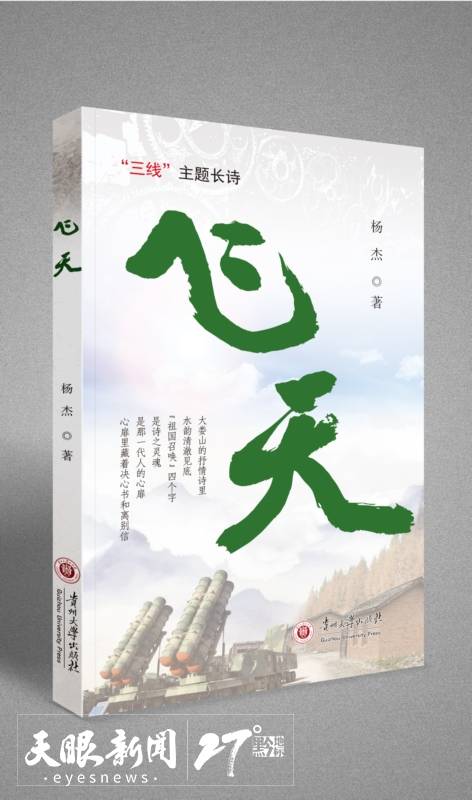
用诗歌守望“三线建设” |《飞天》序
Sou Hu Cai Jing· 2025-05-07 12:31
Core Viewpoint - The article highlights the significance of the "Third Front Construction" movement in China, emphasizing the contributions and spirit of the individuals involved, particularly through the poetry of Yang Jie, who passionately promotes this historical narrative through his works [1][4][5]. Group 1: Yang Jie's Contributions - Yang Jie, an ordinary civil servant and amateur poet, dedicates his time to researching and promoting the "Third Front Construction" without any financial support, showcasing his commitment and productivity [2][4]. - He has completed a trilogy of long poems reflecting on the "Third Front Construction," with titles such as "Hot Blood," "Chasing Dreams," and the upcoming "Flying to the Sky," indicating his strong patriotic feelings and prolific nature [2][4]. Group 2: Cultural Significance - The "Third Front Construction" movement, which took place over sixty years ago, is experiencing a cultural revival under Xi Jinping's cultural ideology, with various forms of media documenting the achievements and spirit of that era [4][5]. - The diverse stories from Guizhou, a key region in the "Third Front Construction," provide rich material for Yang Jie and other writers, allowing them to explore and express the profound impact of this historical period [4][5]. Group 3: Poetic Representation - Yang Jie's poetry vividly captures the experiences of the first generation of "Third Front" workers, illustrating their dedication and sacrifices through evocative imagery and emotional depth [5]. - The article advocates for more poets and writers to follow Yang Jie's example in documenting and celebrating this significant historical movement, emphasizing the role of poetry as a cultural and historical recorder [5].
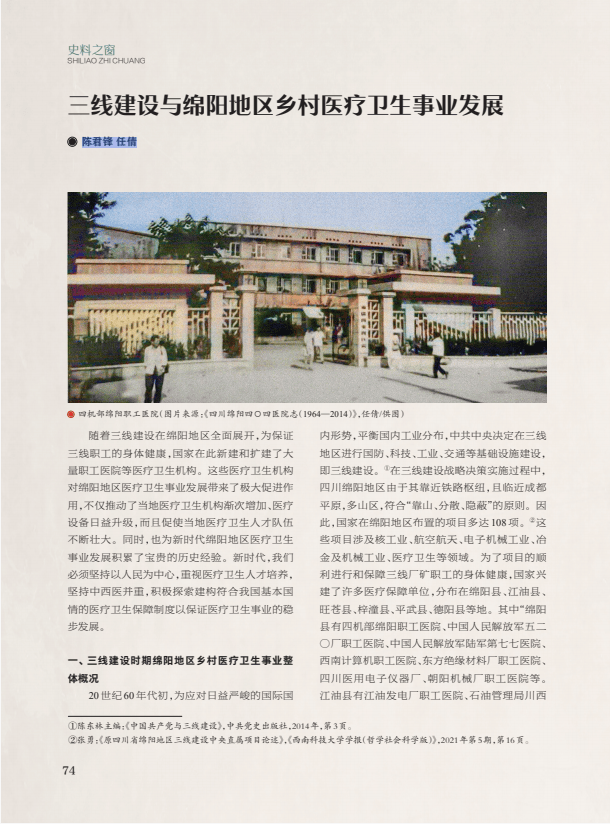
【红色记忆】三线建设与绵阳地区乡村医疗卫生事业发展
Sou Hu Cai Jing· 2025-05-07 08:09
Core Viewpoint - The article discusses the significant impact of the Third Front Construction on the development of rural healthcare in the Mianyang region, highlighting the establishment and expansion of medical institutions, the upgrade of medical equipment, and the growth of healthcare talent, all of which contributed to the overall improvement of healthcare services in the area [6][8][21]. Group 1: Overview of Rural Healthcare Development - In the early 1960s, the Chinese government initiated the Third Front Construction to enhance national defense and industrial distribution, leading to the establishment of numerous projects in Mianyang, including healthcare facilities [7]. - A total of 108 projects were deployed in Mianyang, covering various sectors, including healthcare, to ensure the well-being of workers [7]. - The establishment of multiple worker hospitals across different counties in Mianyang significantly improved local healthcare services [7]. Group 2: Impact of Third Front Construction on Healthcare - The Third Front Construction led to a substantial increase in healthcare institutions, addressing the medical needs of the influx of workers in Mianyang [8]. - The expansion of healthcare facilities not only improved healthcare services but also contributed to local economic prosperity [8]. - For instance, by the end of 1985, Wanzhong County had 10 township health centers and 38 village clinics, with a bed occupancy rate of 23.3% and a cure rate of 86.4% [9]. Group 3: Upgrading Medical Equipment - The complexity of diseases among workers necessitated the continuous upgrading of medical equipment in Mianyang [12]. - The establishment of the Mianyang Medical Electronic Instrument Factory in 1974 marked a significant step in enhancing local medical technology [12]. - By 1987, various hospitals in the region had significantly improved their medical equipment, including multiple X-ray machines and ultrasound devices [12]. Group 4: Growth of Healthcare Talent - The development of healthcare talent was crucial for the advancement of rural healthcare in Mianyang, with training programs being implemented to cultivate medical professionals [13]. - Various hospitals organized training sessions and workshops to enhance the skills of healthcare workers, contributing to improved medical services [19]. - The success stories of healthcare professionals in diagnosing and treating complex conditions reflect the growing expertise in the region [14]. Group 5: Lessons Learned from the Third Front Construction - The focus on people-centered healthcare was a key principle during the Third Front Construction, emphasizing the importance of community involvement in healthcare services [17]. - The training and development of healthcare personnel were recognized as essential for improving healthcare quality and accessibility [19]. - The integration of traditional Chinese medicine alongside Western medicine proved effective in addressing healthcare needs during resource constraints [20].