个人消费贷款财政贴息

Search documents
消费贷财政贴息正式实施:利率下探,银行分化或加剧
Di Yi Cai Jing Zi Xun· 2025-09-02 12:39
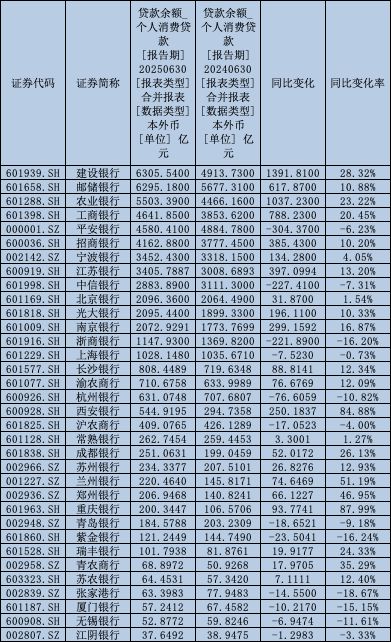
Core Viewpoint - The implementation of the personal consumption loan interest subsidy policy is expected to stimulate growth in consumer credit, with banks experiencing a divergence in performance and asset quality remaining a key focus for the industry [1][4]. Group 1: Policy Implementation and Consumer Impact - The personal consumption loan interest subsidy policy officially launched on September 1, allowing consumers to receive interest subsidies directly through bank systems, with a maximum subsidy of 3,000 yuan per loan [1]. - The subsidy has led to some loan interest rates dropping below 3%, significantly reducing monthly interest payments for consumers [2][3]. - Banks have optimized their processes for applying for subsidies, with many offering mobile banking options for easy access [2]. Group 2: Market Performance and Trends - As of June, the total balance of personal consumption loans across 36 listed banks exceeded 5.49 trillion yuan, reflecting a year-on-year growth of 10.24% [4]. - State-owned banks are leading in loan issuance, with Construction Bank reporting a balance of 6,305.54 billion yuan, a year-on-year increase of 28.32% [5]. - In contrast, many joint-stock banks are experiencing a contraction in their consumer loan portfolios, with notable declines in banks like Ping An Bank and Citic Bank [6]. Group 3: Asset Quality and Risk - The consumer loan delinquency rates are rising, with Industrial and Commercial Bank of China reporting a delinquency rate of 2.51%, an increase of 0.86 percentage points year-on-year [8]. - Some regional banks are facing significant pressure from rising non-performing loans, despite high growth rates in loan issuance [7]. - The overall retail loan risk is accumulating, with an increase in overdue rates and restructured loans, indicating potential challenges ahead for the sector [10].




消费贷“国补”这几点要注意
Ren Min Ri Bao· 2025-09-01 23:58
Core Points - The new personal consumption loan interest subsidy policy is effective from September 1 this year to August 31 next year, offering a subsidy rate of 1% per annum, with a maximum subsidy not exceeding 50% of the loan contract interest rate [1] - The total subsidy cap for each borrower at one lending institution is set at 3,000 yuan, corresponding to a cumulative consumption amount of 300,000 yuan, with a specific cap of 1,000 yuan for single loans below 50,000 yuan [1] - The average personal consumption loan interest rate from commercial banks is around 3%, potentially reducing the actual interest burden for consumers to about 2% during the policy period [1] Consumption Scope - The subsidy covers two categories of consumption: daily expenses for single loans below 50,000 yuan and significant expenditures such as household vehicles, education, cultural tourism, and health care for loans of 50,000 yuan and above [1] Lending Institutions - A total of 23 designated lending institutions are involved, including 6 large commercial banks, 12 joint-stock banks, and 5 other personal consumption loan providers, all of which have a broad regional coverage and are frequently accessed by consumers [1] Application Process - Several banks have automated systems to recognize consumer account transaction information for subsidy operations, simplifying the application process for borrowers [2] - Consumers can apply for personal consumption loans through various channels, including mobile banking apps, and the subsidy will be automatically deducted from the loan interest on the settlement date [2] - Strict measures are in place to prevent fraudulent activities related to loan applications, with penalties for those who attempt to misuse the subsidy funds [2]

手把手教你领消费贷“国补”:最高省3000元,明天起申请!
Sou Hu Cai Jing· 2025-09-01 20:57
Core Viewpoint - The central government has launched a subsidy policy for personal consumption loans starting from September 1, which aims to alleviate the repayment burden for consumers by covering part of the loan interest [3][5]. Summary by Relevant Sections Policy Implementation - The subsidy policy will provide an annual interest subsidy of 1% for eligible residents using personal consumption loans for genuine consumption [5][9]. - This is the first time the central government has extended fiscal subsidies to the personal consumption loan sector, referred to as a "national red envelope" for consumers [5][9]. Subsidy Mechanics - For example, if a consumer borrows 50,000 yuan at a 3% annual interest rate, they would typically pay 1,500 yuan in interest. With the subsidy, they would only pay 1,000 yuan, saving 500 yuan [5][9]. - The subsidy covers a wide range of consumer expenditures, including daily expenses, major purchases like cars and home renovations, and service-related expenses such as education and healthcare [5][6][13]. Coverage and Limits - The subsidy applies to individual loans below 50,000 yuan and focuses on seven key areas for loans of 50,000 yuan and above, including home appliances, automotive expenses, and healthcare [6][9][13]. - Each consumer can receive a maximum subsidy of 3,000 yuan from a single lending institution, with smaller loans (below 50,000 yuan) eligible for up to 1,000 yuan [9][12]. Participating Institutions - The policy includes participation from six major state-owned banks and twelve national joint-stock commercial banks, as well as five other personal consumption loan providers [10][12][14]. Application Process - The application process involves three main steps: selecting a lending institution, signing a supplementary agreement, and ensuring compliant consumption that can be traced by the bank [16][18]. - Consumers are advised to avoid cash withdrawals and personal transfers to ensure eligibility for the subsidy [18][20]. Future Outlook - The policy is set to remain in effect until the end of August 2026, with evaluations planned to assess its impact and potential extensions or expansions [23].
个人消费贷款“国补”正式启动!这份省钱攻略请收好
Sou Hu Cai Jing· 2025-09-01 11:32
Core Viewpoint - The implementation of the personal consumption loan interest subsidy policy has officially started on September 1, with a maximum subsidy limit of 3000 yuan for consumers [1]. Group 1: Policy Implementation - The personal consumption loan interest subsidy policy is now in effect, allowing consumers to benefit from financial support [1]. - Consumers can apply for the subsidy through various banking apps, with simplified online processes available [2]. Group 2: Application Process - Banks have introduced dedicated sections in their mobile banking apps for consumers to easily apply for the interest subsidy [2]. - For example, if a consumer borrows 50,000 yuan at a 3% interest rate, they could save up to 500 yuan in interest with a 1% subsidy, and potentially accumulate up to 3000 yuan in total subsidies [2]. Group 3: Eligible Loan Products - The subsidy applies to personal consumption loans used for various purposes, including daily expenses under 50,000 yuan and larger purchases like cars, home renovations, and education [3]. - Specific loan products from multiple banks are eligible for the subsidy, including various consumer loans and auto loans [3]. Group 4: Usage Guidelines - Borrowers must adhere to strict guidelines regarding the use of funds, ensuring that loans are used for legitimate consumption rather than investment or other non-consumption purposes [4].
政在回应 | 个人消费贷款贴息:买什么能用?补贴多少?
Xin Hua Wang· 2025-09-01 06:28
Core Points - The implementation of the "Personal Consumption Loan Interest Subsidy Policy" starting from September 1 will provide benefits to consumers, marking the first time the central government offers interest subsidies on personal consumption loans [1] Group 1: Eligible Consumption - The subsidy applies to a wide range of consumption, including small daily expenses, larger purchases such as cars, home renovations, furniture, appliances, and electronics, as well as services like travel, retirement, childbirth, education, and medical care, provided that the consumer obtains a loan from relevant institutions [3] Group 2: Subsidy Amount - The annual interest subsidy rate is set at 1%, with a maximum subsidy not exceeding 50% of the loan contract interest rate. The central and provincial governments will cover 90% and 10% of the subsidy funds, respectively [4] - Each individual can receive a maximum subsidy of 500 yuan per single transaction, with multiple transactions eligible for cumulative benefits. For transactions below 50,000 yuan, the subsidy is calculated based on the actual amount. For transactions above 50,000 yuan, the subsidy is capped at 50,000 yuan, allowing for a maximum cumulative subsidy of 3,000 yuan when combined with smaller transactions [5] Group 3: Loan Institutions - The policy involves six major state-owned commercial banks and twelve national joint-stock commercial banks, along with five other personal consumption loan issuing institutions [6] Group 4: Application Process - Borrowers must grant the loan institution relevant permissions when signing the loan agreement to allow for the identification of transaction information related to the loan account [7] - For existing loans, institutions can obtain borrower authorization through supplementary agreements to calculate the subsidy amount according to policy requirements, directly deducting the subsidy from the loan interest during regular payments. Borrowers can track their subsidy status via SMS or mobile apps [8]
广发银行关于个人消费贷款财政贴息政策
Zheng Quan Shi Bao Wang· 2025-09-01 05:33
Core Points - The article discusses the implementation of a personal consumption loan interest subsidy policy by Guangfa Bank to stimulate domestic consumption and support residents' financial needs [1][2]. Group 1: Policy Implementation - The interest subsidy for personal consumption loans will be available starting from September 1, 2025 [2]. - The subsidy applies to loans used for consumption purposes, excluding credit card transactions, and is valid from September 1, 2025, to August 31, 2026 [2][3]. Group 2: Eligible Consumption Areas - The subsidy covers various key consumption areas, including: - Household vehicles, including purchase, insurance, and maintenance [3]. - Elderly care and childbirth-related expenses, such as home modifications for the elderly and childcare services [3]. - Education and training expenses, including certification training and continuing education [3]. - Cultural tourism services purchased through qualified travel agencies [4]. - Home decoration and appliances, including furniture and kitchenware [5]. - Electronic products, such as smartphones and personal computers [6]. - Health and medical expenses, including dental and vision correction [7]. Group 3: Subsidy Details - The annual interest subsidy rate is set at 1%, with a maximum limit of 50% of the loan contract interest rate [8]. - For loans under 50,000 yuan, the subsidy is calculated based on the actual amount, with a maximum of 1,000 yuan for multiple small transactions; for loans of 50,000 yuan or more, the subsidy is capped at 3,000 yuan when combined with smaller transactions [9]. Group 4: Application Process - Customers can apply for the subsidy through the standard loan process, requiring an authorization confirmation to allow the bank to verify consumption transactions [10]. - For transactions that cannot be automatically identified, customers must upload proof of consumption for manual review [11]. Group 5: Subsidy Disbursement and Inquiry - The subsidy will be directly deducted from the loan interest during the loan settlement process for eligible customers [12]. - Customers can check their subsidy amounts through the bank's mobile app and will receive SMS notifications regarding the subsidy [13]. Group 6: Fees and Compliance - There are no fees associated with the application for the personal consumption loan subsidy [14]. - Borrowers attempting to fraudulently obtain subsidies will face legal consequences and may have negative impacts on their credit records [15].
中国民生银行依法合规推进个人消费贷款贴息工作
Jin Tou Wang· 2025-09-01 03:24
Core Viewpoint - China Minsheng Bank is implementing a fiscal interest subsidy policy for personal consumption loans to reduce consumer credit costs and stimulate consumer spending potential from September 1, 2025, to August 31, 2026 [1] Group 1: Fiscal Subsidy Execution Period and Scope - The subsidy applies to personal consumption loans used for consumption, excluding credit card transactions, with identifiable consumption transaction information [1] - The subsidy covers single transactions below 50,000 yuan and significant expenditures in key areas such as automobiles, education, and healthcare [1] Group 2: Fiscal Subsidy Standards - The annual subsidy rate is set at 1 percentage point, with a maximum of 50% of the loan contract interest rate [2] - The total subsidy limit for each individual customer is capped at 3,000 yuan, with a specific limit of 1,000 yuan for transactions below 50,000 yuan [2] Group 3: Fiscal Subsidy Rules - Customers must authorize China Minsheng Bank to access transaction information to qualify for the subsidy, which can be done through the bank's mobile app [3] - The signing of the subsidy agreement does not affect the normal application and use of personal consumption loans, but failure to sign will result in ineligibility for the subsidy [4] Group 4: Consumption Transaction Identification - The bank will identify transactions through system recognition or manual review to determine eligibility for the subsidy [5] Group 5: Subsidy Loan Interest Calculation and Settlement - The bank will calculate the subsidy amount daily based on the stipulated rate and limits, deducting it from the loan interest charged [6] - If a loan that has received a subsidy is later deemed ineligible, the bank reserves the right to reclaim the subsidy amount [6] Group 6: Additional Information - China Minsheng Bank will not charge any fees for processing the subsidy and advises customers to be cautious of potential fraud [7]

9月起,这些新规将施行
财联社· 2025-09-01 01:08
Group 1 - The State Council has issued opinions on gradually promoting free preschool education, starting from the autumn semester of 2025, which will exempt public kindergartens from charging care education fees for children in their final year [1] - Private kindergartens approved by the education department will also have their care education fees reduced in accordance with local public kindergarten standards [1] - The Ministry of Finance and the Ministry of Education will consider factors such as school-age population changes and financial conditions to improve the free preschool education policy [1] Group 2 - The Housing Rental Regulations will take effect on September 15, 2025, mandating that rental housing must comply with safety and health standards [2] - Non-residential spaces such as kitchens and bathrooms cannot be rented out separately for living purposes [2] - Landlords must specify the deposit amount, return time, and conditions for deduction in the rental contract, and cannot unjustly withhold deposits [2] Group 3 - The Rural Road Regulations will also come into effect on September 15, 2025, focusing on improving road network quality and coordinating with national and provincial road construction [3] - New rural roads must meet technical standards, and existing roads that do not meet minimum standards must be upgraded [3] - The regulations encourage the use of existing roads for reconstruction to minimize land occupation [3] Group 4 - The personal consumption loan interest subsidy policy will be implemented from September 1, 2025, to August 31, 2026, covering loans used for consumption [4] - The subsidy applies to single transactions below 50,000 yuan and for key areas such as home appliances and healthcare for transactions above that amount [4] - The policy may be extended or expanded based on its effectiveness after the expiration [4] Group 5 - The Ministry of Human Resources and Social Security has introduced new conditions for receiving personal pensions, effective from September 1 [5] - New eligibility includes significant medical expenses, prolonged unemployment insurance, and receiving minimum living security [5] - Previously, eligibility was limited to reaching retirement age, total loss of work capacity, or settling abroad [5] Group 6 - The new Electric Bicycle Safety Technical Specifications will be enforced starting September 1, 2025, prohibiting the production of non-compliant electric bicycles [6] - The new standards include requirements for battery packs and control systems, and a weight limit for lead-acid battery models has been adjusted [6] - A transition period until November 30, 2025, is allowed for bicycles produced under the old standards [6] Group 7 - The AI-generated content labeling method will be implemented on September 1, 2025, requiring explicit and implicit labeling of AI-generated content [7] - Explicit labels must be clearly perceivable by users, while implicit labels are embedded in the content data [7] Group 8 - The revised Infectious Disease Prevention Law will take effect on September 1, 2025, categorizing infectious diseases into three classes based on their severity [8] - The law emphasizes the protection of personal information and restricts its use beyond epidemic prevention [8] - Local governments can take preventive measures for unexplained infectious diseases and must report to higher authorities [8] Group 9 - The Ministry of Commerce has issued the Product Oil Circulation Management Measures, effective September 1, 2025, detailing regulations for wholesale and retail operations [10] - The measures include requirements for compliance, management systems, and data reporting for oil trading enterprises [10] - It establishes a framework for supervision and legal responsibilities regarding oil circulation [10] Group 10 - The Ministry of Civil Affairs has released the Administrative Division Code Management Measures, effective September 1, 2025, clarifying the code assignment process for administrative divisions [11] - The measures specify the responsibilities of municipal and provincial civil affairs departments in code determination [11] Group 11 - The revised Allocation of Land Directory will be implemented on September 1, 2025, strictly limiting the allocation of state-owned construction land use rights [12] - Applications for land allocation must be approved by the government, and alternative methods such as leasing must be pursued when possible [12] Group 12 - The Ministry of Agriculture and Rural Affairs has announced new animal diagnosis management regulations, effective September 1, 2025, introducing a new animal diagnosis license [13] - The regulations emphasize the standardization of veterinary prescriptions and the prohibition of substandard veterinary drugs [13]

事关免费学前教育、个人养老金、租房……9月新规来了
21世纪经济报道· 2025-08-31 11:10
Group 1 - The State Council issued opinions on gradually promoting free preschool education, starting from the autumn semester of 2025, which will exempt public kindergartens from charging care and education fees for children in their final year [2] - The implementation plan for personal consumption loan interest subsidy policy states that from September 1, 2025, to August 31, 2026, residents can enjoy interest subsidies on personal consumption loans used for consumption, excluding credit card transactions [4] - The notice regarding personal pension withdrawals, effective from September 1, introduces three new scenarios for pension withdrawals and enhances online service access through electronic social security cards and mobile apps [6] Group 2 - The new mandatory national standard for electric bicycles, effective from September 1, stipulates that electric bicycles must not exceed a maximum design speed of 25 km/h and that the total plastic mass used should not exceed 5.5% of the total vehicle mass [8] - The Supreme People's Court issued an interpretation regarding labor dispute cases, effective from September 1, stating that any agreement to not pay social insurance is invalid, regardless of whether it was negotiated or unilaterally promised by the employee [10] - The implementation of the "Identification Measures for AI-Generated Synthetic Content" from September 1 aims to help users identify false information and outlines the responsibilities of service providers regarding content labeling [12] Group 3 - The Administrative Division Code Management Measures will officially take effect on September 1, establishing rules for the creation and abolition of administrative division codes, which are reflected in the first six digits of personal ID numbers [14] - The Housing Rental Regulations will come into effect on September 15, mandating that rental properties must comply with safety and health standards, and stipulating conditions for the collection and return of security deposits [16] - The Rural Road Regulations, effective from September 15, require county-level transportation authorities to take effective measures against over-limit transportation on rural roads and allow for the participation of local residents in road maintenance through government service purchases [18] Group 4 - Starting September 1, Beijing and Hunan provinces will adjust their minimum wage standards, with Beijing's minimum wage set at no less than 14.6 yuan per hour and 2540 yuan per month, while Hunan's monthly minimum wage will be adjusted to 2200 yuan, 2000 yuan, and 1800 yuan for full-time workers [20] - From September 1, Sichuan Province will directly distribute maternity allowances to insured employees who meet the eligibility criteria, either by the employees themselves or their authorized representatives [22] - Guangdong Province will provide financial support for key projects in manufacturing innovation, quality enterprise cultivation, industrial intelligence application, and open-source ecosystem development, with individual projects eligible for up to 50 million yuan in subsidies, effective from September 1 until the end of 2027 [24]
9月新规来了:事关免费学前教育、租房、养老金……
Mei Ri Jing Ji Xin Wen· 2025-08-31 10:51
Group 1 - The State Council issued opinions on gradually promoting free preschool education, starting from the autumn semester of 2025, which will exempt public kindergartens from charging care and education fees for children in their final year [2] Group 2 - The implementation plan for personal consumption loan interest subsidy policy states that from September 1, 2025, to August 31, 2026, residents can enjoy interest subsidies on personal consumption loans used for consumption, provided that the loan issuing institutions can identify the relevant consumption transaction information [4] Group 3 - The notice regarding personal pension withdrawals will take effect on September 1, introducing three new scenarios for pension withdrawals and enhancing online service access through electronic social security cards and mobile apps [6] Group 4 - The new mandatory national standard for electric bicycles will be implemented on September 1, stipulating that electric bicycles with driving functions must not exceed a maximum design speed of 25 km/h and that the total plastic mass used in the bicycle must not exceed 5.5% of the total vehicle mass [7] Group 5 - The Supreme People's Court issued an interpretation regarding labor dispute cases, effective from September 1, stating that any agreement to not pay social insurance is invalid, regardless of whether it is negotiated or unilaterally promised by the worker [9] Group 6 - The implementation of the "Identification Measures for AI-Generated Synthetic Content" will begin on September 1, which aims to help users identify false information and outlines the responsibilities of service providers regarding content labeling [11] Group 7 - The "Administrative Division Code Management Measures" will officially take effect on September 1, establishing rules for the creation and abolition of administrative division codes, which are reflected in the first six digits of personal ID numbers [12] Group 8 - The "Housing Rental Regulations" will come into effect on September 15, mandating that rental properties must comply with building and fire safety standards and outlining conditions for the collection and return of security deposits [14] Group 9 - The "Rural Road Regulations" will be implemented on September 15, requiring county-level transportation authorities to take effective measures against over-limit transportation on rural roads and allowing local residents to participate in road maintenance through government service purchases [15] Group 10 - Starting September 1, Beijing and Hunan provinces will adjust their minimum wage standards, with Beijing's minimum wage set at no less than 14.6 yuan per hour and 2540 yuan per month, while Hunan's monthly minimum wage will be adjusted to tiers of 2200 yuan, 2000 yuan, and 1800 yuan [17] Group 11 - From September 1, Sichuan province will directly distribute maternity allowances to insured employees who meet the eligibility criteria, either by the employees themselves or their authorized representatives [19] Group 12 - Guangdong province will provide financial support for key projects in manufacturing innovation centers, quality enterprise cultivation, industrial intelligence application benchmarks, and open-source ecosystem development, with individual projects eligible for up to 50 million yuan in subsidies, effective until the end of 2027 [21] Group 13 - The "Guangxi Zhuang Autonomous Region Legal Aid Regulations" will officially take effect on September 1, expanding the scope of legal aid to include claims for personal injury compensation due to product liability and agricultural production losses caused by substandard seeds and pesticides [23]