全球多极化

Search documents
包括日本在内,14国集体硬刚!急得特朗普喊话中国,中美关系良好
Sou Hu Cai Jing· 2025-07-15 07:14
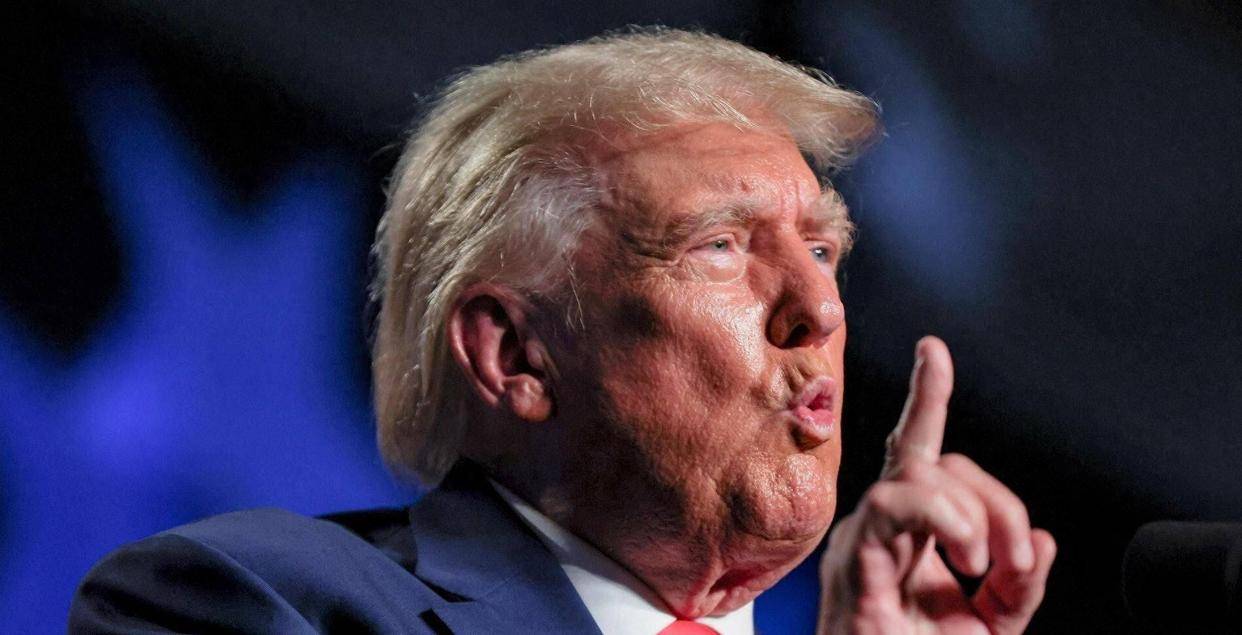
Group 1 - Trump's announcement of a 25% tariff on imports from 14 countries, including Japan, South Korea, and Malaysia, has sparked a global trade war, negatively impacting the U.S. economy and international standing [2] - Japan's agricultural sector is projected to lose approximately 2.3 trillion yen (around 110 billion RMB) due to the tariffs, threatening the political stability of the ruling party [3] - South Korea's automotive industry faces significant challenges, with President Yoon Suk-yeol emphasizing the need for industrial upgrades rather than being exploited by U.S. policies [3] Group 2 - In response to U.S. tariffs, 14 countries have united against the U.S., with Thailand's Deputy Prime Minister stating a preference to halt car production rather than accept high tariffs [3] - The European Union has retaliated by imposing 25% tariffs on U.S. whiskey and Harley-Davidson motorcycles, with an estimated loss of 12 billion euros for the EU automotive industry [3] - U.S. companies are already feeling the impact, with Ford halting production of the F-150 due to rare earth shortages and Boeing facing production risks from supply chain disruptions [4] Group 3 - China's response to the trade war emphasizes mutual respect and cooperation, highlighting its dominance in rare earth processing and its growing economic ties with ASEAN [8] - China controls 90% of global rare earth processing capacity, which is critical for U.S. missile guidance systems, showcasing its strategic advantage [8] - The trade war has accelerated a shift in global economic alliances, with countries increasingly turning to China for trade and investment, as seen in various agreements and partnerships [9]

穿越2万公里走进圭亚那 探营中企出海新故事
Zheng Quan Shi Bao· 2025-05-28 17:49
Core Insights - Guyana is emerging as a significant investment destination for Chinese companies, particularly in the energy and infrastructure sectors, driven by its oil boom and economic growth [1][3][4] - The rapid economic growth of Guyana, with a projected GDP increase of 43.6% in 2024, is attracting over 30 Chinese enterprises across various industries [3][4][9] - Chinese companies are leveraging their strengths in infrastructure and energy to meet the local demands in Guyana, which has outdated infrastructure and a lack of supporting industries [1][2] Industry and Company Summaries - The oil sector in Guyana is experiencing a transformation, with proven reserves exceeding 10 billion barrels, positioning the region as a new center for global oil supply [3][4] - China National Offshore Oil Corporation (CNOOC) is significantly involved in Guyana, with multiple discoveries in the Stabroek block, enhancing its resource base and competitive advantage [4][6] - Zijin Mining is expanding its operations in Guyana, focusing on gold production, with ongoing projects aimed at increasing output capacity [4][10] - China Merchants Energy is responding to the increasing oil production in the Americas by expanding its fleet to enhance shipping capacity, indicating a growing demand for oil transportation [6][8] - Companies like Jiangnan Chemical are entering the Guyanese market for mining and blasting services, reflecting the rising demand for mining-related services due to increased investments [6][8] - The healthcare sector is also seeing investments, with China International Engineering Consulting Corporation (CIECC) constructing hospitals to improve local medical standards [7][10] - The clean energy sector is represented by Zhongtian Technology, which is implementing solar projects, contributing to the local energy landscape [8][10] - The competitive landscape is intensifying, with major international oil companies like Chevron and ExxonMobil also vying for resources in Guyana, impacting the operational environment for Chinese firms [13][14]
关税战过后,澳大利亚硬刚美国:中国是“钞能力”10倍的优质客户
Sou Hu Cai Jing· 2025-05-18 00:04
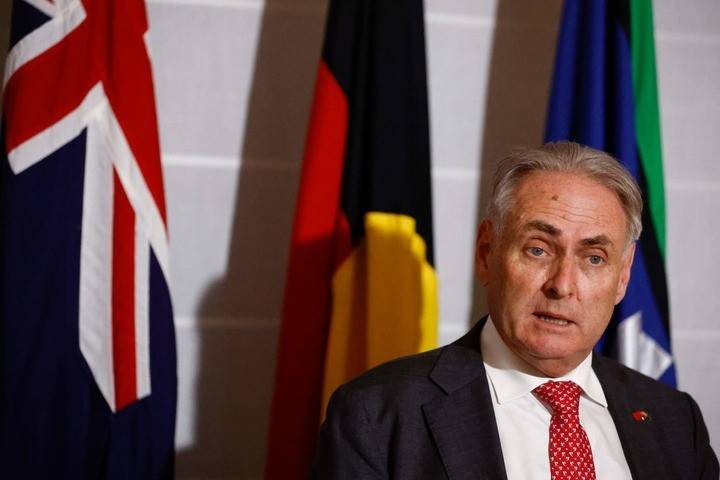
Group 1 - Australia's Trade Minister Farrell emphasized the importance of China as a trading partner, stating that China is ten times more valuable than the U.S. in terms of trade, marking a significant shift from previous policies that favored the U.S. [1][3] - In the 2023-2024 fiscal year, Australia's exports to China reached AUD 210 billion, accounting for 38% of total exports, while exports to the U.S. were only AUD 37 billion, representing less than 7% [3][4] - The previous Morrison government adopted a confrontational stance towards China, which resulted in severe economic repercussions, including a 97% drop in wine exports to China due to high tariffs [3][4] Group 2 - Australia is seeking to balance its economic relations between China and the U.S., participating in trade agreements like RCEP while maintaining military alliances with the U.S. [4][6] - The shift in Australia's strategy reflects a broader trend among U.S. allies reassessing the costs and benefits of aligning with U.S. policies against China, as seen in the economic impacts on the EU and Canada [6][7] - The global trade landscape is evolving, with China emerging as a key partner for many countries, prompting Australia to view its relationship with China as essential for economic stability [6][9] Group 3 - Future developments may include Australia implementing a "dual-track strategy" to diversify its trade markets while maintaining key exports to China [9][11] - The potential fragmentation of U.S. alliances could increase if the U.S. fails to provide substantial economic incentives, leading countries like the EU and Japan to seek closer ties with China [9][11] - China may leverage its growing influence to propose reforms in global trade rules, challenging the existing U.S.-led trade framework [9][11]