
医改

Search documents
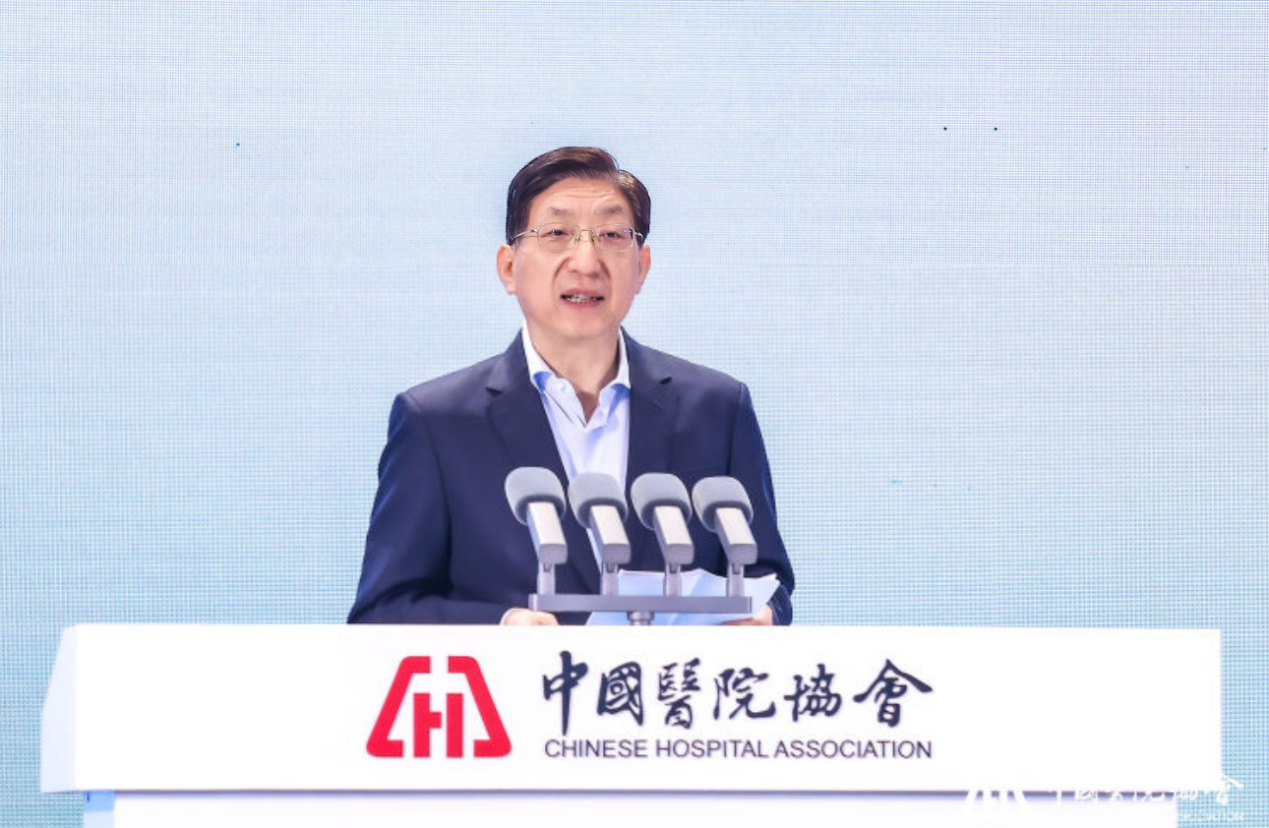
2025中国医院大会暨行风建设大会在京成功举办
Zhong Guo Jin Rong Xin Xi Wang· 2025-06-10 12:10
Core Points - The conference "2025 China Hospital Conference and Conduct Construction Conference" was held in Beijing, focusing on high-quality development in hospitals and aligning with the National Health Commission's work deployment [1] - Emphasis on the role of technological innovation in supporting high-quality development in healthcare, and the importance of creating a clean research environment [3] - Public hospitals are urged to enhance their educational roles and responsibilities, ensuring they act as the mainstay in safeguarding public health [3] Group 1 - The implementation of the Healthy China strategy and deepening medical reforms require medical institutions to improve service quality, strengthen discipline construction, and enhance talent training [5] - Hospitals should focus on providing high-quality, compassionate services while improving management and supporting grassroots healthcare [5] - The China Hospital Association released the "China Hospital Quality Safety Management Group Standards" and signed strategic cooperation agreements with various organizations to integrate resources for high-quality development [7] Group 2 - The conference featured a variety of sessions, including an opening ceremony, main venue discussions, specialized meetings, and 19 sub-forums, with participation from 1,500 representatives and experts [7] - Discussions centered on hospital management, smart healthcare, conduct construction, and discipline development, aiming to share innovative practices and thoughts [7]

“一位领导分管医疗、医保、医药工作”,山东介绍医改经验
Nan Fang Du Shi Bao· 2025-05-27 15:19
Core Insights - The National Health Commission of China is promoting the experience of the Sanming medical reform, with a focus on improving the efficiency of healthcare reforms through coordinated leadership and collaboration among relevant government departments [1][2] Policy Support - Over the past five years, Shandong province has seen an average annual increase of 25% in fiscal subsidies to public hospitals [1] - Local governments are implementing dynamic adjustments to medical service prices, with over 2,300 items set for adjustment in 2024, leading to an optimized revenue structure for public hospitals [1] - Jinan city reported an average annual increase of 13.4% in fiscal subsidies to public medical institutions [2] - Qingdao city has seen an average annual increase of 15% in fiscal input for public hospitals since 2019, with a 5.1 percentage point increase in medical service revenue share and a 6.8 percentage point decrease in drug and consumable costs [2] Resource Allocation and Accessibility - A key focus of the current medical reform is to enhance the accessibility of quality medical resources, aiming for a hospitalization rate of 84.4% within county areas by 2024 [2] - The provincial government is promoting grassroots capacity-building actions, having renovated over 10,000 village clinics and encouraging rural doctors to obtain medical licenses [2] - The establishment of 2,420 medical expert stations and a 15-minute health service circle has been achieved, with grassroots medical treatment accounting for 63.3% of total diagnoses [2] Specific City-Level Initiatives - Jinan city has created six tightly-knit urban medical groups and ten county-level medical communities, enhancing the integration of healthcare services [3] - Qingdao city has innovated in the construction of tightly-knit medical alliances, optimizing the distribution of medical resources based on population and service capabilities [3]
山东省卫健委主任:基本实现“一般病在市县解决”的目标
Xin Jing Bao· 2025-05-27 11:58
Core Insights - The Shandong Province is implementing significant healthcare reforms aimed at enhancing public hospital services and ensuring accessibility for residents [1][2][4] Group 1: Healthcare Coverage and Accessibility - Shandong has achieved full coverage of tertiary hospitals, with 78 county hospitals meeting the service capacity standards equivalent to tertiary hospitals [1][4] - The target for inpatient care within counties is set at 84.4% by 2024, aiming to resolve general illnesses at the city and county levels [1][4] Group 2: Financial Investments and Cost Reductions - Over the past five years, the average annual increase in financial support for public hospitals has been 25% [2] - The implementation of centralized procurement for 824 types of drugs and 40 categories of high-value medical consumables has led to significant price reductions, with some items seeing price drops of up to 75% [2] - In Jinan, the average price reduction for drugs post-procurement exceeded 60% [2] Group 3: Service Price Adjustments and Optimization - Jinan has dynamically adjusted medical service prices for 4,850 items since 2022, increasing prices for 2,004 items reflecting technical labor value while reducing prices for 2,199 inspection and testing items [3] - The city has also introduced new technology projects, enhancing service offerings [3] Group 4: Integrated Healthcare Networks - Shandong has established a network of 866 national and provincial clinical key specialties, forming specialized alliances extending to all counties [4] - A remote medical collaboration network covering over 2,600 medical institutions has been set up, facilitating multidisciplinary consultations and remote diagnostics [5] Group 5: Patient Care and Community Services - The province has achieved full coverage of elderly home medical services across all 16 cities, implementing a "tidal" outpatient management system to optimize medical staff allocation based on patient needs [6] - A shared platform for mutual recognition of inspection and testing results has been established, with 831 medical institutions participating and 429 mutual recognition projects in place [7]
医改如何激励?国家卫健委推三明医改2025年首站,湖北省卫健委答21记者:以地市为单元,开展改革监测
2 1 Shi Ji Jing Ji Bao Dao· 2025-04-23 09:44
21■■■■■■■■■■■■■■■■ �� AWARRENEWAREN MARKANDAR AND ARRENAR ARRENAL MEN A BER BARREN BE BER BE NUMBERENEWSBANDREABERBERSHERENDERENEREMENDERENDERENDERENDERBERBERBERBERBERBERBERBERBER �W�R�M�N�M�N�M��B�B�B�B�B�B�B�B�B�B�B�B�B�"�B�B�B�B�B�B�B"�"��B展"�B�B�"�B�B�"�B�B�B�BABABABABA �� ��� 圖團團體驗團團.21월2 2025年4月23日曜日回 AUDDRAFUEBALEDERE BERE BER BER BER ...
对不同医药细分业务本质的一些思考
青侨阳光投资交流· 2024-08-16 02:02
青侨阳光医药投资 - 行业思考 1 标准化程度和医生依赖度的差异, 是"药VS械VS院"业务不同特性的重要来源 "医药"里的"医"主要指医疗器械和医疗机构,"药"主要指中药、化药、生物药等药品。从这点来说,"药品、 器械、医院等医疗机构"是医药行业最核心3大业务类别。除此之外的医药细分,多数可以看成是这3类业务的 配套产业,比如原料药、CRO、CMO等可以看成是药品的配套,分销商、药店等可以看成是药品和器械的配 套,三方诊断、医疗信息化等可以看成是医疗机构的配套。 从欧美日等发达国家过去几十年的历史经验看,在医药行业相对成熟的主流经济体中,"药"的资本回报率最为 可观,"械"的资本回报率也相当优秀,但"院"的资本回报率比较糟糕。 比如有很多人统计过美股不同行业的历史ROIC,其中: 这与我们的直觉感受是一致的,虽然药品和器械占整个医药行业总盘子不到20%,但我们闭着眼睛也能数出几 十个声名显赫、历史回报强劲的来自美国、欧洲、日本的制药企业和医疗器械企业;但对于占行业总盘子超 60%的医疗服务业务,著名的海外上市医院集团我们可能一只手的指头都数不完。 为什么会这样?一个重要原因是这 三类业务在标准化程度和医生依 ...