
医药健康

Search documents
京津冀百余家单位供岗博士后与科研人才,计划招收1300余名
Xin Jing Bao· 2025-09-19 09:11
Group 1 - The 2025 Beijing-Tianjin-Hebei Postdoctoral and Research Talent Recruitment and Project Negotiation Conference was held, gathering 123 institutions from the region, including universities and high-tech enterprises, offering over 300 postdoctoral and research positions and planning to recruit more than 1,300 talents [1] - A "Project Negotiation Zone" was established to release over 70 research and technology upgrade projects, promoting collaboration through a model of "talents driving projects, projects boosting industries" [1] - Various service areas were set up at the event, including consultations on talent policies, technology transfer, and international postdoctoral services to support the integration of international talents into the region [1] Group 2 - To enhance the conference's reach and influence, live-streaming recruitment activities were conducted, focusing on key areas and providing flexible connection channels for doctoral and research talents [2] - From September 19 to 26, online activities will continue through Guopin.com, with participation from Inner Mongolia, offering more quality job opportunities [2] - Beijing has 727 postdoctoral stations and 51 innovation practice bases, covering ten high-tech industries, which are crucial for supporting the capital's high-quality development and nurturing young scientific talents [2]
高端制造业“挑大梁”,顺义区“十四五”以来造车165万辆
Xin Jing Bao· 2025-09-15 14:16
Economic Growth and Investment - Shunyi District's GDP has averaged a growth of 5.8% since the 14th Five-Year Plan, reaching a total of 238.8 billion yuan last year [1] - Fixed asset investment has averaged a growth of 6.5%, surpassing 60 billion yuan last year [1] - Industrial output has averaged a growth of 8.2%, with nearly 200 billion yuan in total last year, ranking among the top three in the city [1] Automotive Industry - Shunyi produces one out of every three cars in Beijing, with a cumulative production of 1.65 million vehicles and an output value of 336 billion yuan since the 14th Five-Year Plan, growing at an annual rate of 13% [2] - The district is developing a 2,500-acre intelligent connected new energy vehicle technology ecological park to support the industry [2] Aerospace and Pharmaceutical Industries - Shunyi is home to over 220 aviation service companies, generating nearly 200 billion yuan in revenue last year, an 86% increase from 2020 [3] - The pharmaceutical sector includes over 110 regulated enterprises, with a manufacturing output exceeding 10 billion yuan and a trade scale reaching 100 billion yuan [3] Internationalization and Urban Development - Shunyi is focusing on building an international new city, enhancing international community, education, and medical facilities [4] - The district has nearly 10,000 foreign residents and 11 international schools, with a significant number of students entering top 100 universities by 2025 [5][6] Infrastructure and Environmental Improvements - Shunyi has nearly 3,000 kilometers of roads, leading the city in road network density, and is working on major projects for better connectivity [8] - The district has achieved a 30% reduction in PM2.5 levels since 2020 and has increased green coverage significantly [8] Social Welfare and Community Engagement - Over 85% of Shunyi's fiscal spending is allocated to social welfare, with significant investments in education and healthcare [7] - The district has implemented various measures to enhance community spirit and support for residents, including recognition programs for good deeds [9]
北京海淀发布高质量孵化器新政 最高单体支持1亿元
Zhong Guo Xin Wen Wang· 2025-08-30 08:49
Core Viewpoint - Beijing Haidian District has introduced a new policy to support high-quality incubators, with a maximum single support of 100 million yuan, aimed at enhancing the incubator capabilities and building a globally leading innovation and entrepreneurship ecosystem [1] Group 1: Policy Overview - The policy categorizes incubators into two types: "High-Quality Leading Incubators" focused on attracting and nurturing high-level domestic and international incubators, and "High-Quality Cultivating Incubators" aimed at improving existing incubators' efficiency and their ability to nurture high-tech and specialized enterprises [2] - The policy encourages incubators to engage in source innovation, identifying cutting-edge technologies and nurturing early disruptive projects through a "creation project" approach [2] Group 2: Funding and Support Mechanism - High-Quality Leading Incubators will receive upfront support, with expert qualification assessments, annual funding of up to 20 million yuan per incubator, over a support period of 3-5 years, totaling a maximum of 100 million yuan per incubator [3] - High-Quality Cultivating Incubators will receive post-support based on previous operational performance, with the top 20 scoring institutions receiving up to 2 million yuan each [3] Group 3: Focus Areas and Goals - The policy emphasizes support for hard technology sectors such as artificial intelligence, healthcare, embodied intelligence, optoelectronics, and quantum technology, while also promoting "advanced incubation" in future industries like commercial aerospace [2][3] - Haidian District aims to become a key hub for global sci-tech talent exchange, encouraging diverse entities to establish high-quality incubators with a global perspective and strengthen connections with international innovation centers [2]
财达证券每日市场观察-20250721
Caida Securities· 2025-07-21 02:33
Market Performance - The CSI All Share Index showed a steady upward trend, closing in the green, with metal and energy sectors leading gains, while gaming and consumer electronics sectors experienced significant declines[1] - On July 18, the Shanghai Composite Index rose by 0.5%, the Shenzhen Component Index increased by 0.37%, and the ChiNext Index gained 0.34%[3] Fund Flows - On July 18, net inflows into the Shanghai Stock Exchange reached 19.758 billion yuan, while the Shenzhen Stock Exchange saw net inflows of 6.016 billion yuan[3] - The top three sectors for net inflows were small metals, chemical products, and industrial metals, while consumer electronics, communication equipment, and gaming sectors faced the largest outflows[3] Economic Indicators - During the 14th Five-Year Plan period, China's foreign trade is projected to grow by 32.4% compared to the end of the 13th Five-Year Plan, maintaining its position as the world's largest trading nation for eight consecutive years[4] - Service consumption in China is expected to grow at an average annual rate of 9.6% from 2021 to 2024, outpacing goods consumption[6] Industry Developments - The first integrated green electricity data center project in Inner Mongolia has been launched, utilizing a total installed capacity of 300,000 kW, including 200,000 kW from wind power and 100,000 kW from solar power[9] - In the first half of 2025, domestic polysilicon production averaged 100,000 tons per month, with a significant year-on-year decrease of 47.4% in February's production[11] ETF Market Trends - The scale of domestic bond ETFs reached a record high of 481.057 billion yuan as of July 17, with a net inflow of 244.574 billion yuan for the year, marking a 176.7% increase[12] - Haitong Fund became the first fund company to surpass 100 billion yuan in bond ETF scale, with its six bond ETFs totaling 101.041 billion yuan[13]

港澳青年踊跃参与,这场创业大赛报名火热汇聚逾2500项目
Nan Fang Du Shi Bao· 2025-07-18 09:08
Core Viewpoint - The Guangdong-Hong Kong-Macao Greater Bay Area Entrepreneurship Competition has officially commenced, aiming to foster innovation and collaboration among young entrepreneurs from Hong Kong, Macao, and mainland China [2][6]. Group 1: Competition Structure - The competition features five tracks: Artificial Intelligence and Robotics, Integrated Circuits and Low-altitude Economy, Pharmaceutical Health and Biotechnology, Food Technology and Modern Agriculture, and Modern Services and Cultural Creativity [4][5]. - Registration for the competition is open until July 31, with qualification reviews for projects to be completed by August 10 [5][6]. - The competition consists of three stages: preliminary round (August 11-22), semi-finals (early September), and the national finals, which will take place in Foshan [6]. Group 2: Participation and Outreach - As of now, 2,564 projects have registered for the competition, with participation from all provinces and regions in China, and 135 projects from outside Guangdong [7]. - The Modern Services and Cultural Creativity track has the highest number of registered projects at 858, followed by the Artificial Intelligence and Robotics track with 611 projects [7]. - The competition aims to create a top platform for collaboration between young entrepreneurs from Hong Kong, Macao, and the mainland, leveraging the unique advantages of the "One Country, Two Systems" policy [7]. Group 3: Support for Young Entrepreneurs - The Hong Kong government is actively promoting the competition to support local youth in innovation and entrepreneurship, with various funding programs already underway [7]. - The Macao government is facilitating favorable conditions for local startups to establish themselves in the Greater Bay Area, including organizing exploration activities and providing professional consulting services [7].


对接国家重大战略与产业发展趋势 粤港澳大湾区创业大赛将于8月举行
news flash· 2025-07-18 04:10
Core Viewpoint - The Guangdong-Hong Kong-Macao Greater Bay Area Entrepreneurship Competition will take place from August to mid-September this year, focusing on aligning with national strategic and industrial development trends [1] Group 1: Competition Overview - The competition theme is "Innovate the Future, Gather Talents in Guangdong" [1] - It will be held in multiple cities including Guangzhou, Zhuhai, Shenzhen, Hong Kong, and Macau [1] Group 2: Competition Tracks - There are five competition tracks designed to address specific industry sectors: - Artificial Intelligence and Robotics Track, covering AI technology, quantum computing, intelligent robots, and smart manufacturing [1] - Integrated Circuit and Low-altitude Economy Track, focusing on integrated circuits, low-altitude manufacturing, and commercial aerospace [1] - Pharmaceutical Health and Biomanufacturing Track, including new drug development, medical devices, biotechnology, and health management [1] - Food Technology and Modern Agriculture Track, encompassing marine ranching, agricultural equipment, leisure agriculture, rural tourism, and new food and dining brands [1] - Modern Services and Cultural Creativity Track, which includes technology services, silver economy, animation products, and fashion arts [1]
运用“技术流”激活“增长极”
Bei Jing Ri Bao Ke Hu Duan· 2025-07-17 21:50
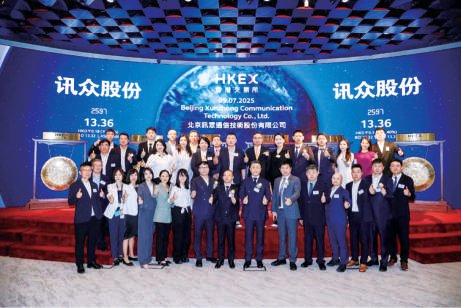
Core Viewpoint - The Postal Savings Bank of China Beijing Branch is committed to supporting the development of specialized and innovative small and medium-sized enterprises (SMEs) through financial technology innovation, aligning with national strategic goals and enhancing financial services for the real economy [1][4]. Group 1: Financial Support and Services - The Beijing Branch has actively supported Xunzhong Communication Technology Co., Ltd. since their partnership began in 2018, providing significant financial assistance during challenging times, including a large "technology flow" loan in 2024 [4][5]. - The branch has offered comprehensive financial services to Xunzhong Communication, including settlement services, social security card processing, payroll services, and private banking for executives, facilitating the company's strategic move to the Hong Kong stock market [4][5]. Group 2: Innovative Financial Solutions - The "technology flow" evaluation system developed by the Postal Savings Bank addresses common challenges faced by high-growth technology companies, such as access, assessment, and credit difficulties, serving over a hundred technology enterprises and providing nearly 10 billion yuan in credit [5][6]. - The Beijing Branch focuses on six key industries: artificial intelligence, integrated circuits, information technology, pharmaceutical health, new energy, and new materials, enhancing financial services throughout the entire lifecycle of technology enterprises [5][6]. Group 3: Digital Transformation and New Financial Models - The branch is leading a digital transformation initiative, launching the "U Yi Calculation" loan platform project in 2024, emphasizing early, small, long-term investments in hard technology [6][7]. - The branch has implemented a "loan-equity linkage" business model, successfully executing the first loan-equity linkage disbursement in the country and introducing the "U Ju Investment" equity valuation model, serving over 2,000 technology enterprises with a loan balance exceeding 20 billion yuan [6][7]. Group 4: Collaborative Ecosystem Development - The Beijing Branch has strengthened cooperation with government and enterprise sectors, establishing a long-term mechanism for collaboration and creating an ecosystem that integrates investment, banking, and research to support specialized and innovative enterprises [7]. - The branch aims to deepen public-private collaboration, investment-loan linkage, and cross-departmental cooperation, enhancing its comprehensive service offerings and contributing to high-quality development in the capital [7].
参考:北京市重点实验室评审标准及申报策略建议
仪器信息网· 2025-07-10 04:36
Core Viewpoint - The article outlines the evaluation criteria and application strategies for the 2025 Beijing Key Laboratory, emphasizing innovation, industry relevance, and the practical application of research outcomes [35]. Group 1: Basic Conditions Evaluation Criteria - The applicant must be a legally registered entity in Beijing with no major credit or safety violations in the past three years [1]. - Research facilities must have a minimum area of 1,000 square meters and research equipment valued at no less than 15 million yuan, with some flexibility for new fields [1]. - Companies must have an average annual sales revenue of at least 1 billion yuan over the past three years, with R&D expenses accounting for at least 5% of sales, or an average annual R&D expenditure of at least 200 million yuan [2]. Group 2: Research Direction and Tasks - Research must align with Beijing's key development areas such as intelligent manufacturing, new-generation information technology, and biomedicine, focusing on critical technologies [3]. - The laboratory should be capable of addressing scientific questions and technical challenges, with the ability to undertake significant national or municipal research tasks [3]. Group 3: Laboratory Team and Talent - The laboratory director must be a recognized academic leader in the field, with full-time research capabilities and a broad scientific vision [4]. - A minimum of 40 full-time staff members is required, ensuring stability and dedicated involvement in laboratory development [5]. - The team should include young talents to promote a structured talent development approach [6]. Group 4: Research Integrity and Safety - Fixed personnel must have no record of research misconduct or major ethical violations in the past three years [7]. - The laboratory must not have experienced any safety production accidents in the past three years [8]. Group 5: Comprehensive Ability Evaluation Criteria - The laboratory must possess core technical capabilities and have independent intellectual property rights, such as patents [9]. - It should demonstrate the ability to convert research outcomes into practical applications, providing examples of industrialization [9]. Group 6: Management and Collaboration - A management system must be in place, with a clear responsibility structure and effective research organization [11]. - Collaboration with universities, research institutions, and industry partners is encouraged to foster innovation [12]. - If international cooperation is involved, it must comply with relevant management regulations [13]. Group 7: Funding and Resource Assurance - The supporting entity must commit to providing stable funding for research and operational expenses [14]. - Proof of research conditions, including facility and equipment details, must be submitted [15]. Group 8: Regular Evaluation and Dynamic Management Standards - Comprehensive evaluations will occur every three years, assessing management, talent development, innovation effectiveness, and achievement of research goals [16][17][18][20]. - Evaluation results will categorize laboratories as excellent, good, qualified, or unqualified, with a one-year rectification period for those deemed unqualified [21][22]. Group 9: Application Material Review Points - Application materials must be complete and adhere to specified formats, including research direction, team introduction, and funding assurance [24]. - All submitted materials must be authentic and verifiable, such as proof of research facilities and intellectual property certificates [25]. - The originality and industrial relevance of technological achievements will be critically assessed [26]. Group 10: Application Process and Timeliness - Expert committees will conduct peer reviews of application materials, focusing on technological breakthroughs and team capabilities [28]. - The application deadline typically falls between June and July, with results announced after expert evaluations [29][30]. Group 11: Application Strategy Recommendations - Focus on priority development areas in Beijing, clearly defining the laboratory's unique position within the industry chain [31]. - Strengthen collaboration between academia, research institutions, and industry to create a closed loop from basic research to industrialization [32]. - Provide typical case studies in application materials to demonstrate the practical value of technological achievements [33]. - Prepare materials in advance to ensure completeness and compliance, avoiding rejection due to formatting or content issues [34].

VC/PE“下乡”淘金
FOFWEEKLY· 2025-07-03 09:59
Core Viewpoint - The financial industry is facing challenges due to an oversupply of talent and difficulties in fundraising and exits, prompting a shift towards exploring structural opportunities in less developed regions [3][12]. Group 1: Reasons for the Shift - The migration towards less developed areas is not spontaneous; understanding the reasons behind this shift is crucial for identifying future directions [4]. - The "GP siphon effect" has led to the accumulation of vast amounts of capital in state-owned funds, particularly in strategic emerging industries [5][6]. - Local governments in first-tier cities and key provincial capitals are also establishing large-scale local state-owned funds to compete [7]. Group 2: Market Dynamics - The "two and ninety-eight law" indicates that only about 2% of private equity and venture capital fund managers manage funds exceeding 10 billion yuan, highlighting a significant concentration of resources [8]. - The over-competition and the concept of "invisible champions" are emphasized, with a focus on creating integrated urban-rural areas that combine production, life, and ecology [9][10]. Group 3: Opportunities in Less Developed Areas - There is a notable disparity in the number of fund managers and fund sizes in less developed regions, with many areas having fewer than 10 managers and funds below 5 billion yuan [14]. - The challenges in attracting and retaining investment management talent in third and fourth-tier cities create a structural opportunity for investment firms to focus on these regions [15]. - The economic gap between urban and rural areas, as well as between eastern and western regions, presents a significant opportunity for investment and growth [16].

北京国管构建科技金融生态圈 助力打造债市“科技板”首都样本
Xin Hua Cai Jing· 2025-06-26 13:47
Group 1 - The "Technology Board" in the bond market has been launched, with Beijing's state-owned enterprises leading the way in issuing innovative bonds at low interest rates and high subscription rates, showcasing financial support for the national innovation-driven development strategy [1] - In June, Beijing's state-owned enterprises successfully issued a total of 115 billion yuan in technology bonds, with notable issuances including 10 billion yuan from Jingneng Group at a record low interest rate of 1.70% and a subscription multiple of 4.77 times [1] - The bond market's technology board is seen as an important innovation for deepening the structural reform of financial supply, reshaping the financing ecosystem for technology enterprises [1] Group 2 - Beijing's state-owned capital management is implementing the city's strategic development plans by building a complete ecosystem for technology finance, integrating various financial platforms to create a multi-level service system covering the entire cycle of technological innovation [2] - The management platform is focusing on key industries such as artificial intelligence, healthcare, and green energy, establishing eight municipal government investment funds with a total scale of 100 billion yuan to support stable funding for state-owned enterprises and promote industrial transformation [2] - The platform aims to enhance the capital market system, linking and integrating innovative resources to improve service capabilities across the entire chain, while promoting collaboration between financial enterprises and industrial groups [3]