
协商民主

Search documents
刘际昕:回应年轻人对“意义感”的渴求
Zhong Guo Qing Nian Bao· 2025-12-28 01:19
Core Viewpoint - The article highlights the innovative teaching methods employed by Liu Jixin, a young teacher at China University of Political Science and Law, focusing on experiential case teaching to engage students in understanding governance and social issues through real-life examples [1][2][3]. Group 1: Teaching Methodology - Liu Jixin utilizes experiential case teaching to bridge theoretical concepts with practical applications, allowing students to grasp the complexities of grassroots governance [2][3]. - The teaching approach emphasizes the importance of personal experience in conveying the nuances of Chinese governance and societal issues, making the lessons more relatable and impactful for students [3][6]. - Liu's method has gained recognition, evidenced by his award in the Beijing Higher Education Political Theory Course Teaching Skills Competition, reflecting the effectiveness of his teaching style [3]. Group 2: Student Engagement - Students are encouraged to engage with real-world issues, such as community governance challenges, which fosters a deeper understanding of democratic processes and local governance [2][3]. - Feedback from students indicates that they find the political theory classes to be a source of emotional support and a way to connect with broader societal narratives [5][6]. - The incorporation of stories and real-life examples, such as the "backpack judge" initiative, helps students understand the practical implications of legal and governance concepts [6]. Group 3: Societal Impact - The article discusses the growing interest among young people in participating in meaningful activities, such as tree planting in the desert, indicating a desire for connection with national narratives [5]. - Liu Jixin's approach aims to instill a sense of civic responsibility in students, encouraging them to understand their role in society and governance [6]. - The focus on balancing professional education with civic education aims to prepare future legal professionals to engage with the complexities of social life and governance [6].
持续提高协商民主工作成效 市政协举行理论研讨会
Jie Fang Ri Bao· 2025-12-25 01:36
Group 1 - The core theme of the seminar is to enhance the role of the People's Political Consultative Conference (PPCC) as a specialized consultative institution and promote the institutional development of consultative democracy in a broad and multi-layered manner [1] - The seminar featured keynote speeches from professors discussing the practical significance and theoretical implications of consultative democracy in the new era, the nature and positioning of the PPCC in national governance, and the functional positioning of the PPCC in the context of whole-process people's democracy [1] - A roundtable discussion included various participants sharing insights on enhancing the effectiveness of the PPCC's consultative role, integrating consultative democracy throughout the proposal process, and stimulating the vitality of different sectors [1][2] Group 2 - Participants expressed that the event deepened their understanding of whole-process people's democracy and the theory of the PPCC, highlighting the institutional advantages and unique appeal of consultative democracy [2] - The PPCC is actively implementing the major concept of whole-process people's democracy by strengthening party leadership, improving mechanisms and procedures, enriching platforms, and deepening practical innovations to establish a closed-loop mechanism for practicing whole-process people's democracy [2]
以协商之力护好高原红色根脉
Xin Lang Cai Jing· 2025-12-24 19:52
Group 1 - The core viewpoint emphasizes the importance of protecting and utilizing red cultural heritage in Qinghai as a valuable asset for historical memory and cultural continuity [1] - The provincial political consultative conference is leveraging bi-monthly discussions to gather insights and foster collaboration among members to address the challenges in protecting red cultural heritage [1] - Red cultural heritage is described as a "living textbook" that requires a systematic approach for its protection and utilization, facing challenges such as uneven urban-rural development and weak foundational support [1] Group 2 - The significance of collaboration is highlighted, with various provincial departments implementing strategies to solidify the foundation for protection and promote revitalization of red cultural heritage [2] - The transformation of consensus into actionable steps is emphasized, with the provincial political consultative conference aiming to convert suggestions into practical initiatives that rejuvenate red landmarks and illuminate the path forward [2] - The protection of red cultural heritage is framed as essential for safeguarding the spiritual essence of Qinghai, with a focus on turning theoretical suggestions into tangible practices [2]
鄂尔多斯东胜区:以协商之“进”聚发展之“劲”
Huan Qiu Wang· 2025-12-03 03:03
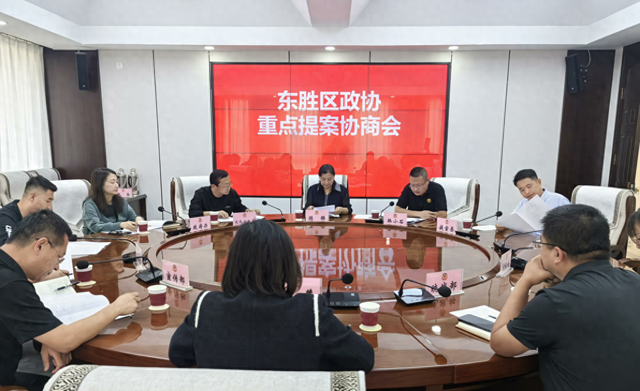
Core Viewpoint - The establishment of four pedestrian overpasses in Dongsheng District, Ordos City, Inner Mongolia, by 2025 will significantly enhance the safety of local residents' travel, reflecting the effective implementation of grassroots governance through collaborative democracy [1][3]. Group 1: Institutional Reforms - In 2023, Dongsheng District's Political Consultative Conference (PCC) restructured its internal organization, moving from a traditional classification model to a functional orientation based on proposals, consultations, public sentiment, and democratic supervision [3]. - The PCC revised 15 institutional documents to create a closed-loop mechanism for consultation, processing, feedback, and supervision, shifting the focus from process to effectiveness [3]. - The restructuring has led to smoother consultation processes and more precise services, as stated by the PCC Chairman Han Yaoting [3]. Group 2: Collaborative Mechanisms - The PCC has innovated a mechanism where the Party Committee proposes topics, committee members recommend issues, and the public raises concerns, integrating consultation into research, inspections, and proposals [3]. - A think tank comprising 26 experts from various fields has been established to provide targeted advice on key issues such as ecological construction, private economy, and urban renewal [3]. - Since the institutional reform, 11 key consultation topics have been completed, resulting in over 50 actionable suggestions, most of which have been adopted by relevant departments [3]. Group 3: Public Engagement and Feedback - The PCC has established a comprehensive mechanism for collecting, screening, transforming, consulting, and providing feedback on public sentiment, engaging directly with communities to understand their needs [4]. - A total of 212 proposals have been filed since the reform, with 201 completed, achieving a completion rate of 94.8% [4]. - The PCC has gathered 480 pieces of public sentiment information, with 85 being adopted at various levels, leading to the successful implementation of several public welfare projects [4]. Group 4: Future Directions - Collaborative democracy has become a crucial tool for addressing development challenges and improving grassroots governance in Dongsheng [4]. - The PCC aims to continue aligning with the Party's central work and responding to public needs, exploring new paths for political consultation [4]. - The ongoing efforts are expected to invigorate collaborative democracy at the grassroots level, enhancing its vitality and effectiveness [4].


充分发挥人民政协作为专门协商机构作用(学习贯彻党的二十届四中全会精神)
Ren Min Ri Bao· 2025-11-20 00:24
Group 1 - The article emphasizes the importance of the People's Political Consultative Conference (PPCC) as a specialized consultative institution, highlighting its role in promoting socialist consultative democracy and facilitating political cooperation among various parties and groups [2][3][4] - The PPCC is recognized as a significant political form and organization that embodies the multi-party cooperation and political consultation system led by the Communist Party of China, reflecting the interests of diverse social strata and ensuring the overall interests of the people [3][4][5] Group 2 - The article outlines that the PPCC plays a crucial role in modernizing the national governance system and governance capabilities by providing a platform for orderly political participation and interest expression, thus enhancing decision-making processes [4][5] - It stresses the need for the PPCC to transform the decisions of the Central Committee into widespread consensus and action among various sectors of society, fostering unity and collaboration [5][6] Group 3 - The article discusses the necessity of strengthening theoretical education and political unity among PPCC members to ensure effective collaboration and action towards national goals [7][8] - It highlights the importance of deepening discussions on key national tasks, such as promoting high-quality development and addressing social stability issues, through specialized consultations [8][9] Group 4 - The article emphasizes the role of the PPCC in democratic supervision, focusing on the implementation of major policies and decisions made by the Central Committee, and enhancing the effectiveness of this supervision [9][10] - It calls for broad consensus-building to support national development and rejuvenation efforts, ensuring that diverse voices are heard and integrated into the decision-making process [10][11] Group 5 - The article outlines the need for a systematic approach to enhance the effectiveness of the PPCC as a consultative institution, including improving institutional mechanisms and ensuring adherence to the leadership of the Communist Party [12][13] - It stresses the importance of building a strong team of PPCC members and staff to support the institution's functions and maintain a positive political environment [16]
姜信治署名文章:充分发挥人民政协作为专门协商机构作用
Bei Jing Ri Bao Ke Hu Duan· 2025-11-19 22:49
Core Points - The article emphasizes the importance of the People's Political Consultative Conference (PPCC) as a specialized consultative institution, highlighting its role in promoting China's political system and enhancing governance capabilities [1][2][3] Group 1: Significance of the PPCC - The PPCC serves as a vital channel for socialist consultative democracy, integrating consultation, supervision, participation, and cooperation [1][2] - It reflects the superiority of the socialist political system with Chinese characteristics, ensuring representation of diverse interests and promoting unity among various political parties and groups [2][3] Group 2: Modernization of Governance - The PPCC facilitates a platform for orderly political participation and interest expression, enhancing the decision-making process through broad consultation [3][4] - It plays a crucial role in aligning government decisions with public sentiment, thereby improving the effectiveness of national governance [3][4] Group 3: Consensus Building - The PPCC is instrumental in transforming central government decisions into widespread consensus and collective action among the populace [4][5] - It emphasizes the importance of uniting various social groups to foster a cohesive political environment [4][5] Group 4: Focus Areas for the PPCC - The PPCC is urged to strengthen theoretical foundations and enhance political unity among its members [6][7] - It should focus on high-quality development and modernization, addressing key national tasks and challenges through in-depth discussions and research [7][8] Group 5: Democratic Supervision - The PPCC's role in democratic supervision is to monitor the implementation of major policies and decisions, providing constructive feedback to the government [8][9] - It employs various supervision methods to ensure effective oversight and enhance governmental accountability [8][9] Group 6: Strengthening Collaboration - The article advocates for a systematic approach to enhance collaboration between the PPCC and other consultative channels, aiming for a cohesive consultative democracy framework [10][11] - It highlights the need for a well-structured mechanism to facilitate effective communication and cooperation among different political entities [10][11] Group 7: Institutional Development - The PPCC is encouraged to continuously improve its institutional mechanisms to adapt to new challenges and enhance its operational efficiency [11][12] - Emphasis is placed on maintaining the party's leadership and ensuring that the PPCC's activities align with the central government's directives [11][12] Group 8: Capacity Building - The article stresses the importance of developing the capabilities of PPCC members and staff to effectively fulfill their roles [14][15] - It calls for a focus on political education and training to enhance the overall quality and effectiveness of the PPCC's work [14][15]
广州市政协举办“百姓提案”实践与理论工作坊
Guang Zhou Ri Bao· 2025-10-25 01:36
Core Points - The Guangzhou Municipal Political Consultative Conference held a workshop on "Citizen Proposals," involving experts from top universities and local officials to discuss the practical and theoretical aspects of citizen proposals [2][3] - The initiative aims to enhance public participation in urban governance and improve the sense of gain and recognition of democratic consultation among citizens [2] Group 1 - The workshop included visits to representative livelihood projects transformed from "Citizen Proposals," such as Huangpu River Walking Bridge and Tianhe Sports Center Skate Park [2] - The conference featured in-depth discussions among nine experts from various universities, providing suggestions for the development of "Citizen Proposals" [2] - The initiative is seen as a significant attempt to practice whole-process people's democracy, creating a rational and orderly space for expression and transforming scattered issues into systematic proposals [2][3] Group 2 - The Guangzhou Municipal Political Consultative Conference plans to continue improving the working mechanism and deepen theoretical research on "Citizen Proposals" [3] - The focus will be on establishing a closed-loop process for topic collection, analysis, implementation, and feedback evaluation to ensure the effectiveness of more "Citizen Proposals" [3] - The initiative aims to turn public "golden ideas" into governance "golden keys," providing a local sample for the theory of Chinese-style consultative democracy [3]
让治理实践更好融入思政大课堂
Ren Min Ri Bao· 2025-10-23 22:29
Core Viewpoint - The integration of practical experiences into ideological and political education is emphasized, highlighting the importance of connecting classroom learning with real-life social governance issues [1][2][3] Group 1: Practical Application in Education - Utilizing social contexts such as community governance, cultural sites, and innovation enterprises is essential for effective ideological education [1] - Engaging students in real-life discussions and problem-solving, such as in the case of pocket parks, enhances their understanding of democratic processes [2] - The focus on youth perspectives in social governance issues makes the educational content more relatable and impactful [2] Group 2: Mechanisms for Participation - Establishing institutional channels for youth participation in social practices is crucial for the effectiveness of ideological education [3] - Collaborations between educational institutions and local governments can facilitate practical learning experiences, such as community research and volunteer services [3] - Encouraging students to engage in community governance not only enriches their educational experience but also deepens their understanding of national and local issues [3]
让青少年触摸中国式民主的脉搏
Zhong Guo Qing Nian Bao· 2025-10-21 23:00
Core Points - The event "Walking into the CPPCC" was held, allowing 91 students and teachers from eight high schools in Beijing to engage with the National Committee of the Chinese People's Political Consultative Conference (CPPCC) for the first time, promoting understanding of China's socialist consultative democracy [1] - The event included visits to historical exhibitions and discussions with CPPCC officials, emphasizing the unique advantages of China's political system and fostering institutional confidence among youth [1][5] Group 1 - The event was co-hosted by the CPPCC General Office's News Bureau and the Central Committee of the Communist Youth League, aiming to enhance youth engagement with the political system [1] - Students actively participated in discussions, sharing their insights on the importance of democratic practices and their roles in community engagement [5][6] - The event highlighted the significance of "whole-process people's democracy," encouraging students to understand their responsibilities in democratic practices [5][6] Group 2 - The teaching approach was adapted to resonate with students, focusing on their interests and aligning with new curriculum standards on "people's democracy" [3] - Students expressed their understanding of the CPPCC's functions and the importance of political participation through interactive learning experiences [4][5] - The event fostered a sense of connection between students and the CPPCC, making the concept of democracy more tangible and relatable [7]
徐新荣在西安市调研时表示深入学习贯彻省委政协工作会议精神 以高质量履职展现新担当新作为
Shan Xi Ri Bao· 2025-10-12 00:26
Core Points - The article emphasizes the importance of studying and implementing the spirit of the Provincial Political Consultative Conference, highlighting the need for high-quality performance in the context of modernizing Shaanxi [1][2] Group 1 - The Provincial Political Consultative Conference is seen as a crucial organization for promoting the spirit of the Provincial Conference and enhancing political guidance [2] - There is a focus on aligning thoughts and actions with the provincial deployment requirements, particularly in supporting the "two establishments" and "two safeguards" [2] - The article discusses the need for the consultative body to engage in in-depth research and precise political consultation to contribute to high-quality development in the province [2] Group 2 - The article mentions the importance of gathering public sentiment and strength, emphasizing the role of the consultative organization in uniting people and fostering confidence [2] - It highlights the necessity for reform and innovation to improve the efficiency of the consultative democracy mechanism [2] - The article calls for strengthening internal capabilities and enhancing the roles of committee members and support services to advance the development of the consultative body [2]