
协商民主

Search documents
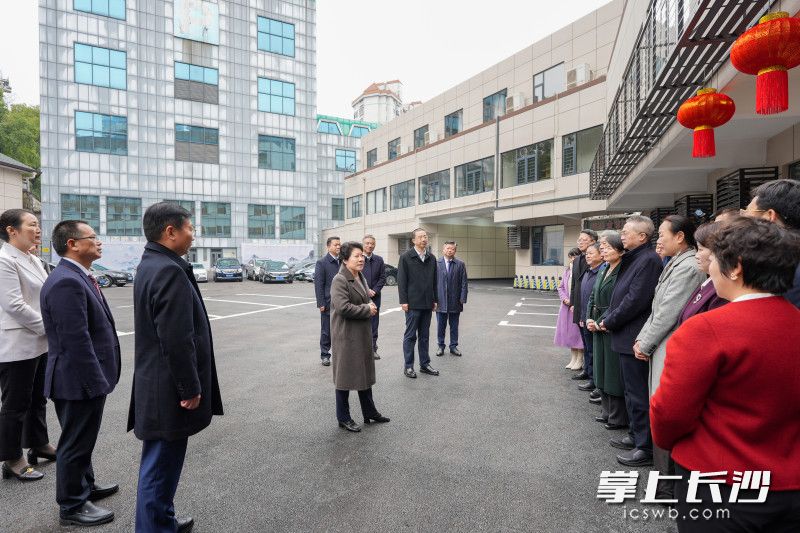
吴桂英陈博彰开展“新春第一访”
Chang Sha Wan Bao· 2026-02-25 02:08
Core Viewpoint - The article highlights the "New Spring First Visit" initiative in Changsha, emphasizing the importance of collaboration between various democratic parties, the business community, and non-partisan individuals in contributing to the city's high-quality development and modernization efforts [3][4]. Group 1 - The "New Spring First Visit" has been a distinctive brand for promoting consultative democracy in Changsha for 34 consecutive years [3]. - City leaders, including Wu Guiying and Chen Bozhang, visited the headquarters of various democratic parties and the business community to extend New Year greetings and express appreciation for their contributions [3]. - Wu Guiying acknowledged the efforts of democratic parties and non-partisan individuals in aligning with the Communist Party of China (CPC) to support the city's development goals over the past 25 years [3]. Group 2 - Wu Guiying emphasized the need for continued adherence to Xi Jinping's thoughts and the principles of consultative democracy, urging all parties to work in unison politically, ideologically, and in action [4]. - The article outlines the expectation for democratic parties and the business community to actively provide policy suggestions and foster consensus to contribute to the modernization of Hunan [4]. - The Changsha Municipal Committee of the CPC will continue to create conditions and provide support for democratic parties and non-partisan individuals to fulfill their roles effectively [4].

中国的“团结型政治”
Xin Lang Cai Jing· 2026-02-25 00:30
Group 1 - The core concept of "Chinese governance" is a significant research topic in contemporary Chinese social sciences, contributing to the construction of an independent knowledge system [1] - The concept of "political unity" is essential for the development of Chinese political science, emphasizing the historical experiences and institutional practices of political unity in China [1] - The system of multi-party cooperation and political consultation, particularly through the People's Political Consultative Conference (PPCC), reflects the various aspects of China's "unity-oriented politics" [1] Group 2 - The People's Political Consultative Conference (PPCC) exemplifies the institutional arrangement of the united front, incorporating diverse political parties, social groups, and non-party individuals to maximize political participation [2] - The PPCC's unique organizational structure includes 34 categories, promoting institutionalized political participation and coordination among different political entities [2] Group 3 - The new type of political party system in China, led by the Communist Party, ensures a unified political direction and maintains social order and governance [3] - Unlike the adversarial nature of Western political systems, the PPCC fosters cooperative relationships among political parties, providing oversight and support rather than obstruction [3] Group 4 - Consultative democracy has become a crucial method for resolving internal conflicts among the populace, emphasizing dialogue and consensus-building [5] - The practice of consultative democracy spans various levels of governance, from central planning to grassroots community discussions, integrating multiple channels for political participation [5] Group 5 - The combination of the united front, new type of political party system, and consultative democracy forms a "unity-oriented politics" model, addressing key issues of leadership and organization [6] - This model is seen as a strategic approach for the Communist Party to unite the nation in advancing socialist modernization [6]
“团结型政治”:为中国之治奠定制度基础
Xin Lang Cai Jing· 2026-02-08 21:39
Group 1 - The core concept of "Chinese governance" is a significant research topic in contemporary Chinese social sciences, contributing to the construction of an independent knowledge system [1] - The concept of "political unity" is essential for the development of Chinese political science, emphasizing the historical experiences and institutional practices of political unity in China [1] - The "united front" tradition has been a fundamental approach for the Communist Party of China (CPC) in mobilizing various forces for socialist modernization since the reform and opening up [1] Group 2 - The People's Political Consultative Conference (PPCC) exemplifies the institutional arrangement of the united front, incorporating diverse political parties and social groups to facilitate political participation [2] - The new type of political system in China, characterized by multi-party cooperation and political consultation led by the CPC, is crucial for maintaining social order and governance [2] Group 3 - Unlike the adversarial nature of Western political systems, the PPCC fosters cooperative relationships based on shared political goals, providing supervision and policy advice [3] - The majority of seats in the PPCC are held by non-Communist members, highlighting the collaborative nature of political consultation in policy-making processes [3] Group 4 - Consultative democracy has become a vital mechanism for resolving internal conflicts among the populace, emphasizing dialogue and consensus-building [5] - The practice of consultative democracy spans various levels of governance, from central planning to grassroots community meetings, integrating multiple channels for political participation [6] Group 5 - The combination of the united front, new type of political system, and consultative democracy forms a "unity-based political" model, addressing key governance issues [7] - The CPC's strategy involves leveraging this model to unite the nation in advancing socialist modernization, ensuring political stability and order [7]
内蒙古青少年观察员沉浸式感受全过程人民民主
Zhong Guo Qing Nian Bao· 2026-02-06 22:55
Core Viewpoint - The Inner Mongolia Autonomous Region's political advisory body has introduced a youth observer mechanism to engage young people in the democratic process, enhancing their understanding of political participation and the importance of civic responsibility [1][2]. Group 1: Youth Engagement - The initiative allows 20 young observers to attend the Inner Mongolia Political Consultative Conference, providing them with a firsthand experience of the democratic process [1]. - Many of the youth participants had previously engaged in a "simulated proposal" activity organized by the Communist Youth League, which helped them develop their proposals and gain entry to the conference [1]. - The experience of being heard and respected in the democratic process has instilled a sense of institutional confidence and national responsibility among the youth [2]. Group 2: Educational Impact - The mechanism aims to broaden the political perspective of young people and deepen their understanding of the work of the People's Political Consultative Conference [1]. - Through regular organization of on-site experiences in democratic consultation, the initiative seeks to cultivate a sense of patriotism and commitment to the party among the youth [1]. - The interaction between youth observers and political advisors during the conference fosters a supportive environment, encouraging young people to think critically and contribute to discussions [1].
同学,你的“提案”上两会了
Xin Lang Cai Jing· 2026-02-06 22:00
Core Viewpoint - A student proposal regarding the improvement of community correction mechanisms for minors in Sichuan has been officially accepted by the provincial political consultative conference, highlighting the active engagement of youth in political processes [1][5]. Group 1: Proposal Background - The proposal originated from a middle school student, Li Ruiting, who expressed her concerns about juvenile delinquency during a "simulated political consultative" class [2][3]. - Li conducted extensive research over the summer, producing a detailed report that identified trends in juvenile crime, including increasing violence and online bullying [3][4]. Group 2: Proposal Content - The submitted proposal focuses on enhancing the community correction work for minors, suggesting improvements in the standardization of correction practices and the establishment of specialized correction institutions [4]. - Recommendations include creating a provincial-level unified "juvenile justice social worker database" to ensure personalized support for each minor and utilizing a smart correction platform for precise monitoring and risk assessment [4]. Group 3: Engagement and Impact - The interaction between political representatives and students is seen as a valuable opportunity to encourage youth participation in social issues, fostering a sense of social responsibility among young people [4]. - The proposal will be addressed by various provincial departments, including the provincial judicial office and education department, following the provincial political consultative conference [5].
在服务大局中精准建言 在守正创新中彰显特色
Zheng Zhou Ri Bao· 2026-02-06 00:55
Group 1 - The core viewpoint emphasizes the importance of proposals in enhancing the quality of governance and promoting high-quality economic and social development in the city, with a total of 1,200 proposals submitted and a satisfaction rate of 98.4% for the responses received [1][2] - The proposals cover various areas including artificial intelligence innovation, digital transformation of traditional manufacturing, and grassroots social governance, reflecting a deep connection to public welfare and effective policy implementation [1][2] - The city’s political leadership plays a crucial role in guiding the proposal process, ensuring that the proposals align with the central tasks of the government and are effectively transformed into actionable policies [2][3] Group 2 - A focus on improving the quality of proposals is evident, with a structured approach to proposal management that includes clear responsibilities and standardized processes for drafting, handling, and responding to proposals [3][4] - The city has implemented a system for monitoring key proposals, with city leaders actively involved in overseeing the progress and ensuring that specific recommendations are addressed [4][5] - The integration of proposal work into the governance system enhances democratic supervision and allows for continuous feedback and improvement in decision-making processes [6][7] Group 3 - The expansion of collaborative platforms for proposal discussions is highlighted, with ongoing efforts to enhance the interaction between various stakeholders, including government officials and proposal submitters [7] - The city is committed to a multi-level approach in proposal management, fostering cooperation between different levels of government to improve the overall effectiveness of the proposal process [7]
一纸提案解两难
Xin Lang Cai Jing· 2026-02-02 21:08
Core Viewpoint - The proposal submitted by 彭健铭 addresses the contradiction between the need to prevent the "non-grain" use of arable land and the development of specialty agriculture, emphasizing the importance of integrating these aspects for sustainable agricultural practices in southern China [1][2]. Group 1: Proposal and Policy Response - 彭健铭's proposal suggests managing shallow-rooted crops on undamaged arable land as arable land, and including crops like bananas in the arable land management scope, promoting intercropping of grain and oil crops in orchards [2]. - The proposal received a positive response from national ministries, with several recommendations reflected in the latest policies issued by the Ministry of Natural Resources and the National Forestry and Grassland Administration [1][2]. Group 2: Implementation and Impact - The new regulations allow for the recognition of undamaged arable land used for growing vegetables, shallow-rooted crops, and medicinal herbs, while also permitting temporary adjustments for fruit and tea trees based on actual usage [2]. - The implementation of these regulations provides clearer institutional support for the development of specialty agriculture in southern and southwestern regions, alleviating the dilemma faced by farmers between preserving arable land and ensuring their livelihoods [2]. Group 3: Democratic Process and Policy Development - The journey from field research to proposal submission, and from ministerial response to policy implementation exemplifies the concept of "consultative democracy" in action, highlighting the positive interaction between democratic processes and policy formulation in China [3].
中国人民政治协商会议广西壮族自治区委员会常务委员会工作报告(摘要)
Guang Xi Ri Bao· 2026-02-02 02:18
Core Insights - The year 2025 marks the conclusion of the "14th Five-Year Plan" and emphasizes the importance of deepening reforms under the leadership of the regional party committee [1] - The regional political consultative conference (CPPCC) has focused on enhancing political consultation, democratic supervision, and participation in governance, contributing positively to the modernization of Guangxi [4][5] Group 1: Achievements in 2025 - The CPPCC held 66 various consultation activities, focusing on the scientific formulation of the "15th Five-Year Plan" and promoting the integration of technological and industrial innovation [5] - A total of 153 issues were addressed through coordinated problem-solving efforts, demonstrating the CPPCC's commitment to high-quality development [2] - The CPPCC organized 32 meetings and 40 study sessions to reinforce the ideological foundation based on Xi Jinping's thoughts, with 4,459 member participations in training activities [4] Group 2: Focus on Artificial Intelligence - The CPPCC recognized the importance of artificial intelligence in various sectors and actively promoted the establishment of an international cooperation hub for AI in Guangxi [3] - Collaborative efforts were made to enhance AI applications and research, positioning Guangxi as a leader in AI development within the ASEAN region [3] Group 3: Future Tasks for 2026 - The CPPCC aims to align with the "15th Five-Year Plan" goals, emphasizing practical work and innovation to enhance its role as a specialized consultative body [9] - Plans include deepening democratic supervision and enhancing the quality of consultation to address fundamental and systemic issues in the region [10] - The CPPCC will focus on strengthening its collaborative efforts with various sectors, including ethnic minorities and overseas Chinese, to foster unity and cooperation [11]
一年来黑龙江省政协立案提案992件全部办复
Xin Lang Cai Jing· 2026-02-01 03:53
Core Viewpoint - The recent meeting of the Heilongjiang Provincial Political Consultative Conference highlighted significant progress in proposal submissions, indicating a strong commitment to high-quality development and modernization in the province [2]. Group 1: Proposal Statistics - The Heilongjiang Provincial Political Consultative Conference received a total of 1,137 proposals during its third session, marking an increase of 228 proposals or 25.1% year-on-year, setting a historical record [2]. - Out of the total proposals, 992 were officially registered, resulting in a registration rate of 87.2% [2]. - Individual and joint proposals accounted for 889, representing 89.6% of the total, while collective proposals from party groups made up 103, or 10.4% [2]. Group 2: Proposal Categories - Proposals related to economic development comprised 460, which is 46.4% of the total, while political development proposals accounted for 40, or 4% [2]. - Cultural development proposals totaled 130, making up 13.1%, and social development proposals reached 269, representing 27.1% [2]. - Proposals focused on ecological civilization development numbered 93, which is 9.4% of the total [2]. Group 3: Technology and Economic Impact - In the area of technology transfer, the Heilongjiang Provincial Science and Technology Department reported 662 major technology achievements were converted last year, generating a cumulative economic benefit of 13.67 billion yuan, reflecting a growth of 6.4% and 21.5% compared to 2024 [3]. - The conference emphasized the integration of proposals with national strategies and local modernization efforts, particularly in areas such as rural revitalization, green agricultural development, and the digital economy [3]. Group 4: Proposal Management and Future Plans - The Heilongjiang Provincial Political Consultative Conference has improved its "1+N" key proposal supervision mechanism, expanding the scope of oversight to ensure comprehensive coverage by the conference's leadership [3]. - A total of 16 consultation meetings were organized to facilitate the implementation of related proposals, positively impacting 130 additional proposals [3]. - Looking ahead to 2026, the conference aims to deepen the integration of consultative democracy into the entire proposal process, focusing on enhancing quality and efficiency [3].
中共陕西省委召开民主协商会
Shan Xi Ri Bao· 2026-02-01 01:13
Group 1 - The core viewpoint of the news is the convening of a democratic consultation meeting by the Shaanxi Provincial Committee of the Communist Party of China to discuss personnel arrangements and gather opinions from various democratic parties, the Federation of Industry and Commerce, and non-party representatives [1][2] Group 2 - The meeting was chaired by Deputy Secretary of the Provincial Party Committee, Xing Shanping, and attended by key officials including the Minister of the United Front Work Department, Li Mingyuan, and the Minister of the Organization Department, Zhang Wei, who provided explanations regarding personnel arrangements [1] - Representatives from various democratic parties and organizations expressed unanimous support for the personnel arrangements and emphasized the importance of collaboration under the leadership of the Shaanxi Provincial Committee to ensure the success of the provincial two sessions [1] - Xing Shanping highlighted the significance of consultative democracy as an important form of whole-process people's democracy and urged all parties to actively contribute ideas and suggestions to support key initiatives such as the "Three-Year" activities and the development of various economic sectors [2]