
南海问题

Search documents
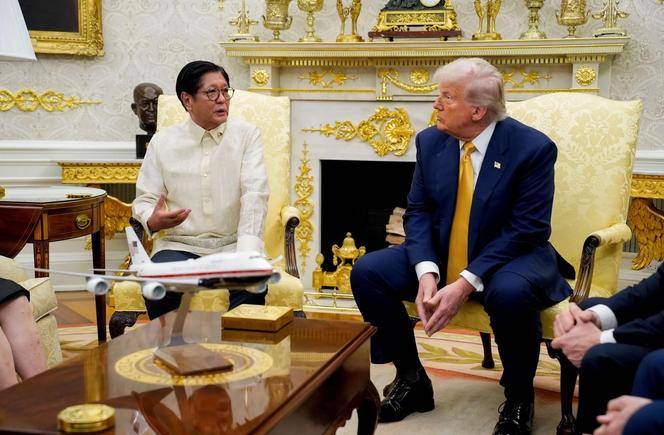
马科斯飞抵美国,告了中国一状,特朗普当着他的面,宣布访华意向
Sou Hu Cai Jing· 2025-07-26 03:07
Core Points - Marcos' visit to the US aimed to negotiate tariff concessions and strengthen defense support from the US amid rising tensions in the South China Sea [1][5] - Trump's unexpected announcement of a visit to China during the meeting with Marcos undermined the latter's plans and expectations for US support [1][5] - The lack of substantial tariff benefits, with only a minor adjustment from 20% to 19%, led to criticism from Philippine media regarding Marcos' perceived capitulation to the US [5][6] Group 1 - Marcos sought tariff concessions and defense support from the US due to escalating South China Sea tensions [1][5] - Trump's intention to visit China was a significant setback for Marcos, indicating a lack of US commitment to confront China on behalf of the Philippines [1][5] - The Philippine media expressed disappointment, labeling Marcos' actions as "selling out" to the US [5][6] Group 2 - Marcos' failure to secure meaningful tariff reductions raises concerns about his political future, especially with upcoming midterm elections [6] - The rise of candidates from the Aquino family, focusing on economic and social issues, poses a challenge to Marcos' administration [6] - Public interest in the South China Sea dispute is low, with citizens prioritizing economic development and living standards over geopolitical tensions [6]

中国不接受、不承认!
第一财经· 2025-07-23 02:25
Core Viewpoint - The article discusses China's firm stance on its sovereignty over the South China Sea, emphasizing historical and legal grounds while criticizing the United States for its interference and military presence in the region [2]. Group 1: China's Position on South China Sea - China asserts undeniable sovereignty over the South China Sea islands and adjacent waters, supported by historical and legal evidence [2]. - The Chinese representative, Fu Cong, reiterated that China does not recognize the so-called "ruling" from the South China Sea arbitration case and rejects any claims based on it [2]. - The overall stability of the South China Sea has been maintained through joint efforts with ASEAN countries, with no issues regarding freedom of navigation and overflight [2]. Group 2: Criticism of the United States - Fu Cong accused the U.S. of ignoring the historical context and facts of the South China Sea issue, claiming it spreads misinformation and undermines mutual trust among regional countries [2]. - The U.S. has not joined the United Nations Convention on the Law of the Sea but acts as a "judge" of the convention, interfering in other countries' affairs [2]. - The U.S. has deployed offensive weapons, including land-based intermediate-range missiles, in the South China Sea under the guise of "freedom of navigation," conducting military reconnaissance and exercises that intrude into Chinese territorial waters and airspace [2].

中国代表在安理会驳斥美方在南海问题上对中国的指责
Xin Hua She· 2025-07-22 22:44
Core Points - The Chinese representative at the UN, Fu Cong, rebutted unfounded accusations from the US regarding the South China Sea during a high-level debate on multilateralism and international peace [1][2] - Fu emphasized China's indisputable sovereignty over the South China Sea islands and surrounding waters, supported by historical and legal evidence [1] - China maintains a consistent stance on the South China Sea arbitration case, rejecting any claims based on the so-called ruling [1] - The overall situation in the South China Sea remains stable due to joint efforts between China and ASEAN countries, with no issues regarding freedom of navigation and overflight [1] Summary by Sections - **China's Sovereignty Claims** - Fu Cong asserted that China has undeniable sovereignty over the South China Sea islands and adjacent waters, backed by historical and legal grounds [1] - The Chinese position on the South China Sea arbitration case is clear and consistent, with a refusal to accept the so-called ruling [1] - **US Actions and Criticism** - Fu criticized the US for ignoring the historical context of the South China Sea issue and for its role in sowing discord among regional countries [2] - The US has not joined the United Nations Convention on the Law of the Sea but acts as a self-proclaimed "judge" of the convention, interfering in other countries' affairs [2] - The US has deployed offensive weapons, including land-based intermediate-range missiles, in the South China Sea under the guise of "freedom of navigation," conducting military reconnaissance and exercises [2]
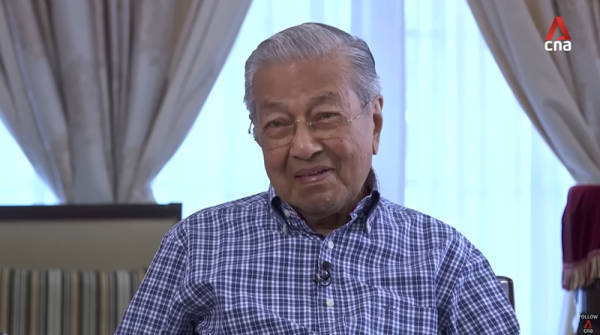
不上美媒当,马哈蒂尔反问:你们美国人派遣军舰,中国还能咋办?
Sou Hu Cai Jing· 2025-07-11 09:30
Group 1 - The article discusses the impact of new tariffs announced by President Trump on multiple countries, including Malaysia, which faces a 25% tariff increase [1] - Former Malaysian Prime Minister Mahathir expresses that Trump's tariff policy will harm the U.S. more than other countries, leading to increased living costs in the U.S. [1] - Mahathir suggests that Malaysia can mitigate the impact of U.S. tariffs by reducing trade with the U.S. and strengthening trade relations with China [1] Group 2 - Mahathir criticizes U.S. actions in the South China Sea, stating that U.S. military presence escalates regional tensions [2] - He highlights the negative consequences of U.S. political maneuvers, such as Nancy Pelosi's visit to Taiwan, which he believes provoked instability [2] - Mahathir emphasizes that China has not taken aggressive actions in the South China Sea and that Malaysia must find a way to coexist with China [5] Group 3 - The article also touches on Mahathir's views regarding global conflicts, including the Ukraine situation, which he attributes to Western provocation [6] - He condemns Israel's actions against Hamas as unacceptable, labeling them as acts of genocide [6] - Mahathir acknowledges the lack of unity among Muslim countries in their relations with Israel, attributing the ongoing issues to historical land dispossession [6]
中菲双方应如何妥善处理南海问题?中国驻菲律宾大使回应
news flash· 2025-06-17 10:58
Core Viewpoint - The tensions in certain areas of the South China Sea are not caused by China and are not desired by China, with external forces like the United States playing a disreputable role [1] Group 1: China's Position - China is compelled to respond firmly and reasonably to unilateral provocations in order to safeguard its territorial sovereignty and maritime rights [1] - There is a call for the Philippines to act in the fundamental interests of the nation and its people, and to engage in dialogue and consultation to manage differences properly [1] Group 2: Regional Stability - The emphasis is on jointly maintaining the China-Philippines relationship and the overall peace and stability of the region [1]
香会今日新加坡开幕,马克龙将成首位发表开幕式主旨演讲的欧洲国家元首
Huan Qiu Shi Bao· 2025-05-29 23:00
Group 1 - The 22nd Shangri-La Dialogue is taking place in Singapore, with approximately 550 attendees from 40 countries, including defense ministers and security experts [1] - Key topics of discussion include the new U.S. security policies in Asia and Europe, U.S.-China competition, and issues related to the South China Sea, as well as the ongoing Russia-Ukraine conflict and recent India-Pakistan tensions [1] - French President Macron will deliver the keynote address, marking the first time a European leader has done so at the opening of the dialogue since its inception in 2002 [1] Group 2 - The Chinese defense ministry announced that a delegation from the National Defense University will attend the Shangri-La Dialogue, aiming to engage in deep exchanges and build consensus [2] - The Chinese side emphasizes the importance of U.S.-China military relations and expresses an open attitude towards communication at all levels, hoping for mutual respect regarding core interests [2]
硬搬新加坡组屋抹黑中国,美使馆大翻车
Guan Cha Zhe Wang· 2025-05-21 11:06
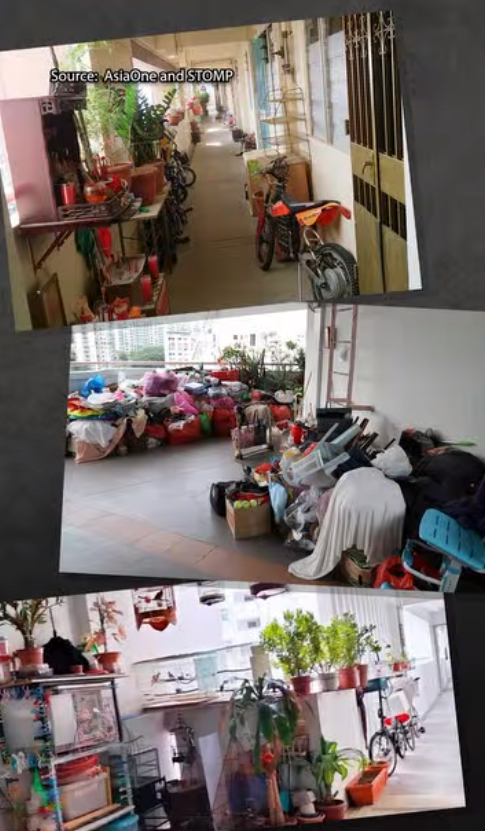
Group 1 - The U.S. Embassy in Singapore released a video comparing China's South China Sea claims to clutter in public housing corridors, attempting to create tension between China and Singapore [1][3] - The video received backlash from Singaporean netizens, who criticized the U.S. for trying to sow discord and accused it of hypocrisy [4][5] - The video transitioned from discussing Singaporean housing to the South China Sea conflict, suggesting that such issues also occur near Singapore [3][4] Group 2 - Chinese officials, including Foreign Minister Wang Yi, have reiterated their commitment to maintaining peace and stability in the South China Sea through dialogue and cooperation with ASEAN countries [6][7] - The Chinese government has expressed strong opposition to U.S. military presence in the South China Sea, viewing it as a significant threat to regional security [6][8] - China's stance is that the South China Sea arbitration ruling is illegal and invalid, and it does not recognize or accept it [6][7]
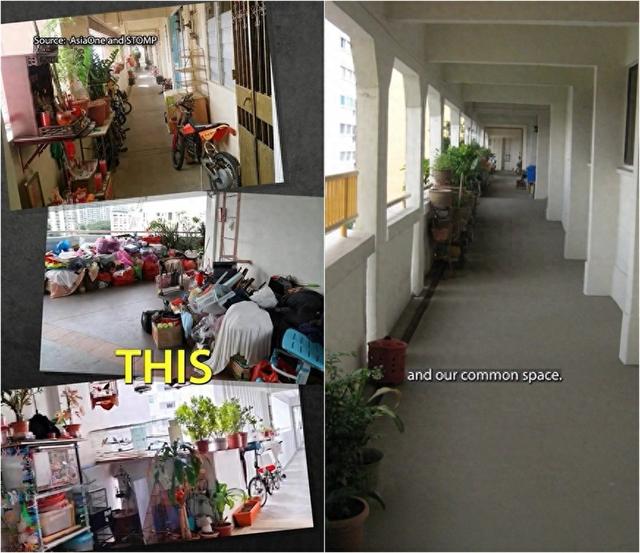
美国驻新大使馆发视频将中国在南海正当主张与“新加坡组屋杂乱走廊”强行联系,被网友痛批
Huan Qiu Wang· 2025-05-21 06:27
Group 1 - The U.S. Embassy in Singapore faced backlash for a video that linked China's claims in the South China Sea to local housing issues, which many found inappropriate and disrespectful [1][3] - The video presented a narrative comparing disputes over public space in Singapore to China's actions in the South China Sea, suggesting a parallel that was criticized by viewers [3] - Online reactions included accusations of the U.S. trying to manipulate Singaporean sentiments and a general sentiment of disapproval towards U.S. involvement in regional matters [3][4] Group 2 - China's stance on the South China Sea has been consistent, asserting that the U.S. poses the greatest threat to regional stability and rejecting the legitimacy of the South China Sea arbitration ruling [4] - Chinese representatives have emphasized the importance of dialogue and cooperation with relevant parties to resolve maritime disputes based on historical facts and international law [4] - The overall situation in the South China Sea is reported to be stable due to collaborative efforts between China and ASEAN countries, with China expressing its commitment to maintaining peace and cooperation in the region [4]
耿爽用1234驳斥美方抹黑
news flash· 2025-05-20 23:45
Core Viewpoint - The article discusses China's response to the United States' criticisms regarding the South China Sea during a United Nations Security Council debate, emphasizing China's stance on maritime security and regional stability [1]. Group 1: China's Position on South China Sea - China asserts that the UN Security Council is not the appropriate forum for discussing the South China Sea issue, rejecting the U.S. representative's comments [1]. - The Chinese representative accuses the U.S. of being the greatest threat to security and stability in the South China Sea by frequently sending military vessels and aircraft under the guise of freedom of navigation [1]. - China emphasizes its commitment to resolving maritime disputes through dialogue and negotiation based on historical facts and international law, declaring the South China Sea arbitration ruling as illegal and invalid [1]. Group 2: Regional Stability and Cooperation - The article highlights that, with the joint efforts of China and ASEAN countries, the overall situation in the South China Sea remains stable [1]. - China expresses its determination and capability to transform the South China Sea into a sea of peace, friendship, and cooperation [1]. - The Chinese representative calls on the U.S. to adhere to its commitments regarding the One China principle [1].