
投资止跌回稳

Search documents
——申万宏源建筑周报(20251208-20251212):推动投资止跌回稳,积极有序化解政府债务-20251214
Shenwan Hongyuan Securities· 2025-12-14 06:02
Investment Rating - The industry investment rating is "Overweight" indicating a positive outlook for the sector compared to the overall market performance [4][25]. Core Insights - The report highlights a focus on stabilizing investment and addressing government debt risks, with an emphasis on increasing central budget investments and optimizing local government bond usage [4][12]. - The construction sector has shown varied performance, with the SW Construction Decoration Index declining by 1.59%, underperforming against major indices [4][5]. - Key sectors such as infrastructure private enterprises and ecological landscaping have seen significant annual gains, with increases of 51.98% and 50.53% respectively [4][6]. Industry Performance Summary - The construction industry experienced a weekly decline of 1.59%, with the best-performing sub-industry being professional engineering, which increased by 0.73% [5][6]. - The top three companies in terms of weekly gains were 亚翔集成 (+25.20%), 汇绿生态 (+24.55%), and 海南发展 (+20.37%) [10][11]. - Year-to-date, the best-performing sub-industries included 基建民企 (+51.98%), 生态园林 (+50.53%), and 专业工程 (+46.64%) [6][10]. Key Company Developments - 重庆建工 won a joint bid for a project worth 1.714 billion yuan, representing 6.29% of its 2024 revenue [14]. - 文科股份 secured a contract for an environmental improvement project valued at 91 million yuan, accounting for 13.08% of its 2024 revenue [14]. - The report notes significant changes in company leadership and shareholder structures, impacting various firms within the industry [16].
申万宏源建筑周报:推动投资止跌回稳,积极有序化解政府债务-20251214
Shenwan Hongyuan Securities· 2025-12-14 05:11
Investment Rating - The report maintains a positive outlook on the construction and decoration industry, indicating an "Overweight" investment rating, suggesting that the industry is expected to outperform the overall market [4][25]. Core Insights - The report highlights the need to stabilize investment and manage local government debt risks, as emphasized by the central government's recent economic work conference [4][12]. - It notes that the construction industry experienced a weekly decline of 1.59%, underperforming compared to major indices, with the best-performing sub-industry being professional engineering, which saw a slight increase of 0.73% [5][6]. - The report identifies key companies that are expected to benefit from new investment opportunities, particularly in emerging sectors aligned with national strategies [4][12]. Industry Performance Summary - The construction sector's weekly performance showed a decline of 1.59%, with the SW Construction Decoration Index underperforming against the Shanghai Composite Index [5][6]. - The best-performing sub-industries for the week included professional engineering (+0.73%), while the largest annual gainers were private infrastructure companies (+51.98%) and ecological landscaping (+50.53%) [4][6]. - Notable individual stock performances included Yaxiang Integration (+25.20%) and Hainan Development (+20.37%), while stocks like Jiaojian Co. (-30.30%) and Zhengping Co. (-22.61%) faced significant declines [10][11]. Key Company Developments - Chongqing Construction won a joint bid for a major engineering project valued at 1.714 billion yuan, representing 6.29% of its projected 2024 revenue [14]. - Wenkai Co. secured a contract for an environmental improvement project worth 91 million yuan, accounting for 13.08% of its expected 2024 revenue [14]. - The report emphasizes the importance of focusing on undervalued companies, suggesting that firms like China Railway and Shanghai Construction may see valuation recovery [4][12].


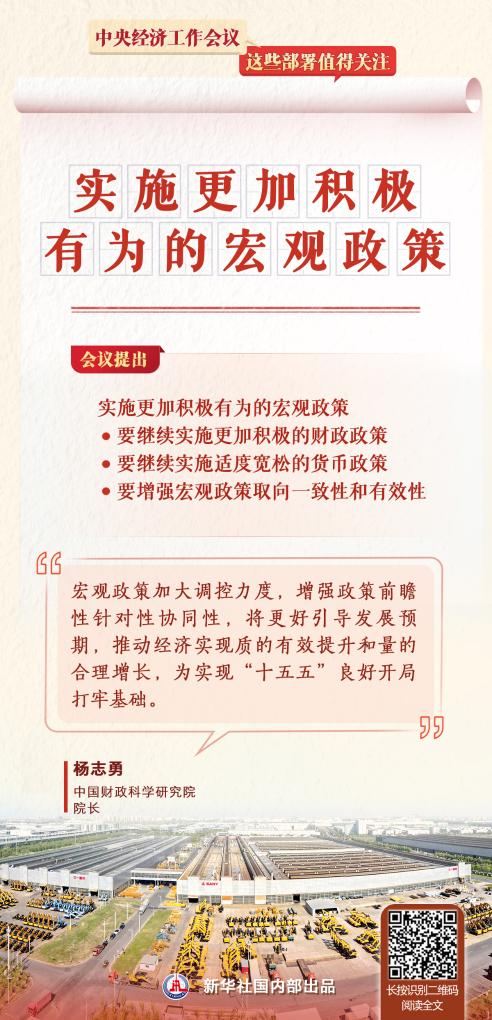
中央经济工作会议,这些部署值得关注
Xin Hua Wang· 2025-12-12 14:54
Group 1 - The Central Economic Work Conference was held from December 10 to 11, 2025, to summarize economic work and analyze the current economic situation, while deploying plans for 2026 [1] - The conference emphasized the implementation of more proactive macro policies, including a continuation of active fiscal policies and moderately loose monetary policies, to enhance the consistency and effectiveness of macro policies [2] - The conference highlighted the need to clear unreasonable restrictions in the consumption sector to unleash service consumption potential, which is crucial for accelerating the construction of a new development pattern and achieving high-quality development [4] Group 2 - The conference proposed measures to stabilize investment and effectively stimulate private investment by expanding access, addressing bottlenecks, and strengthening guarantees to create a stable and predictable environment for private enterprises [5] - A nationwide unified market construction regulation will be formulated to address "involution" competition, ensuring that the construction of a unified national market is legally grounded and promoting more mature and defined systems [6] - The conference called for deepening reforms in the foreign investment promotion system to steadily expand institutional openness, leveraging China's large market to attract global resources and enhance economic innovation and competitiveness [7] Group 3 - Support for major economic provinces to take the lead in driving economic growth by stabilizing investment, consumption, and exports, ensuring smooth industrial and supply chains, and contributing to national economic growth while reducing regional disparities [8]

聚焦中央经济工作会议|我国将着力推动投资止跌回稳
Sou Hu Cai Jing· 2025-12-12 05:38
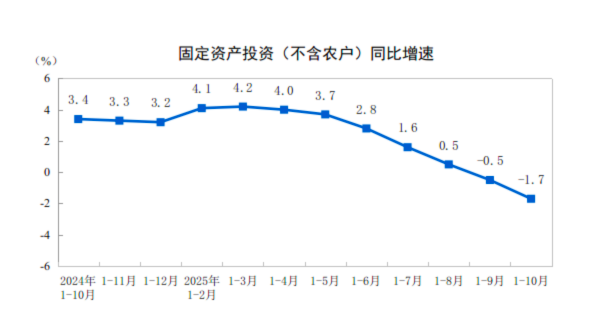
Group 1 - The core viewpoint of the news emphasizes the importance of investment in expanding domestic demand, with a focus on "maintaining demand as the main driver and building a strong domestic market" as outlined in the Central Economic Work Conference [1] - The conference highlighted the need to "stop the decline and stabilize investment" and to "effectively stimulate the vitality of private investment" due to a 1.7% year-on-year decrease in fixed asset investment in the first ten months of the year [1] - The investment structure is being optimized, with rapid growth in high-tech industry investments, indicating a shift towards more advanced sectors [1] Group 2 - Private investment is recognized as a crucial support for stabilizing growth, adjusting structure, and promoting employment, with a call to create a stable and predictable institutional environment for private enterprises [2] - The conference proposed high-quality urban renewal as both a livelihood and development project, which can play a significant role in driving investment, expanding domestic demand, and stabilizing growth [2] - There is a broad investment demand in new industrialization, new urbanization, and energy-saving transformations, along with significant opportunities in basic public services, which are expected to support the robust development of the Chinese economy [2]
中央明确推动投资止跌回稳 哪些政策工具可以期待
Di Yi Cai Jing· 2025-12-12 04:41
Group 1 - The central economic work conference emphasized the need to "maintain domestic demand as the main driver and build a strong domestic market," with a clear directive to "promote investment stabilization" [1] - Fixed asset investment growth turned negative from September, with a further decline in October, influenced by factors such as the real estate market adjustment and declining investment returns [1][3] - A series of policies, including the issuance of 500 billion yuan in new policy financial tools and an additional 200 billion yuan in special bonds, aim to support investment growth [1][3] Group 2 - From January to October, national fixed asset investment (excluding rural households) reached 4,089.14 billion yuan, a year-on-year decrease of 1.7%, with private fixed asset investment down by 4.5% [3] - Real estate development investment fell by 14.7% year-on-year, significantly impacting overall investment growth, which was down by 3 percentage points due to this decline [3][4] Group 3 - Despite the slowdown in investment growth, the investment structure is optimizing, with high-tech industries experiencing rapid growth, such as aerospace manufacturing investment increasing by 19.7% and information services by 32.7% [4] - Clean energy investments, including solar, wind, nuclear, and hydropower, collectively grew by 10.4% year-on-year [4] Group 4 - The conference highlighted the importance of increasing investment to strengthen the real economy, promote technological and industrial innovation, and address regional development imbalances [5] - The "Two Heavy" projects, which focus on major national strategies and key area security capabilities, are identified as crucial for expanding effective investment [6] Group 5 - The role of new policy financial tools will continue to be emphasized, with expectations for increased fiscal spending in areas such as social security, education, and healthcare in 2026 [7] - Measures to stimulate private investment include 13 policy initiatives aimed at improving access and addressing barriers for private enterprises [8] Group 6 - The National Development and Reform Commission plans to enhance the effectiveness of policies promoting private investment, including support for technology-driven enterprises and infrastructure REITs [9]
中央明确推动投资止跌回稳,哪些政策工具可以期待
Di Yi Cai Jing· 2025-12-12 03:56
Group 1: Economic Policy and Investment Strategy - The Central Economic Work Conference emphasized the need to increase central budget investment and optimize the implementation of "two heavy" projects to stabilize investment growth [1][6] - A series of policies, including the issuance of 500 billion yuan in new policy financial tools and an additional 200 billion yuan in special bonds, aim to support investment in infrastructure and stimulate private investment [1][8] Group 2: Investment Trends and Performance - From January to October, fixed asset investment (excluding rural households) reached 4,089.14 billion yuan, a year-on-year decrease of 1.7%, with private fixed asset investment down by 4.5% [3] - Real estate investment saw a significant decline of 14.7% year-on-year, which negatively impacted overall investment growth by 3 percentage points [3][4] Group 3: Sectoral Investment Growth - Despite the overall slowdown, certain high-tech sectors experienced rapid investment growth, such as aerospace manufacturing (up 19.7%) and information services (up 32.7%) [4] - Clean energy investments, including solar, wind, nuclear, and hydropower, collectively grew by 10.4% year-on-year [4] Group 4: Private Investment and Policy Support - The government aims to effectively stimulate private investment, which is crucial for growth and employment, with measures to enhance access and support for private enterprises [8][9] - The National Development and Reform Commission plans to improve the effectiveness of policies promoting private investment, including facilitating financing for technology-driven enterprises [9]
重要经济会议召开,这次有哪些亮点,对A股有什么影响?
Sou Hu Cai Jing· 2025-12-12 01:42
Group 1 - The core idea of the recent economic work conference emphasizes the integration of investment in both physical assets and human capital, highlighting the need for internal strengthening to address external challenges [1] - The new focus on "investment in people" suggests a shift towards enhancing livelihoods, as consumer spending is crucial for boosting domestic demand, especially in the face of external export shocks [1] - The proposed urban and rural resident income increase plan aims to tackle the issue of insufficient domestic demand by raising people's income, thereby enhancing their consumption capacity and future income expectations [1] Group 2 - The economic conference did not provide direct policies for the A-share market but indicated a continued loose liquidity environment through flexible monetary tools like reserve requirement ratio cuts and interest rate reductions [3] - The A-share market is currently perceived to have sufficient funds but lacks effective mechanisms, with a need for profit-taking processes and careful management of financing to stabilize the market [3] - The focus for next year is on stimulating domestic consumption, particularly in sectors like consumer goods and traditional industries such as liquor, which may benefit from supportive policies [3][4]

聚焦中央经济工作会议丨我国将着力推动投资止跌回稳
Xin Hua Wang· 2025-12-11 16:50
Group 1 - The core viewpoint of the articles emphasizes the importance of investment in expanding domestic demand and the need to stabilize and invigorate private investment in the face of a challenging external environment and declining investment returns [1][2] - The Central Economic Work Conference highlighted the goal of maintaining a strong domestic market and proposed measures to increase central budget investment, optimize project implementation, and enhance the role of new policy financial tools [1] - Fixed asset investment in China decreased by 1.7% year-on-year in the first ten months of the year, but there has been a rapid growth in investment in high-tech industries [1] Group 2 - The conference also stressed the importance of high-quality urban renewal as a means to drive investment, expand domestic demand, and stabilize growth, particularly in the context of structural adjustments and insufficient internal demand [2] - There is significant investment potential in new industrialization, urbanization, energy-saving, and carbon reduction projects, as well as in basic public services, which are crucial for supporting China's economic development [2]
聚焦中央经济工作会议|我国将着力推动投资止跌回稳
Sou Hu Cai Jing· 2025-12-11 16:46
"相关部署将更好发挥政府投资的撬动作用,进一步优化投资结构,不断释放投资活力。"国家发展改革 委宏观经济研究院研究员张林山说。 民间投资是稳增长、调结构、促就业的重要支撑力量。会议指出,有效激发民间投资活力。 新华社北京12月11日电(记者魏弘毅)投资是扩大内需的重要抓手。12月10日至11日举行的中央经济工 作会议部署明年经济工作重点任务时提出"坚持内需主导,建设强大国内市场",并明确"推动投资止跌 回稳""有效激发民间投资活力"。 受外部环境复杂严峻、投资收益下降等因素影响,今年前10个月,全国固定资产投资同比下降1.7%。 与此同时,我国投资结构优化,高技术行业投资较快增长。 会议提出,适当增加中央预算内投资规模,优化实施"两重"项目,优化地方政府专项债券用途管理,继 续发挥新型政策性金融工具作用。 会议还提出,高质量推进城市更新。"城市更新既是民生工程,更是发展工程,能够发挥拉投资、扩内 需、稳增长的重要作用。"对外经济贸易大学教授马双表示,在我国经济面临结构调整、内部需求不足 等挑战的情况下,城市更新将有效赋能经济社会高质量发展。 当前,我国新型工业化、新型城镇化、节能降碳改造等投资需求广阔,基本公 ...
2025年12月中央经济工作会议点评:推动投资止跌回稳,督促各地主动化债
Shenwan Hongyuan Securities· 2025-12-11 13:41
Investment Rating - The industry investment rating is "Overweight" indicating a positive outlook for the sector [12]. Core Insights - The Central Economic Work Conference emphasized the need to stabilize investment and increase central budget investment to support key projects, particularly in light of the significant pressure on investment due to local government debt and the real estate sector [2][4]. - There is a focus on actively and prudently resolving risks in key areas, urging local governments to take initiative in debt management, which is expected to improve cash flow for construction companies [4]. - Continued deepening of state-owned enterprise reform is highlighted, aiming to enhance the core competitiveness of central state-owned enterprises, which dominate the construction industry [4]. - Green development initiatives are being advanced, with increased demand for carbon reduction transformations in major industries, which is expected to benefit construction engineering companies [4]. - The report suggests that the construction industry will stabilize in 2026, with emerging sectors likely to see higher investment opportunities due to major national strategies [4]. Summary by Sections Investment Analysis - The report indicates that from January to October 2025, fixed asset investment decreased by 1.7% year-on-year, with infrastructure investment (excluding electricity) down by 0.1% [4]. - The emphasis on central funding for key projects is expected to stimulate investment recovery [4]. Key Company Recommendations - Investment focus includes companies such as Sichuan Road and Bridge, China Chemical, and Donghua Technology in the central and western regions, and companies like Jinggong Steel Structure and Zhongsteel International for overseas expansion [4]. - Low valuation companies such as China Railway and Shanghai Construction are expected to see valuation recovery [4]. Valuation Table Insights - The report provides a valuation table for key companies in the construction sector, highlighting earnings per share (EPS) and projected net profit growth rates for 2024 to 2026 [6][7]. - For instance, China Railway is projected to have a net profit of 26,183 million yuan in 2025, with a decline of 6% from the previous year [6].