操作系统生态

Search documents
进入关键期!超3万应用加速开发,鸿蒙开发者军团冲锋
第一财经· 2025-06-20 12:05
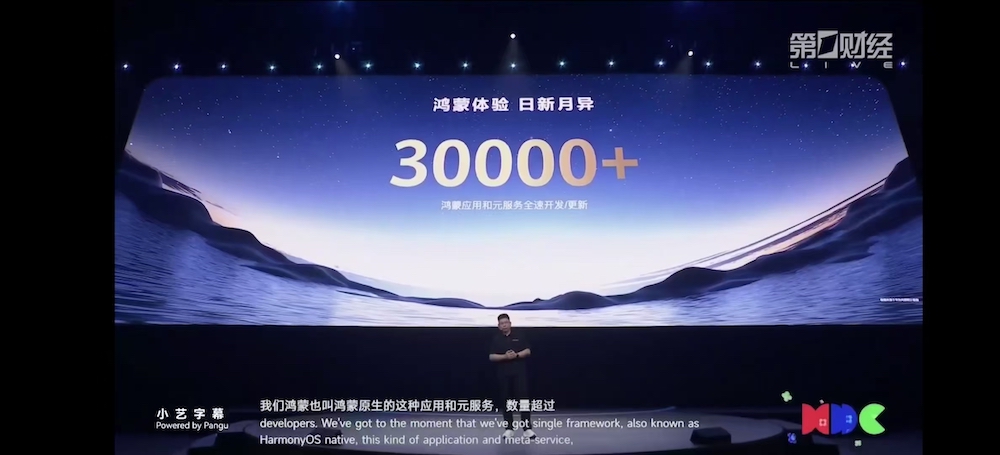
Core Viewpoint - HarmonyOS has become the fastest-growing open-source operating system, with over 130 million lines of code, and is entering a new phase of accelerated development supported by developers, partners, and consumers [1][3]. Group 1: Development Progress - As of June 20, 2025, over 40 Huawei terminal products are equipped with HarmonyOS 5, and more than 30,000 HarmonyOS applications and services are in active development [1][4]. - The number of HarmonyOS developers has surpassed 8 million, indicating a growing ecosystem [1][4]. - The development of HarmonyOS has transitioned from self-research to industry-wide collaboration, with over 9,000 applications participating in system-level innovations [4][5]. Group 2: Ecosystem Challenges - Historical failures of mobile operating systems like Symbian, Windows Phone, and BlackBerry highlight the importance of a robust application ecosystem for user retention and developer engagement [3][4]. - The initial phase of building the HarmonyOS ecosystem faces similar challenges, requiring a sufficient number of attractive applications to draw users and developers [3][4]. Group 3: Developer Engagement - Developers have provided nearly 4 million pieces of feedback, leading to over 260 system function updates and more than 270,000 version submissions [4][5]. - The cost of adapting applications to HarmonyOS has decreased by over 70% for some developers, enhancing development efficiency [5][9]. - The ecosystem is evolving from "community finding people" to "people finding community," indicating a shift in developer sentiment towards HarmonyOS [5][9]. Group 4: Future Directions - HarmonyOS 6.0 is set to integrate software, hardware, chips, and cloud services, with AI capabilities embedded in the system architecture [7][8]. - The focus is shifting towards AI integration and interconnectivity among devices, with developers increasingly interested in how HarmonyOS can differentiate their applications [9][10]. - The call for more enterprise applications to accelerate HarmonyOS adaptation reflects the growing recognition of its potential [10][11].


鸿蒙开发者军团冲锋:超3万应用加速开发,生态规模战进入关键期
Di Yi Cai Jing· 2025-06-20 11:05
Core Insights - Huawei's HarmonyOS has become the fastest-growing open-source operating system, with over 130 million lines of code and more than 800,000 developers contributing to its ecosystem [1][4] - The launch of HarmonyOS 5 has seen over 40 Huawei terminal products and more than 30,000 applications and services in development, marking a significant milestone in the ecosystem's growth [1][4] - The transition from a technology-driven approach to a collaborative ecosystem model is crucial for the future success of HarmonyOS, as it aims to attract more developers and partners [1][4][8] Development and Ecosystem - The construction of an operating system ecosystem is more challenging than developing the operating system itself, as evidenced by the failures of past mobile operating systems like Symbian and Windows Phone [2][4] - HarmonyOS has received nearly 4 million pieces of feedback and has undergone over 260 system updates, showcasing a robust collaborative effort from developers and consumers [4][8] - The integration of AI and cloud services into HarmonyOS is expected to enhance application performance and user experience, with the upcoming HarmonyOS 6.0 set to introduce a new architecture [6][7] Developer Engagement - Developers have reported a significant reduction in development costs and time, with some stating that costs have decreased by over 70% when adapting to HarmonyOS [5][7] - The ecosystem is witnessing a shift from developers seeking out the community to the community actively attracting developers, indicating growing confidence in HarmonyOS [5][7] - Collaboration with major applications like WeChat and Douyin has led to the creation of over 50 innovative projects, further enriching the HarmonyOS ecosystem [4][5] Future Outlook - The success of HarmonyOS will depend on the active participation of developers and the overall vibrancy of the ecosystem, as Huawei calls for more enterprise applications to accelerate their adaptation to HarmonyOS [8] - The competitive landscape in the consumer electronics industry is shifting towards AI integration, with Huawei needing to keep pace with rivals like Apple and Google [7][8] - The ongoing development of HarmonyOS is seen as a collective effort of millions of partners, developers, and consumers, emphasizing the importance of collaboration in achieving technological advancements [8][9]
国产鸿蒙操作系统“六年成绩单”来了!
Zheng Quan Shi Bao Wang· 2025-06-20 09:57
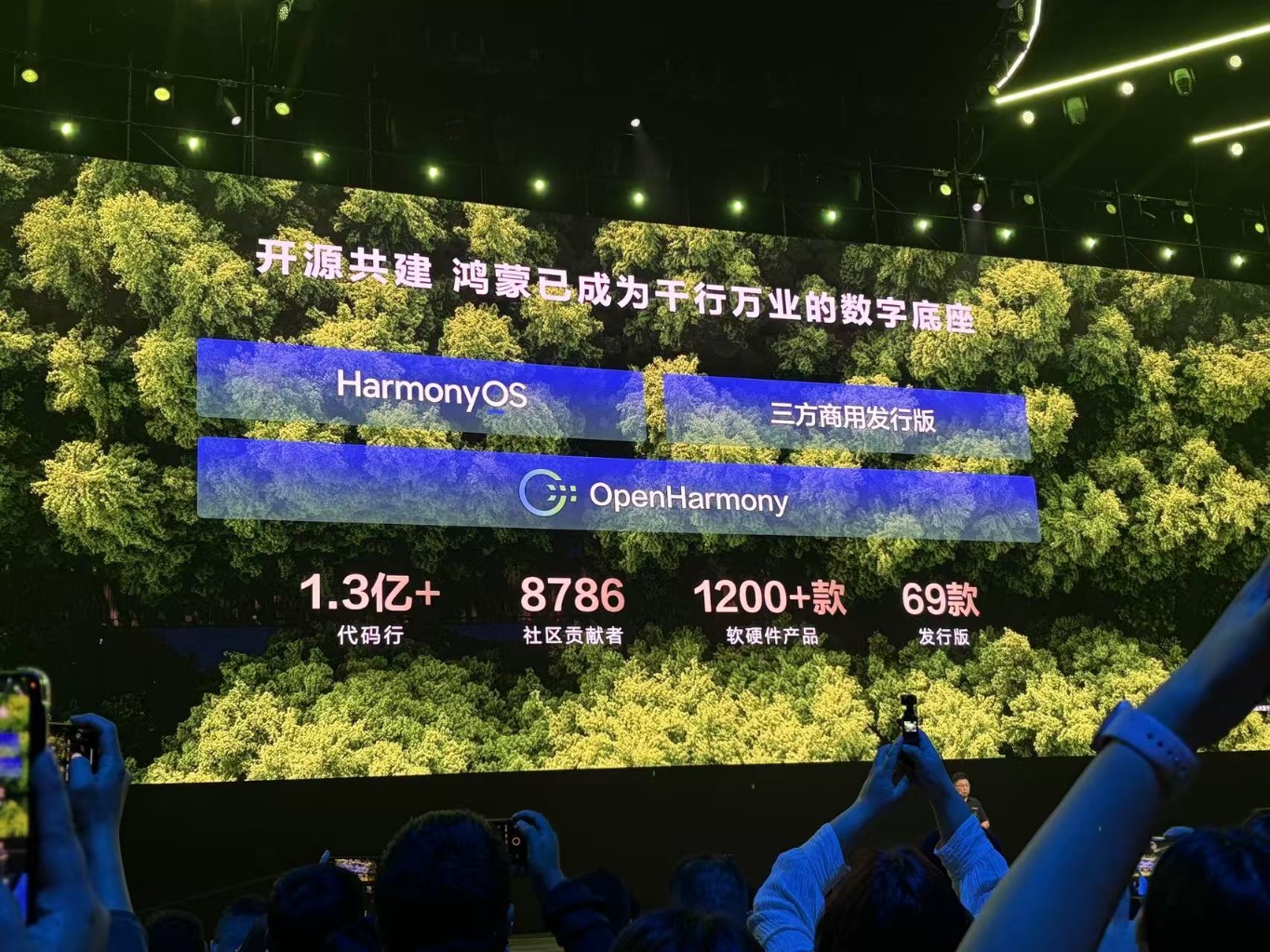
Core Insights - Huawei's HarmonyOS has evolved significantly since its launch six years ago, with a focus on building a robust ecosystem rather than just an operating system [1] - The HarmonyOS ecosystem includes both Huawei's proprietary system and the open-source version, OpenHarmony, which allows other companies to develop their own versions [1] Group 1: Ecosystem Development - The HarmonyOS ecosystem has transitioned to a phase of "exponential expansion," with over 30,000 applications and services being developed across nearly 20 industries, including government, healthcare, and industrial sectors [2] - More than 800 million developers are now engaged with the HarmonyOS platform, and over 40 Huawei devices are equipped with HarmonyOS 5, which has added over 260 new features [2][4] - OpenHarmony is recognized as the fastest-growing open-source operating system, with over 1.3 billion lines of code and nearly 9,000 community contributors [2] Group 2: Innovation and Features - Huawei has introduced over 70 system-level innovations in HarmonyOS, with more than 9,000 applications utilizing new capabilities such as "touch to connect" and system scanning [4] - The upcoming HarmonyOS 6 will enhance connectivity and intelligence, featuring a new intelligent agent framework that allows applications to perform complex tasks collaboratively [4] - Over 50 intelligent agents are currently in development, covering various sectors such as education, healthcare, and finance, with applications from companies like JD.com and Sina [6] Group 3: Industry Collaboration - Various domestic application leaders, including DingTalk and Sina Weibo, have shared their innovative experiences based on the HarmonyOS, showcasing features like voice interaction and privacy protection [6] - The collaborative efforts in developing the HarmonyOS ecosystem are seen as a significant joint innovation in the operating system and application fields [4][6]
华为终端BG董事长余承东重返母校清华 开讲鸿蒙校园公开课
Sou Hu Cai Jing· 2025-05-23 08:40
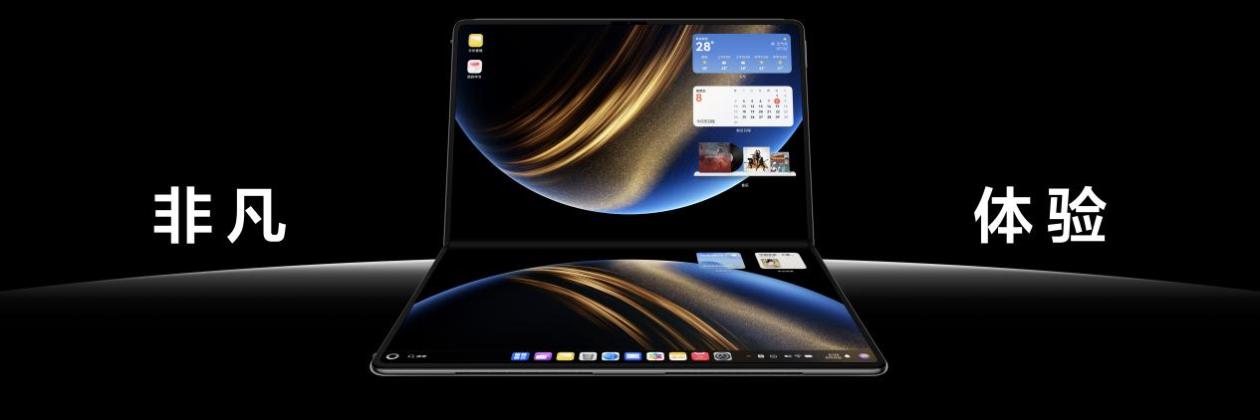
Core Insights - Huawei's Executive Director, Yu Chengdong, emphasized the importance of innovation in leading the future and building the HarmonyOS ecosystem during a lecture at Tsinghua University [1][3] - The HarmonyOS aims to unify fragmented operating systems, allowing for seamless interconnectivity across devices, which is a key design principle [3][5] - The development of HarmonyOS has surpassed 120 million lines of code, with a focus on creating a robust ecosystem that supports extensive application development [5] Group 1 - Yu Chengdong returned to Tsinghua University to share insights on HarmonyOS and its innovations with over 500 students [1] - The first demonstration of Huawei's HarmonyOS foldable laptop, HUAWEI MateBook Fold, showcased advancements in hinge and screen technology, enhancing user experience [1] - The lecture highlighted the challenges of fragmented operating systems and the need for a unified application ecosystem to foster innovation [3] Group 2 - The complexity of developing an operating system is acknowledged, but the real challenge lies in building a comprehensive ecosystem with extensive application support [5] - HarmonyOS architecture innovations include soft-hard cloud integration and a distributed soft bus, enabling a consistent user experience across multiple devices [5] - Yu Chengdong shared insights on career development, emphasizing the importance of pursuing interests and passions to enhance creativity and productivity [7] Group 3 - The Huawei Campus Public Course, part of the Huawei Flower Club initiative, aims to connect with university students and enhance their skills, having conducted nearly 900 sessions across over 400 universities since 2023 [7]

鸿蒙折叠电脑14小时预约近5万
news flash· 2025-05-20 01:25
Core Viewpoint - Huawei's HarmonyOS computer has officially launched, completing its ecosystem closure, with a focus on breaking the dominance of Windows and MacOS in the market [1] Group 1: Product Launch - The HarmonyOS foldable computer is priced between 23,999 yuan and 26,999 yuan, yet it has garnered significant interest from Huawei users, with over 47,000 reservations made within 14 hours of the launch [1] Group 2: Ecosystem and User Experience - A key feature of the HarmonyOS computer is the built-in Oseasy virtual machine, which allows users to run Windows 11 applications, addressing the current lack of HarmonyOS-compatible applications and ensuring a better user experience [1]
鸿蒙电脑登场,1000+应用适配+跨端协同,能否撼动操作系统市场格局?
Huan Qiu Wang· 2025-05-19 11:24
Core Viewpoint - The launch of Huawei's HarmonyOS computers marks a significant step towards achieving self-controlled operating systems in China, providing an alternative to the dominant Windows and MacOS platforms [1][3]. Industry Impact - HarmonyOS computers are expected to drive the development of China's PC industry by fostering a self-sufficient software ecosystem, enhancing the research and application of domestically developed software [3][5]. - The introduction of HarmonyOS creates a fertile ground for domestic software applications, potentially leading to a positive cycle of ecosystem development [3][5]. Application Ecosystem - Over 150 dedicated applications have been optimized for HarmonyOS computers, with more than 1,000 integrated applications already adapted, and an expectation to exceed 2,000 by the end of the year [5]. - The applications cover a wide range of user needs, including office productivity, design, finance, entertainment, and education [5]. User Experience Enhancements - The integration of AI capabilities in applications like WPS enhances user efficiency, allowing for tasks such as PPT creation to be completed with minimal effort [7]. - Video editing applications like Wanxing Miaoying offer features that enable users to edit videos seamlessly, even in low connectivity environments [9]. - Financial applications like Dongfang Caifu provide a secure trading environment, enhancing user privacy and convenience [11]. Device Features - The HUAWEI MateBook Fold offers innovative dual-screen functionality, allowing users to multitask effectively during presentations and trading activities [14]. - HarmonyOS facilitates a seamless experience across devices, ensuring continuity in user experience and data management [14].
谷歌不会自废武功
虎嗅APP· 2025-03-27 23:50
Core Viewpoint - Google is shifting its strategy regarding the Android Open Source Project (AOSP) by moving development to an internal codebase, which raises concerns about the potential closure of AOSP while still maintaining its commercial interests [2][3][4][5]. Group 1: AOSP Overview - AOSP was initially created to enhance the Android experience through contributions from manufacturers and developers, aiming to compete with iOS [6]. - The project has evolved into two branches: the public AOSP branch, accessible to anyone, and the internal development branch, limited to companies that have signed agreements with Google [10]. Group 2: Strategic Shift - By concentrating development on the internal codebase, Google aims to reduce operational costs and compel OEM manufacturers to pay for access to the latest Android updates and security patches [10]. - This move does not necessarily mean a complete abandonment of AOSP, as it still plays a crucial role in maintaining Google's ecosystem across various devices [11][13]. Group 3: Historical Context - Over the past 15 years, Google's strategy has consistently involved "damaging AOSP to benefit GMS," with many core applications being removed from AOSP and made available through Google Play [11][12]. - Despite the reduction of local applications in AOSP, Google has continued to update it, recognizing the importance of AOSP-based devices in sustaining its ecosystem [12][13]. Group 4: Competitive Landscape - The competition in the operating system market is fundamentally about monopolization, and Google is unlikely to overlook the implications of AOSP's potential closure [14].