
晋江经验

Search documents
做优做强,“晋江经验”为全球企业发展提供启示
Sou Hu Cai Jing· 2025-07-06 02:54
Core Insights - The "Jinjiang Experience" serves as a model for the growth of private enterprises in China, emphasizing the importance of a strong real economy and innovation [1][3][4] Group 1: Economic Development - In 2024, the total value added of the private economy in Fujian is expected to exceed 4 trillion yuan, with over 14,000 national high-tech enterprises, of which more than 97% are private [3] - Fujian's private enterprises, guided by the "Jinjiang Experience," focus on strengthening their core businesses and leveraging new technologies and business models to enhance competitiveness [4] Group 2: Industrial Clusters - The development of industrial clusters is crucial for enhancing the overall competitiveness of the manufacturing sector, with Fujian fostering geographic concentration of related enterprises for resource sharing and complementary advantages [7] - An example is the Quanzhou modern sports products cluster, which integrates over 100 production factors within a 50-kilometer radius of Jinjiang, creating a comprehensive industrial ecosystem [8] Group 3: Government Support - The government plays a pivotal role as a "guide" for enterprises, continuously optimizing services to reduce obstacles for business growth [11] - As of October 2024, Fujian has launched over 4,700 integrated service items, streamlining approval processes by 64.35%, with more than 97% of matters handled online [12] Group 4: Legal Framework - A strong legal framework is essential for business development, with Fujian focusing on creating a stable and predictable environment for enterprises [14] - In 2024, the overall satisfaction rate for Fujian's business environment reached 88.27%, maintaining above 85% for four consecutive years [15] Group 5: Innovation and Sustainability - Fujian enterprises are embracing change and seizing opportunities, with examples like Xiamen Jinlong's innovations in electric buses and Furen Sen Gong's sustainable bamboo products gaining international acclaim [18][19]

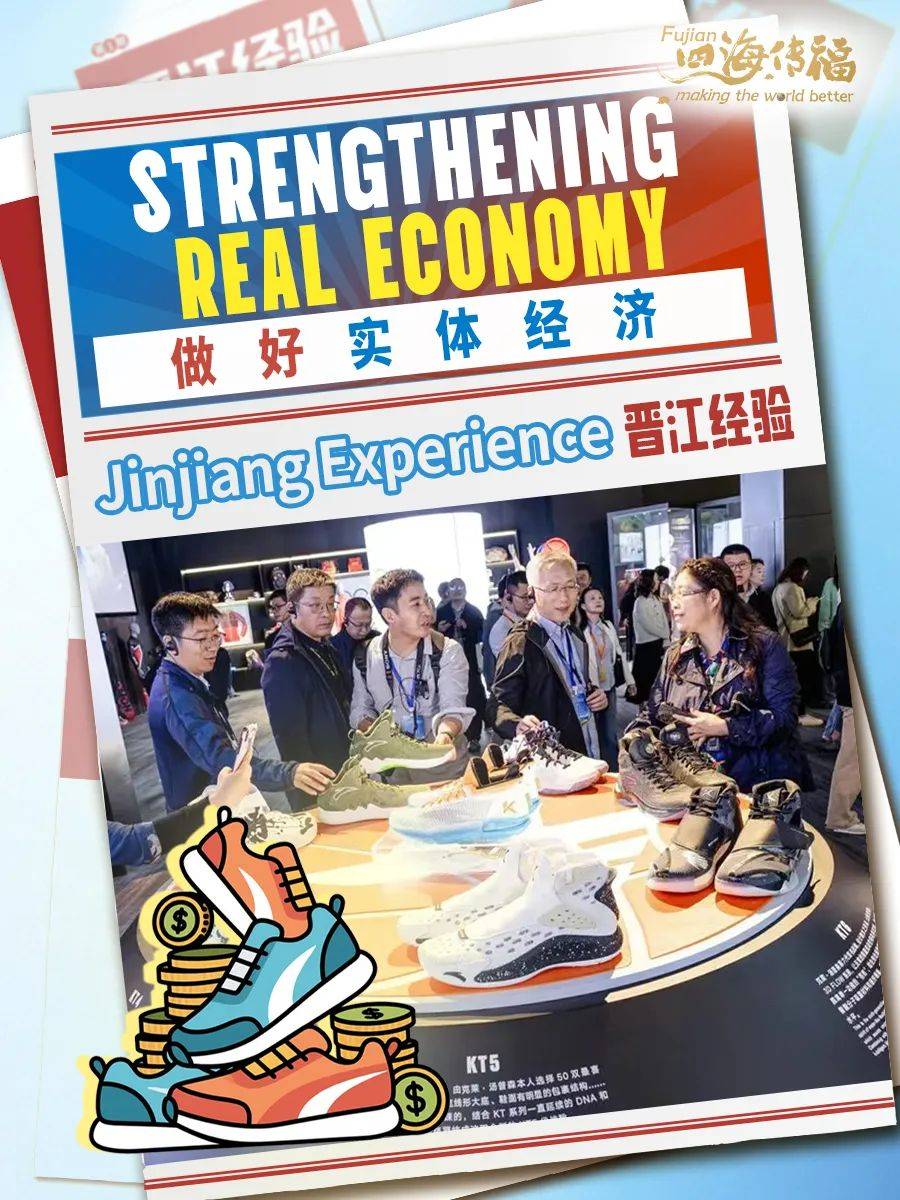
泉州:人人争当“晋江经验”干部教育培训品牌推介官
Zhong Guo Fa Zhan Wang· 2025-06-18 09:19
Group 1 - The core idea of the articles revolves around the "Jinjiang Experience" as a model for optimizing the business environment and promoting high-quality development of the private economy in Quanzhou, Fujian Province [1][2] - Quanzhou's private economy contributes 70% of tax revenue, 80% of regional GDP, and 90% of technological innovation results, showcasing its significant role in the local economy [1] - The Quanzhou Municipal Party School has established a comprehensive training brand for the "Jinjiang Experience," conducting various educational activities to share innovative practices in industrial upgrading, business environment, rural revitalization, and urban-rural integration [1][2] Group 2 - The training program is structured around a "theoretical source - practical transformation - cultural soul" curriculum, providing a multi-faceted view of the "Jinjiang Experience" [2] - The training center collaborates with 56 institutions, including central and national training organizations, to promote the "Jinjiang Experience" education nationwide through mutual class offerings and resource sharing [2][3] - A new "school-enterprise linkage" training model has been established, combining the educational resources of the Quanzhou Municipal Party School and the Quanzhou Development Group to enhance the training program's effectiveness [3]
创新发展“晋江经验”激发民营经济活力
Zhong Guo Jing Ji Wang· 2025-05-21 23:11
Group 1 - The "Jinjiang Experience" is a theoretical achievement formed through deep research by Xi Jinping, focusing on the development of social productivity and the direction of socialist market economy reform, providing a scientific guide for the growth of the private economy [1][2] - Over 20 years, the "Jinjiang Experience" has evolved with the principles of "six persistent commitments" and "correctly handling five major relationships," showcasing its enduring theoretical charm and practical power [1][2] - Jinjiang's GDP grew from less than 150 million yuan in 1978 to over 350 billion yuan in 2024, ranking it third in comprehensive economic and social development among county-level cities in China [1][2] Group 2 - The essence of the "Jinjiang Experience" lies in the commitment to developing social productivity and adapting to new forms of productivity, which has led to the growth of private enterprises and the establishment of over 50 listed companies in Jinjiang [2][3] - Jinjiang has successfully transformed traditional industries like footwear and textiles while also investing in emerging sectors such as integrated circuits and digital economy, demonstrating a continuous leap in productivity [2][3] Group 3 - The "Jinjiang Experience" emphasizes the importance of a robust real economy, with Jinjiang focusing on manufacturing and developing nine trillion-level industrial clusters, including textiles, footwear, and petrochemicals [3][4] - The shift from competing on price to competing on technology is evident in the footwear industry, with companies like 361° investing in smart factories to enhance efficiency and reduce costs [3][4] Group 4 - A sound legal environment is crucial for the development of productivity, with the "Jinjiang Experience" advocating for a legal framework that supports private enterprises and fosters a fair market environment [4][5] - Recent legal reforms, including the Civil Code and amendments to anti-monopoly laws, have created a favorable environment for private enterprises to thrive [4][5] Group 5 - The approach to addressing issues faced by private enterprises has shifted from a rigid "one-size-fits-all" method to a more supportive and innovative strategy, aiming to create a first-class business environment [5][6] - The focus is on minimizing unnecessary interference in business operations while providing substantial support to enterprises, ensuring they can grow and innovate in a stable and predictable environment [5][6]
全国政协常委、安踏集团董事局主席丁世忠:创新发展“晋江经验” 推动传统产业转型升级
Zheng Quan Shi Bao Wang· 2025-03-07 18:58
Group 1: Core Insights - The focus is on boosting domestic consumption, integrating industry-academia-research, enhancing sports event economy, and promoting new productivity in traditional industries [1][2][3] - Domestic brands are encouraged to innovate and meet the upgraded consumption needs of the public through quality products and policies that enhance brand awareness [1][2] - The "Jinjiang experience" serves as a model for traditional industries to leverage local resources and capabilities for innovative development [2] Group 2: Industry and Economic Development - The traditional industry accounts for over 80% of China's manufacturing sector, highlighting the need for innovative practices to enhance productivity [2] - The integration of industry, academia, and research is deemed essential for accelerating the transformation of technological achievements into practical applications [2] - The sports industry is experiencing significant growth, with events like marathons and triathlons driving economic phenomena such as "marathon economy" and increased consumer spending [3] Group 3: Policy Recommendations - Recommendations include establishing a closed-loop mechanism for technology research and development involving enterprises, government, and research institutions [2] - There is a call for national policies to support deep cooperation between AI companies and traditional industries to develop applicable AI technologies [2] - Encouragement for local governments to foster original sports event IPs and provide policy support for venue leasing and security coordination [3]
