
产学研融合

Search documents
氢能成本高企何解 关键在于产学研融合
Sou Hu Cai Jing· 2026-02-24 16:37
Core Insights - Hydrogen energy will play a crucial role in the green transition of the energy system and deep decarbonization of industries, but it is currently in its early development stage facing high costs that hinder large-scale commercial application [1] - The integration of industry, academia, and research is essential to overcome key bottlenecks and cultivate core competitiveness in the hydrogen energy sector [1] Industry Opportunities - The domestic hydrogen energy market is expanding as technology matures, with applications in transportation, industry, and power sectors, such as hydrogen fuel cell vehicles contributing to low-carbon transitions [2] - The construction of hydrogen energy infrastructure, including hydrogen storage and refueling stations, is progressing, with operational stations covering 29 provinces, providing policy support for industry chain bottlenecks and application expansion [2] International Collaboration - China's increased participation in international hydrogen energy standard-setting presents significant opportunities for technology advancement, with collaborations between Chinese enterprises and international research institutions enhancing global competitiveness [3] Challenges in Integration - The hydrogen energy sector faces challenges in integrating industry, academia, and research, including poor policy coordination and differing priorities between enterprises and universities [4] - Enterprises struggle to play a significant role in innovation due to financing bottlenecks and limited application scenarios, hindering their ability to convert research outcomes into practical applications [5] - There is a shortage of high-level talent and interdisciplinary professionals in the hydrogen energy field, exacerbated by a late start in developing educational programs [5] Policy Recommendations - To enhance collaboration, a coordinated innovation mechanism should be established, aligning the research focus of universities with the technical needs of enterprises, and improving the efficiency of cooperation [7] - Emphasizing the role of enterprises as innovation leaders, mechanisms to alleviate financing challenges should be implemented, including establishing hydrogen industry funds and promoting green financial tools [8] - Support for joint research activities between enterprises and research institutions is crucial, along with simplifying patent and technology transfer processes to improve innovation outcomes [9]
氢能成本高企何解?关键在于产学研融合丨能源思考
Di Yi Cai Jing· 2026-02-24 12:04
Core Viewpoint - The integration of industry, academia, and research is crucial for overcoming key bottlenecks and cultivating core competitiveness in the hydrogen energy sector [1] Industry Opportunities - The hydrogen energy industry is in its early development stage, with high costs hindering large-scale commercial application, necessitating innovation and research breakthroughs [1] - The application of hydrogen energy is expanding in transportation, industry, and power sectors, with hydrogen fuel cell vehicles contributing to low-carbon transitions [2] - The construction of hydrogen energy infrastructure, including hydrogen storage and refueling stations, is progressing, with operational stations covering 29 provinces in China, providing policy support for industry chain bottlenecks [2] International Collaboration - China's increased participation in international hydrogen energy standard-setting presents significant opportunities for technology advancement and global competitiveness [3] Challenges in Integration - The hydrogen energy sector faces challenges such as poor policy coordination and a lack of effective collaboration mechanisms between enterprises and universities, leading to inefficiencies [4] - Enterprises struggle with financing, limiting their ability to act as innovation leaders, while high R&D costs and long technology iteration cycles hinder profitability [5] - There is a shortage of high-level research talent and interdisciplinary professionals in the hydrogen energy field, exacerbated by a late start in talent cultivation [5] Policy Recommendations - Establish a collaborative innovation mechanism to enhance the effectiveness of industry-academia-research partnerships, ensuring alignment between basic research and technical needs [7] - Highlight the role of enterprises as innovation leaders by creating cost-sharing mechanisms and supporting hydrogen energy infrastructure development [8] - Promote joint R&D activities between enterprises and research institutions, streamline patent and technology transfer processes, and enhance talent training aligned with industry needs [9]
创新奇智港交所上市并签署战略合作协议
Jing Ji Guan Cha Wang· 2026-02-14 07:51
Recent Events - Innovation Works (stock code: 02121.HK) officially listed on the Hong Kong Stock Exchange on January 27, 2026, becoming the first stock in the "AI + Manufacturing" sector, marking a significant step in its capital market journey [1] Company Project Advancement - On January 28, 2026, Innovation Works signed a strategic cooperation agreement with the Hainan Research Institute of Shanghai Jiao Tong University, focusing on underwater intelligent operation equipment and marine environmental perception, aiming to promote the integration of industry, academia, and research, as well as the industrialization of technological achievements [2]
0.001秒里的智造与匠心
Ren Min Ri Bao Hai Wai Ban· 2026-02-13 01:40
Core Insights - The article highlights the technological advancements in sports equipment for the Chinese athletes at the Milan Winter Olympics, showcasing the integration of domestic brands' innovations in their gear [1]. Group 1: Technological Innovations - The Chinese short track speed skating team's competition suit has achieved a 1.49% reduction in drag compared to the 2022 Beijing Winter Olympics, which can translate to a significant advantage in races [2]. - The development of a single-layer cut-resistant fabric has replaced the previous double-layer design, resulting in lighter and more flexible suits for athletes, with each suit weighing only a few hundred grams and having a strength 15 times that of steel wire [3]. - An innovative "thermal current" technology has been implemented in the clothing to maintain temperature balance, utilizing a micro-circulation system that adapts to cold and sweat conditions [4]. Group 2: Customization and Suitability - The research and development process has shifted from direct imitation to scientific customization, creating gear that is tailored to the physical characteristics and habits of Chinese athletes [5]. - The focus on suitable materials has led to the realization that the best-performing gear must align with the athletes' actual performance conditions, rather than solely relying on laboratory data [5]. Group 3: Industry Collaboration and Investment - The rise of China's independent industrial chain is evident, with increased collaboration between research teams and foreign suppliers, leading to a more equal partnership in technology sharing [7]. - Significant investment of nearly 20 billion yuan has been made in independent innovation and research, fostering deep integration between industry, academia, and research institutions [7].

衢州以科技创新引领“开门红”
Xin Lang Cai Jing· 2026-02-11 17:43
Group 1 - The research center in the Yangtze River Delta is collaborating with Zhikou Technology (Quzhou) Co., Ltd. to provide professional testing for motorcycle shift actuators, enhancing product quality and accelerating R&D iterations [1] - The four-province marginal radio equipment testing center, operational since August last year, serves over twenty local enterprises and has become an "accelerator" for industrial innovation [1] - Zhejiang Jingjing Technology Co., Ltd., a key project that landed in Quzhou last year, has commenced production of medical endoscopes and has a full order schedule extending into the second half of the year [1] Group 2 - The continuous optimization of Quzhou's innovation ecosystem and the enhancement of policy support are driving a wave of innovation [2] - The municipal science and technology bureau has launched a "R&D Offensive" service action, focusing on promoting R&D expense collection and tax deduction policies for industrial enterprises [2] - Future strategies will include optimizing the innovation ecosystem through precise policy supply and service connections to activate the vitality of enterprises, universities, and research institutions [2]
中国首个“万亿区”诞生!6000家高企,每平方公里54亿:解构中国最“恐怖”的经济密度……
Xin Lang Cai Jing· 2026-02-10 12:41
Core Insights - Shenzhen's Nanshan District has become the first county-level administrative region in China to surpass a GDP of 1 trillion yuan by 2025, surpassing approximately 90% of China's prefecture-level cities and even exceeding the annual economic output of small European countries like Iceland and Estonia [2][38] - Nanshan's economic success is attributed to a combination of market mechanisms, technological innovation, and urban governance, rather than natural resource endowments or administrative status [4][39] Economic Performance - Nanshan generates over 25% of Shenzhen's economic output on less than 10% of its land, with a GDP density of 54 billion yuan per square kilometer, three times the average in Shenzhen and over three times that of Shanghai's Pudong New Area [2][38] - The district hosts 218 listed companies and contributes approximately 0.7% to the national GDP, showcasing a high concentration of economic activity [2][38] Industrial Ecosystem - Nanshan is characterized as a "tropical rainforest" of industry, with over 600,000 market entities, including 6,037 national high-tech enterprises, creating a unique ecosystem of vertical integration and rapid innovation [7][41] - The district's "robot valley" exemplifies its industrial efficiency, where product development cycles are significantly shorter than in Silicon Valley, allowing for rapid prototyping and testing [9][43] R&D Investment - Nanshan's R&D investment intensity reaches 7.87%, far exceeding the national average of approximately 2.5% and surpassing Israel's 5.6%, leading to a high number of patents per capita [14][48] - The integration of secondary and tertiary industries has resulted in nearly 80% of the economy being driven by high-tech services rather than traditional sectors, with strategic emerging industries accounting for nearly 60% of GDP [14][48] Government Role - The local government plays a crucial role in fostering innovation through supportive policies, including substantial industry guidance funds and a high tolerance for failure, which helps startups navigate funding challenges [16][50] - Nanshan's strict intellectual property protection has made it a hub for international patent applications, accounting for 1/14 of the national total [18][52] Urban Integration - The district promotes seamless collaboration between academia and industry, with universities located close to enterprises, facilitating talent mobility and innovation [20][54] - Nanshan's urban planning integrates work and leisure, creating an attractive environment for top talent, which enhances cross-industry innovation [22][56] Comparative Analysis - Compared to Beijing's Haidian District, which excels in original innovation, Nanshan's strength lies in the industrialization of technology, with over 90% of R&D activities occurring within enterprises [24][58] - In contrast to Shanghai's Pudong, which benefits from significant state resources, Nanshan's growth is driven by grassroots entrepreneurship and a market-oriented approach [28][62] Challenges Ahead - Nanshan faces risks of hollowing out due to rising costs, as high rents and labor expenses may drive manufacturing away, necessitating innovative solutions to maintain its industrial base [30][65] - The district's administrative status as a district limits its governance capabilities, posing challenges in fiscal management and regional coordination [32][67] - The high cost of living may hinder the retention of young talent, raising concerns about the sustainability of its innovative ecosystem [34][69] Conclusion - Nanshan's achievement as the first trillion-yuan district signifies a shift towards innovation-driven growth without reliance on natural resources, providing a model for other regions in China [36][70] - The district's future will depend on balancing high-quality growth with quality of life, as it navigates the complexities of urbanization and economic development [36][70]


靖江研发投入创历史新高 占GDP比重达3.36%
Yang Zi Wan Bao Wang· 2026-02-07 06:25
Group 1 - The core viewpoint of the news highlights that Jiangjing has achieved a significant increase in R&D investment, reaching 3.36% of GDP, which is above the average level of Taizhou and matches the provincial average, with an annual growth rate exceeding 10% compared to the end of the 13th Five-Year Plan [1] - Jiangjing has actively strengthened the role of enterprises in technological innovation, implementing policies such as R&D expense deductions and tax reductions for high-tech enterprises, and has established a service team to support small and medium-sized technology enterprises [1] - The city has introduced a comprehensive policy system to support innovation, including project recruitment and technology breakthroughs, which has led to significant collaborations between enterprises and academic institutions, resulting in a total funding of 24.7 million yuan and leveraging approximately 110 million yuan in R&D investment [1][2] Group 2 - Jiangjing is integrating into the Yangtze River Delta innovation network by establishing cross-regional collaboration platforms, which has facilitated 22 various industry-academia-research activities and 56 cooperation projects with top universities [2] - The city is focusing on future industry trends by guiding enterprises to seize high ground in emerging sectors, with companies like Donghua Testing and New Era Shipbuilding making significant advancements in AI and green shipbuilding, respectively [4] - The local government emphasizes the importance of scientific planning for the 14th Five-Year Plan, aiming to enhance the innovation service system and increase R&D investment to drive deep integration of technological and industrial innovation [5]
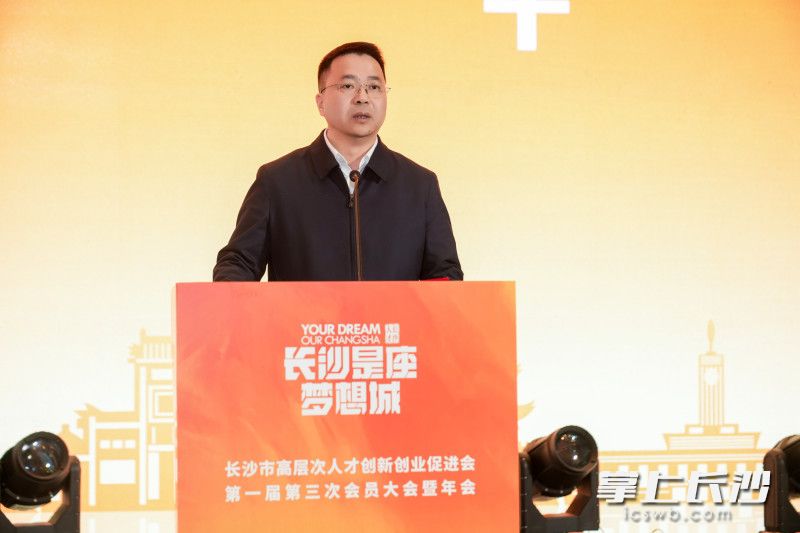
群贤汇智 才遇星城
Chang Sha Wan Bao· 2026-02-06 15:11
Core Viewpoint - The event highlighted the importance of high-level talent in driving innovation and entrepreneurship in Changsha, emphasizing the city's commitment to creating a supportive environment for talent development and integration into the local economy [5][10][15]. Group 1: Talent Development and Policies - Changsha has established a comprehensive support system for talent development, evolving from "22 talent policies" to an upgraded "45 talent policies," including initiatives like the "Double Backpack" action plan for young entrepreneurs [5][7]. - The city has successfully gathered over 200 high-level talents, with 84% being city-level talents, and organized 46 events to facilitate project connections, resulting in 162 effective project matches [5][8]. - Financial support for talent has been enhanced through the introduction of a "Financial Support Policy Product Service Package," with 8 banks and 68 financial institutions forming a collaborative network to meet diverse financing needs [7][8]. Group 2: Innovation and Collaboration - The event featured presentations from seven companies showcasing innovative projects, including advancements in technology such as solid-state batteries and intelligent robotics, reflecting the intellectual contributions of high-level talents in Changsha [12][10]. - Participants discussed the importance of cross-disciplinary collaboration and the need for improved mechanisms to convert research outcomes into practical applications, highlighting the synergy between academia and industry [10][12]. Group 3: Community and Cultural Integration - The event fostered a sense of community among talents through cultural activities, emphasizing Changsha's reputation as a "city of happiness" and a welcoming environment for newcomers [15][16]. - Changsha's strategy focuses on integrating investment in both infrastructure and human resources, aiming to create a nurturing ecosystem for talent retention and growth [15][16].
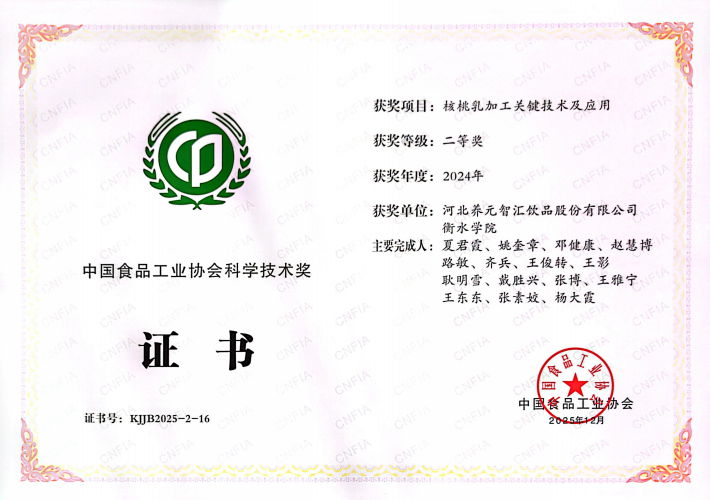
养元饮品再获科学技术奖,创新驱动核桃产业高质量发展
Sou Hu Wang· 2026-02-06 07:42
Core Viewpoint - The recent award of the second prize in the China Food Industry Association Science and Technology Award to Hebei Yangyuan Zhihui Beverage Co., Ltd. (referred to as "Six Walnuts") and Hengshui College for their project on "Key Technologies and Applications of Walnut Milk Processing" highlights the company's commitment to technological innovation and its leading position in the walnut deep processing industry [1][3][8] Group 1: Technological Innovation and Achievements - Six Walnuts has established itself as a pioneer and benchmark in the walnut beverage industry, consistently prioritizing technological innovation as a core driver of its development [3][4] - The company has created seven innovation platforms, including the "Key Laboratory of Walnut Beverage in China's Light Industry" and a postdoctoral research workstation, fostering a deep integration of industry, academia, and research [3][4] - Significant technological breakthroughs include the 2005 introduction of the "5·3·28" process, which improved the yield of walnut kernels, and the 2018 "Whole Walnut CET Cold Brew Process," which enhanced nutrient utilization to 97% while preserving taste [4][6] Group 2: Industry Leadership and Quality Control - The award signifies a milestone in Six Walnuts' "Technology-Driven Enterprise" strategy, as the company expands the scientific boundaries of walnut nutrition and health value [8] - The company has established walnut bases in key production areas and implemented a strict "3·6·36" procurement standard to ensure precise control over raw material quality [6] - Collaborating with research teams, Six Walnuts has addressed various technical challenges, including walnut bitterness and emulsion stability, leading to the development of high-end functional products [6][8]

每一瓶果蔬汁里,都藏着真诚与情谊
Xin Lang Cai Jing· 2026-02-05 18:10
Core Viewpoint - The article highlights the growing demand for healthy and green products in the New Year market, particularly focusing on the popularity of fruit and vegetable juices produced by Shennei Food Company, which emphasizes quality and traditional production methods [1][2]. Group 1: Company Overview - Shennei Food Company, established in 1996, is a well-known domestic brand rooted in the Xinjiang region, committed to producing high-quality fruit and vegetable juices [2]. - The company adheres to strict national green food certification standards, ensuring quality control from the source by monitoring soil and water, and implementing unified management of raw material bases [2]. Group 2: Production and Technology - The production process at Shennei Food Company involves ten rigorous steps, including washing, squeezing, and filtering, utilizing advanced technologies such as ultra-high temperature sterilization and high-pressure cell wall breaking to preserve the natural flavor and nutritional value of the juices [1][3]. - The company has achieved a daily production capacity of nearly 10,000 units, with an order volume reaching 700,000 units ahead of the Spring Festival [1]. Group 3: Market Position and Innovation - Shennei Food Company has become a standard setter in the national agricultural industry for carrot, carrot juice, and processing tomatoes, gaining widespread market recognition and consumer favor through its high-quality products [3]. - The company is focused on innovation, planning to launch new products such as purple carrot juice, sea buckthorn compound juice, and goji berry compound juice by 2025, leveraging Xinjiang's unique agricultural resources [3].