电商转型

Search documents
2025年电商“遇冷”,大批商家退出淘宝,4个原因太扎心
Sou Hu Cai Jing· 2025-09-13 13:18
Core Insights - The e-commerce industry in China is experiencing a downturn, with many merchants exiting traditional platforms like Taobao due to high competition, rising costs, and changing market dynamics [1][10]. Group 1: Reasons for E-commerce Challenges - Rising customer acquisition costs are making it difficult for merchants to attract consumers, with Taobao's average customer acquisition cost increasing by 47% to 78 yuan per new customer in the first half of 2025 [3]. - Profit margins are being severely compressed, with the average gross margin for e-commerce platforms at 23.7%, down 8.3 percentage points from five years ago, leading to many merchants operating at net profit margins below 5% [5]. - Intense market competition is evident, with the number of new registered online stores increasing by 8.7% while the growth of online shopping users is only 1.2%, resulting in a saturated market [7]. Group 2: Impact of Platform Changes - Frequent changes in platform rules and algorithms are increasing operational uncertainty and costs for merchants, with Taobao implementing over 30 significant rule changes in the first half of 2025 [8]. - New e-commerce platforms like Douyin and Pinduoduo are diverting traffic and merchants from traditional platforms, with Douyin's GMV growing by 78.5% compared to Taobao's 5.3% [10]. Group 3: Strategies for Merchants - Focusing on niche markets can help merchants avoid intense competition and reduce customer acquisition costs [10]. - Increasing product value through differentiation and enhanced customer service can mitigate the pressure of price competition [11]. - Diversifying sales channels across multiple platforms can reduce dependency on a single platform and spread risk [13].



6大电商代运营商,超半数净利下滑
21世纪经济报道· 2025-09-05 04:44
Core Viewpoint - The e-commerce agency industry is experiencing a "dual climate" in the first half of 2025, with significant performance divergence among listed companies, highlighting the need for transformation and adaptation to new market dynamics [1][2][12]. Group 1: Company Performance - Ruoyuchen achieved a remarkable revenue growth of 67.55% year-on-year, reaching 1.319 billion yuan, driven by a strong performance in its self-owned brand business [9][13]. - Liren Lizhuang reported a revenue decline of 13.98% to 830 million yuan, with a net loss of approximately 33.76 million yuan, marking a staggering year-on-year decrease of 1315.98% [6][12]. - Baozun E-commerce maintained a revenue increase of 5.63% to around 4.6 billion yuan but faced a net loss of 97.04 million yuan, which widened by 6.23% compared to the previous year [7][12]. - Yiwang Yichuang experienced a revenue drop of 14.3% to about 530 million yuan, while its net profit increased by 5.83% to approximately 71 million yuan [9][10]. - Qingmu Technology's revenue rose by 22.75% to 668 million yuan, but its net profit decreased by 22.96% to about 51.66 million yuan due to increased marketing expenses [10][12]. - Kaichun Co. reported a revenue decline of 21.67% to 162 million yuan, with a net profit decrease of 16.17% to approximately 300,890 yuan [10][12]. Group 2: Industry Trends - The e-commerce user growth rate is slowing, and competition for platform traffic is intensifying, leading to rising customer acquisition costs (CAC) and squeezing profit margins for agencies [2][11]. - The fragmentation of traffic sources, with the rise of platforms like Douyin and Xiaohongshu, has made it essential for agencies to adapt their service models beyond traditional "shelf e-commerce" [2][11]. - The shift towards a "stock era" in e-commerce emphasizes the importance of transformation and innovation for survival and growth, as evidenced by the performance disparities among companies [12][13]. - The overall online retail sales in China reached 74.295 billion yuan in the first half of 2025, growing by 8.5%, indicating that e-commerce still plays a crucial role in the consumer market [14][16]. Group 3: Strategic Insights - Companies that successfully transition to self-owned brand operations and diversify their business models are likely to thrive, as seen with Ruoyuchen's significant growth in self-owned brands [9][13]. - The ability to leverage accumulated data and identify new market segments will be critical for agencies to navigate the evolving landscape and capitalize on emerging opportunities [16]. - The government's push for healthy e-commerce development aligns with the industry's need for innovation, suggesting a favorable environment for companies that can adapt quickly [14][16].






微博“寻夫”尘埃落定,丽人丽妆仍未走出业绩泥潭,上半年净利暴跌1315.98%
Hua Xia Shi Bao· 2025-08-28 13:58
Core Viewpoint - Shanghai Liren Lizhuang Cosmetics Co., Ltd. reported a significant decline in performance for the first half of the year, with revenue dropping and net profit turning into a substantial loss, indicating ongoing challenges in the market [2][3][4]. Financial Performance - The company recorded a revenue of 831 million yuan, a year-on-year decrease of 13.98% [3]. - The net profit attributable to shareholders was a loss of 32.76 million yuan, a staggering year-on-year decline of 1315.98% [3][4]. - Revenue has been on a downward trend since its peak of 4.155 billion yuan in 2021, with a 37.44% decline in 2024 to 1.728 billion yuan [4]. Market Challenges - The decline in performance is attributed to the termination of partnerships with key brands and a general consumer spending slowdown, leading to pressure on traditional e-commerce [3][5]. - The company heavily relies on e-commerce platforms for revenue, with 91.12% of its main business revenue coming from online retail, primarily through Tmall [4]. - Increased competition in the beauty industry and changing consumer preferences have further complicated the market landscape [5]. Management and Strategic Issues - The company faces internal challenges, including a lack of diversification in brand and platform reliance, which has increased operational risks [5]. - The divorce of the controlling shareholder has raised concerns about the stability of the company's ownership structure and its potential impact on strategic decision-making [6][8]. Future Growth Strategies - In response to declining performance, the company has initiated efforts to enter the Douyin market by establishing a dedicated Douyin division to create live-streaming opportunities for partner brands [11]. - The company aims to enhance its core competitiveness by leveraging data analysis and consumer insights to optimize online sales [4].

财说| 存货高达31亿元,假发巨头瑞贝卡如何转型?
Sou Hu Cai Jing· 2025-08-25 23:13
Core Viewpoint - The semi-annual report of Rebecca (600439.SH) shows apparent recovery in net profit, but significant discrepancies between net profit and cash flow raise concerns about underlying risks [1][3]. Financial Performance - In the first half of the year, Rebecca reported a net profit of 9.38 million yuan, a year-on-year increase of 15.31%, while revenue reached 598 million yuan, up 4.20% [3]. - The company's operating cash flow decreased significantly by 26.76%, amounting to 119 million yuan [1]. - The gross profit margin improved to 38.09%, an increase of 5.13 percentage points, attributed to a higher proportion of direct-to-consumer sales [3]. E-commerce Transformation - Rebecca's strategic shift towards e-commerce has been a key driver of growth, with the QVR brand's independent site sales soaring by 320% year-on-year [3]. - During the "618" shopping festival, the GMV of Rebecca's Tmall flagship store exceeded 23.55 million yuan, marking over 120% growth [3]. - Sales expenses surged by 34.15% to 117 million yuan, primarily due to increased advertising and marketing costs associated with online business expansion [4][5]. Inventory Concerns - Rebecca's inventory reached 3.131 billion yuan, accounting for 67% of total assets, which is over six times its revenue for the same period [8]. - The inventory turnover days extended from 1,039 days in 2021 to 1,534 days in the first half of 2025, indicating poor liquidity [9]. - The company has a low inventory impairment provision of only 0.8%, raising concerns about potential write-downs [10]. Governance Issues - Rebecca and its controlling shareholder are under investigation by the China Securities Regulatory Commission for suspected violations of information disclosure regulations [12]. - The company has faced multiple regulatory warnings since 2021, highlighting ongoing internal control failures [12][13]. - The controlling shareholder's stake has decreased to 22.22%, with a significant portion of shares pledged, posing risks of margin calls and control changes [14][16].


仁怀酒企,get√电商新技能
Sou Hu Cai Jing· 2025-08-22 09:07
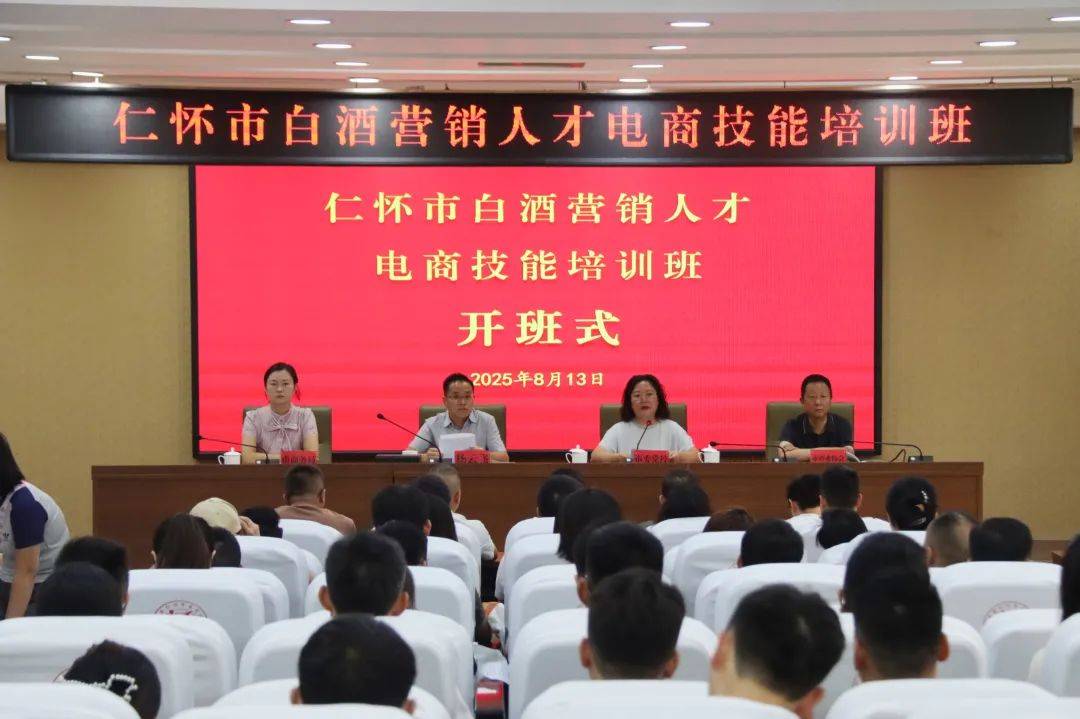
Group 1 - The core viewpoint of the articles emphasizes the importance of digital transformation in the liquor industry, particularly in e-commerce, to address talent shortages and operational bottlenecks [1][3][5] - The training program, organized by the Renhuai Municipal Bureau of Commerce, aims to inject new momentum into the e-commerce development of liquor enterprises through government-led initiatives and expert instruction [1][3] - Renhuai, as a key production area for sauce-flavored liquor, recognizes the necessity of e-commerce transformation as an inevitable choice for industry development [3] Group 2 - The training focuses on practical and effective skills, converting theoretical knowledge into market expansion capabilities, addressing the pain points of insufficient e-commerce talent and outdated operational methods [3] - Course content includes three main dimensions: traffic operation and conversion, anchor incubation and content creation, and compliant operation, covering practical topics such as live streaming trends, private domain accumulation, persona building, short video creation, and legal regulations [3] - The first batch of 100 e-commerce backbone talents will be cultivated through this training, which is a key part of Renhuai's strategy to build a "three-in-one" e-commerce support system of policies, talents, and platforms [5] Group 3 - The initiative aims to activate the digital potential of the industry chain by leveraging the "seed" effect of these trained talents, promoting a shift from production capacity advantages to digital competitiveness [5] - Renhuai City plans to continue supporting the liquor industry through systematic training, policy support, and resource integration, aiming to expand the market reach of "China's Liquor Capital" through digital economy [5]
从电商双雄争霸,看苏宁张近东如何“败北”于京东刘强东?
Sou Hu Cai Jing· 2025-08-20 07:01
Core Insights - The article discusses the contrasting trajectories of Suning and JD.com, highlighting how Suning has struggled while JD.com has thrived in the e-commerce landscape [3][4][26]. Group 1: Company Background - Suning and JD.com were once fierce competitors, with Suning being a traditional retail giant and JD.com emerging as a leading e-commerce platform [3][4]. - Suning's financial troubles are evident, with three core companies entering bankruptcy restructuring in February 2025, accumulating a total debt of 130 billion yuan, while Suning's asset-liability ratio stands at 90.63% [4][26]. - In contrast, JD.com reported a revenue growth of 22.4% year-on-year in Q2 2025, reaching 356.7 billion yuan, and a total revenue of 657.8 billion yuan in the first half of 2025, up 19.3% from the same period in 2024 [4][26]. Group 2: Historical Development - Both Zhang Jindong (Suning) and Liu Qiangdong (JD.com) started their businesses with limited capital, but their paths diverged significantly at key moments [5][6]. - Suning began as an air conditioning retailer in 1990, while JD.com started as a multimedia store in 1998, focusing on selling authentic products [5][6]. - The SARS outbreak in 2003 prompted JD.com to pivot to online sales, while Suning only launched its e-commerce platform in 2010, missing the early opportunities in the digital marketplace [6]. Group 3: Competitive Strategies - JD.com invested heavily in building its logistics infrastructure, recognizing it as a critical factor for success, which included launching same-day delivery services in 2010 [7][9][10]. - JD.com adopted an internet-based business model that leveraged big data and cloud computing for inventory management and customer insights, enhancing its competitive edge [11][12]. - In contrast, Suning's extensive offline store network became a liability, leading to high operational costs and inefficiencies in inventory management [13][14]. Group 4: Market Position and Performance - JD.com has captured a significant market share in China's B2C e-commerce, reaching 21.1% in 2024, while Suning's market share dwindled to 4.1% [16]. - The price war initiated in 2012 severely impacted Suning, forcing it to offer price subsidies that further strained its financial health [21][22]. Group 5: Leadership and Management Styles - Liu Qiangdong's hands-on leadership style and willingness to take risks have been pivotal in JD.com's growth, fostering a culture of innovation and responsiveness [23]. - Zhang Jindong's cautious approach has led to missed opportunities for Suning, as the company struggled to adapt to the rapidly changing e-commerce landscape [24][25]. Group 6: Lessons Learned - The competition between Suning and JD.com illustrates the importance of strategic foresight, execution capability, and maintaining focus on core business areas for sustained success in the market [26][27].



对话电商商家,探究快递反内卷下的新常态
2025-08-18 01:00
Summary of Conference Call Records Company and Industry Overview - The company operates primarily in the cosmetics sector within the e-commerce industry, focusing on platforms such as Douyin (over 40% market share), Pinduoduo (nearly 20%), Tmall, and JD.com [1][3][4] Key Points and Arguments - **Impact of Anti-Competition Policies**: In the first half of 2025, the implementation of anti-competition policies led to a price increase of 0.5 yuan in express delivery costs, raising the company's shipping cost to nearly 2 yuan per order, significantly affecting the low-ticket cosmetics business [1][2][3] - **Strategic Focus**: The company plans to increase investment in Tmall and develop high-priced products to enhance overall profitability, while continuing to benefit from lower shipping costs on Douyin and Pinduoduo [1][3][4] - **E-commerce Tax Regulations**: New e-commerce tax regulations limit the cosmetics industry to a 30% tax deduction, compared to 15% for other sectors. The company has optimized its advertising costs on Pinduoduo to 40% and improved product quality to reduce return and after-sales costs [4][22] - **Distribution System**: The company's distribution system accounts for approximately 30% of total volume, while self-operated business constitutes 70%. The self-operated data is deemed more accurate for reflecting overall volume due to the impact of low-priced sales by distributors [5][6] - **Product Cost and Pricing**: The production cost of cosmetics is around 2-3 yuan, with a selling price of 19.9 yuan, resulting in a profit of about 3 yuan per unit. The average order value is below 30 yuan, with a gross margin of approximately 23% [6][22] Additional Important Insights - **Shipping Partnerships**: The company collaborates with YTO Express and Shentong Express for logistics, utilizing cloud warehouses in Guangzhou to enhance shipping speed and cost efficiency [2][7] - **Market Competition**: The e-commerce landscape in 2025 is more complex due to rising costs, tax pressures, and increased competition, leading to a decline in performance compared to previous years [27] - **Return Rates**: The return rate for low-ticket items is around 10%, while cosmetics can reach 20-30%. Different platforms exhibit varying return rates, with Pinduoduo and Douyin having more flexible return policies [28][30] - **Future Trends**: The company anticipates that the return phenomenon will continue, influenced by advertising costs and product quality, with high return rates persisting in categories like cosmetics and apparel [31] This summary encapsulates the essential aspects of the conference call, highlighting the company's strategic responses to market challenges and operational dynamics within the e-commerce sector.
被年轻人遗忘的国民零食,为何在拼多多突然翻红?
Xin Jing Bao· 2025-08-13 02:44
Group 1 - The article discusses the evolution of traditional snack brands in Fujian, highlighting their historical significance and initial success in the market [1][4] - It notes that these brands faced challenges due to their reliance on traditional distribution channels and missed early e-commerce opportunities, leading to stagnation [2][5] - The emergence of new e-commerce platforms like Pinduoduo provided these brands with a chance to revitalize their sales and connect directly with consumers [3][6] Group 2 - Since 2020, brands like Jin Guan and You Chen have successfully leveraged Pinduoduo's platform to adapt their products and marketing strategies, resulting in significant sales growth [8][9] - The article emphasizes the importance of cost-effective strategies and the ability to respond to consumer demands, which have been facilitated by Pinduoduo's supportive policies [10][12] - Brands have reported impressive returns on investment (ROI) on Pinduoduo, with some achieving ratios as high as 1:10, compared to traditional e-commerce channels [9]

疯狂关店的中国“女装一姐”,被优越感击垮
3 6 Ke· 2025-08-10 08:55
Core Viewpoint - The article discusses the decline of the fashion brand Dazzle, once a leader in women's clothing, highlighting its significant revenue and profit drops, store closures, and challenges in adapting to changing consumer preferences and market dynamics [6][9][41]. Group 1: Company Performance - Dazzle reported a 16.2% drop in revenue and a 38.5% decline in net profit for the previous year, with a further 10.9% revenue decrease and a 24.98% profit drop in Q1 2025 [6][9]. - The company closed 147 stores in the last year, with plans to close an additional 99 stores in the first half of 2025, reducing total store count below 900 [26][28]. Group 2: Product Issues - Dazzle's products, once celebrated for their uniqueness, are now criticized for being difficult to wear and uncomfortable, with complaints about design complexity and high maintenance requirements [16][19]. - The brand's pricing strategy, with products typically priced between 1,000 to 3,000 yuan, is seen as misaligned with current consumer expectations, especially during economic downturns [33][36]. Group 3: Market Positioning - Dazzle's marketing strategy, which relied heavily on celebrity endorsements and a high-end image, has become a liability as consumer preferences shift towards value and practicality [29][41]. - The brand's failure to effectively transition to online sales and adapt to the preferences of younger consumers has resulted in a significant loss of market share [22][25]. Group 4: Competitive Landscape - Competitors like Moco, Cos, and Edition have successfully integrated online and offline channels, while Dazzle remains heavily reliant on physical stores, leading to declining store efficiency [26][24]. - The brand's inability to innovate and respond to market changes has left it vulnerable, as consumers increasingly prioritize value over brand prestige [41][38].


宝尊电商2025年第一季度亏损扩大 CEO仇文彬能扭亏吗?
Sou Hu Cai Jing· 2025-07-22 03:01
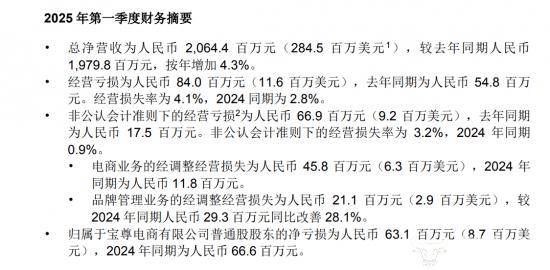
Core Viewpoint - Baosheng E-commerce reported a total revenue of 2.064 billion RMB in Q1 2025, marking a 4.3% year-on-year increase, but the company remains in a loss position with a net loss of 63.1 million RMB, although this loss has narrowed compared to the previous year [1][4]. Revenue Structure - The revenue structure of Baosheng E-commerce is changing, with traditional e-commerce revenue reaching 1.709 billion RMB but experiencing a significant increase in operating losses from 11.8 million RMB in the same period last year to 45.8 million RMB [3][4]. - Brand management revenue grew by 23% to 387.4 million RMB, with operating losses narrowing by 28% [3][4]. Financial Performance - The adjusted operating loss for the e-commerce business was 45.8 million RMB, while the brand management segment reported an adjusted operating loss of 21.1 million RMB [4]. - The company has faced continuous losses since 2021, despite achieving a net profit of 426 million RMB in 2020 [4]. Strategic Initiatives - To facilitate its transformation, Baosheng E-commerce's CEO has implemented two key measures: omnichannel collaboration and technology empowerment, with significant investments in AI technology to enhance operational efficiency [5]. - The company has engaged in multi-channel cooperation, with emerging channels like JD.com and Douyin showing double-digit growth [5]. Market Sentiment - Capital markets appear to lack patience for the company's transformation efforts, with several institutional shareholders, including Alibaba, reducing their holdings since 2024, leading to a 20% decline in the company's stock price from its peak in 2024 [5]. - Analysts express concerns regarding the ability of GAP China to meet its turnaround commitments and whether the decline in traditional e-commerce business can be halted [5].