
超级品牌

Search documents
消费股的寒冬!A股2025年冷门板块一览
Ge Long Hui· 2025-12-31 08:27
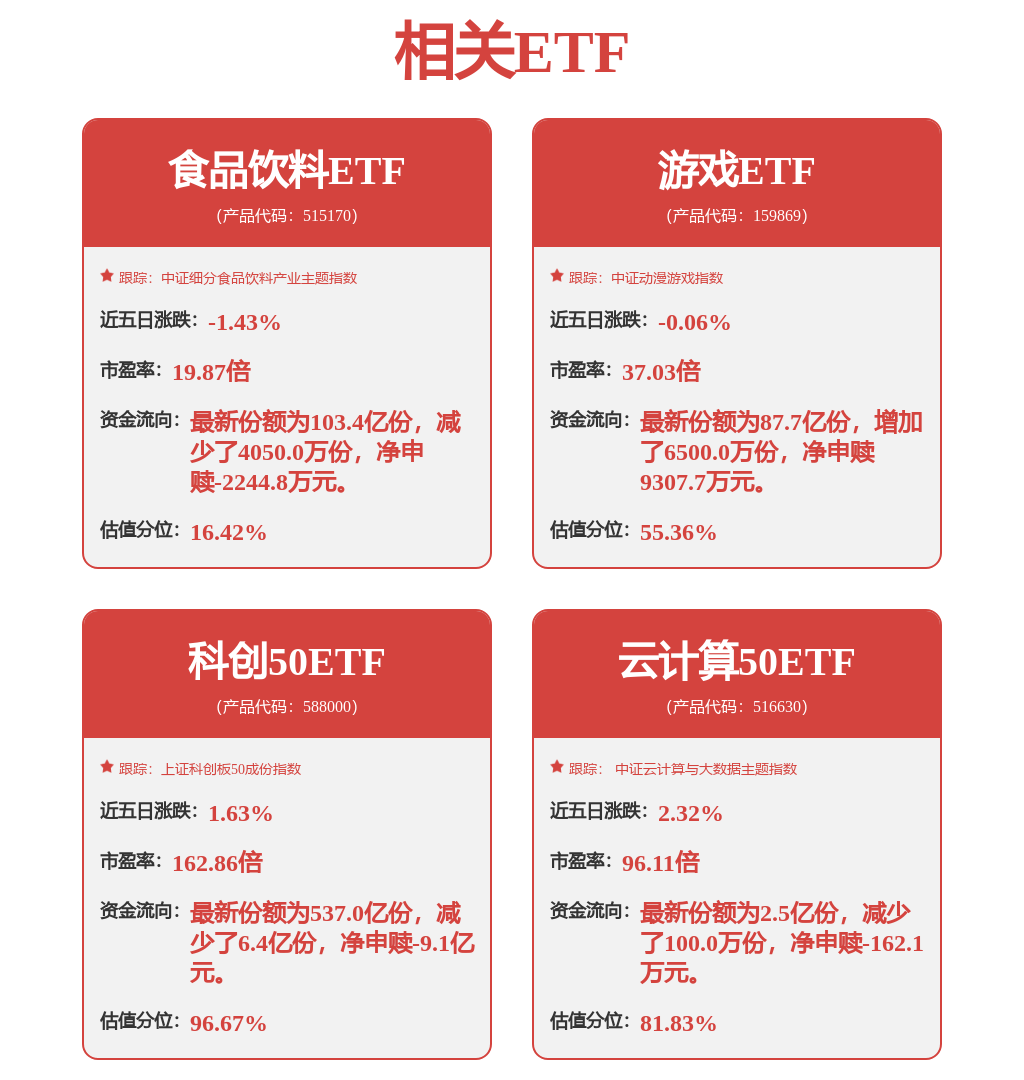
Group 1 - The core viewpoint of the articles highlights the significant decline in various sectors, particularly in consumer stocks such as liquor, which faced a drop due to weak demand and performance issues, alongside a shift of market funds towards high-growth technology sectors like AI and robotics [1] - The top ten sectors with the largest annual declines include: new stocks down 12.28%, MLOps down 0.69%, rental and sales rights down 9.99%, liquor down 8.94%, in vitro diagnostics down 8.88%, super brands down 7.48%, REITs down 7.34%, under-screen photography down 4.19%, seasoning down 3.22%, and electronic paper down 3.16% [1] - Liquor companies reported a decline in both revenue and profit in their third-quarter reports, with high inventory levels and price adjustments contributing to the downturn, particularly affecting regional and mid-to-high-end liquor brands [1] Group 2 - The Food and Beverage ETF (product code: 515170) has seen a recent decline of 1.43% over the past five days, with a price-to-earnings ratio of 19.87 times and a net redemption of 22.44 million yuan [2] - The Gaming ETF (product code: 159869) experienced a slight decrease of 0.06% in the last five days, with a higher price-to-earnings ratio of 37.03 times and a net subscription of 93.08 million yuan [2] - The Cloud Computing 50 ETF (product code: 516630) reported a 2.32% increase over the past five days, with a price-to-earnings ratio of 96.11 times and a net redemption of 1.62 million yuan [3]

市场三大指数高开高走,创业板指涨超2%
Dongguan Securities· 2025-12-22 23:30
Market Overview - The three major indices in the A-share market opened higher and closed positively, with the ChiNext Index rising over 2% [1][2] - The Shanghai Composite Index closed at 3917.36, up 0.69%, while the Shenzhen Component Index closed at 13332.73, up 1.47% [1] - The trading volume in the Shanghai and Shenzhen markets reached 1.86 trillion, an increase of 136 billion compared to the previous trading day [4] Sector Performance - The top-performing sectors included Communication, which rose by 4.28%, and Comprehensive, which increased by 2.63% [1] - Conversely, sectors such as Media and Banking experienced declines, with drops of 0.61% and 0.52% respectively [1] - Notable concept indices that performed well included Hainan Free Trade Zone and Commercial Aerospace, while sectors like Hair Medical and Family Doctors lagged behind [2] Policy Impact - The People's Bank of China announced a one-time credit repair policy that will remove certain overdue credit information from the financial credit information database for eligible individuals [3] - The Loan Market Quote Rate (LPR) remained unchanged for the seventh consecutive month, with the one-year LPR at 3.00% and the five-year LPR at 3.50% [3] Future Outlook - The market is expected to maintain a loose liquidity environment until the first quarter of the following year, influenced by the Federal Reserve's interest rate decisions and domestic economic policies [4] - The report suggests that the recent market pullback provides a good opportunity for investors to position themselves ahead of the upcoming spring market [4] - Recommended sectors for investment include dividends, TMT (Technology, Media, and Telecommunications), and consumer sectors [4]
超级品牌概念下跌0.48%,7股主力资金净流出超亿元
Zheng Quan Shi Bao Wang· 2025-12-22 08:41
Group 1 - The Super Brand concept index declined by 0.48%, ranking among the top declines in concept sectors, with notable declines in stocks such as Aucma, Zhonggong Education, and TCL Technology [1] - Among the Super Brand concept stocks, 13 stocks saw price increases, with Anfu Technology, SF Holding, and Dong'e Ejiao leading the gains at 2.40%, 1.22%, and 1.11% respectively [1] - The Super Brand concept experienced a net outflow of 1.662 billion yuan from main funds, with 32 stocks facing net outflows, and 7 stocks seeing outflows exceeding 100 million yuan [2] Group 2 - The top net outflow stocks included China Mobile, TCL Technology, and Kweichow Moutai, with net outflows of 359.45 million yuan, 219.80 million yuan, and 155.96 million yuan respectively [2] - Conversely, the stocks with the highest net inflows included SF Holding, Dong'e Ejiao, and Yunnan Baiyao, with net inflows of 89.39 million yuan, 34.34 million yuan, and 14.78 million yuan respectively [2] - The trading volume for China Mobile was 2.28%, while TCL Technology had a turnover rate of 2.06% [3]






美丽田园医疗健康(02373.HK)点评:内生+外延双轮驱动 聚焦三大超级战略
Ge Long Hui· 2025-12-19 21:48
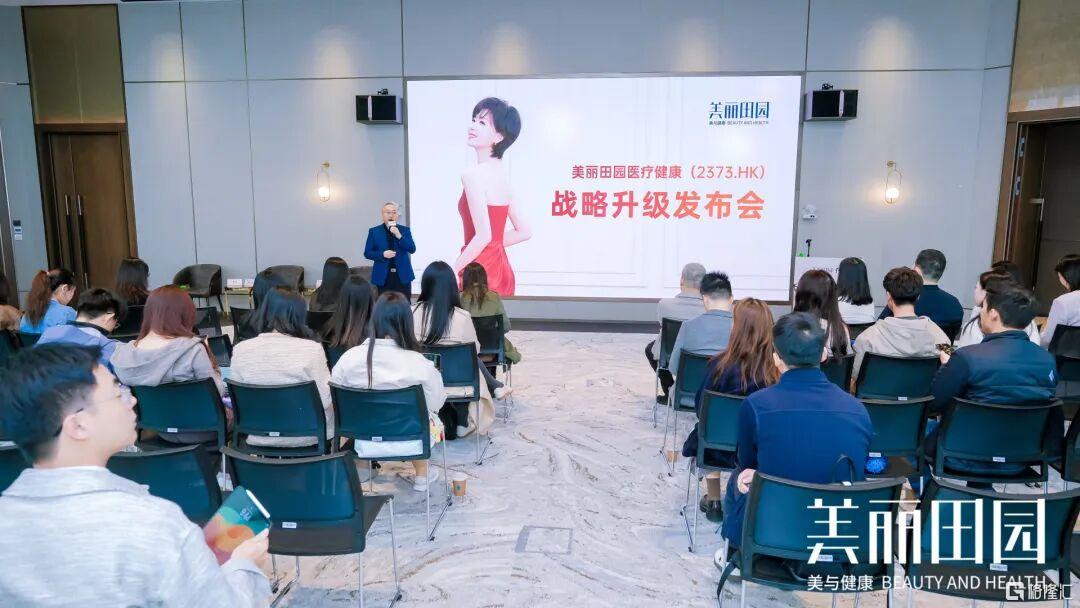
Group 1 - The company announced the acquisition of 100% equity in Siyuanli for 1.25 billion RMB (approximately 1.369 billion HKD), aiming to further industry consolidation [1] - Siyuanli, established in 1996, is the third-largest beauty service brand in China, with 182 stores as of June 2024, including 163 beauty stores and 19 medical beauty stores across 48 cities [1] - Post-acquisition, the company's total store count will exceed 700, enhancing market share and accelerating the "Double Beauty + Double Healthcare" strategic layout [1] Group 2 - The company increased its stake in Nairui to 90% after acquiring 70% equity for a total consideration of 350 million RMB, with Nairui being the second-largest traditional beauty service brand in China [2] - In July 2024, the company announced the inclusion of 75 remaining Nairui stores through franchising, adding a total of 150 new stores to its network [2] - Nairui's revenue reached 277 million RMB in the first half of 2025, with adjusted net profit margin improving from 6.5% before acquisition to 10.4% post-acquisition [2] Group 3 - The company held a strategic upgrade conference on November 19, announcing three major strategies: Super Brand, Super Chain, and Super Digitalization [3] - The Super Brand strategy focuses on integrating the top three brands in the industry, including Meili Tianyuan, Nairui, and Siyuanli, to strengthen brand advantages [3] - The company has invested over 200 million RMB in digitalization, achieving double-digit growth in new member acquisition and maintaining a member retention rate of 80% in the following year [3] Group 4 - The company maintains a buy rating, adjusting the 2025 adjusted earnings per share forecast from 1.34 RMB to 1.59 RMB, with new forecasts for 2026 and 2027 set at 2.05 RMB and 2.29 RMB, respectively [3] - The target price has been raised from 19.84 HKD to 37.13 HKD, indicating a potential upside of 41% [3]
美丽田园医疗健康(02373):内生+外延双轮驱动,聚焦三大超级战略
Shenwan Hongyuan Securities· 2025-12-19 07:50
Investment Rating - The report maintains a "Buy" rating for the company, indicating a strong expectation of performance relative to the market [4]. Core Insights - The company is focusing on a dual-driven strategy of organic growth and acquisitions, with a particular emphasis on three major strategic areas: Super Brand, Super Chain, and Super Digitalization [6]. - The acquisition of 100% of the shares of Siyanli for 1.25 billion RMB (approximately 1.369 billion HKD) is expected to enhance market share and accelerate the company's strategic layout [4]. - The company has increased its stake in Nairui to 90%, with significant improvements in operational efficiency post-acquisition, reflected in a rise in adjusted net profit margin from 6.5% to 10.4% [5]. Financial Data and Earnings Forecast - The company forecasts revenue growth from 2,145 million RMB in 2023 to 4,541 million RMB in 2027, with a compound annual growth rate (CAGR) of approximately 31.16% [8]. - Adjusted net profit is projected to increase from 241 million RMB in 2023 to 540 million RMB in 2027, with a notable growth rate of 53.18% in 2023 [8]. - The adjusted earnings per share (EPS) is expected to rise from 1.05 RMB in 2023 to 2.29 RMB in 2027, reflecting a strong upward trend in profitability [8].
海尔智家涨1.06%,成交额10.05亿元,近3日主力净流入3298.71万
Xin Lang Cai Jing· 2025-12-02 07:11
Core Viewpoint - Haier Smart Home has shown a positive market performance with a 1.06% increase in stock price, reaching a market capitalization of 260.4 billion yuan [1] Company Overview - Haier Group, founded in 1984, has expanded from producing refrigerators to a wide range of sectors including home appliances, IT, logistics, finance, real estate, and biopharmaceuticals, becoming a global leader in providing solutions for a better life [2] - The company holds a 10.2% share of the global retail volume in 2014, maintaining its position as the world's largest home appliance brand for six consecutive years [2] Shareholder Structure - Among the top ten circulating shareholders, Central Huijin Asset Management and China Securities Finance Corporation are included [3] Technology and Product Focus - The company utilizes Strauss's MAZE technology, leading in the water purifier market [4] - Haier Wireless, a subsidiary of Haier Group, focuses on wireless charging and has participated in setting national industry standards for electromagnetic compatibility and radiation, also investing in Intel's wireless charging technology team [4] - The main business involves the research, production, and sales of home appliances, including refrigerators, kitchen appliances, air conditioners, washing machines, and smart home solutions [4] Financial Performance - For the period from January to September 2025, Haier Smart Home achieved a revenue of 234.05 billion yuan, a year-on-year increase of 15.31%, and a net profit attributable to shareholders of 17.37 billion yuan, up 14.64% year-on-year [8] Dividend Distribution - Since its A-share listing, Haier Smart Home has distributed a total of 48.66 billion yuan in dividends, with 24.27 billion yuan distributed over the past three years [9] Shareholder Changes - As of September 30, 2025, the number of shareholders decreased by 8.15% to 190,600, with an average of 0 circulating shares per person [8] - Hong Kong Central Clearing Limited is the fifth-largest circulating shareholder with 361 million shares, a decrease of 89.04 million shares from the previous period [9]

美丽田园医疗健康(02373):战略升级:锚定“20城超1亿”,全面贯彻“三大超级”战略
Haitong Securities International· 2025-11-21 05:49
Investment Rating - The report assigns an "Outperform" rating to Beauty Farm Medical and Health Industry, expecting a relative return exceeding 10% over the next 12-18 months [24]. Core Insights - Beauty Farm has articulated a clear strategy centered around the "Three Super" initiatives: Super Brand, Super Chain, and Super Digitalization, aiming to build core competitive advantages in the beauty services industry [2][9]. - The company targets to establish operational entities with revenues exceeding RMB 100 million in 20 core cities, which contribute approximately 40% of the industry revenue, with a solid foundation already in place as 8 cities have achieved this target [3][10]. - Recent operational performance shows strong momentum, with same-store sales growth of 6-8% and collection growth accelerating to low double digits, indicating robust endogenous growth [4][11]. Summary by Sections Strategic Overview - The "Three Super" strategy focuses on enhancing brand value, expanding chain operations, and leveraging digitalization to deepen customer relationships and operational efficiency [2][9]. - The company has integrated three premium brands to secure a strong position in the high-end market and aims to enhance customer experience through personalized services [2][9]. Growth Strategy - The goal is to increase the number of cities generating over RMB 100 million in revenue from 8 to 20 in the near term, with a focus on developing Shanghai and Beijing into "super cities" with revenues exceeding RMB 1 billion each [3][10]. - The growth will be driven by both organic growth and strategic acquisitions, leveraging successful past experiences in markets like Chongqing and Xi'an [3][10]. Financial Performance - The company has demonstrated exceptional profit enhancement capabilities, with significant improvements in revenue per store and profit margins post-acquisition [4][11]. - Strong cash flow generation is projected, with estimated operating cash flow of approximately RMB 1 billion for FY25, supporting future shareholder returns and strategic acquisitions [4][11]. Industry Context - The beauty services industry in China is highly fragmented, with nearly 90% of operations being single-store, presenting significant opportunities for consolidation driven by branding, chainification, and digitalization [5][12]. - The company anticipates a decrease in the total number of industry stores, while the market share and profitability of leading players with strong branding and digital capabilities will increase significantly [5][12]. M&A Strategy - Proven M&A integration capabilities are a key engine for executing the Super Chain strategy, with over 30 successful transactions completed historically [6][13]. - The recent integration of Naturade has validated the effectiveness of the company's platform-based empowerment model, with expectations of similar success from the newly acquired DECLÉOR [6][13].
美丽田园发布三大超级战略 以超级品牌、超级连锁、超级数字化引领高端美业新格局
Zheng Quan Ri Bao Wang· 2025-11-21 04:37
Core Viewpoint - Meili Tianyuan Medical Health Industry Co., Ltd. is positioning itself as a key player in the high-end beauty market, observing consumer trends through its extensive network of stores in major cities [1] Group 1: Super Brand Strategy - The beauty service industry is highly fragmented, with many regional and small brands lacking influence and consumer trust [2] - Differentiation through branding is essential for success in a mature and competitive market [3] - Meili Tianyuan's acquisition of 100% of Siyuanli for 1.25 billion yuan positions it among the top three beauty brands in China, alongside its existing brand Nairui [3] - National brand stores have a 2.1 times higher consumer recharge willingness compared to small brands, with an average recharge amount 60% higher [3] - Enhancing brand awareness can increase customer spending by 20% to 50% for each level of recognition [3] - The company aims to redefine customer experience by focusing on sensory engagement and establishing industry standards [4] Group 2: Super Chain Strategy - The beauty industry is characterized by a high degree of market fragmentation, with 89% of beauty institutions being single stores [5] - Meili Tianyuan's business model focuses on "Double Beauty + Double Health," aiming to create sustainable growth through both internal and external strategies [5] - The company currently has nine cities generating over 100 million yuan in revenue and plans to expand this to 20 core cities [5] - Supply chain capabilities are crucial for chain enterprises, and Meili Tianyuan will enhance partnerships with quality suppliers to offer high-quality products at better prices [5] Group 3: Super Digitalization Strategy - Many beauty service providers still rely on manual record-keeping, which limits data integration and business empowerment [7] - Digitalization is viewed as a critical tool for future decision-making, shifting from traditional customer acquisition to precise online targeting [7] - The company has invested over 200 million yuan in the past five years to build a 90-member IT team, focusing on digital integration across all operations [7] - Meili Tianyuan categorizes over 200 customer attributes and launches more than 2,000 targeted marketing campaigns annually, achieving double-digit growth in new memberships [8] - The company aims to leverage medical beauty resources and digital supply chain capabilities to create a transformative effect in the industry [8]
美丽田园连松泳:三大超级战略重塑美容行业价值新空间
Ge Long Hui· 2025-11-21 01:29
Core Insights - The company, Meili Tianyuan, announced three major strategic upgrades: Super Brand, Super Chain, and Super Digitalization, aiming to redefine high-end beauty services and reshape the industry's value space [1][18]. Super Brand - The beauty service industry is highly fragmented, with many regional and small brands lacking influence, leading to high consumer trust costs and low loyalty [4]. - Brand differentiation is crucial for standing out in a saturated market, as evidenced by data showing that consumers are 2.1 times more willing to recharge at national brands compared to smaller ones, with average recharge amounts being 60% higher [4]. - Meili Tianyuan's Super Brand strategy leverages its position as the umbrella for the top three brands in China's beauty industry, aiming to enhance customer experience and brand recognition [4][5]. Super Chain - The beauty industry is characterized by a high degree of fragmentation, with 89% of beauty institutions being single stores [8]. - The low entry barriers and lack of economies of scale hinder the growth of larger chains [8]. - Meili Tianyuan's Super Chain strategy focuses on creating 20 "1 billion revenue Clubs" in key cities, building on its existing nine cities with over 1 billion in revenue [8][9]. Super Digitalization - Many beauty service providers still rely on manual processes, with digitalization seen as essential for future decision-making and customer service enhancement [12]. - Meili Tianyuan has invested over 200 million in digitalization over the past five years, establishing a 90-member IT team to integrate digital solutions across its operations [12][13]. - The company has developed over 200 customer attribute classifications and maintains a member retention rate of 80%, with customer acquisition costs remaining below 2% [12][13]. Acquisition of Siyuanli - The acquisition of Siyuanli is viewed as a strategic move to consolidate the top three brands in the high-end beauty sector under Meili Tianyuan, following the successful integration of the second-largest brand, Nairui [15][16]. - The structural similarities and customer overlap between Meili Tianyuan and Siyuanli provide a strong foundation for synergy and enhanced resource utilization [16]. Industry Outlook - The beauty and health sector is positioned for significant growth, driven by consumer demand for self-care and wellness, with Meili Tianyuan leading the charge with its strategic initiatives [18].
海尔智家涨1.04%,成交额10.65亿元,近3日主力净流入-1776.58万
Xin Lang Cai Jing· 2025-10-21 09:29
Core Viewpoint - Haier Smart Home has shown a positive market performance with a 1.04% increase in stock price, reaching a market capitalization of 237.95 billion yuan [1] Company Overview - Haier Group, founded in 1984, has expanded from producing refrigerators to a wide range of sectors including home appliances, IT, logistics, finance, real estate, and biopharmaceuticals, becoming a global leader in providing solutions for a better life [2] - The company holds a 10.2% share of the global retail volume in 2014, maintaining its position as the world's leading large home appliance brand for six consecutive years [2] Shareholder Information - Among the top ten circulating shareholders, Central Huijin Asset Management Co., Ltd. and China Securities Finance Corporation Limited are included [3] Technology and Product Focus - The company utilizes Strauss's MAZE technology, leading in the water purifier market [4] - Haier Wireless, a subsidiary of Haier Group, focuses on wireless charging and has participated in setting national industry standards for electromagnetic compatibility and radiation, also investing in Intel's wireless charging technology team [4] - The main business involves the research, production, and sales of home appliances, including refrigerators, kitchen appliances, air conditioners, washing machines, water appliances, and other smart home solutions [4] Financial Performance - For the first half of 2025, Haier Smart Home achieved a revenue of 156.49 billion yuan, a year-on-year increase of 15.39%, and a net profit attributable to shareholders of 12.03 billion yuan, up 15.48% year-on-year [8] Dividend Distribution - Since its A-share listing, Haier Smart Home has distributed a total of 46.155 billion yuan in dividends, with 21.766 billion yuan distributed over the past three years [9] Shareholder Structure - As of June 30, 2025, the number of shareholders reached 207,500, an increase of 9.97% from the previous period [8] - Hong Kong Central Clearing Limited is the fifth-largest circulating shareholder, holding 450 million shares, a decrease of 131 million shares from the previous period [9]