AI造假

Search documents
AI图像水印失守!开源工具5分钟内抹除所有水印
量子位· 2025-08-14 04:08
Core Viewpoint - A new watermark removal technology called UnMarker can effectively remove almost all AI image watermarks within 5 minutes, challenging the reliability of existing watermark technologies [1][2][6]. Group 1: Watermark Technology Overview - AI image watermarks differ from visible watermarks; they are embedded in the image's spectral features as invisible watermarks [8]. - Current watermark technologies primarily modify the spectral magnitude to embed invisible watermarks, which are robust against common image manipulations [10][13]. - UnMarker's approach targets the spectral information directly, disrupting the watermark without needing to locate its specific encoding [22][24]. Group 2: Performance and Capabilities - UnMarker can remove between 57% to 100% of detectable watermarks, with complete removal of HiDDeN and Yu2 watermarks, and 79% removal from Google SynthID [26][27]. - The technology also performs well against newer watermark techniques like StegaStamp and Tree-Ring Watermarks, achieving around 60% removal [28]. - While effective, UnMarker may cause slight alterations to the image during the watermark removal process [29]. Group 3: Accessibility and Deployment - UnMarker is available as open-source on GitHub, allowing users to deploy it locally with consumer-grade graphics cards [5][31]. - The technology was initially tested on high-end GPUs but can be adjusted for use on more accessible consumer hardware [30][31]. Group 4: Industry Implications - The emergence of UnMarker raises concerns about the effectiveness of watermarking as a solution to combat AI-generated image authenticity [6][36]. - As AI image generation tools increasingly implement watermarking, the development of robust removal technologies like UnMarker could undermine these efforts [35][36].


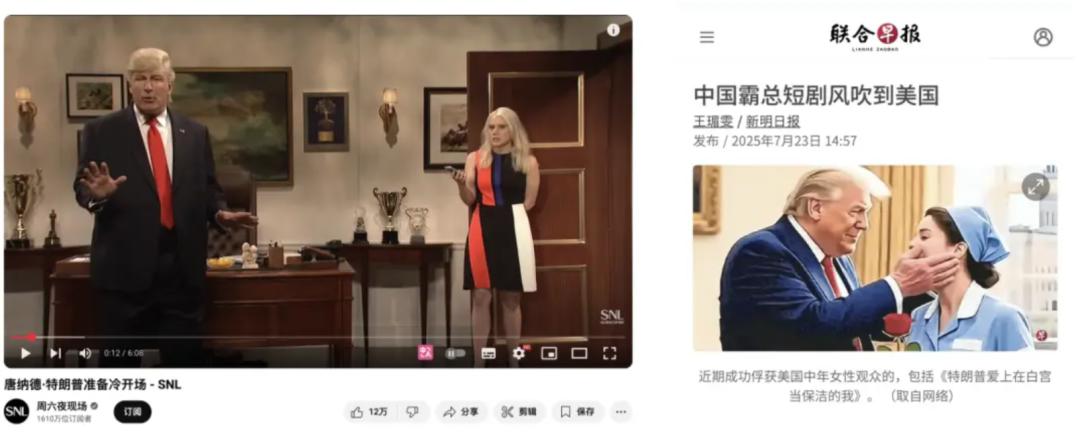
“特朗普爱上保洁”和“1.5亿美金短剧神话”:社会信任资本正在被谁透支?
3 6 Ke· 2025-08-08 02:20
Core Viewpoint - The article discusses the emergence of a fabricated short drama titled "Trump Falls in Love with the White House Cleaner," which falsely claimed to have generated $150 million in revenue, highlighting the failure of media verification processes and the rise of AI-generated misinformation [1][2][4]. Group 1: Media and Misinformation - The short drama was initially reported by a self-media account, which misled readers with a sensational title that implied the existence of the drama without confirming it [4][5]. - Major platforms like ReelShort, YouTube, and Netflix showed no evidence of the drama's existence, revealing a significant gap in media fact-checking [2][4]. - The spread of this false narrative reflects a broader issue of media's responsibility in verifying facts, as some outlets failed to uphold their duty, leading to a loss of public trust [8][19]. Group 2: AI and Content Creation - The article emphasizes the role of AI in generating fake content, which lowers the cost of misinformation production while increasing its appeal [13][20]. - The ease of creating convincing fake narratives using AI raises concerns about the integrity of information in the digital age [20]. - The phenomenon of AI-generated content highlights the need for a robust mechanism to ensure the value of truthful information exceeds that of falsehoods [20]. Group 3: Economic Implications - The article outlines how the false narrative attracted significant attention, leading to a surge in traffic for fake news websites, which often outperformed reputable media in terms of engagement [14][19]. - Self-media operators benefit financially from sensational headlines and misleading content through advertising revenue and paid subscriptions [15][19]. - The article warns of a "grey industry" that profits from misinformation, where the allure of quick financial gain overshadows ethical considerations [15][19]. Group 4: Cultural and Political Context - The absurdity of the narrative raises questions about cultural perceptions and the potential manipulation of political figures for entertainment purposes [18][19]. - The blending of entertainment with political discourse can dilute the seriousness of political issues, leading to a trivialization of important topics [18][19]. - The article suggests that the propagation of such narratives may reflect deeper anxieties about cultural differences and the portrayal of political figures [18][19].
“仅退款”风波再起, 用AI伪造证据竟成作弊利器
Qi Lu Wan Bao· 2025-08-05 02:16
Core Viewpoint - The rise of AI technology has led to an increase in fraudulent refund claims in the e-commerce sector, with some consumers exploiting the "refund without return" policy to gain products without payment [1][2][3]. Group 1: E-commerce Refund Mechanism - The "refund without return" policy was initially designed to protect consumers in specific scenarios, but it has been misused by some buyers, leading to significant losses for merchants [2][3]. - Major e-commerce platforms have recently adjusted their "refund without return" policies, allowing merchants to handle refund requests autonomously [2][5]. - A report indicated that 50.36% of complaints from merchants on e-commerce platforms were related to "refund without return" issues, highlighting the prevalence of this problem [2]. Group 2: AI Technology and Fraud - Some consumers are using AI tools to create fake images of products to claim refunds, which has resulted in losses of 5% to 8% of revenue for affected merchants [1][2]. - Experts suggest that the misuse of AI for fraudulent activities could hinder public acceptance of new technologies and disrupt market rules [3][5]. - Recommendations include implementing AI image recognition technology and a tiered evidence submission system for refund claims to mitigate fraud [3][5]. Group 3: Legal Implications - The use of AI-generated fake content for refund claims can lead to legal consequences, including potential fraud charges if the amount involved is significant [4][5]. - The Civil Code allows merchants to demand returns or compensation for breaches of the "refund without return" agreement [4]. - New regulations regarding the identification of AI-generated content are set to take effect in September 2025, aiming to curb misuse [4][5]. Group 4: Recommendations for Improvement - A multi-faceted approach involving rule enhancement, technological countermeasures, and legal deterrents is necessary to address the issues surrounding "refund without return" fraud [5]. - E-commerce platforms are urged to establish a rapid response mechanism for AI fraud cases and to collaborate on data sharing to combat fraudulent activities effectively [5].
DeepSeek又惹祸了?画面不敢想
Xin Lang Cai Jing· 2025-07-06 04:24
Core Viewpoint - The article discusses the increasing prevalence of misinformation generated by AI, highlighting the challenges posed by AI hallucinations and the ease of feeding false information into AI systems [3][10][21]. Group 1: AI Misinformation - AI hallucination issues lead to the generation of fabricated facts that cater to user preferences, which can be exploited to create bizarre rumors [3][10]. - Recent examples of widely circulated AI-generated rumors include absurd claims about officials and illegal activities, indicating a trend towards sensationalism over truth [5][6][7][8]. Group 2: Impact of Social Media - The combination of AI's inherent hallucination problems and the rapid dissemination of information through social media creates a concerning information environment [13][14]. - The article suggests that the current state of information is deteriorating, likening it to a "cesspool" [15]. Group 3: Recommendations for Improvement - AI companies need to enhance their technology to address hallucination issues, as some foreign models exhibit less severe problems [17]. - Regulatory bodies should improve their efforts to combat the spread of false information, although the balance between regulation and innovation remains delicate [18]. - Individuals are encouraged to be cautious with real-time information while relying on established knowledge sources [20].