
Interest Rate Cut

Search documents
PCE Inflation Meets Expectations. The Fed Is Likely to Hold Rates Next Week.
Barrons· 2026-01-22 16:50
Group 1 - The Federal Reserve's preferred inflation gauge met expectations in November, indicating stability in inflation rates [2] - This alignment with expectations supports the Federal Reserve's strategy of maintaining current interest rates for the time being [2] - Policymakers are considering the optimal timing for future interest rate cuts based on the current economic indicators [2]
Why Silver Will Outperform Gold in 2026
Yahoo Finance· 2026-01-22 15:25
Core Insights - Silver's performance has significantly outpaced gold, with a return of 145% in 2025 compared to gold's 64% rise, and it has continued this trend into 2026 with a 25% return in the first two weeks while gold rose 6% [1] Group 1: Interest Rates - The U.S. Federal Reserve cut interest rates three times in 2025, with a forecasted over 60% likelihood of another rate cut by June 2026 [2] - Lower interest rates enhance the attractiveness of precious metals like gold and silver, as they are non-yielding assets compared to dividend stocks or bonds [3] Group 2: Industrial Demand for Silver - Industrial demand for silver is increasing, driven by its applications in electric vehicles, solar panels, and semiconductors, among other technologies [4][5] - The rise of solar panels, which require significant amounts of silver, is a major catalyst for increasing silver demand, especially as major economies focus on decarbonization [5] Group 3: Supply Constraints - Silver's supply cannot be easily increased, which may lead to further price momentum as demand continues to rise [6] - U.S. solar capacity is projected to grow by 70 gigawatts in 2026 and 2027, translating to a 49% increase from late 2025 levels, potentially consuming an additional 143 million ounces of silver [7] - The global energy transition, particularly in countries like China, is expected to drive hundreds of millions of ounces in new silver demand in 2026 [8]
Trump Pressures Fed, Slams Big Landlords, Pushes Bold Plan To Cut Rates - iShares 20+ Year Treasury Bond ETF (NASDAQ:TLT)
Benzinga· 2026-01-21 18:46
Group 1: Federal Reserve and Interest Rates - President Trump is pressuring the Federal Reserve to lower interest rates, claiming that high borrowing costs are preventing ordinary Americans from homeownership [1][2] - Trump criticized Fed Chair Jerome Powell for maintaining tight monetary policy, suggesting that the U.S. should have the lowest interest rates globally [2][3] - Plans to announce a new Fed Chair are confirmed, with Trump expressing hope that the next chairman will perform better [3] Group 2: Housing Market Policies - The administration has directed government-backed institutions to purchase up to $200 billion in mortgage-backed securities to reduce long-term borrowing costs [4] - Trump signed an executive order banning large institutional investors from buying single-family homes, arguing that this practice distorts the housing market and drives up prices [5][6] - He emphasized that homes should be for people, not corporations, and called for Congress to make the ban on institutional purchases permanent [5][6] Group 3: Consumer Debt and Credit Card Rates - Trump urged lawmakers to cap credit card interest rates at 10% for one year, citing high consumer debt as a barrier to homeownership [7] - He highlighted that current credit card rates can reach as high as 32%, which he views as usury [7] Group 4: Existing Homeowners and Market Stability - While advocating for lower interest rates, Trump expressed concern for existing homeowners, stating that policies should not lead to a housing market crash [8][9] - He warned that drastically lowering housing prices could harm homeowners' equity and lead to financial distress [9] Group 5: Economic Growth and Market Reactions - Trump argued that strong economic growth does not necessarily lead to inflation, suggesting that proper growth can help manage price pressures [9][10] - Following Trump's comments, U.S. Treasury markets stabilized, with the 10-year yield around 4.27% [10][11] - Gold prices continued to rise, reaching record highs, indicating a shift towards safe-haven assets amid market uncertainty [12]

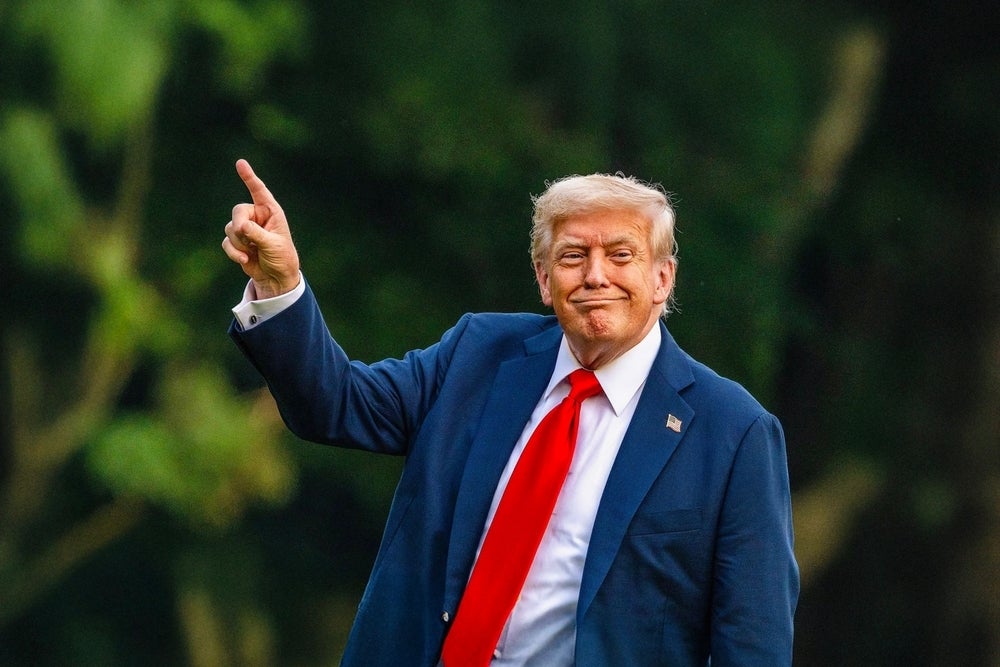
Dollar Little Changed as President Trump Dials Back Harsh Rhetoric on Greenland
Yahoo Finance· 2026-01-21 15:37
Economic Indicators - The dollar index (DXY00) is down by -0.02%, reflecting concerns over potential tariffs imposed by President Trump on several European countries if they do not allow the acquisition of Greenland [1] - US pending home sales in December fell by -9.3% month-over-month, marking the largest decline in 5.5 years, significantly worse than the expected -0.3% [2] - US construction spending in October rose by +0.5% month-over-month, exceeding expectations of +0.1% [3] Monetary Policy and Market Reactions - The Federal Open Market Committee (FOMC) is expected to cut interest rates by about -50 basis points in 2026, contributing to underlying weakness in the dollar [5] - The dollar is under pressure as the Fed has begun purchasing $40 billion a month in T-bills since mid-December, increasing liquidity in the financial system [6] - Markets are currently pricing in a 5% chance of a -25 basis point rate cut at the FOMC's next meeting on January 27-28 [4] Political Developments - President Trump announced a 10% tariff on goods from eight European countries starting February 1, which will rise to 25% in June unless a deal for the "purchase of Greenland" is reached [4] - President Trump stated he is seeking "immediate negotiations" to acquire Greenland, emphasizing that he does not want to use excessive force [3][6] - The euro (EUR/USD) is down by -0.10% today, with its losses limited by the dollar's weakness and supportive comments from ECB President Lagarde regarding the minor impact of additional tariffs on European inflation [7]
Fed’s Bowman sees risks to job market, says Fed 'should be ready' to cut rates
Yahoo Finance· 2026-01-16 16:49
Core Viewpoint - The Federal Reserve should be prepared to cut interest rates further due to "signs of fragility" in the job market, as indicated by Vice Chair for Supervision Michelle Bowman [1] Labor Market Conditions - There are indications of a weakening job market, with a recent drop in job openings and softness in hiring potentially leading to a rise in unemployment [1][2] - Private-sector job gains averaged only about 30,000 per month in the fourth quarter, which is insufficient to prevent an increase in the unemployment rate [3] - The majority of job gains have been in the healthcare and social services sectors, suggesting a gradual softening in hiring since early last year [3] Interest Rate Policy - The central bank should proactively set interest rates based on forecasts rather than relying heavily on recent data, which may lead to being behind the curve [4] - Bowman's views contrast with other Fed officials who do not see the necessity for further "insurance" cuts to protect the job market [4] Inflation Outlook - The Fed's preferred inflation index, the Personal Consumption Expenditures Index on a core basis, was estimated at 2.9% in December, with adjustments for tariffs suggesting it could be closer to the 2% target [5] - The economy is expected to continue expanding at a solid pace, with the labor market stabilizing near full employment as interest rates become less restrictive [6]
Fed should be ready to cut rates again amid job market risks, Bowman says
Reuters· 2026-01-16 16:02
Core Viewpoint - The U.S. central bank should be prepared to cut interest rates again due to a fragile job market that could deteriorate quickly [1] Group 1 - Federal Reserve Vice Chair for Supervision Michelle Bowman emphasized the need for readiness to adjust interest rates in response to labor market conditions [1]

光大期货0116热点追踪:风险溢价部分挤出,铜价上行驱动减弱
Xin Lang Cai Jing· 2026-01-16 08:48
Core Viewpoint - The copper market is experiencing a correction, with a maximum daily decline of nearly 2%, influenced by macroeconomic factors and geopolitical tensions [2][7]. Macroeconomic Summary - As of January 10, the number of initial jobless claims in the U.S. dropped to 198,000, significantly below market expectations of 215,000 and the previous value of 208,000, indicating resilience in the labor market [2][7]. - The probability of a Federal Reserve rate cut in January has decreased to around 5%, as the Kansas City Fed President stated there is currently no reason to lower rates, which could hinder progress in controlling inflation and negatively impact the labor market [2][7]. Market Dynamics - Trump's announcement to temporarily refrain from imposing tariffs on key minerals like copper has reduced the risk premium previously associated with copper prices, weakening short-term upward price momentum [2][7]. - The geopolitical situation between the U.S. and Iran, along with volatility in precious metals, is contributing to instability in high copper prices [2][7]. Domestic Market Conditions - Continuous registration of copper stocks in both domestic and international markets indicates pressure from domestic hedging funds, suggesting a weakening of the domestic fundamental outlook during the off-season [2][7]. - If there are no new reductions in supply, there is an expectation of price adjustments for copper at current high levels [2][7]. Supply Chain Insights - Domestic TC (treatment and refining charges) quotes for copper concentrate remain at historical lows, maintaining a tight supply sentiment, which serves as a strong fundamental support factor [2][7]. - Ongoing negotiations regarding the Mantoverde copper mine in Chile have failed, leading to continued strikes that heighten market concerns over supply tightness [2][7]. - Long-term supply tightness issues persist, necessitating cautious attention to recent market fluctuations [2][7].

BOC AVIATION(02588.HK):DELIVERY IMPROVES STEADILY; WATCH ROE EXPANSION AMID ASSET-LIABILITY SYNERGY
Ge Long Hui· 2026-01-15 13:13
Core Viewpoint - BOC Aviation is expected to enter a growth cycle with increasing volume and prices due to improved delivery and interest rate cuts by the US Federal Reserve, which supports steady valuation upside [1]. Company Performance - In 4Q25, BOC Aviation delivered 16 aircraft, marking a 3% increase year-over-year (YoY) and a 5% increase quarter-over-quarter (QoQ). The company committed to purchasing 14 aircraft [2]. - For the full year 2025, BOC Aviation delivered 51 aircraft, a 13% increase YoY, and committed to purchasing 160 aircraft. By the end of 2025, the owned fleet totaled 451 aircraft, a 16% increase YoY, with an order book of 337 aircraft, up 105 YoY [2]. Industry Supply Dynamics - Airbus and Boeing delivered a total of 1,194 aircraft in the first 11 months of 2025, compared to 1,114 for the entire year of 2024. AirInsight Group estimates that combined deliveries may reach 1,752 aircraft in 2026 [3]. - The tight supply-demand market is expected to support high-priced contract execution, while the ample order backlog provides a solid foundation for medium- to long-term business growth [3]. Asset Management - BOC Aviation sold seven self-owned aircraft in 4Q25, a decrease of 1 YoY and 3 QoQ. In 2025, the total sales of self-owned aircraft reached 35, reflecting a 6% increase YoY [4]. - The existing fleet has an average age of 5.0 years and an average remaining lease term of 7.8 years. As of the end of 1H25, the market value of the self-owned fleet had a 15% premium over its book value, indicating potential for asset premium realization [4]. Financial Outlook - The US Federal Reserve's interest rate cuts may lead to a marginal decline in financing costs, with floating-rate liabilities comprising 29% of BOC Aviation's existing liabilities as of 1H25, indicating strong sensitivity to interest rate changes [5]. - The company issued corporate bonds with coupon rates of 4.25% and 4.375% for 5.5-year and 7-year terms, respectively, which are lower than the 4.75% rate for a newly issued 3-year bond in January 2025 [5]. - Earnings forecasts for 2025 and 2026 are largely maintained, with a new forecast for 2027 set at US$931 million. The stock is trading at 1.0x 2026e and 0.9x 2027e P/B, with a target price raised by 8% to HK$87.9, implying 1.1x 2026e and 1.0x 2027e P/B with an 8.8% upside [6].

央行邹澜:银行净息差已经出现企稳迹象,为降息创造一定空间
2 1 Shi Ji Jing Ji Bao Dao· 2026-01-15 08:23
Group 1 - The average statutory deposit reserve ratio for financial institutions is currently 6.3%, indicating room for further reserve requirement cuts [1] - The People's Bank of China (PBOC) aims to implement a moderately loose monetary policy to create a suitable monetary and financial environment for stable economic growth and high-quality development [1][2] - The PBOC plans to utilize various policy tools, including reserve requirement cuts and interest rate reductions, to maintain ample liquidity and support economic stability and reasonable price recovery [2] Group 2 - The PBOC will enhance the dual functions of monetary policy, focusing on both total and structural aspects, to support key areas such as domestic demand, technological innovation, and small and medium-sized enterprises [2] - The PBOC emphasizes the importance of guiding expectations and improving the transparency of monetary policy through effective communication mechanisms [2] - The PBOC will promote a low comprehensive financing cost for society by clarifying loan costs and reducing intermediary fees, thereby optimizing the financing environment for enterprises [3]
中国经济:出口强劲或支撑人民币、延缓降息-China Economics Strong Exports Likely Support the Renminbi and Delay Rate Cut
2026-01-15 02:51
Summary of Key Points from the Conference Call Industry Overview - **Industry**: China's Trade Sector - **Year**: 2025 Core Insights and Arguments - **Strong Export Performance**: China's exports grew by 5.5% year-on-year (YoY) to reach US$3.8 trillion in 2025, surpassing expectations and contributing to a trade surplus of US$1.2 trillion, a historic high [1][4][11] - **Monthly Trade Surplus**: In December 2025, the trade surplus reached US$114.1 billion, the highest in six months, with exports increasing by 6.6% YoY, significantly above market expectations [4][11] - **Import Growth**: Imports also showed improvement, rising to 5.7% YoY in December, up from 0.9% YoY previously, indicating a rebound in demand [4][6] - **Sector Contributions**: The growth in exports was primarily driven by technology and automotive sectors, with machinery and electrical sales increasing by 12.1% YoY and automobile exports surging by 71.7% YoY [7][18] - **Geographical Trends**: Exports to ASEAN countries grew by 11.1% YoY, while shipments to the US declined by 30.0% YoY, reflecting a shift in trade dynamics [7][12] Future Outlook - **Export Projections for 2026**: Export growth is expected to moderate to around 3.0% in 2026, supported by a stable global economy and sustained industrial competitiveness in China [8] - **Policy Adjustments**: Anticipated voluntary export curbs by Beijing, including cuts to export tax rebates for solar and battery products, which constituted approximately 5% of exports in 2025 [8][9] - **Currency Management**: A "managed" appreciation of the Renminbi (RMB) is expected, with a target of approximately 6.8 USDCNY in the next 6-12 months [9] Additional Important Insights - **Economic Impact**: The strong export performance is seen as a key driver for GDP growth, achieving a forecasted 5% growth for 2025 [1][8] - **Interest Rate Outlook**: The solid economic data and positive market sentiment may delay anticipated cuts in interest rates or reserve requirement ratios (RRR), although a cut in the Loan Prime Rate (LPR) remains plausible in Q1 2026 [9]
