Interest rates

Search documents
Nouriel Roubini Expects Close to 4% US Growth by End of the Decade
Bloomberg Television· 2026-02-18 14:32
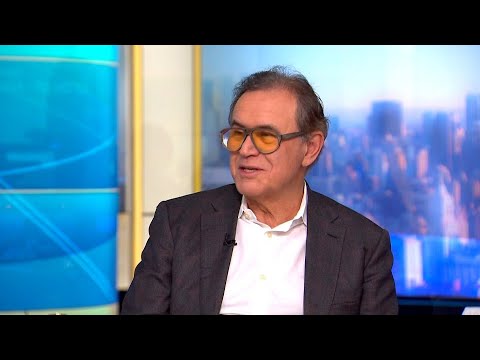
Nouriel Roubini of Roubini Macro Associates joins us now for more now. Good morning. Good to see you.Great seeing you. Walked into the studio and said no longer Dr. . Gloom, Dr.. Boom. Is that right. What's behind the new doctor.Boom. Well, I've been arguing for over a year that there's a productivity growth acceleration because of technologies of the future. Everybody's obsess about junior high, but there's also semiconductors, robotic automation, quantum fusion.The fans like fintech in material science, s ...

Interest Rates Were Cut — What Will Mortgage Rates Look Like in 2026?
Yahoo Finance· 2026-02-18 12:25
Group 1 - The Federal Reserve cut its key interest rate by 25 basis points, placing the overnight borrowing rate in the 3.5%-3.75% range [1] - Experts believe that mortgage rates are influenced by various factors beyond interest rate decisions, including tariffs, inflation, and stagnant wages [2] - The Mortgage Bankers Association reported a 3.8% decline in total mortgage application volume for the week ending December 12 compared to the previous week [4] Group 2 - Financial experts predict that mortgage rates will not change significantly in 2026, with minimal rate cuts expected [5] - The recent Fed meeting saw a non-unanimous vote, indicating a lack of alignment among board members regarding interest rate decisions [5] - As of December 19, the average interest rate for a 30-year fixed-rate conventional loan was 6.208%, reflecting a slight decrease of 0.04% from the previous week [5]
Dollar holds gains as markets focus on peace talks, Fed minutes
The Economic Times· 2026-02-18 02:07
Economic Data and Market Sentiment - Japanese exports rose for the fifth consecutive month in January, indicating a positive trend in trade [6][9] - Confidence among Japanese manufacturers improved in February for the first time in three months, as per the Reuters Tankan poll [6][9] - The International Monetary Fund urged Japan to continue raising interest rates and avoid further loosening of fiscal policy [7][9] Geopolitical Developments - Progress was reported in nuclear talks between Iran and the U.S., with an understanding on main "guiding principles" reached, although a deal is not imminent [5][8] - Peace negotiations between Ukraine and Russia are ongoing, with U.S.-mediated talks taking place in Geneva [6][8] U.S. Economic Indicators - The Federal Reserve's Open Market Committee is set to release minutes from its January meeting, which may provide insights into future monetary policy [8] - The U.S. Commerce Department will issue its first estimate for GDP for the fourth quarter on Friday, which is a key economic indicator [8] Currency Market Movements - The dollar index remained stable at 97.11 after a two-day advance, reflecting mixed market sentiment [2][8] - The yen strengthened by 0.1% to 153.12 per dollar, while the euro held steady at $1.1852 [2][5] - The Australian dollar and kiwi remained steady at $0.7083 and $0.6047 respectively, with New Zealand's central bank expected to hold rates [8][9] U.S.-Japan Investment Initiatives - The Trump administration announced three projects valued at $36 billion to be financed by Japan, part of a larger $550 billion investment agreement aimed at reducing U.S. tariffs [7][9]


RBNZ Leaves Interest Rates on Hold, Expects Inflation to Soften
WSJ· 2026-02-18 01:55
Core Viewpoint - The Reserve Bank of New Zealand has decided to keep interest rates unchanged, indicating an expectation for inflation to decrease soon and for economic recovery to accelerate in the upcoming year [1] Summary by Relevant Categories Monetary Policy - The Reserve Bank of New Zealand maintained its current interest rates during the latest monetary policy meeting [1] Economic Outlook - The central bank anticipates a retreat in inflation in the near future [1] - There is an expectation for economic recovery to gain momentum over the next year [1]

5 Ways Elections in 2026 Could Impact Middle Class Budgets
Yahoo Finance· 2026-02-17 15:42
Core Insights - The 2026 elections are perceived as a potential reset for the middle class, with a significant portion of voters feeling that a middle-class lifestyle is increasingly unattainable [1][2] Group 1: Economic Impact of Elections - Rising costs in housing, healthcare, and education are outpacing wage growth, making the outcomes of the 2026 elections critical for future tax rates and relief measures [2] - Tax changes resulting from the elections will directly affect take-home pay, with potential extensions or redesigns of income tax cuts being a key focus [3][4] - The national debt concerns are leading some leaders to consider deficit reduction plans that may limit future tax breaks, impacting middle-income tax relief [4] Group 2: Healthcare Costs - Healthcare expenses have become the top financial concern for Americans, surpassing groceries, housing, and utilities, with a significant portion of the population worried about affording care [6] - The expiration of enhanced Affordable Care Act premium tax credits has led to increased premiums, influencing voter decisions regarding candidates who may restore these subsidies [7] Group 3: Interest Rates and Debt Costs - Federal Reserve decisions on interest rates are influenced by election outcomes, affecting mortgage and credit card payments for consumers [8] - Predictions suggest that if inflation continues to ease, the Federal Reserve could lower interest rates to around 3% by 2026, impacting overall debt costs [8]
ASX 200 Gains 0.5% in Early Trade as Australian Market Nears 9,000 Level
Stock Market News· 2026-02-16 23:38
Market Overview - The Australian share market opened higher, with the S&P/ASX 200 index gaining 47.3 points or 0.5% to reach 8,984.40 points, just 16 points shy of the historic 9,000 level [2][10] - The early rally was supported by a recovery in the Materials sector, with mining companies like BHP Group and Rio Tinto seeing renewed buying interest as commodity prices stabilized [3][10] Sector Performance - Financial stocks contributed to the morning's gains, with the "Big Four" banks trading positively, including Commonwealth Bank of Australia, Westpac Banking Corp, and National Australia Bank [4][10] - The local market's strength is notable despite a lack of direction from the U.S. markets, which were closed for the Presidents Day holiday [5][10] Earnings Reports - The market was buoyed by strong results from JB Hi-Fi, which reported a first-half profit of $306 million, leading to a 7.5% jump in its stock price [6] - A2 Milk also saw a surge of 6.8% after upgrading its sales guidance, positively impacting consumer-facing stocks [6] Market Sentiment - Analysts suggest that the 9,000-point level is a major psychological resistance point, but current corporate earnings momentum could catalyze a breakout [7] - Investors are focused on global inflation data and local economic indicators, including the Reserve Bank of Australia's latest commentary [7]
Best CD rates today, February 16, 2026 (Lock in up to 4% APY)
Yahoo Finance· 2026-02-16 11:00
Core Insights - The Federal Reserve has reduced its target interest rate three times in 2025, impacting deposit account rates and presenting a potential opportunity to secure high certificate of deposit (CD) rates before they decrease further [1] Group 1: Current CD Rates - The highest CD rate available today is 4% APY, offered by Marcus by Goldman Sachs for a 1-year CD [2] - Today's average CD rates are among the highest seen in nearly two decades, largely due to the Federal Reserve's actions to combat inflation [3] Group 2: National Average CD Rates - The national average interest rate for a 1-year CD stands at 1.61%, significantly lower than the best available rates [3] - Online banks and credit unions typically provide more competitive rates compared to traditional banks [3] Group 3: Finding the Best CD Rates - It is advisable to shop around and compare CD rates from various financial institutions before making a decision [4] - Online banks often have lower overhead costs, allowing them to offer higher interest rates on CDs [4] - Higher CD rates may come with higher minimum deposit requirements, necessitating alignment with personal financial plans [4] - Reviewing account terms, including early withdrawal penalties and auto-renewal policies, is crucial for selecting the right CD [4]
Here’s the Surprising ETF Trouncing the S&P 500 in 2026
Yahoo Finance· 2026-02-15 17:30
Core Viewpoint - The iShares Russell 2000 ETF is outperforming the S&P 500 in 2026, challenging the traditional investment narrative that favors large-cap stocks [3][4]. Performance Comparison - The iShares Russell 2000 ETF is up 6.8% year-to-date in 2026, while the S&P 500 has declined by 0.1% [3][8]. - Over the past year, the iShares ETF has gained 17.6%, surpassing the S&P 500's 14.9% increase [3][8]. Small-Cap Dynamics - The iShares Russell 2000 ETF benefits from small-cap stocks, which have shown resilience and growth potential despite previous struggles [4]. - Small-cap stocks faced significant challenges during the pandemic, leading to underperformance compared to larger companies [5][6]. Economic Context - Small caps have higher debt loads, approximately 1.5 times that of large caps, making them more vulnerable to economic downturns [5]. - Inflation and rising interest rates have further pressured small businesses, limiting their growth potential [6]. Historical Performance - From 2020 to 2024, the Russell 2000 Index returned only 2.2% annually, in stark contrast to the S&P 500's 15.1% average return [7]. - By late 2024, small caps were trading at a 20% valuation discount compared to large caps [7]. Recent Developments - The Federal Reserve's rate cuts in 2025 to a range of 3.50%-3.75% have reduced borrowing costs for small-cap companies [8]. - Russell 2000 earnings grew by 12% in late 2025, marking the first time they outpaced large caps since 2021 [8].
HELOC and home equity loan rates Sunday, February 15, 2026: How to get your best rate offer
Yahoo Finance· 2026-02-15 11:00
Core Insights - Interest rates for home equity lines of credit (HELOCs) and home equity loans are currently at one-year lows, providing an opportunity for homeowners to secure below-market rates if they shop around [1][2] Interest Rates Overview - The average HELOC rate is 7.23%, with a 52-week low of 7.19%. The national average for home equity loans is 7.44%, with a low of 7.38% recorded in early December 2025 [2] - Rates are based on applicants with a minimum credit score of 780 and a combined loan-to-value ratio (CLTV) of less than 70% [2] Home Equity Access - Homeowners with low primary mortgage rates may find it challenging to access their home's increasing value. HELOCs or home equity loans can provide a solution without sacrificing their low mortgage rates [3] - The Federal Reserve estimates that homeowners have approximately $34 trillion in equity locked in their homes, indicating a significant opportunity for accessing this equity through second mortgages like HELOCs or home equity loans [4] Rate Structure and Flexibility - Home equity interest rates differ from primary mortgage rates, typically based on an index rate plus a margin. For example, with a prime rate of 6.75% and a margin of 0.75%, the HELOC rate would be 7.50% [5] - Lenders have flexibility in pricing second mortgage products, making it beneficial for borrowers to compare offers based on credit score, debt levels, and credit line relative to home value [6] Loan Types and Features - HELOCs often come with introductory rates that may last for a limited time, after which rates become adjustable. In contrast, home equity loans (HELs) usually have fixed rates for the duration of the loan [6][7] - The best HELOC lenders offer low fees, fixed-rate options, and generous credit lines, allowing homeowners to utilize their equity as needed [8] Current Offers and Considerations - LendingTree currently offers a HELOC APR as low as 6.13% for a credit line of $150,000, but borrowers should be aware of the variable nature of HELOC rates [9] - Home equity loans may be easier to navigate due to their fixed rates and lump-sum disbursement, eliminating concerns about draw minimums [10] Market Conditions and Recommendations - The national average for HELOCs is 7.23% and 7.44% for home equity loans, with rates varying significantly based on lender and borrower creditworthiness [11] - For homeowners with low primary mortgage rates and substantial equity, now may be an optimal time to consider a HELOC or home equity loan for purposes such as home improvements [12]
US CPI Fuels Fed Wagers, US Inflation Comes In Cooler Than Expected | Real Yield 2/13/2026
Youtube· 2026-02-13 23:07
Economic Overview - The U.S. economy shows strength with tame consumer inflation and stronger-than-expected job growth, leading traders to adjust their expectations for rate cuts, resulting in lower two-year yields [1][3][4] - The labor market's strength is questioned, with suggestions that job growth numbers may be overstated by approximately 60,000 per month, indicating caution regarding future rate cuts [3][12] Inflation and Federal Reserve Policy - Recent inflation data is viewed as encouraging, with both headline and core inflation moderating, although core services continue to exert upward pressure on inflation [8][9] - Federal Reserve officials, including Governor Stephen Myron, advocate for lower interest rates, citing supply-driven changes in the economy that could support growth [5][6] - The market is pricing in a 50% chance of a third rate cut by December, but some analysts believe this is an overreaction to recent data [11][12] Bond Market Dynamics - The two-year yield has reached its lowest level since September 2022, reflecting the market's sensitivity to Federal Reserve policy [4][8] - A significant rally in the two-year note has been observed, although it remains within a tight range [4][8] - The dollar has been declining, with investors diversifying into other markets, particularly emerging markets, as the Fed eases and global economic growth continues [17][18] Corporate Debt Issuance - A surge in reverse Yankee bond sales has been noted, with U.S. companies like Alphabet and Goldman Sachs raising funds in non-dollar markets, indicating a trend towards diversifying funding sources [72][76] - The scale of recent bond sales includes Alphabet's £5.5 billion deal and Goldman Sachs' €7 billion financial bond, both experiencing strong demand [73][74] - Companies are seeking to diversify their funding to avoid pushing up borrowing costs in their home markets [76] Market Sentiment and Future Outlook - The current market environment is characterized by a mix of strong issuance and cautious investor sentiment, with credit spreads beginning to widen slightly [91][92] - Analysts suggest that while issuance may continue, there is a growing dispersion in performance among different sectors, particularly in tech and financials [93][94] - The structural increase in supply from tech companies is expected to impact spreads, with a potential regime change in how tech bonds are perceived by investors [96][115]