Tariff

Search documents
X @The Economist
The Economist· 2025-09-20 12:00
America’s next president could end its one-sided tariff onslaught overnight, bringing down the effective trade-weighted tariff rate. Surely the choice is an obvious one? From The Economist’s perspective, yes https://t.co/HQm2NwQp7f ...
X @Bloomberg
Bloomberg· 2025-09-20 10:48
Besides a tariff cordon and government backing for infant industries, takeaways from a new study include the importance of bringing in human talent from abroad https://t.co/IIfX1z5EWU ...
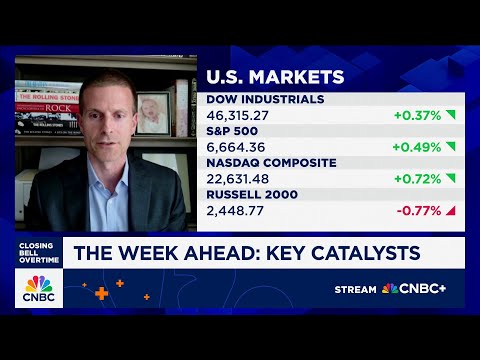
These are the key catalysts to watch during the week of September 22, 2025
CNBC Television· 2025-09-19 21:36
Well, our next guest joins us with the catalyst he thinks will be the most important for investors next week. Let's bring in Adam Chrysafouli from Vital Knowledge. Adam, it's great to have you back on and let's start right there.What do you think moves the market. I think for next week the most important catalyst will be tech earnings. Micron uh most critically Tuesday night and then also Jable and Accenture are also going to be I think important.Um, you know, the Fed and economic data gets a lot of attenti ...


苹果(AAPL.US)CEO库克否认iPhone涨价与特朗普关税计划有关 强调AI功能全面融入新机
智通财经网· 2025-09-19 15:12
Group 1 - Apple's CEO Tim Cook stated that the recent price increase of the iPhone is not related to the tariffs imposed by President Trump, clarifying that the price does not include tariff increases [1] - The iPhone 17 Pro model's price was raised by $100, while the entry-level model's price remained unchanged, and a new Air model was introduced at a higher price [1] - Analysts had previously expected Apple to raise product prices due to global supply chain pressures and tariff issues, but Cook's comments dispelled these speculations [1] Group 2 - Apple has adjusted its supply chain by shifting some iPhone production to countries like India and Vietnam to mitigate cost pressures from tariffs, although China remains the primary production base [1] - Cook has emphasized Apple's commitment to supporting U.S. manufacturing, with a pledge to invest at least $600 billion to strengthen domestic manufacturing and support suppliers [1] - In the second quarter of fiscal year 2025, Apple faced a financial impact of up to $800 million due to tariff-related costs, highlighting the pressures from global supply chain adjustments [2] Group 3 - Apple's strategy in the artificial intelligence (AI) sector has come under scrutiny, as it is perceived to be lagging behind competitors like OpenAI and Google in generative AI products [2] - Cook responded to concerns by stating that AI technology is integrated throughout the iPhone, particularly in image processing and voice interaction, and that Apple will continue to drive innovation in this area [2]

X @Bloomberg
Bloomberg· 2025-09-18 06:10
Trade & Tariffs - US tariff of 39% severely impacted Swiss exports [1] - Developed nations' highest tariff in the US negatively affected Swiss exports [1]
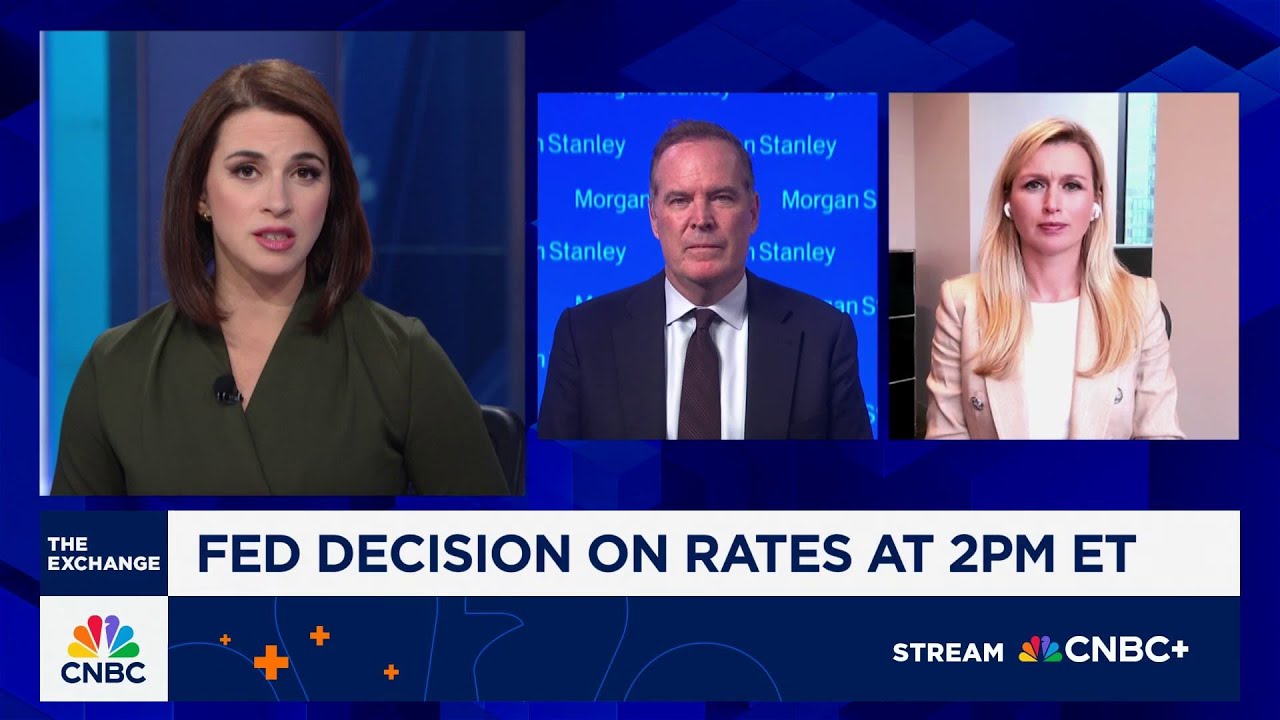
Economy does not warrant a 50 basis point rate cut in September, says Morgan Stanley's Michael Gapen
Youtube· 2025-09-17 17:50
Economic Outlook - The Federal Reserve is expected to recalibrate its stance due to shifting risks towards a weaker labor market, suggesting that restrictive policy is not justified [3][12] - There is a consensus that a series of rate cuts, potentially totaling 75 to 100 basis points, is warranted by the current economic conditions, particularly the weak labor market data [4][7][5] Labor Market Analysis - The labor market is showing signs of weakness, with job creation stagnating outside of the healthcare sector, prompting concerns about broader economic implications [5][6] - The Fed aims to preempt further labor market deterioration by moving towards a neutral policy stance [6][12] Tariff Impact - Companies are adjusting to higher tariff rates by absorbing costs rather than increasing hiring, which contributes to labor market weakness [7][8] - The anticipated economic stimulus from tax cuts is expected to materialize in the future, but is not currently impacting the economy [8] Federal Reserve's Strategy - The Fed is not advocating for an easy monetary policy but rather seeks to transition from a restrictive stance to a neutral one to better respond to economic developments [12][13] - The timing of the Fed's actions is critical, as immediate adjustments are necessary to sustain economic expansion into 2026 [9]
X @Investopedia
Investopedia· 2025-09-17 16:15
Trump’s tariff policy seems to have Canadians reconsidering buying homes in the U.S. The number of Canadians searching for homes in the U.S. on Redfin was down last month. https://t.co/SY88cqigdA ...
X @Bloomberg
Bloomberg· 2025-09-16 23:22
The record-breaking rally in Asian stocks is set to come under increasing pressure as Donald Trump’s tariff hikes start to sap earnings, some of the region’s biggest funds say https://t.co/yEpgqwyWYe ...
‘TikTok’ of rising ocean rates as China prospects improve
Yahoo Finance· 2025-09-16 17:00
Group 1 - Positive developments in trade negotiations between China and the U.S. are reported, particularly regarding a potential deal for TikTok, which may benefit trans-Pacific shipping [1] - Container rates from China to the U.S. West Coast increased by 7% to $2,309 per forty-foot equivalent unit (FEU) as of September 16, and are 34% higher than at the end of August [2] - Rates for China-East Coast shipments rose by 4% to $3,368 per FEU, with a 24% increase observed in September [2] Group 2 - Ocean lines' general rate increases, along with blanked sailings and higher demand ahead of China's Golden Week holiday, contributed to the rate improvements [3] - The National Retail Federation predicts a 10% decrease in second-half shipments compared to the same period in 2024, with October imports expected to be 13% lower and November and December down by 20% [4] - September imports are 16% higher than earlier projections, indicating some positive effects from the ongoing 30% U.S. tariffs on China [5] Group 3 - Ocean Network Express (ONE) is redeploying 10 Chinese-built ships for U.S. service as part of a restructuring of its trans-Atlantic service [6]
Lidar maker Hesai CEO on staying competitive despite US tariff costs
Youtube· 2025-09-16 07:28
Core Viewpoint - The company is navigating the challenges posed by tariffs and regulatory scrutiny while striving to maintain competitiveness and customer trust in the market. Group 1: Tariffs and Costs - The company continues to incur significant costs due to tariffs imposed by the US government, which is viewed as a cost of doing business rather than an option to avoid [1] - Despite the additional costs from tariffs, the company believes it offers the best performing, highest quality, and most price competitive products, which helps retain a majority of its customers [2] - The uncertainty surrounding tariffs is a major concern for customers, impacting their purchasing decisions [3] Group 2: Competitive Strategies - The company is focused on remaining competitive by ensuring unmatched performance and service, while also addressing customer concerns through solutions [4] - A new factory is being established in Southeast Asia to facilitate global shipping of sensors, reducing reliance on Chinese manufacturing [4][5] - Compliance with global regulations, particularly regarding data security and privacy, is a priority for the company to maintain customer trust [5] Group 3: Customer Relations and Negotiations - The company engages in ongoing negotiations with customers regarding cost absorption and pricing strategies in light of new tariffs [6][7] - It is emphasized that the financial burden of tariffs is not solely on the company or the customers, but rather a shared challenge in the current business environment [8] Group 4: Legal and Reputational Issues - The company is appealing allegations of links to the Chinese military, asserting that there is no direct evidence supporting these claims [10] - The ongoing legal situation has not resulted in direct business losses, but it has affected the company's reputation, which is a significant concern [10][11] - Customers are supportive of the company's appeal process, recognizing the need for a fair trial [11]