
公共文化服务

Search documents
300场活动勾勒文化服务新版图
Su Zhou Ri Bao· 2025-11-27 00:31
Core Insights - The "Citizen Culture Fair" launched in May 2023 in Suzhou Industrial Park has successfully engaged over 50,000 citizens through more than 300 activities across three major areas [1][2] - The initiative reflects a shift from centralized cultural supply to decentralized community engagement, enhancing public cultural services and fostering a collaborative model involving government, society, and citizens [1][2] Group 1: Cultural Service Development - The Suzhou Industrial Park's management has prioritized the construction of citizen centers, leading to the establishment of a "15-minute cultural life circle" that has transformed cultural services from isolated offerings to a comprehensive public network [2][4] - The "Citizen Culture Fair" has introduced diverse activities such as sports, intangible cultural heritage experiences, and cultural markets, making culture more accessible and relatable to the public [2][4] Group 2: Multi-Dimensional Empowerment - The "Citizen Culture Fair" is structured around four main themes: "Heart Stage," "Heart Power," "Heart Reading City," and "Heart Home," catering to various age groups and interests, thus achieving efficient matching of cultural resources with citizen needs [4][6] - Activities under "Heart Stage" include nearly 30 high-quality performances, while "Heart Power" promotes sports and health through community events and fitness classes [5][6] - "Heart Reading City" focuses on enhancing reading culture with themed exhibitions and interactive activities, while "Heart Home" emphasizes community engagement through cultural and educational initiatives [6][7] Group 3: Public Cultural Service Enhancement - The "Citizen Culture Fair" exemplifies a model of public cultural service that is people-centered, aiming to bring joy and convenience to citizens while fulfilling the mission of cultural service [7] - Future events, including a New Year music concert and various cultural performances, are planned to continue engaging the community and enhancing public cultural services [7]
辽宁“万卷府抵”平台上线 打通文化惠民“最后一公里”
Xin Hua Wang· 2025-11-19 03:34
Core Points - The "Wan Juan Fu Di" platform has been launched to address the public's reading difficulties in Liaoning Province, marking a significant breakthrough in the public cultural service system [1] - The platform integrates resources from public libraries across the province, allowing residents to borrow books conveniently from home through a dedicated app [1][2] - The initial phase has consolidated 500,000 volumes from provincial and municipal libraries, covering various genres to meet diverse reading needs [1] Group 1 - The platform aims to solve issues related to limited library coverage and accessibility for rural and disadvantaged groups [1] - It features a logistics system for free book delivery and returns, enhancing user convenience [1] - The launch event saw active participation from readers, who experienced the platform's functionalities firsthand [1] Group 2 - Future plans include connecting 127 public libraries in the province and integrating resources from university libraries and urban reading rooms [2] - The initiative aims to normalize access to books and promote a culture of reading among the public [2] - This development is expected to contribute to the high-quality enhancement of public cultural services and support the construction of a culturally strong province [2]
近悦远来 主客共享美好生活
Bei Jing Ri Bao Ke Hu Duan· 2025-11-12 01:11
Core Points - The 2025 China Cultural Center Annual Conference will be held in Beijing, focusing on the theme "Love Art, Love Life, Love Cultural Centers," marking the first time the event is hosted in the capital [1] - The conference aims to explore innovative paths for popularizing art and enhancing public cultural services, injecting new vitality into the development of public cultural undertakings [1] Group 1: Cultural Facilities and Innovations - The integration of cultural facilities into various scenarios has become a key method for enhancing the cultural atmosphere and quality of life in Tongzhou District [2] - The 24-hour reading space at Beitou Aegean Shopping Park has become a new cultural landmark, offering over 6,000 books and attracting nearly 75 million visits [2] - A total of 23 similar reading spaces have been opened across Tongzhou, providing accessible cultural services to residents [2] Group 2: Cultural Services and Accessibility - Tongzhou District is enhancing cultural services by extending the operating hours of cultural venues, creating a "15-minute reading culture circle" for residents [3] - The district has combined various cultural landmarks and facilities to promote a more integrated cultural service model [3] Group 3: Quality Performances and Community Engagement - The "Cultural Light Cavalry Tongzhou Legend" series of performances aims to bring quality cultural resources directly to the grassroots level [4] - The "Tongzhi Rhythm" cultural activities have been recognized as a national-level lifelong learning brand project, promoting cultural engagement across all age groups [5] Group 4: Intangible Cultural Heritage - Tongzhou District boasts 107 items of intangible cultural heritage, which are being integrated into modern public cultural services [6] - The district is utilizing various platforms to promote intangible cultural heritage, including cloud exhibition halls and cultural experience stations [7] Group 5: Cultural and Tourism Integration - The integration of public cultural services with tourism is becoming a new trend, enhancing the appeal of the city to both residents and visitors [8] - Innovative initiatives like the "ticket root economy" are being implemented to stimulate cultural tourism consumption [9] - The district is forming a "Tongzhou model" for high-quality public cultural service development, emphasizing the role of culture in enhancing urban life [9]
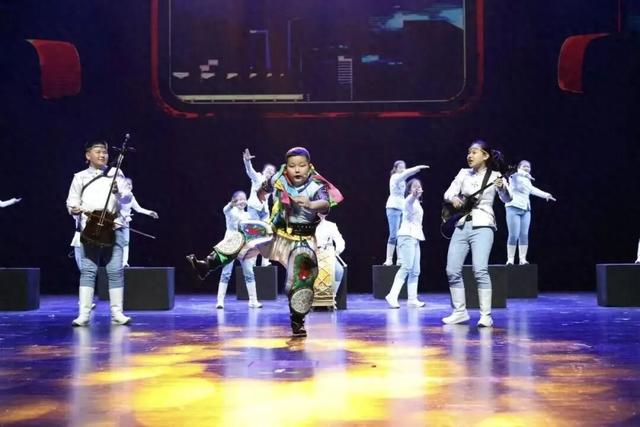
村民下订单,文化服务送上门(迈向“十五五”的文化图景)
Ren Min Ri Bao· 2025-11-11 05:35
Core Points - The initiative of appointing cultural village leaders in Inner Mongolia aims to enhance cultural services in rural areas, with a focus on utilizing local artistic talents to benefit the community [1][2] - The number of cultural village leaders has significantly increased from 100 to 569, indicating a growing interest and participation in cultural activities among villagers [3] - The program has led to a more vibrant cultural life for villagers, fostering better community relationships and increasing engagement in cultural activities [3] Summary by Sections Cultural Village Leaders Initiative - The program was initiated in July 2022, with the selection of cultural village leaders from local artists to provide cultural volunteer services [1] - Cultural village leaders are tasked with teaching and promoting local arts, such as paper-cutting, to enhance cultural heritage and community engagement [2] Growth and Impact - The number of cultural village leaders has expanded to 569, reflecting a successful outreach and engagement strategy [3] - Villagers' participation in cultural activities has increased, leading to a more dynamic and enriched cultural environment [3] Future Outlook - The initiative aims to not only teach specific skills but also to act as a bridge for introducing better cultural and technical resources to rural areas, contributing to comprehensive rural revitalization [3]
财政部:积极培育新兴产业和未来产业 持续推动制造业转型升级
智通财经网· 2025-11-07 10:56
Core Viewpoint - The report emphasizes the acceleration of new growth momentum in China's economy through enhanced fiscal policies, support for innovation, and investment in key industries, while ensuring the stability of employment and market expectations [1][3]. Group 1: Fiscal Policy and Economic Growth - The fiscal policy is increasingly proactive, focusing on stabilizing employment, businesses, and market expectations, while promoting economic recovery [3][4]. - A total of 300 billion yuan in special bonds is allocated to support the replacement of consumer goods, which is expected to stimulate significant retail sales [4][15]. - The central government plans to increase its technology funding to 398.12 billion yuan in 2025, a 10% increase from the previous year, focusing on core technology and strategic industries [5][21]. Group 2: Investment and Consumption - The government aims to enhance domestic demand by boosting consumption and effective investment, with a focus on key sectors and weak links [13][16]. - The issuance of special bonds has accelerated, with 5.55 billion yuan issued in the first half of the year, completing 42.7% of the annual target [16]. - The manufacturing sector is expected to see a 10.3% increase in industrial investment, driven by government support for technological upgrades [17]. Group 3: Employment and Social Welfare - The central government allocated 667.4 billion yuan for employment support, with 6.95 million new urban jobs created in the first half of the year [27][28]. - Education spending increased by 5.9% to 2.15 trillion yuan, with a focus on improving quality and access to education [29][30]. - Basic public health service funding reached 804.35 billion yuan, enhancing health management and disease prevention efforts [32][33]. Group 4: Risk Management and Financial Stability - The government is implementing measures to mitigate financial risks, including the management of local government debt and the promotion of real estate market stability [7][9]. - A comprehensive approach to fiscal management is being adopted, including reforms in tax systems and budget execution to ensure effective use of resources [7][12]. Group 5: Innovation and Technology - The report highlights the importance of integrating technological innovation with industrial development, with a focus on enhancing research capabilities and supporting key technology projects [20][21]. - Funding for basic research is set to increase by 12.1%, emphasizing the need for original innovation and support for research institutions [21][22]. Group 6: Environmental and Social Development - The government is committed to ecological protection and sustainable development, with significant funding allocated for pollution control and ecosystem restoration [38][39]. - Social welfare programs are being expanded, with increased support for vulnerable populations and efforts to improve living standards [34][35].
【铜川】文化润民 让幸福可感可及
Shan Xi Ri Bao· 2025-11-05 00:09
Group 1 - The core idea of the articles revolves around the promotion of cultural education and activities in Tongchuan City, emphasizing the importance of making cultural resources accessible to the community [1][4][5] - The establishment of the "National Aesthetic Education Classroom" brand activity aims to provide free art training based on community needs, with over 10 classes covering various art forms such as opera, dance, and calligraphy [4][5] - The Tongchuan Senior University has launched a "Foundation-Study-Team" training model, offering 91 interest classes this year, with over 1,700 enrollments, catering to the diverse interests of the elderly population [2][3] Group 2 - The interest classes at Tongchuan Sunshine Middle School have seen high participation, with one-third of students engaging in various extracurricular activities, including traditional arts like paper-cutting and modern classes like pulp painting [3] - The community arts center has been instrumental in providing a platform for citizens to engage in artistic activities, enhancing their quality of life and fostering social connections among participants [4] - Future plans include expanding the number of "National Aesthetic Education Classrooms" and collaborating with art training institutions to enrich the teaching staff and cultural offerings [5]
直达基层,公共文化服务底色更亮
Nei Meng Gu Ri Bao· 2025-11-04 16:34
Core Points - The "Stars Award" ceremony and national excellent mass art performance were held in Chongqing, where two works from Inner Mongolia won awards for their artistic quality and ethnic characteristics [1][6] - The "Stars Award" is the only national government award in China's mass art field, evaluated every three years, highlighting the efforts of cultural workers in promoting public cultural services [6][8] - Inner Mongolia has established a comprehensive network of mass art organizations, including 118 cultural centers and over 1,000 social cultural institutions, enhancing grassroots cultural services [6][9] Summary by Categories Awards and Recognition - Inner Mongolia's music piece "Happy Nadam" and square dance "Joyful Ordos" won the Stars Award, showcasing the region's cultural richness [1][6] - Since 2016, Inner Mongolia has organized five rounds of the Stars Award, recognizing 72 works across various categories, including music and dance [8] Cultural Activities - Inner Mongolia has conducted over 200,000 cultural events during the "14th Five-Year Plan" period, reflecting the vitality of grassroots mass art [8] - Notable cultural activities include "Dancing North Border," "Singing North Border," and "Our Festival," which aim to enhance the cultural life of the public [7][8] Digital Innovation in Culture - The region has embraced digital technology to innovate cultural services, offering online performances and exhibitions to reach remote areas [9] - This combination of online and offline services has expanded cultural outreach and significantly improved public cultural service coverage [9]

城市书房点亮美好生活(新时代画卷)
Ren Min Ri Bao· 2025-10-20 22:42
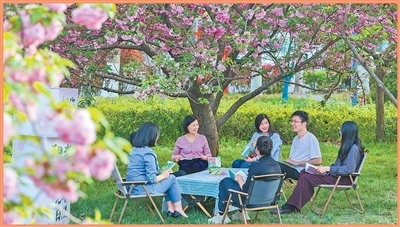
Core Viewpoint - The article highlights the rapid emergence and integration of urban reading spaces, known as "city reading rooms," across various regions in China, emphasizing their role in enhancing public cultural services and promoting reading habits among the populace [15][16]. Summary by Sections Cultural Spaces - Urban reading rooms are being established in various cities, combining elements of reading, exhibitions, and social interaction, creating a unique cultural atmosphere [13][15]. - Examples include the "Flower City Book Room" in Guangzhou, which integrates reading with floral and tea experiences, and the "Forest Book House" in Hefei, offering diverse services like reading and tea tasting [3][15]. Community Integration - City reading rooms are designed to be accessible and integrated into urban communities, shopping areas, and tourist attractions, providing convenient reading and leisure spaces for residents [15][16]. - The "Hongyan Book Room" in Hohhot has become a distinctive public cultural service brand, with 23 locations established [11]. Development and Growth - Thousands of city reading rooms have been built nationwide, contributing to the formation of a "15-minute reading circle," which facilitates easy access to reading resources [16]. - These spaces often collaborate with public libraries for resource sharing, enhancing the reading experience through well-designed layouts and extended hours [16]. Future Directions - There is a call for improved construction standards and operational mechanisms for city reading rooms to optimize their layout and service offerings [16]. - The article emphasizes the importance of fostering a reading culture and cultural confidence in society, aligning with national goals for cultural development [16].
文化扎根高原 幸福浸润万家
Ren Min Ri Bao· 2025-10-10 22:10
Core Points - The article highlights the vibrant cultural scene in Tibet, particularly focusing on the performance of traditional Tibetan opera, known as Xiangba Tibetan Opera, which has gained popularity among local residents [1] - The development of public cultural services in Tibet has led to the establishment of a comprehensive cultural infrastructure network, enhancing access to cultural activities for various ethnic groups [1][2] - The shift from "delivering culture" to "cultivating culture" is emphasized, with over 1,000 cultural talents trained annually at the grassroots level, contributing to the growth of local art troupes and performance teams [2] Group 1 - The Xiangba Tibetan Opera performances have become a regular feature during festivals and large cultural events, showcasing the efforts of cultural inheritors to engage younger generations [1] - The average age of cultural inheritors in Xiangba Tibetan Opera has decreased to below 35 years, indicating a successful transfer of cultural knowledge to younger individuals [1] - The public cultural service system in Tibet has been significantly improved, with facilities established at various administrative levels to meet the cultural needs of the population [1] Group 2 - The implementation of a training program for cultural talents has resulted in the formation of numerous artistic groups across Tibet, including 76 county-level art troupes and 5492 village performance teams [2] - Local women are learning traditional embroidery skills, which not only helps preserve cultural heritage but also provides them with a source of income, with some earning over 3,000 yuan per month [2] - The launch of a digital public cultural cloud platform allows residents to access cultural content and learn traditional crafts remotely, enhancing the reach and impact of cultural services [2]
2024年文化产业实现营业收入19.14万亿元,比2020年增长37.7%——文旅产业发展蓬勃兴旺
Ren Min Ri Bao· 2025-09-30 00:13
Core Insights - The cultural and tourism industry in China has experienced significant growth and development during the "14th Five-Year Plan" period, with a focus on high-quality development and integration of culture and tourism [2][3] Group 1: Industry Growth and Economic Impact - The cultural industry is projected to achieve a revenue of 19.14 trillion yuan in 2024, representing a 37.7% increase from 2020 [2] - The number of large-scale cultural enterprises has increased to 78,000, up by 13,000 since 2020 [2] - Domestic tourism reached a record high in the first half of 2025, with 3.15 trillion yuan spent by 3.285 billion travelers [2] Group 2: Cultural and Tourism Integration - The deep integration of culture and tourism is a key focus, enhancing the quality and efficiency of development [2] - New trends in tourism include "cultural travel," "heritage tourism," and "museum tours," reflecting a shift towards more culturally enriched travel experiences [2] Group 3: Market Regulation and Consumer Protection - The Ministry of Culture and Tourism is implementing comprehensive regulations to maintain a healthy market order, including real-name ticket purchases for large performances and addressing issues like low-cost tours and forced shopping [3] Group 4: Artistic Creation and Public Engagement - The period has seen a flourishing of artistic creation, with a robust support mechanism for producing high-quality works [4] - Major artistic events and festivals have been organized to promote public participation and appreciation of the arts [4][5] Group 5: Public Cultural Services - The standardization and equalization of public cultural services have improved, with over 3,248 public libraries and nearly 44,000 cultural institutions established nationwide [7] - The government is focusing on making public cultural services more accessible and engaging, with initiatives to encourage community involvement in cultural activities [7][8]