
家国情怀

Search documents
辛识平:家国共此时,情满中国年
Xin Hua Wang· 2026-02-14 01:45
Group 1 - The core message emphasizes the warmth and unity of the Chinese New Year, highlighting the importance of family reunions and the cultural significance of the festival [1][2][3] - The anticipated volume of cross-regional travel during the 2026 Spring Festival is projected to reach 9.5 billion trips, marking a historical high, reflecting the vibrant movement of people across the country [1] - The sentiment of togetherness is reinforced by the dedication of various professionals, such as border guards, police, healthcare workers, and transport staff, who continue to serve their communities during the holiday [2] Group 2 - The emotional and cultural power of the Spring Festival nourishes the shared spiritual home of the Chinese nation and strengthens connections between China and the world [3] - The global recognition of the Spring Festival is evident as it transcends borders, becoming a shared cultural celebration with various international activities and experiences [3] - The enduring spirit of the festival symbolizes not just a holiday but a continuous cultural legacy and the resilience of civilization [3]
这一次,让“妈妈的味道”被看见
Xin Lang Cai Jing· 2026-02-13 23:52
Core Viewpoint - The article emphasizes the emotional significance of "mother's cooking" as a symbol of home and familial warmth, especially during the Chinese New Year, highlighting its role in connecting individuals to their roots and cultural identity [2][4][5]. Group 1: Emotional Connection to Home - A survey indicates that 70.5% of young people working or studying away from home cherish the taste of home-cooked meals, particularly those made by their mothers [2]. - The concept of "mother's taste" serves as a platform for expressing nostalgia and gratitude, inviting global Chinese communities to share their unique experiences through various forms of art [2][3]. Group 2: Cultural Significance - The article discusses how "mother's cooking" embodies the deep-rooted connection to one's hometown and reflects the essence of Chinese agricultural civilization, where land and home are integral to identity [4]. - The flavors of home-cooked meals are tied to specific regions in China, representing the diverse cultural heritage and memories associated with different localities [4]. Group 3: Community and Support - The article highlights the efforts of various sectors to support workers, such as delivery personnel, by providing comforting meals that replicate the taste of home, ensuring they feel connected to their families during the festive season [5]. - The message from the Chinese leadership underscores the importance of family and community, suggesting that every meal shared contributes to the overall prosperity of the nation [6].
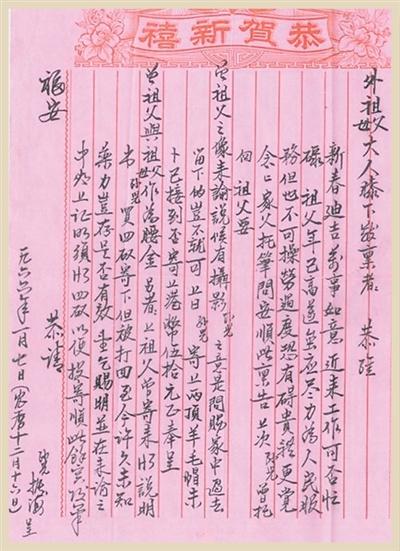
骐载福笺至,同庆团圆年(人民家书)
Ren Min Ri Bao Hai Wai Ban· 2026-02-13 22:54
Core Viewpoint - The letters from overseas Chinese during the Spring Festival reflect deep familial connections and cultural sentiments, showcasing the evolution of communication from traditional letters to modern digital messages while maintaining the essence of longing for home and family [1]. Group 1: Historical Context of Letters - The letters serve as a historical snapshot, connecting generations of overseas Chinese and documenting their struggles and achievements over time [1]. - The letters illustrate the transition from survival to development, highlighting the importance of family ties and cultural exchange [1]. Group 2: Specific Letters and Their Significance - A letter from Zhenhai, a Chinese expatriate in 1966, includes a monetary gift of 50 Hong Kong dollars as "yaojin" (lucky money), symbolizing the cultural practice of sending financial support along with personal messages [5]. - Zhenhai's letter emphasizes the emotional connection to his roots and the customs of his hometown, reflecting the enduring sentiment of overseas Chinese towards their homeland [5]. - Another letter from Huang Faxiang in 1908 showcases the financial responsibilities and familial obligations of overseas Chinese, detailing the transfer of 224 silver dollars to family members, which illustrates the established financial networks among expatriates [17]. - Chen Zhujin's letter from South Africa highlights the community's efforts to support each other during crises, demonstrating the role of overseas Chinese organizations in fostering solidarity and cultural ties [18]. - The letters from Chen Weipeng and Chen Weijie, young Chinese expatriates in Panama, express their commitment to enhancing cultural exchanges between China and Panama, showcasing the younger generation's role in continuing these traditions [21].

关爱盈斗室 真情满华夏
Xin Lang Cai Jing· 2026-02-13 22:46
Core Viewpoint - The article emphasizes the importance of connecting individual family well-being with national prosperity, highlighting the efforts of Xi Jinping in visiting ordinary families and expressing care for their lives and aspirations [1][19][25]. Group 1: Visits and Engagements - Xi Jinping visited various households across China, including elderly care facilities and disaster recovery areas, to understand their living conditions and offer New Year greetings [2][3]. - The visits included interactions with families affected by natural disasters, showcasing the government's commitment to rebuilding and improving their lives [3][4]. - The article details specific instances where Xi Jinping engaged with families, asking about their needs and expressing concern for their well-being [10][11][12]. Group 2: Themes of Care and National Unity - The narrative illustrates the theme of "family" being intertwined with "nation," where the happiness of individual families contributes to the overall strength of the country [16][25]. - Xi Jinping's remarks during visits reflect a deep understanding of the struggles faced by ordinary citizens, reinforcing the idea that addressing their needs is a priority for the government [15][19]. - The article highlights the emotional connections formed during these visits, portraying Xi Jinping as a leader who genuinely cares for the people [9][24]. Group 3: Development and Progress - The article mentions the transformation of communities through government initiatives, such as poverty alleviation and infrastructure development, leading to improved living standards [20][22]. - It emphasizes the importance of sustainable development and ecological tourism as part of the broader strategy for economic growth [22]. - The narrative concludes with a vision for a prosperous future, where the well-being of every family is seen as essential to national success [25].
音画交织 旋律昂扬
Xin Lang Cai Jing· 2026-02-13 20:37
Group 1 - The core message of the articles highlights the release of two music videos, "Yicai" and "Looking at China," which celebrate the New Year and reflect themes of national pride and cultural heritage [1][2] - "Yicai" features lyrics that honor the dedication of intangible cultural heritage guardians, using imagery to depict the connection between individuals and their cities and country [1] - "Looking at China" employs a dual perspective to showcase the beauty of China and the significant changes in society, emphasizing the importance of continuous effort for a better life [2] Group 2 - The music video for "Yicai" combines pop music with Peking opera elements, illustrating the spirit of perseverance and collective effort through its lyrics [1] - "Looking at China" utilizes a blend of male and female vocals along with children's choir, enhancing the emotional depth and musical layers of the piece [2] - The production team for "Looking at China" focused on integrating traditional and modern elements, capturing various scenes from Tianjin to reflect its cultural richness and contemporary vibrancy [2]
总书记北京考察 | 记者手记:春擂奋进鼓,跃马赴新程
Xin Hua She· 2026-02-12 23:41
Group 1 - The core message emphasizes the importance of technological innovation and self-reliance in achieving national modernization and development goals [5][12][18] - The visit to the National Information Innovation Park highlights the focus on information technology and its role in driving future industrial development [3][5] - The interaction with researchers and technology entrepreneurs underscores the government's commitment to fostering innovation and addressing key challenges in the tech sector [5][12] Group 2 - The establishment of community services like the "Parents' Canteen" reflects the government's efforts to enhance social welfare and support for the elderly and working populations [7][10] - The visit to the "Lungfu Temple" market illustrates the blend of traditional culture and modern economic activities, showcasing the vibrancy of local commerce [15][17] - The emphasis on maintaining cultural heritage while promoting high-quality development aligns with the broader strategy of integrating historical and modern elements in urban planning [17][18]
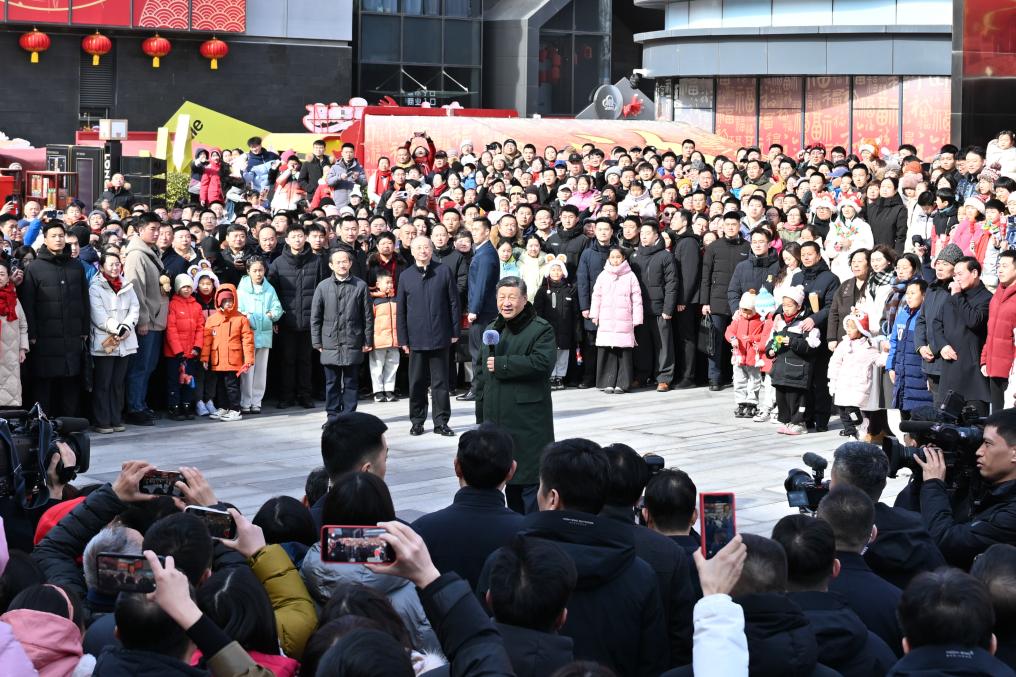
春擂奋进鼓,跃马赴新程
Xin Lang Cai Jing· 2026-02-12 17:28
Core Viewpoint - The emphasis on technological innovation as a key driver for future industrial development is highlighted, with a call for strategic awareness and proactive historical spirit in China's modernization efforts [1][2]. Group 1: Technological Innovation - Xi Jinping stresses that the degree of technological breakthroughs largely determines the speed, breadth, and depth of future industrial development [1]. - The importance of self-reliance in technology is underscored, with a focus on gathering quality resources to tackle prominent challenges and achieve strategic goals [2]. Group 2: Community and Social Welfare - The establishment of community services like "parents' canteens" aims to support the elderly and new employment groups, reflecting a commitment to social welfare [4]. - The interaction between Xi Jinping and delivery workers illustrates the recognition of their contributions to urban life, emphasizing their role as essential to the city's functioning [5]. Group 3: Cultural Heritage and Modernization - The integration of traditional culture with modern economic activities is highlighted, showcasing the vibrant atmosphere of the city during festive seasons [10]. - The historical significance of Beijing as a city with a rich cultural heritage is acknowledged, alongside its current status as a hub for high-quality development and technological innovation [11].
漫评:一程归途幸福暖 万里家国情意浓
Zhong Guo Jing Ji Wang· 2026-02-12 11:09
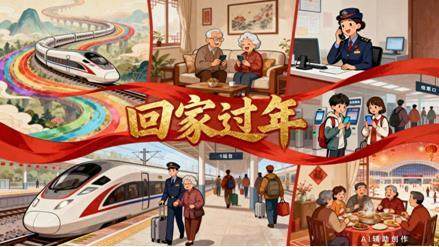
Core Insights - The Spring Festival travel rush, known as the largest periodic migration in human history, saw over 1.4 billion people completing inter-regional movements, reflecting deep familial bonds and national sentiment in China [2][4]. Group 1: Transportation Infrastructure - The successful large-scale movement of people is supported by China's robust transportation network, including the operation of the domestically produced C919 aircraft on multiple routes and the implementation of smart systems at train stations [2]. - The continuous improvement of infrastructure and the application of technology, such as electric vehicle transport ships and fast-charging facilities at service areas, enhance the efficiency of inter-regional travel [2]. Group 2: Public Services and Community Support - The Spring Festival is not only a test of transportation capacity but also a measure of service quality, with volunteers assisting thousands of travelers and tailored services for specific needs, such as elderly travelers and vehicle transport [3]. - Various departments have focused on community needs, providing warm services that enhance the travel experience and ensure that every traveler feels the warmth of returning home [3]. Group 3: National Sentiment and Economic Impact - The massive movement of people during the Spring Festival symbolizes the deep emotional connection to home and family, with diverse forms of reunion reflecting the importance of familial ties [4]. - The coordinated efforts of over 20 departments to ensure smooth travel and efficient logistics highlight the effective governance and commitment to public welfare, contributing to the overall vitality of the economy [4].
多彩年俗传文脉 文明新风入万家——2026“我们的节日·春节”主题文化活动在各地举行
Ren Min Ri Bao· 2026-02-12 02:18
Group 1 - The core theme of the 2026 "Our Festival: Spring Festival" cultural activities is to blend traditional customs with modern elements, creating a harmonious atmosphere for the New Year across various regions in China [1][5] - The activities include a series of demonstrations in cities such as Wuxi, Jingdezhen, and Sanmenxia, showcasing local traditions and promoting a sense of unity and joy during the Spring Festival [1][5] Group 2 - In Hubei, the performance of the national intangible cultural heritage "Lichuan Lantern Song" and local products like Lichuan yam and Baiyang dried tofu were highlighted, attracting significant public interest [2] - The Sanmenxia Lantern Festival featured 21 interconnected lanterns, showcasing the Yellow River culture and intangible heritage elements, creating a vibrant display of folk customs [2] - Various local activities, including folk performances and traditional crafts, contributed to a rich and festive atmosphere, enhancing community engagement [2] Group 3 - In Jiangsu, community-driven performances like "Village Evening" reflected local stories and fostered neighborly connections, emphasizing the importance of community in cultural celebrations [3] - The integration of civilizational concepts into performances, such as the "Three Minutes Before the Play" initiative in Jiangxi, aimed to promote social values and cultural awareness [3] - Events in Shandong featured representatives from various industries sharing inspiring stories, reinforcing a sense of unity and positive energy within the community [3] Group 4 - In Jianchuan, children performed traditional songs and calligraphers distributed auspicious couplets, highlighting the significance of traditional culture in modern celebrations [4] - The cultural activities serve as a bridge connecting families and fostering a sense of national pride and community spirit [5] Group 5 - In Fujian, performances by artists from both Fujian and Taiwan, along with the distribution of traditional snacks, emphasized the cultural ties and shared values between regions [5] - The immersive cultural performance "Return to Minnan" combined historical narratives with modern technology, allowing audiences to engage deeply with cultural heritage [5] - The ongoing "Our Festival: Spring Festival" activities are expected to enhance cultural confidence and promote a festive spirit across urban and rural areas [5]
剑南春马年春节营销:以“家国情怀”为笔,绘就市场热销画卷
Jing Ji Guan Cha Wang· 2026-02-10 09:38
Core Insights - The white liquor industry is experiencing a critical turning point amidst deep adjustments, with market expectations indicating an impending industry inflection point [1][2] - Jian Nan Chun has launched a vibrant Spring Festival marketing campaign themed "Family and Country in Spring, Fortune Comes with the Horse," focusing on cultural innovation, scene integration, and channel empowerment [1][2] Group 1: Cultural Breakthrough and Product Innovation - The white liquor market environment before the 2026 Spring Festival is complex, with the zodiac liquor market expected to exceed 20 billion, but growth has decreased by 5.3 percentage points compared to the previous year [2] - Jian Nan Chun integrates "family and national sentiment" into every aspect of its Spring Festival marketing, recognizing the shift from material to spiritual consumption in the white liquor industry [2][4] - The brand has successfully engaged consumers through cross-industry collaborations, such as the Douyin micro-variety show "Family and Country in Spring," which explores regional cultural characteristics [3][4] Group 2: Scene Integration - Scene marketing has become increasingly important in the competitive white liquor market, with consumers seeking overall experiences tied to specific occasions and emotional atmospheres [5] - Jian Nan Chun has sponsored the Deyang Lantern Festival, combining its thousand-year liquor culture with regional customs, enhancing consumer experiences [5][7] - The brand has also created a New Year shopping festival, allowing consumers to taste its products while shopping, thus increasing brand recognition and purchase desire [5][7] Group 3: Long-term Value of Cultural Strategy - The white liquor market is under pressure from deep adjustments while also seeing signs of consumer recovery, pushing the industry towards a "true value" competition phase [8] - Jian Nan Chun's marketing strategies during the Spring Festival reflect a focus on cultural elements, meeting consumer demands for emotional value and cultural significance [8][9] - The brand's successful "Family and Country in Spring" campaign illustrates the importance of understanding and fulfilling consumer spiritual needs in the evolving market landscape [9]