干支通

Search documents
小机场如何带动新客流?
2 1 Shi Ji Jing Ji Bao Dao· 2025-08-22 08:42
Group 1 - The core issue facing small airports is low passenger traffic, with 33% of the 263 airports in China having an annual passenger flow of less than 300,000 [1] - Small airports often have limited flight frequency, with many routes operating only every other day, which affects operational efficiency and cost distribution [1] - The Civil Aviation Administration of China is promoting connecting flights to enhance the network and improve passenger flow to small airports [2] Group 2 - The integration of air and rail transport is beneficial for increasing passenger numbers, as seen in the case of Ordos Airport, which experienced a 40% increase in passenger throughput [3] - Airlines are exploring new models, such as the "cloud bus" service by Huaxia Airlines, which connects hubs with smaller airports, significantly improving efficiency [3] - The fusion of aviation and tourism industries is a key strategy for attracting more passengers, with successful examples like the Sanqing Mountain Airport showing significant growth in passenger numbers [4][5] Group 3 - The development of small airports relies heavily on local government funding, and there is a need for sustainable business models that integrate various industries, including tourism [5] - The report highlights that the passenger transport volume for connecting flights from small airports is over six times that of mainline flights, indicating a strong demand for such services [2]
历史新高!青岛机场单日旅客吞吐量突破10万人次
Zhong Guo Min Hang Wang· 2025-08-16 04:51
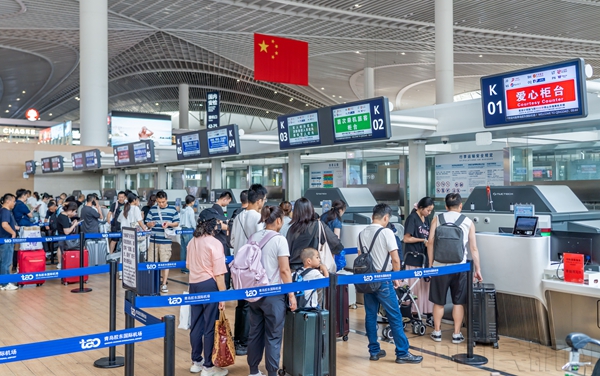
Core Insights - Qingdao Airport achieved a record daily passenger throughput of 101,000 on August 15, marking a significant milestone in its operational history [1] - The airport has seen a steady increase in domestic passenger flow and a rapid rise in international travelers, with an average daily throughput exceeding 90,000 during the peak summer travel season [1] Domestic Route Network Optimization - As of August 15, Qingdao Airport has launched a total of 166 domestic passenger routes, covering 86 cities [3] - The airport has intensified services on 24 key routes, including Guangzhou, Changchun, Hangzhou, and Urumqi, while also adding and resuming flights to several new destinations [3] International and Regional Route Development - International and regional passenger volumes surged by 28% during the summer travel period, with the number of international routes reaching 25 [3] - New routes to Cheongju and Shizuoka have been introduced, enhancing coverage of second and third-tier cities in Japan and South Korea, leading to a 36% increase in passenger volume from these regions [3] - Southeast Asian passenger numbers rose by 44%, particularly following the implementation of visa-free policies, with increased flights to Kuala Lumpur [3] Transfer System Enhancement - Qingdao Airport is implementing the "dry branch connection, full network linkage" strategy, facilitating convenient transfers for passengers across 40 domestic airports [4] - The airport has established an efficient transfer network covering 25 cities for flights to Japan and South Korea, with 20% of passengers transferring through Qingdao for these destinations [4] Service Improvement Initiatives - The airport has launched new service measures to enhance passenger experience, including reducing domestic flight check-in time to 35 minutes and streamlining transfer processes to 80 minutes [5] - Various passenger benefits have been introduced, such as free first-day parking, discounted rail segment fees, and complimentary hotel stays for eligible transfer passengers [5] - The airport has also implemented measures to ensure operational efficiency during adverse weather conditions, maintaining flight safety and minimizing disruptions [5]

二连浩特机场推出经呼中转通程精品航线
Zhong Guo Min Hang Wang· 2025-05-22 08:57
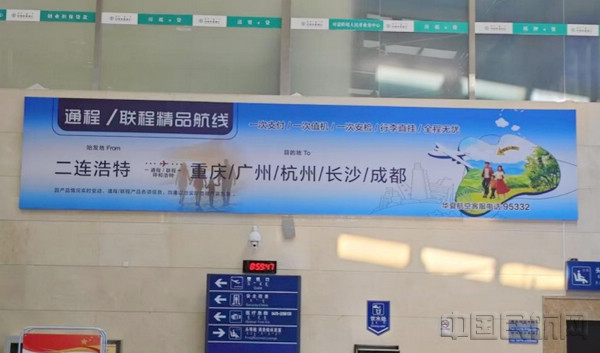
Core Points - The article discusses the launch of a new transit product by Erlianhot Airport to enhance connectivity and improve passenger experience for travelers using regional airports [1][2] - The new product addresses long-standing issues such as limited flight options, insufficient connectivity, and high ticket prices for passengers traveling to popular domestic cities [1][2] Group 1 - Erlianhot Airport has introduced a premium transit route product that allows passengers to transfer through Hohhot Airport to five key cities: Guangzhou, Hangzhou, Chengdu, Chongqing, and Changsha [2] - The premium transit route aims to simplify the travel process by offering a single payment, check-in, security check, and direct baggage handling, thereby alleviating common travel inconveniences [2] - The initiative is part of a broader strategy to enhance the accessibility of regional airports and promote the development of local economies [2] Group 2 - To increase awareness and attract more travelers, Erlianhot Airport has implemented various promotional strategies, including creating articles and videos for social media, engaging staff in promotions, and updating advertisements in the terminal [2] - The airport has also introduced a reverse connecting product to provide travelers with more diverse travel options, facilitating quicker access to their destinations [2]
哈尔滨—呼玛短途运输航线正式开通
Zhong Guo Min Hang Wang· 2025-05-16 08:40
Core Viewpoint - The opening of the Harbin-Huma short-haul flight route significantly enhances the regional air transport network in Heilongjiang Province, providing more convenient travel options for passengers [1][2]. Group 1: Flight Route Development - The Harbin-Huma route is now operational, reducing travel time between the two locations from approximately 10 hours by road to just 2.5 hours by air [2]. - Currently, Heilongjiang Province has launched a total of 5 short-haul flight routes, including Harbin-Huma, Harbin-Nenjiang, Heihe-Nenjiang, Heihe-Huma, and Gagdaqi-Huma [1]. - The new route is operated by the King Air 350 aircraft, with flights scheduled three times a week on Wednesdays, Fridays, and Sundays [1]. Group 2: Strategic Initiatives - Heilongjiang Airport Group is actively responding to provincial government initiatives aimed at promoting regional coordinated development and enhancing the tourism sector [2]. - The group has introduced a "trunk and branch" service model, expanding the operational scale of the C909 aircraft in the Heilongjiang market [2]. - By 2025, additional tourism routes will be added, including flights from Fuyuan to Harbin and from Suifenhe to Dalian and Beijing, further enhancing the province's air travel network [2]. Group 3: Future Plans - The Heilongjiang Airport Group plans to focus on building Harbin into an international aviation hub while improving the provincial flight network to support local economic development [3]. - The aim is to create a transportation system that facilitates both quick access and leisurely travel, enhancing service for passengers [3].
财达证券每日市场观察-20250514
Caida Securities· 2025-05-14 05:11
Market Overview - The market experienced fluctuations with a trading volume of 1.33 trillion, slightly down by approximately 100 billion from the previous trading day, with over half of the sectors showing gains, particularly in banking, pharmaceuticals, and transportation, while military, computing, machinery, and electronics sectors faced declines [1] - The positive developments in trade negotiations have been quickly reflected in the market, although the absolute tariff levels remain high, indicating ongoing uncertainties in future negotiations [1] - Despite the high opening and subsequent decline, the potential for continued upward movement in the market remains significant, as the trade war and its dynamics may be long-term, with the recent rebound reflecting the market's recognition of these factors [1] Sector Performance - The photovoltaic sector saw some gains but experienced a pullback, driven by rumors of production cuts and supply preservation in the silicon material industry, which have not been officially confirmed, suggesting that this sector may only offer short-term trading opportunities until a significant improvement in the industry fundamentals is observed [2] - The military sector's short-term adjustments have not altered its main position in the market, with the logic for mid-term valuation restructuring becoming stronger [3] Fund Flow - On May 13, the net outflow of funds from the Shanghai Stock Exchange was 6.58 billion, while the Shenzhen Stock Exchange saw a net outflow of 96.72 billion. The sectors with the highest inflows included large state-owned banks, photovoltaic equipment, and joint-stock banks, while the sectors with the largest outflows were military electronics, consumer electronics, and semiconductors [5] Industry Dynamics - The release of the "Precision Denitrification Technology for Magnesium Smelting Industry" marks a global innovation, filling a gap in China's magnesium smelting industry regarding flue gas denitrification technology, with the potential to reduce nitrogen oxide emissions by approximately 10,000 tons annually, achieving a 70% reduction in emissions [11] - The Civil Aviation Administration of China is focusing on optimizing domestic transfer services and enhancing the quality of international route operations, aiming to boost market consumption vitality in the civil aviation sector [12] - Sichuan Province has introduced policies to support the development of low-altitude economy, providing financial support of up to 30% for projects related to large drones, eVTOLs, and flying cars, with a maximum funding limit of 20 million [13] Fund Dynamics - The private equity market is showing signs of recovery, with the number of billion-level private equity firms reaching 87, an increase of 3 since the end of March, driven by a gradual recovery in the issuance market [14] - The Shenzhen Semiconductor and Integrated Circuit Industry Investment Fund has been established with a total scale of 5 billion, primarily investing in key projects and leading enterprises in Shenzhen's semiconductor industry [15][16]
济南机场开通“经穗飞”跨航司国内、国际(地区)航班中转衔接服务
Zhong Guo Min Hang Wang· 2025-04-24 09:06
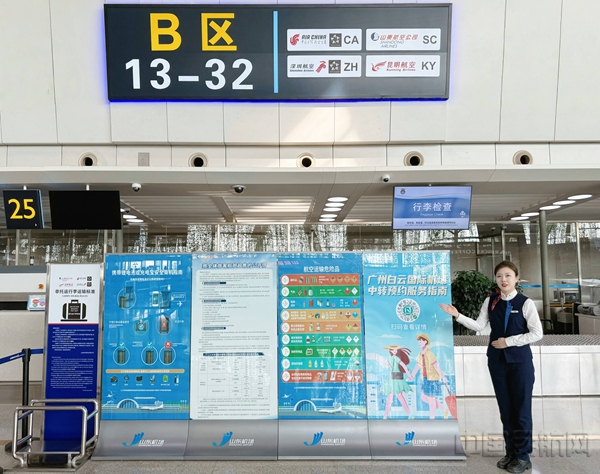
Core Viewpoint - The launch of the "Jinan-Guangzhou" inter-airline domestic and international flight transfer service marks a significant step for Jinan Airport in building a comprehensive flight network and expanding its international aviation market [1][2]. Group 1: Service Launch and Objectives - Jinan Airport has initiated a new transfer service in collaboration with Guangzhou Airport to enhance connectivity for both domestic and international flights [1][2]. - This service aims to facilitate seamless connections for passengers traveling from Jinan to international destinations via Guangzhou, effectively linking over 30 international airlines [2][3]. Group 2: Passenger Experience Enhancements - Passengers transferring through Guangzhou Airport can utilize the "Airport Pass" mini-program for a streamlined experience, including a range of new services such as guided assistance and luggage storage [3]. - Specific benefits include a full-service guide for passengers with a layover of 3 hours or more, free luggage storage for layovers within 48 hours, and discounts at designated shops within the terminal [3]. Group 3: Future Development Plans - Jinan Airport plans to strengthen communication and collaboration with various airports and airlines to create a more efficient and interconnected air transport network [5]. - The airport aims to enhance its role as a regional aviation hub, focusing on optimizing transfer products and improving overall passenger service quality [5].