普惠保险

Search documents
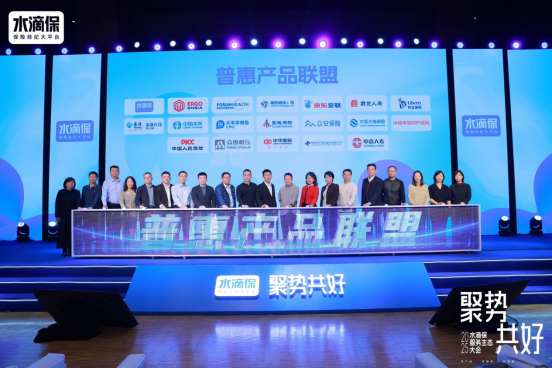
水滴保举办2025服务生态大会 携手18家保司成立“普惠产品联盟”
智通财经网· 2025-11-28 05:59
Core Insights - The second "Gathering Strength, Achieving Common Good" Waterdrop Insurance Service Ecosystem Conference was successfully held, where a report on the innovation of insurance for individuals with pre-existing conditions was released, highlighting the current protection status and demand pain points for this demographic [1][9] - Waterdrop Insurance established the "Inclusive Product Alliance" with 18 insurance companies to focus on the protection needs of specific groups such as individuals with pre-existing conditions, the elderly, and mothers and infants, aiming to promote inclusive insurance services through AI empowerment and product co-creation [1][16] Group 1 - The average annual medical expenditure for individuals with pre-existing conditions is nearly 90,000 yuan, indicating a significant protection gap that needs to be addressed [3][9] - The development of insurance for individuals with pre-existing conditions aligns with the national "14th Five-Year Plan" principles of prioritizing people's needs and high-quality development, and is essential for expanding coverage and improving service in the insurance industry [3][5] - The report indicates that over 60% of critical illness patients incur out-of-pocket expenses exceeding 100,000 yuan, and the prevalence of chronic diseases is increasing among younger populations, necessitating innovation in insurance products [9][10] Group 2 - Waterdrop Insurance has launched 214 insurance products for individuals with pre-existing conditions, with 34 being industry firsts, and has introduced innovative products such as a medical insurance plan that does not require health declarations [10][12] - The "Three Good Services" initiative, focusing on "Good Products," "Good Services," and "Good Claims," aims to enhance the overall service experience through AI and big data technology [13][14] - The establishment of the "Inclusive Product Alliance" aims to develop affordable and accessible insurance products for the public, with participation from various insurance companies to strengthen collaboration and trust within the industry [16]

香港火灾警示录:内地家财险普及率低,不少老旧小区“裸奔”
Hua Xia Shi Bao· 2025-11-28 02:59
Core Insights - A severe fire broke out in Hong Kong's Tai Po district, resulting in 94 fatalities, highlighting deep-seated fire safety and emergency management issues in aging residential buildings [1][3] - The insurance industry played a crucial role in the aftermath, with multiple companies activating emergency response mechanisms and green claims channels to support affected families [1][2] Insurance Industry Response - Several insurance companies, including China Life Overseas, initiated emergency claims services, simplifying procedures and ensuring rapid disbursement of funds to victims [1][3] - Ping An Property & Casualty and Ping An Life quickly formed emergency response teams to assess client claims, demonstrating heightened corporate social responsibility [2][3] Insurance Coverage and Awareness - The residential buildings in Hong Kong are typically required to have comprehensive insurance, including fire and public liability insurance, which provides a financial safety net for disaster recovery [3][4] - In contrast, mainland China's residential insurance coverage is significantly lower, with many older communities lacking adequate fire insurance, leaving them vulnerable [5][6] Consumer Awareness and Market Gaps - There is a notable gap in risk awareness and insurance understanding among mainland residents, with many neglecting the importance of property insurance [7][8] - The lack of mandatory insurance requirements in mainland China contributes to low penetration rates of household property insurance, particularly in older urban areas [8][9] Recommendations for Improvement - Experts suggest enhancing product design and consumer education to improve the attractiveness and understanding of fire and household insurance [7][8] - Collaboration between insurance companies, government, and real estate developers is recommended to promote the adoption of insurance products and improve coverage [8][9]

惠民保十年的普惠实践
Shang Hai Zheng Quan Bao· 2025-11-19 01:38
Core Insights - The article discusses the evolution and current state of the "Hui Min Bao" (惠民保) insurance products, highlighting their significance in addressing the high medical costs faced by the public over the past decade [1][9]. Group 1: Market Development - Since its inception in 2015, the Hui Min Bao insurance has expanded from a pilot program in Shenzhen to a nationwide initiative, with a total of 313 local products launched by July 31, 2025 [2]. - The market has shifted from "incremental expansion" to "stock optimization," with 202 products currently in stable operation, over 80% of which are traditional Hui Min Bao products [2]. - New products in 2025 are driven by two main trends: expanding coverage to underserved areas and enhancing existing products to meet diverse consumer needs [2]. Group 2: Coverage and Innovation - Hui Min Bao products have evolved to offer more comprehensive coverage, including outpatient expenses, special drug coverage, and chronic disease management [4]. - On average, each Hui Min Bao product covers 41 special drugs and 28 types of conditions, with over 80% of traditional products including special drug responsibilities [4]. - The inclusion of innovative treatments, such as CAR-T therapy, and local specialty drugs reflects a commitment to enhancing treatment options for patients [5]. Group 3: Challenges and Solutions - The "death spiral" challenge arises from a high dropout rate of healthy individuals, leading to an increased proportion of high-risk insured, which threatens the sustainability of the insurance model [6][7]. - Some products have seen participation rates below 10%, and certain products have payout rates exceeding 100%, putting pressure on the operational viability of Hui Min Bao [7]. - The industry is moving towards consolidation and optimization of products to reduce competition and improve sustainability [7]. Group 4: Pricing and Service Innovations - Hui Min Bao is transitioning from a uniform pricing model to a differentiated pricing strategy based on age, health status, and group participation, aiming to attract healthier individuals [8]. - Various value-added services are being introduced to enhance the experience for policyholders, including health management services and expedited claims processing [8]. - Collaboration between government and insurance companies is being strengthened to lower operational costs and improve risk management through data sharing [8]. Group 5: Future Outlook - Expanding the coverage of special drugs is expected to create a complementary mechanism between commercial insurance and public health insurance, enhancing the overall healthcare system [9]. - The future of Hui Min Bao will depend on effectively managing risk, setting reasonable premium rates, and preventing adverse selection to ensure long-term stability [9]. - With a stable market foundation and accelerated product innovation, Hui Min Bao is poised for high-quality development, contributing significantly to China's multi-tiered healthcare system [9].
惠民保十年的普惠实践
Shang Hai Zheng Quan Bao· 2025-11-18 18:42
Core Insights - The article discusses the evolution and current state of the "Hui Min Bao" (惠民保) insurance products, highlighting their significance in addressing the high medical costs faced by the public over the past decade [1][9] - It emphasizes the transition from "incremental expansion" to "stock optimization" in the market, indicating a more stable and mature landscape for these insurance products [2][9] Group 1: Market Development - Since its inception in 2015, the Hui Min Bao has expanded to 313 local products by July 2025, with 202 currently in stable operation, predominantly traditional types [2] - The market is experiencing a "dual-driven" growth pattern, with new products targeting underserved areas and existing products being upgraded to meet diverse consumer needs [2] Group 2: Coverage and Innovation - Over the past decade, Hui Min Bao products have expanded their coverage from basic hospitalization to include outpatient services, special drug coverage, and chronic disease management [4] - On average, each Hui Min Bao product covers 41 special drugs, with over 80% of traditional products including special drug responsibilities, particularly for cancer and rare diseases [4][5] Group 3: Challenges and Solutions - The "death spiral" challenge is a significant issue, where healthy individuals opt out of insurance due to low claims experience, leading to a higher proportion of unhealthy individuals and increased costs [6][7] - To address sustainability, many products are undergoing adjustments, with a trend towards consolidation to reduce competition and improve operational efficiency [7] Group 4: Pricing and Service Innovations - Hui Min Bao is shifting from a uniform pricing model to a differentiated pricing strategy based on age, health status, and group participation, aiming to attract healthier individuals [8] - Various regions are enhancing service offerings, including health management services and expedited claims processes, to improve the perceived value for policyholders [8] Group 5: Future Outlook - The expansion of special drug coverage is expected to enhance the complementarity between commercial insurance and public health insurance, potentially reducing the financial burden on patients [9] - The future of Hui Min Bao will depend on effective rate setting, risk management, and regulatory improvements, as it continues to play a crucial role in China's multi-tiered healthcare system [9]
“共建普惠金融新质服务体系·助力 共同富裕”全国性专场活动在甬成功举办
Xin Lang Cai Jing· 2025-11-06 13:32
Core Insights - The event focused on "Inclusive Insurance, Intelligent Services, and Common Prosperity," highlighting the importance of inclusive finance in supporting local economic development [1][3] - The Ningbo government is leveraging its status as a national insurance innovation pilot zone to explore new paths and models for inclusive insurance services [3][7] Group 1: Event Overview - The event was co-hosted by the Ningbo Municipal Government and the China Insurance Society, attracting over 180 participants from various sectors [1] - Key speakers included Ningbo's Deputy Mayor Xu Qiang and China Pacific Insurance Group's Secretary Su Shaojun, who emphasized the significance of inclusive finance in achieving high-quality development [3] Group 2: Key Presentations - Dr. Xing Li from the China Inclusive Finance Research Institute compared international practices in inclusive insurance and their implications for China's insurance industry [5] - Zheng Yimin from China Pacific Insurance highlighted the company's efforts in product innovation and service empowerment to meet public needs [5] - Professor Qiu Bo from Ningbo University presented a book detailing over 30 innovative inclusive insurance products developed in Ningbo [5] Group 3: Roundtable Discussion - A roundtable discussion was held, featuring experts discussing the role and impact of inclusive insurance in promoting common prosperity [6] Group 4: Ningbo's Insurance Innovations - Ningbo has launched over 80 inclusive insurance products, establishing a mature operational mechanism characterized by low premiums and high coverage [7] - The "Flexible Insurance" product, aimed at flexible employment individuals, has covered over 500,000 people and has been recognized as a best practice [7] - The "Tianyi Ningbao" medical insurance product has served over 12 million participants since its launch, effectively reducing citizens' medical burdens [7]

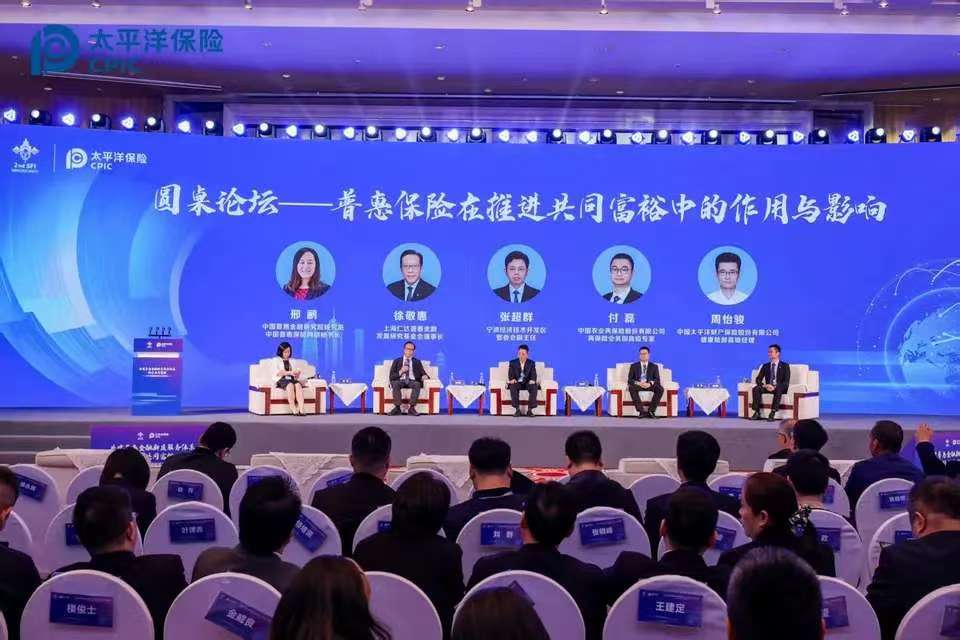
平安产险许乐扬:建议出台针对小微企业的行业示范性保险条款
Zhong Guo Jing Ying Bao· 2025-10-20 08:16
Core Insights - The development of inclusive insurance in China is being positively influenced by national policies, but it still faces challenges such as structural mismatches between supply and demand, insufficient commercial sustainability, and adaptability issues in service capabilities [2][4] Group 1: Industry Challenges - Inclusive insurance is in its early stages, with a significant gap between risk demand and supply, estimated at 5.8 trillion yuan, indicating that about 62% of the risk demand remains unmet [4] - The target groups for inclusive insurance often have weak insurance awareness, small asset scales, and low risk resistance capabilities, leading to inadequate risk protection [4] Group 2: Company Initiatives - Ping An Property & Casualty Insurance has provided insurance coverage for 1.61 million small and micro enterprises, amounting to 189 trillion yuan, and has developed over 8,200 products tailored to various industries [2] - The company aims to enhance product pricing models and leverage technology to reduce operational costs, thereby improving the management of insurance services [2][3] Group 3: Recommendations for Development - It is suggested to enhance overall protection levels for inclusive groups through policy guidance, particularly in high-risk sectors like manufacturing and transportation [4] - The establishment of industry-standard insurance clauses for small and micro enterprises is recommended to address the complexity and accessibility issues in purchasing insurance [5]

“惠民保”拼价格不如比服务
Jing Ji Ri Bao· 2025-10-12 22:10
Core Insights - The recent iteration of "惠民保" products has shifted from a focus on low premiums to an emphasis on service and coverage, reflecting a deeper understanding of inclusive insurance principles [1][3] - The sustainability of "惠民保" is under scrutiny as insurance companies face challenges in gaining public trust while adhering to a "保本微利" operational principle [1][3] Group 1: Product Development - Many regions are enhancing "惠民保" products by incorporating health management services to improve the sense of security among insured individuals [2] - The "大爱无疆" project in Zhuhai has mobilized 281,000 participants for cancer screenings, identifying over 20,000 high-risk cases and diagnosing approximately 140 early-stage cancers, potentially saving over 40 million yuan in medical expenses [2] - Beijing's "普惠健康保" offers free health management services to policyholders who have not made claims for three consecutive years [2] Group 2: Regulatory Environment - The unique nature of "惠民保" necessitates a clear delineation between government support and market operations, balancing policy and commercial attributes [3] - Recent guidelines from the National Financial Regulatory Administration emphasize adherence to commercial principles, discouraging low-price competition and ensuring that insurance contracts are not altered post-signing [3] Group 3: Market Trends - The scope of inclusive insurance in China has expanded significantly, evolving from primarily agricultural and critical illness insurance to include various products like "惠民保" and family property insurance [4] - The transition of "惠民保" from merely existing to providing quality coverage serves as a valuable reference for broader inclusive insurance initiatives [4]
兜住民生底线:普惠保险创新模式织密保障网
Zhong Guo Jing Ying Bao· 2025-10-10 19:18
Core Insights - The article highlights the development of a comprehensive insurance system in China, particularly focusing on the "Four Guarantees" insurance model by China Life Insurance, which aims to address various health and economic risks faced by rural populations [1][2][3] Group 1: Insurance System Overview - The "Four Guarantees" insurance system includes supplementary medical insurance, personal accident insurance, agricultural disaster insurance, and anti-poverty insurance, providing a multi-faceted safety net for rural communities [3][4] - In 2024, China Life's Guangxi branch aims to achieve a total premium scale of 17.1 billion yuan, marking a 36% year-on-year increase, with a market share of 34% in total premiums [1] Group 2: Targeted Insurance Products - The supplementary medical insurance covers vulnerable groups, significantly reducing out-of-pocket expenses for medical care, thus mitigating the risk of poverty due to health issues [3][4] - The personal accident insurance has provided coverage for over 29,000 rural workers, with total compensation amounting to 580,000 yuan in 2024 [3] - Agricultural disaster insurance has covered 13,000 cattle and over 67,000 acres of rice and corn, with total compensation reaching 6.1 million yuan in 2024 [3] Group 3: Economic Impact and Community Support - The insurance system has monitored 7,670 households since its inception in November 2021, disbursing a total of 10.36 million yuan in claims, with 255 individuals receiving 2.35 million yuan in 2024 alone [4] - The "Wohui Insurance" product, tailored for the local citrus industry, has expanded its coverage to all 13 townships and over 280 administrative villages, with total claims reaching 1.85 million yuan since its launch [6][7] Group 4: Cross-Border Insurance Initiatives - China Life has developed cross-border insurance services for Vietnamese workers, providing coverage for 170,000 foreign workers, thus enhancing regional economic ties and safety [8] Group 5: Future Directions - The company plans to deepen its commitment to providing diverse insurance services that align with rural revitalization and broader social welfare goals [9]

保险业保障能力稳步提升
Jing Ji Ri Bao· 2025-10-09 01:53
Core Insights - The insurance industry in China has solidified its position as the second-largest insurance market, with cumulative payouts reaching 9 trillion yuan, a 61.7% increase compared to the "13th Five-Year Plan" period [1] - By the end of Q2 2025, total assets of insurance companies and insurance asset management companies are projected to reach 39.2 trillion yuan, reflecting a 9.2% growth from the beginning of the year [1] Group 1: Social Security and Health Insurance - Urban and rural residents' major illness insurance provides further protection against high medical costs, with the government overseeing policy formulation and commercial insurance institutions managing the projects [2] - As of now, major illness insurance has served 1.22 billion urban and rural residents [2] - The "Guiding Opinions on Promoting High-Quality Development of Inclusive Insurance" emphasizes broad coverage, affordability, and fairness in insurance services [3] - Commercial health insurance has paid out a total of 1.8 trillion yuan in economic compensation over the past five years [3] Group 2: Long-term Care Insurance - Shandong Jining has initiated commercial insurance institutions to manage long-term care insurance, benefiting over 5,000 individuals with total payouts of 95 million yuan [4] - The insurance sector is innovating various commercial pension products to address the challenges of an aging population [4] - Long-term care insurance currently covers 180 million people [4] Group 3: Agricultural Insurance - Agricultural insurance provides risk protection for 800 million farming households, with a 72% increase in average coverage for major grain crops during the "14th Five-Year Plan" period [6] - The implementation of comprehensive cost and income insurance for major grain crops has been expanded nationwide, providing significant economic compensation for affected farmers [6] - The central government has allocated 56.2 billion yuan for agricultural insurance in 2024, with over 20 billion yuan specifically for major grain insurance [6] Group 4: Disaster Risk Management - The insurance industry has paid out over 150 billion yuan for natural disasters, ensuring prompt and reasonable compensation [7] - A national catastrophe insurance system is being established to enhance disaster risk management and support disaster relief efforts [7] Group 5: Support for the Real Economy - The insurance sector is actively engaging in risk management and financing needs for key national projects, including the Belt and Road Initiative [8] - China Export & Credit Insurance Corporation (Sinosure) achieved a record underwriting amount of 1.0214 trillion USD in 2024, marking a 10% increase year-on-year [8] - Sinosure's services have directly and indirectly facilitated over 930 billion USD in export amounts, accounting for 26% of China's total exports [8][10]
加快推进保险法修订;百万圆桌计划推出“MDRT中国特别奖项”;港险新规:储蓄险须标明“保险”|13精周报
13个精算师· 2025-09-27 03:04
Regulatory Dynamics - Nine departments encourage Chinese export credit insurance companies and other insurance institutions to increase support for service exports [8][9] - The central bank maintains the 1-year and 5-year LPR unchanged at 3.0% and 3.5% respectively [10] - The Ministry of Human Resources and Social Security reports that the basic pension insurance fund has achieved positive returns for eight consecutive years, with an average investment return rate of 5.15% [11] - The number of people covered by basic pension insurance in China reaches 1.072 billion, increasing by over 7.3 million since the end of the 13th Five-Year Plan [12] - Over 20 million new employment form workers are covered by occupational injury insurance [13] - The National Medical Insurance Bureau has included 42 rare diseases in the national medical insurance catalog [14] - The National Medical Insurance Bureau releases a long-term care insurance service catalog consisting of 20 life care and 16 medical care items [15] - The Financial Regulatory Administration holds a seminar with ASEAN and China-Japan-Korea financial regulatory agencies [16] - Financial Regulatory Administration head Li Yunzhe meets with Ray Dalio, founder of Bridgewater Associates [17] - The total assets of the banking and insurance industries exceed 500 trillion, with an average growth of nearly 9% over the past five years [18] Company Dynamics - China Ping An increases its stake in Agricultural Bank of China by 115 million HKD [29] - Sunshine Life increases its stake in China Ruyi by 113 million HKD [30] - Great Wall Life raises its stake in New Tian Green Energy to 5.00%, triggering a disclosure requirement [31] - Great Wall Life increases its stake in Qin Port shares by 1 million shares [32] - Ping An Life acquires a stake in Jingchang Logistics [33] - Ping An Overseas issues a 300 million USD 10-year senior unsecured bond with a coupon rate of 5% [34] - Fosun United receives approval for capital increase, with the International Finance Corporation and Asian Development Bank as new shareholders [35] - Ruizhong Life reduces its stake in Qinsong shares by over 9.55 million shares [36] - China Reinsurance receives approval for issuing capital supplement bonds [37] - Bank of China Samsung is approved to issue perpetual capital bonds [38] - China Life establishes a health management company in Nanjing [39] - Sunshine Insurance unveils Sunshine Hengyi Private Fund Management Co., Ltd. [41] - Bank of China Samsung establishes an equity investment partnership in Tianjin with a contribution of 1.1 billion [42] - Tianmao Group's cash option for delisting is executed, involving over 2.3 billion [43] - Huanghe Property Insurance's 125 million shares are up for auction with a starting price of 115 million [44] Industry Dynamics - Social insurance capital's A-share holdings exceed 2 trillion, reaching a historical high [55] - JPMorgan Chase invests approximately 135 billion HKD in China Pacific Insurance H-shares [56] - Mainland insurance companies attract record inflows in Hong Kong stocks [57] - Insurance capital's real estate investment scale significantly increases in the first half of 2025 [58] - The second batch of Sci-Tech Bond ETFs sees substantial institutional investment [59] - Goldman Sachs reports a surge of hedge funds into banking, insurance, and consumer finance sectors [60] - The first commercial insurance innovation drug catalog completes expert review, with five high-cost CAR-T drugs approved [61] - AI applications in the insurance industry are accelerating, with significant productivity potential [62][63] - The health insurance structure is changing, with medical insurance growth surpassing critical illness insurance [65]