
核安全

Search documents
乌克兰两座核电站,降负荷运行
中国能源报· 2025-11-18 01:20
Core Viewpoint - The operational capacity of Ukraine's Khmelnytskyi and Rivne nuclear power plants has been reduced due to military attacks on a transformer station, which is critical for maintaining external power supply and ensuring safety systems and cooling functions [3]. Group 1 - The Khmelnytskyi and Rivne nuclear power plants have been operating at reduced power for the past ten days due to military attacks on a transformer station [3]. - The transformer station is a vital node in the national power grid, essential for the nuclear plants to maintain external power supply [3]. - The Director General of the International Atomic Energy Agency (IAEA), Grossi, emphasized the importance of reliable external electricity for nuclear safety and stated that experts will continue to assess the condition of key transformer stations [3].

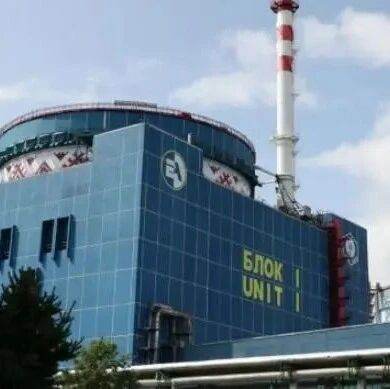
乌克兰两座核电站因变电站受损连续十日降负荷运行
Yang Shi Xin Wen· 2025-11-17 18:57
Core Points - The Director General of the International Atomic Energy Agency (IAEA), Grossi, reported that the Ukrainian nuclear power plants, Khmelnytskyi and Rivne, have been operating at reduced power due to military attacks on substations over the past ten days [1] - Substations are critical nodes in the national power grid, essential for maintaining external power supply, ensuring safety systems, and cooling functions for nuclear power plants [1] - Grossi emphasized that reliable external electricity is crucial for nuclear safety, and experts will continue to assess the condition of key substations [1]
日本福岛核电站测量设备涉嫌伪造测试证书等文件
Huan Qiu Shi Bao· 2025-11-03 07:10
Core Points - The Fukushima nuclear power plant's 3,615 measurement devices were not properly tested and allegedly had falsified test certificates [1] - The devices, primarily produced by Chiyoda Technol Corporation, were used to monitor radiation effects on humans and measure air radiation levels [1] - An investigation revealed that Chiyoda Technol sold these devices to the Fukushima plant without completing necessary tests, using falsified data [1] Company Summary - Chiyoda Technol Corporation is implicated in the scandal involving the sale of untested radiation monitoring devices to the Fukushima nuclear power plant [1] - The company issued an official apology on October 30 regarding the incident [1] Industry Summary - The Fukushima nuclear power plant has a history of data falsification, with 199 instances of data manipulation and concealment of reactor faults since 1977 [1] - Following the 2011 nuclear disaster, experts had already determined that core meltdowns had occurred, but the operating company, Tokyo Electric Power Company, downplayed the situation [1] - The Fukushima prefectural government and Tokyo Electric Power Company stated that other functioning devices in the facility mitigated health and safety risks from the untested equipment [1]
扎波罗热核电站恢复外部供电
Xin Hua She· 2025-10-23 14:03
Core Points - The Zaporizhzhia Nuclear Power Plant has restored power supply to one damaged 750 kV high-voltage transmission line after 30 days of external power loss [1] - The International Atomic Energy Agency (IAEA) is coordinating efforts to repair another 330 kV transmission line, emphasizing the importance of restoring power for nuclear safety [1] - The external transmission lines were cut off on September 23, with both Russia and Ukraine blaming each other for the shelling that caused the damage [1] Group 1 - The Zaporizhzhia Nuclear Power Plant is one of the largest nuclear power plants in Europe and has been under Russian control since the escalation of the Ukraine crisis in February 2022 [1] - The plant has faced multiple attacks, raising international concerns about its safety [1] - Since September 23, the plant has been relying on backup diesel generators to maintain operations [1] Group 2 - IAEA Director General Grossi stated that restoring power is a critical step for ensuring nuclear safety and that repair efforts have begun following the establishment of a ceasefire zone [1]
欧洲最大核电站失控!断电超两周,切尔诺贝利危机恐在乌克兰重演
Sou Hu Cai Jing· 2025-10-20 13:58
Core Points - The Zaporozhye Nuclear Power Plant has been offline for over two weeks due to external power outages, posing significant risks to safety and stability in Europe [1][3] - The reliance on emergency diesel generators for cooling systems raises concerns about the potential for catastrophic failures if these systems fail [5][7] - The ongoing conflict between Ukraine and Russia has turned the power supply lines into strategic assets, complicating the situation further [13][15] Group 1 - The Zaporozhye Nuclear Power Plant, with six reactors and over 1,200 tons of nuclear fuel, is in a precarious situation without external power [1][5] - The cooling systems are critical, as the nuclear fuel continues to generate decay heat, necessitating constant cooling to prevent disasters [7][9] - The risk of equipment failure is heightened, as one of the seven emergency diesel generators has already malfunctioned during the crisis [9][11] Group 2 - The geopolitical implications of the power supply lines have led to accusations between Ukraine and Russia, with each side blaming the other for the outages [13][15] - The International Atomic Energy Agency (IAEA) has been actively involved in monitoring the situation and facilitating discussions between the conflicting parties [19][21] - A temporary ceasefire has been agreed upon to allow for the repair of power lines, but the long-term safety of the nuclear facility remains uncertain [25][27] Group 3 - The situation has prompted European countries to activate emergency energy plans, including the potential restart of decommissioned coal power plants [24] - The ongoing conflict has raised alarms about the safety of nuclear facilities, challenging the fundamental safety standards of human civilization [29]

没想到中国这么硬,如果中国不抬轿子,国际原子能机构要吃瘪
Sou Hu Cai Jing· 2025-10-15 06:41
Core Points - The article discusses Japan's decision to release treated radioactive water from the Fukushima nuclear power plant into the Pacific Ocean, a plan that has faced significant opposition from neighboring countries, particularly China [1][3][5]. Group 1: Japan's Plan and Implementation - Japan's government decided in April 2021 to gradually release over 1.3 million tons of treated radioactive water into the ocean, with an annual release of 220 trillion becquerels of radioactive material expected to last for 30 to 40 years [1][5]. - The water is treated using the ALPS system, which removes most radioactive substances but cannot filter out tritium, necessitating dilution before release [1]. Group 2: International Reactions - China has been particularly vocal against Japan's plan, claiming it poses risks to marine life and food safety, labeling Japan's actions as selfish and dismissive of international concerns [3][5]. - Other countries, including South Korea, Russia, and some Pacific island nations, have also protested against Japan's decision [3]. Group 3: IAEA's Role and Reports - The International Atomic Energy Agency (IAEA) was invited to assess Japan's plan, and after two years of investigation, it concluded in July 2023 that Japan's approach meets international safety standards, recommending ongoing monitoring [5][10]. - Despite the IAEA's endorsement, China expressed dissatisfaction, arguing that the report did not adequately evaluate the long-term impacts of radioactive material accumulation in the ocean [5][10]. Group 4: China's Response and Actions - In response to Japan's actions, China immediately banned all imports of Japanese seafood, a move later echoed by Russia [7]. - China plans to enhance domestic monitoring and send experts to sample water near Fukushima to test for radioactive substances [7][10]. Group 5: Ongoing Developments and Future Outlook - As of January 2025, China reported no abnormalities in its water and food testing results, but it continues to emphasize the need for long-term monitoring [8][10]. - The IAEA's ongoing relationship with China is evolving, with discussions on cooperation and transparency regarding nuclear safety issues [10][11]. - Japan's seafood exports are under scrutiny, and while China has resumed imports from Japan, it maintains a cautious stance regarding products from Fukushima and surrounding areas [10][11].

泽连斯基紧急发声!俄军猛攻乌克兰能源命脉,称其为弥补地面失利
Sou Hu Cai Jing· 2025-10-14 05:58
Group 1 - Russia has intensified attacks on Ukraine's energy infrastructure, particularly as winter approaches, posing significant challenges to daily life [1][5] - The Ukrainian energy sector reported damage to facilities in Donetsk, Odesa, and Chernihiv, with emergency services working around the clock to restore power [1] - The recent attacks have resulted in injuries, including a fire at a gas facility in Odesa and injuries to energy company employees in Kyiv [2] Group 2 - The Zaporizhzhia nuclear power plant has been without external power for over a week, raising international concerns about nuclear safety [4] - Ukrainian President Zelensky noted that the increased attacks on the energy system are linked to heightened pressure on the front lines [5] - A large-scale attack in Kyiv resulted in at least 20 injuries and nationwide blackouts, described as one of the most concentrated attacks on the energy system since the conflict began [7] Group 3 - The ongoing attacks on energy infrastructure are seen as a strategy by Russia to weaken Ukraine's economy and social operations [7] - The situation has drawn attention from the international community, with concerns that attacks on civilian energy systems could lead to humanitarian crises [7] - The stability and security of energy facilities are critical factors influencing the trajectory of the conflict as winter approaches [11]

Cadre Holdings, Inc. (CDRE) Analyst/Investor Day Transcript
Seeking Alpha· 2025-10-09 02:46
Core Insights - The company views the current geopolitical risks and security challenges as opportunities for growth and leadership in the industry [2][3] - The commitment to support professionals in high-stakes environments, such as EOD technicians and nuclear safety teams, is a fundamental aspect of the company's culture and operational focus [2][3] Industry Overview - The landscape of protection has evolved, now encompassing not just physical armor but also the safeguarding of critical infrastructure and energy systems [3] - The company's expansion into nuclear safety, including the development of containment, detection, and rapid response platforms, aligns with its strategic goals and core competencies [3] - Recent achievements, such as the award of Advanced Blast Sensors over a five-year period, highlight the company's ongoing commitment to innovation and excellence in safety technology [3]


Cadre (NYSE:CDRE) 2025 Investor Day Transcript
2025-10-08 15:00
Summary of Cadre Holdings 2025 Investor Day Company Overview - **Company**: Cadre Holdings (NYSE: CDRE) - **Industry**: Nuclear Safety and Defense Equipment - **History**: Founded in 1964 as SafariLand, transitioned to a publicly traded company in 2021 after multiple acquisitions and restructuring efforts [10][11][12] Core Business and Strategy - **Transformation**: Cadre is evolving from a specialty safety provider to a large-scale industrial enterprise focused on high-margin sectors, including national security and clean energy [5][4] - **Revenue Breakdown**: - 20% from company-owned distribution - 80% from innovative product manufacturing [13][15] - **Employee Base**: Over 2,600 employees across 21 manufacturing facilities [16] Financial Performance - **Adjusted EBITDA Growth**: Increased by 740 basis points since 2020, indicating strong operational focus on productivity and continuous improvement [35] - **Leverage**: Post-acquisition leverage remains below 2x, showcasing financial prudence [36] - **M&A Strategy**: Focus on sensible acquisitions with multiples between 5x and 11x adjusted EBITDA, emphasizing cost synergies [37][38] Nuclear Business Focus - **Market Drivers**: - Environmental management of nuclear waste - National security and weapons modernization - Growth in nuclear energy as a clean energy source [66][68][69] - **Recent Acquisition**: Acquired Alpha Safety in March 2024, expanding capabilities in nuclear engineering and environmental cleanup [63] Key Initiatives and Projects - **Blast Sensor Program**: Awarded a $50 million contract for the Blast Exposure Monitoring System, enhancing capabilities in blast sensor technology [42][43] - **Environmental Cleanup**: Cadre's nuclear segment is heavily involved in the cleanup of radioactive waste, with significant annual investments [73][76] - **Nuclear Energy Growth**: The U.S. aims to quadruple nuclear energy production by 2050, presenting a substantial market opportunity for Cadre [89] Market Trends and Opportunities - **Geopolitical Tensions**: Increasing global safety threats and geopolitical unrest are driving demand for Cadre's products [50][51] - **AI and Energy Demand**: The rise of AI technologies necessitates increased energy production, with nuclear energy positioned as a key solution [70][88] - **Regulatory Changes**: Recent executive orders are streamlining the regulatory process for nuclear projects, facilitating market entry and expansion [92] Long-term Vision - **Growth Aspirations**: Targeting 3% to 5% organic revenue growth, with an additional $100 million from acquisitions annually [54][55] - **Margin Improvement**: Aiming to increase adjusted EBITDA margins from low 40s to 45-50% [56] - **Commitment to Safety**: Cadre emphasizes its mission of saving lives through innovative safety equipment, with a notable record of 2,254 lives saved [16][17] Conclusion - Cadre Holdings is strategically positioned to capitalize on the growing nuclear market, driven by environmental, security, and energy needs. The company's focus on innovation, operational excellence, and prudent financial management underpins its long-term growth strategy.
Cadre (NYSE:CDRE) 2025 Earnings Call Presentation
2025-10-08 14:00
Cadre Holdings Overview - Cadre is transforming from a public safety company to a diversified industrial company focused on highly engineered safety products in stable markets[7] - The company estimates its core Law Enforcement (LE) business has an annual Serviceable Addressable Market (SAM) of approximately $2 billion[8] - Cadre's diversified industrial focus, including domestic nuclear, expands the annual SAM to approximately $5-8 billion[8] - Cadre's revenue for FY2024 was $568 million, with an aspiration for 3-5% organic growth supplemented by $100 million in annual M&A[40] - The company's adjusted EBITDA for FY2024 was $105 million, representing an 18.5% margin, with an aspiration for mid-20s% adjusted EBITDA margin[40] Cadre Nuclear Group - Cadre Nuclear Group was formed through the acquisition of Alpha Safety in March 2024 and Carr's Engineering Division in April 2025[44, 45] - Cadre Nuclear Group had £51 million in revenue for FY2024 (ended August 31, 2024)[46] - The Waste Isolation Pilot Plant (WIPP) shipment expectations create a robust, federal-backed, multi-year demand environment, with a budget of ~$600 million in 2025 versus $350 million in 2020[58] Contracts and Awards - Med-Eng was awarded a $50 million Indefinite Delivery Indefinite Quantity (IDIQ) contract with the Department of Defense for a Blast Exposure Monitoring System (BEMO)[26, 28]