欧洲一体化

Search documents
拖住中国,吃掉欧盟!为何说关税大戏背后,特朗普正在包围欧洲?
Sou Hu Cai Jing· 2025-05-27 10:04
Core Points - The article discusses the ongoing trade tensions initiated by the Trump administration, highlighting recent negotiations with Japan and the EU regarding tariff evaluations and extensions [1][3][19] - It emphasizes the fluctuating nature of Trump's policies and the underlying economic interests driving these negotiations, suggesting a strategic reconfiguration of global economic power dynamics [3][24] Group 1: Trade Negotiations - On May 23, Japan's Prime Minister communicated a request to reassess tariff measures to the White House, marking the first direct communication since the trade war began [1] - Just two days later, Trump had a "very pleasant" conversation with the EU, extending the deadline for tariff negotiations to July 9 [1] - Trump's social media statements on the same day indicated a lack of progress in EU negotiations, reflecting his unpredictable stance [1][19] Group 2: Historical Context of European Integration - Post-World War II, European countries sought unity to prevent future conflicts, leading to the idea of European integration, initially proposed by Winston Churchill in 1946 [3][5] - The establishment of NATO in 1949 marked the beginning of military cooperation among European nations, which later evolved into the European Economic Community and the European Union [5][7] - The EU's expansion from 1995 to 2007 included ten Eastern European countries, increasing its membership to 27 [5] Group 3: EU's Global Role and Relations with the US - Since 2000, the EU has invested significantly in international affairs, such as contributing $33 billion to the reconstruction of former Yugoslav states, compared to the US's $22 billion [7] - The EU has developed a unique role in global diplomacy, particularly in the Iran nuclear issue, where it established independent dialogue mechanisms [7][11] - The EU's increasing international influence has been perceived as a challenge to US dominance, particularly in trade and technology sectors [9][17] Group 4: Economic Dependencies and Challenges - European companies have become reliant on Chinese production and markets, complicating their position amid US-China trade tensions [15][17] - Trump's tariffs have raised production costs for European firms, making them indirect victims of the trade war [17][19] - The EU's response to US tariffs included retaliatory measures, but internal divisions weakened its collective bargaining power [19][20] Group 5: Strategic Implications - The article suggests that Trump's trade policies aim to realign global economic power, creating rifts between the US and EU while attempting to maintain US dominance [22][24] - The EU's efforts to assert its independence from US influence are complicated by its economic ties with China, presenting a "third choice" in its foreign relations [13][15] - The ongoing trade disputes and negotiations reflect a broader shift towards a multipolar world, challenging the traditional US-centric global order [24]

欧洲紧盯波兰、罗马尼亚总统选举
Huan Qiu Shi Bao· 2025-05-18 22:26
Group 1 - The presidential elections in Poland and Romania are taking place, with significant implications for EU unity and overall direction [1][2] - In Poland, 13 candidates are competing, with the main contest between pro-European candidate Trzaskowski and nationalist candidate Nawrocki, supported by current leaders [1] - The outcome of the Polish election is seen as a critical test for the country's pro-European vision and its alignment with Germany and the EU [1] Group 2 - In Romania, the second round of voting features George Simion and independent candidate Nicușor Dan, following a previous invalidated election round [2] - The rise of Eurosceptic leaders like Nawrocki and Simion could strengthen the influence of Eurosceptic factions within the EU and exacerbate internal divisions [2] - Such electoral outcomes may empower countries challenging the EU's overall direction, like Hungary and Slovakia [2]
波兰外长:乌克兰加入欧盟能更好保障其安全
news flash· 2025-05-14 17:33
Core Viewpoint - The Polish Foreign Minister Sikorski stated that Ukraine's accession to the EU is more feasible than joining NATO, as the EU can provide better security guarantees [1] Group 1: Ukraine's Integration - Sikorski emphasized that there has never been a "realistic prospect" for Ukraine to join NATO, suggesting that European integration is achievable for Ukraine [1] - He mentioned that EU treaties offer "stronger and clearer" security guarantees compared to NATO treaties [1] Group 2: Poland's Military Stance - Sikorski ruled out the possibility of Poland sending troops to Ukraine for peacekeeping missions [1] - He highlighted Poland's responsibility to defend NATO's eastern flank and ensure the smooth transportation and communication for supporting Ukraine's peacekeeping efforts [1] Group 3: Transatlantic Relations - Sikorski remarked on the mutual need between Europe and the United States, agreeing with President Trump's assertion that European countries should bear primary responsibility for their own security [1] - He called for European nations to continue increasing military spending [1]
乌克兰央行行长:考虑放弃美元,转用欧元作为参考货币
Guan Cha Zhe Wang· 2025-05-08 02:01
Core Viewpoint - The Governor of the National Bank of Ukraine, Andriy Pyshnyi, indicated that Ukraine is considering abandoning the US dollar as its reference currency in favor of the euro, driven by increasing ties with Europe and the fragmentation of global trade [1][2]. Group 1: Currency Transition Considerations - Ukraine's potential shift to the euro is influenced by its aspirations for EU membership and the growing role of the EU in enhancing Ukraine's defense capabilities [1][3]. - The euro's share in foreign exchange transactions is gradually increasing, although it remains relatively small compared to the dollar [1][2]. - The transition to the euro is described as complex and requires comprehensive preparation [1][4]. Group 2: Economic Implications - The shift to the euro could significantly reduce transaction costs and exchange rate risks for Ukraine in its European integration efforts [3][4]. - The National Bank of Ukraine has recently moved from a fixed exchange rate to a managed floating exchange rate, still referencing the dollar [2][4]. - Pyshnyi forecasts moderate economic growth for Ukraine in the next two years, estimating a growth rate between 3.7% and 3.9% [5][6]. Group 3: External Financial Support - Ukraine is heavily reliant on external financing, expecting to receive approximately $55 billion in external support this year to cover fiscal deficits and build reserves [6][5]. - Future aid is projected to decrease, with expectations of $17 billion in 2026 and $15 billion in 2027 [6].
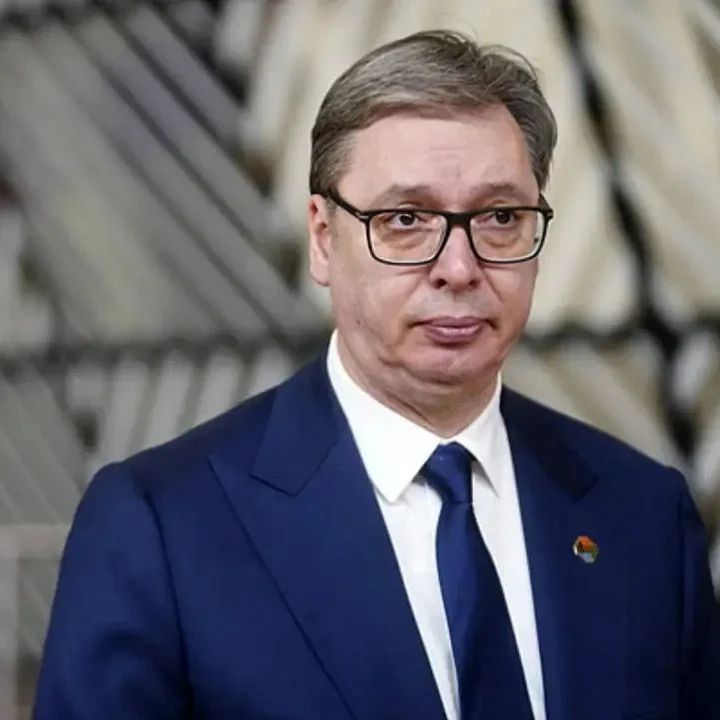
"武契奇已出院,还没放弃访俄"
凤凰网财经· 2025-05-04 14:00
Core Viewpoint - The article discusses the health status and upcoming plans of Serbian President Aleksandar Vučić, emphasizing his commitment to attend the Victory Day celebrations in Moscow despite health issues and pressure from the EU [1][4]. Group 1: Health Status of President Vučić - Serbian First Deputy Prime Minister and Finance Minister Sinisa Mali reported that President Vučić has been discharged from the military hospital and is in good condition [2][3]. - Vučić has canceled all activities for the next few days to rest as advised by doctors, but he is expected to return to work soon [3][4]. Group 2: Upcoming Plans and EU Pressure - Vučić plans to attend the Victory Day celebrations in Moscow on May 9, where he will meet leaders from around 20 countries, showcasing Serbia's international standing [4][5]. - The EU has threatened that Vučić's visit could violate membership standards, potentially jeopardizing Serbia's EU accession process, which began in 2009 [4][5]. - Despite EU pressure, Vučić remains resolute in his decision to attend the event, emphasizing Serbia's historical contributions to the anti-fascist war [4][5]. Group 3: Reactions to EU Pressure - Russian Foreign Ministry spokesperson Maria Zakharova criticized the EU's actions as coercive and likened them to those of criminals [5]. - Slovak Prime Minister Robert Fico also confirmed his attendance at the event and expressed defiance against EU directives [5].