石油封锁

Search documents
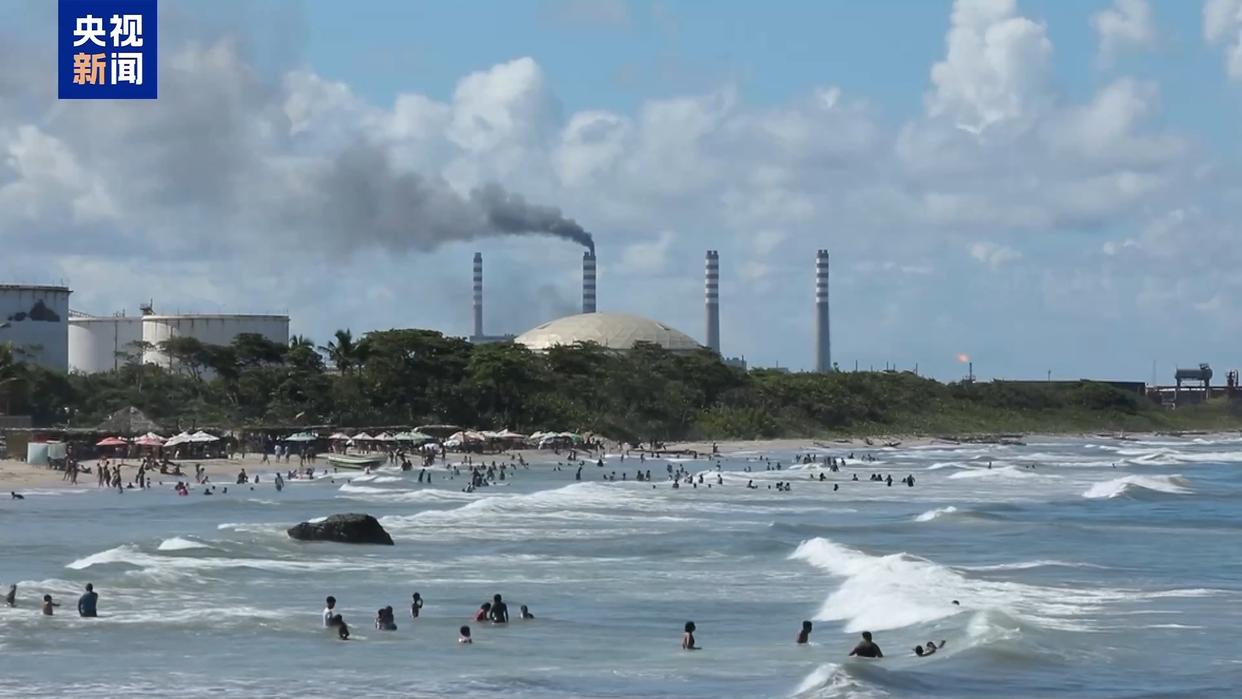
委内瑞拉港口炼油厂正常生产 港口运行基本正常
Yang Shi Xin Wen· 2025-12-26 16:21
Group 1 - The core point of the article highlights the operational status of the El Palito refinery in Venezuela, which continues to function despite the challenges posed by U.S. sanctions [3][4][6] - Cabello Port is identified as Venezuela's largest commercial trade port, handling over 60% of the country's public port cargo throughput, and serves as a crucial hub for oil exports and imports [3] - The El Palito refinery, part of the state-owned Petróleos de Venezuela, S.A. (PDVSA), has a processing capacity of 140,000 barrels per day at peak times, supplying fuel and refined products to the central and western regions of the country [3][6] Group 2 - Local residents report that despite the difficulties caused by the sanctions, operations at companies producing oil derivatives like PVC are running normally, with efforts to find alternative sources for raw materials [4] - The El Palito refinery, while smaller compared to other refineries in Venezuela, meets 24% of the national oil demand by processing 20,000 to 30,000 barrels of crude oil daily [6] - A former advisor to PDVSA emphasizes the strength of the oil workforce and production capabilities in Venezuela, which have proven resilient against various extreme challenges, including technical difficulties [9]

U.S. Coast Guard Chasing Another Tanker Involved in Shipping Venezuela Oil
WSJ· 2025-12-21 22:25
Core Viewpoint - The operation is part of the U.S. administration's efforts to enforce a blockade on Venezuela's oil shipments following an order from former President Trump [1] Group 1 - The operation follows the boarding of two other ships earlier this month [1] - The blockade aims to restrict Venezuela's oil exports, which are crucial for the country's economy [1]
委内瑞拉国内石油市场未出现明显波动
Yang Shi Xin Wen· 2025-12-21 19:10
Group 1 - The recent seizure of oil tankers by the United States near Venezuela has raised concerns in the international market regarding the security of Venezuela's oil supply [1] - Despite the geopolitical tensions, the domestic oil market in Venezuela remains stable, with no significant fluctuations in supply or prices observed [1] - Venezuelan citizens express strong condemnation of the U.S. actions, indicating a sense of resilience and confidence in their ability to cope with external pressures [2][4][6][9] Group 2 - Experts suggest that the U.S. blockade on Venezuelan oil could have adverse effects on the U.S. energy system, as both countries have a highly integrated supply chain [10] - The current situation highlights the ongoing financial and economic crisis in the U.S., while Venezuela maintains diplomatic relationships and experience to navigate these challenges [12] - The Venezuelan government has issued a statement condemning the U.S. actions and reaffirming its commitment to independently develop its oil industry [14]

Trump vowed to block tankers carrying Venezuela's oil — nearly a dozen are at sea right now
CNBC· 2025-12-17 17:04
Core Insights - The U.S. military has seized at least one oil tanker, Skipper, that was carrying Venezuelan crude oil, as part of a broader strategy to enforce sanctions against Venezuela [1][2][3] - There are currently at least 34 U.S.-sanctioned oil tankers in the Caribbean, with 12 of them reportedly filled with Venezuelan crude oil [1][2] - President Trump has announced a "complete and total blockade" on sanctioned oil tankers associated with Venezuela, categorizing the Maduro regime as a foreign terrorist organization [3] Industry Analysis - The analysis from Kpler indicates that the U.S. will focus on blocking only those tankers carrying Venezuelan oil, while vessels transporting crude from other nations, such as Iran and Russia, will not be affected [3] - Following the announcement of the blockade, there may be increased scrutiny and enforcement actions against these tankers by U.S. authorities, according to Kpler's senior risk and compliance analyst [4] - Kpler's report suggests that the blockade of Venezuelan oil is not expected to lead to an increase in crude oil prices [4]