
石油封锁

Search documents
“一艘俄罗斯油轮获美方放行”
中国能源报· 2026-03-30 01:29
Core Viewpoint - A Russian oil tanker carrying approximately 730,000 barrels of crude oil has been allowed by the U.S. Coast Guard to proceed to Cuba, potentially easing the energy crisis in the country [3]. Group 1: U.S. Actions and Policies - The U.S. Coast Guard had the capability to intercept the Russian tanker in the Caribbean but did not take action as the Trump administration did not issue orders to do so [3]. - Since the beginning of the year, the Trump administration has implemented a new round of oil sanctions against Cuba and has issued multiple military threats [3]. Group 2: Russian Support for Cuba - The Russian Foreign Ministry expressed support for the Cuban government and people, highlighting the severe challenges faced by Cuba due to the U.S. embargo [3]. - Russia emphasized its commitment to continue providing necessary support to Cuba amidst the ongoing sanctions [3].

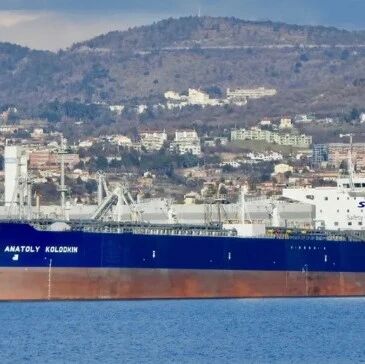
受“友谊”输油管道供应中断影响,匈牙利再度面临来自乌克兰的能源威胁,匈牙利总理强硬表态:“我们将在这件事上击败他们”
中国能源报· 2026-03-08 09:39
Core Viewpoint - Hungary's Prime Minister Viktor Orbán emphasizes the need to break the oil blockade imposed by Ukraine, asserting that Hungary will not compromise under pressure and will resist any form of extortion [3]. Group 1: Energy Supply Dispute - Hungary and Ukraine are in a dispute over the interruption of oil supply through the "Friendship" pipeline, which has led to escalating tensions between Hungary, Slovakia, and Ukraine since January 27 of this year [5]. - Orbán highlights that energy expenditures are a significant part of ordinary households' living costs in Hungary, and the interruption of the "Friendship" pipeline poses a new energy threat to Hungary [3]. Group 2: Government Response and Monitoring - The Hungarian government is actively monitoring oil inventory and price trends, with plans to intervene immediately if prices exceed manageable levels [3]. - Orbán expresses that he does not expect an apology from Ukraine but demands the resumption of the oil pipeline [3]. Group 3: EU Membership Concerns - Orbán opposes Ukraine's accession to the European Union, arguing that accepting a country in a state of war would bring conflict into the EU and divert Hungarian funds to Ukraine [3].

加拿大向古巴提供援助 “自主决策”未与美方磋商
Yang Shi Xin Wen Ke Hu Duan· 2026-02-25 20:25
Core Viewpoint - The Canadian government has announced a CAD 8 million (approximately USD 5.84 million) emergency food and nutrition aid to Cuba in response to the current situation in the country, emphasizing its independent foreign policy approach without prior discussions with the U.S. [1] Group 1: Canadian Government Actions - The Canadian government will provide CAD 8 million in aid to Cuba for emergency food and nutrition support [1] - Canadian Foreign Minister Anand stated that this decision reflects Canada's autonomous foreign policy [1] Group 2: U.S. Actions and Implications - Following a large-scale military strike by the U.S. on Venezuela, there are implications that Cuba could be the next target [1] - On January 29, U.S. President Trump signed an executive order threatening to impose tariffs on goods imported from countries supplying oil to Cuba [1] - On February 6, Cuba announced a series of measures to counter the new round of U.S. oil sanctions [1]
美石油封锁之际 古巴外长抵达莫斯科
Xin Lang Cai Jing· 2026-02-18 10:01
Core Viewpoint - The visit of Cuban Foreign Minister Bruno Rodriguez to Moscow coincides with a new round of U.S. oil sanctions against Cuba, highlighting geopolitical tensions and the potential for Russia to engage in constructive dialogue with the U.S. regarding Cuba's oil embargo [1] Group 1: U.S. Sanctions - The U.S. has implemented a new round of oil sanctions against Cuba, which poses significant challenges for the Cuban economy [1] - President Trump signed an executive order on January 29, threatening to impose tariffs on countries providing oil to Cuba [1] Group 2: Russia's Position - Russian officials, including presidential press secretary Dmitry Peskov, have expressed a desire for constructive dialogue with the U.S. to address the oil embargo on Cuba [1] - The meeting between Rodriguez and Russian Foreign Minister Sergey Lavrov may indicate Russia's willingness to support Cuba amid U.S. sanctions [1]
外媒:美石油封锁之际,古巴外长抵达莫斯科
Huan Qiu Wang· 2026-02-18 09:34
Core Viewpoint - The visit of Cuban Foreign Minister Bruno Rodriguez to Moscow occurs amid a new round of U.S. oil sanctions against Cuba, highlighting geopolitical tensions and potential shifts in alliances [1] Group 1: Diplomatic Engagement - Bruno Rodriguez arrived in Moscow on February 18 to meet with Russian Foreign Minister Sergey Lavrov [1] - The meeting is part of ongoing diplomatic efforts between Cuba and Russia, particularly in the context of U.S. sanctions [1] Group 2: U.S. Sanctions Impact - The U.S. has implemented a new round of oil sanctions against Cuba, with President Trump signing an executive order on January 29 threatening tariffs on countries supplying oil to Cuba [1] - Russian officials, including presidential spokesperson Dmitry Peskov, have expressed a desire for constructive dialogue with the U.S. to address the oil embargo issue [1]
美对向古巴提供石油的国家采取关税措施,俄大使:完全疯狂
Xin Lang Cai Jing· 2026-02-16 10:53
Core Viewpoint - The recent executive order by U.S. President Trump imposing tariffs on countries supplying oil to Cuba has been criticized by Russian officials as "completely insane" and a violation of international law [1][3]. Group 1: U.S. Actions - President Trump signed an executive order on January 29, which imposes tariffs on goods from countries that provide oil to Cuba [3]. - The order is seen as a direct consequence of the current fuel supply difficulties faced by Cuba, which are attributed to the U.S. government's fuel blockade [3]. Group 2: International Reactions - Russian Ambassador to Cuba, Viktor Koronelli, condemned the U.S. executive order, stating it imposes sanctions on third countries trading with Cuba [3]. - Cuban Foreign Minister Rodriguez expressed strong condemnation of the new round of U.S. oil blockade actions on social media [3]. - Russian Foreign Minister Lavrov, in a phone call with Rodriguez, stated that economic and military pressure on Cuba, including hindering energy supplies, is unacceptable [3].
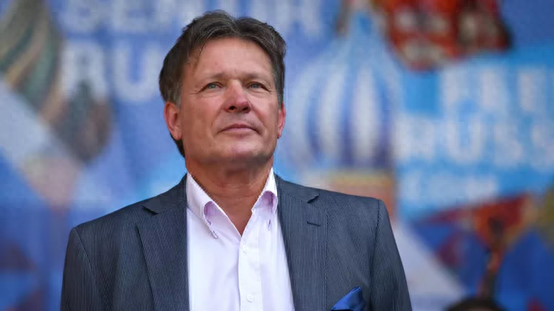
古巴一炼油厂仓库起火 火势已得到控制
Xin Lang Cai Jing· 2026-02-14 06:10
Core Viewpoint - A fire occurred at the "Nico Lopez" refinery in Havana, Cuba, on February 13, with the cause under investigation and no reports of casualties or property damage yet [1] Group 1: Incident Details - The fire broke out in a warehouse at the refinery, with large plumes of smoke observed but dissipating quickly [1] - The incident took place near the docking area of two oil tankers in Havana Bay [1] Group 2: Context and Government Response - The fire comes amid heightened tensions, as U.S. President Trump signed an executive order on January 29 threatening tariffs on countries supplying oil to Cuba [1] - In response to the new U.S. oil blockade, the Cuban government announced fuel rationing measures on February 6 [1]
古巴一炼油厂起火
中国能源报· 2026-02-14 02:20
Group 1 - A fire broke out at the "Nico Lopez" oil refinery in Havana, Cuba, but the fire has been brought under control [1] - The Cuban Ministry of Energy and Mines announced the incident on social media, stating that the cause of the fire is under investigation [1] - Witnesses reported seeing smoke rising from the refinery, but it dissipated by the time reporters arrived on the scene [1] Group 2 - In response to U.S. sanctions, the Cuban government announced a series of measures, including fuel rationing, to cope with the new round of oil embargoes [1] - U.S. President Trump signed an executive order threatening tariffs on countries supplying oil to Cuba, which has heightened the pressure on the Cuban energy sector [1]

美能源部长放风:中国从我们手里买了委石油
Sou Hu Cai Jing· 2026-02-13 12:27
Core Insights - The U.S. Energy Secretary, Dan Brouillette, became the first high-ranking official from the Trump administration to visit Venezuela, indicating a shift in U.S. policy towards the country’s oil sector [1] - Brouillette stated that the U.S. oil blockade on Venezuela has essentially ended, with China being a major buyer of Venezuelan oil sold by the U.S. government [1][4] - The Trump administration aims to reduce the influence of China, Russia, and Iran in Venezuela by promoting U.S. and allied companies in the reconstruction of the Venezuelan oil industry [3] Group 1: U.S. Policy and Actions - The U.S. government has allowed China to purchase Venezuelan oil but prohibits the use of unfair low pricing associated with the Maduro government [4] - Brouillette emphasized that the military action taken by the U.S. was not solely about Venezuela's oil wealth but rather a geopolitical issue affecting the entire Western Hemisphere [4] - The U.S. is looking to improve the business environment for American companies in Venezuela, as indicated by Brouillette's discussions with Venezuelan interim president, Delcy Rodríguez [3] Group 2: Market Dynamics - Following U.S. military actions, several Indian refineries have begun purchasing Venezuelan oil, and the Indian government is encouraging state-owned refiners to increase their purchases of both Venezuelan and U.S. oil [4] - Venezuela's oil production is expected to recover in the medium term, with estimates suggesting it could reach 2 million barrels per day within two to three years [4] - As of December last year, Venezuela's oil production was approximately 896,000 barrels per day, indicating significant room for growth [4]
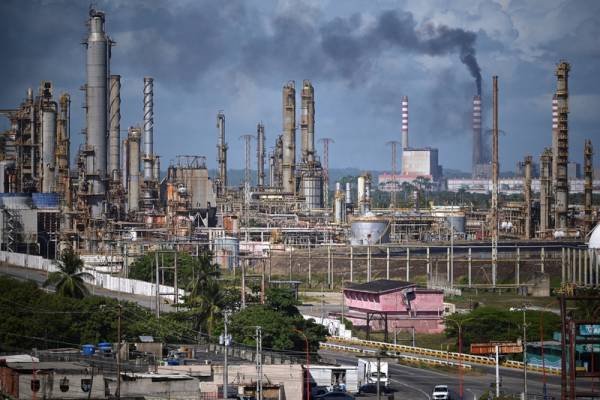
俄罗斯:正从古巴撤回俄公民
Zhong Guo Xin Wen Wang· 2026-02-12 07:07
Group 1 - The core issue is the disruption of aviation fuel supply in Cuba due to the U.S. oil blockade, prompting Russia to evacuate its citizens from Cuba [1] - Russian airlines, including Aeroflot and Nordwind Airlines, are adjusting their flight schedules to Cuba, operating only return flights to facilitate the evacuation of Russian tourists [1] - Approximately 5,000 Russian tourists are reported to be stranded in Cuba, as stated by the Russian Tourism Operators Association [1]